
Edward Henry Wehnert
Edward Henry Wehnert (1813–1868) was an English-born painter of landscape, genre and historical subjects, now best remembered for his illustrations in books and magazines.
Also recorded as Edward Wehnert · E. H. Wehnert
Edward Henry Wehnert
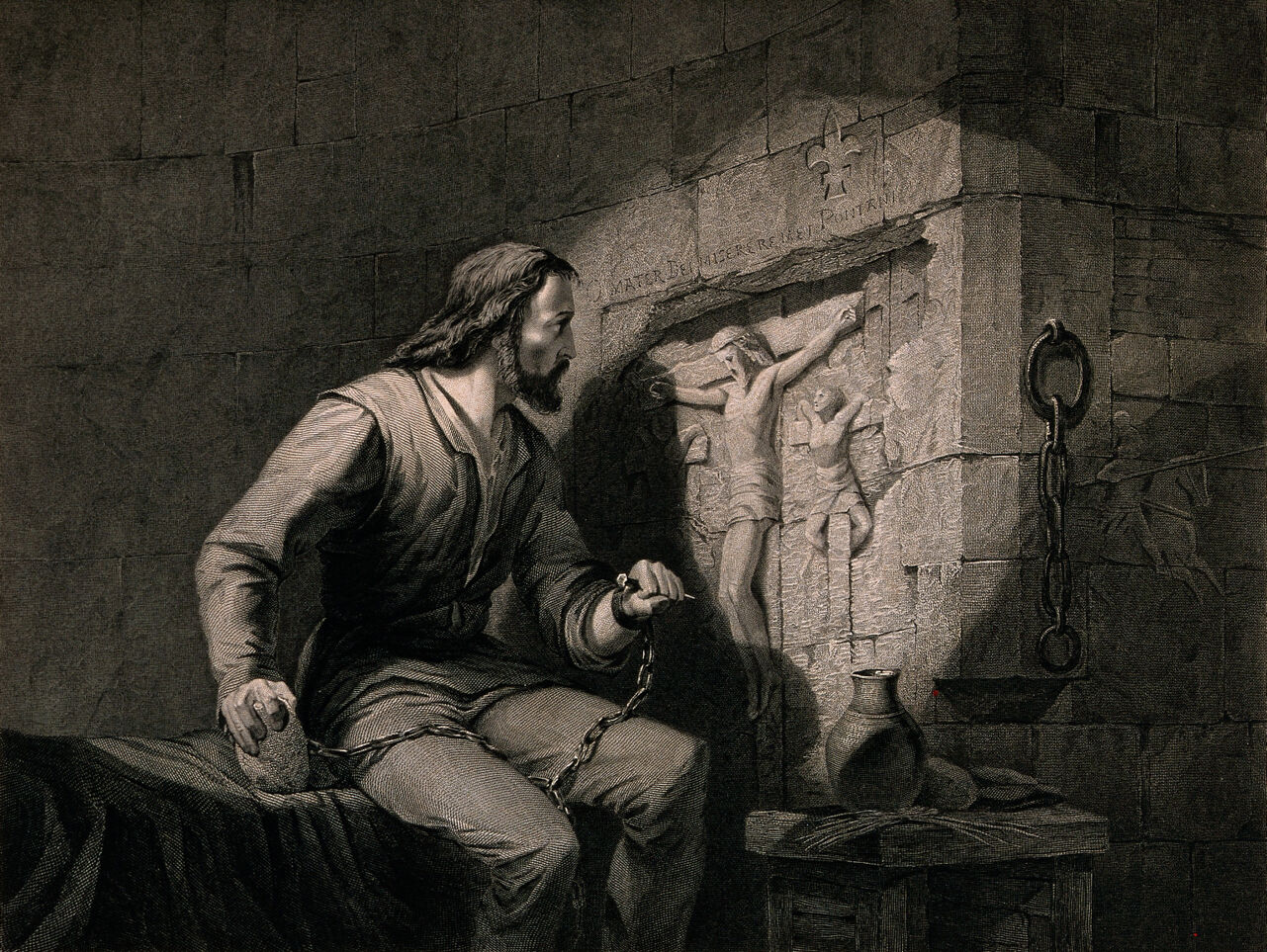
Edward Henry Wehnert · Wellcome Collection, London · Wellcome Collection · Public Domain Mark
- Born
- 1813 · London.
- Died
- 1868 · London.
- Nationality
- United Kingdom
- Occupation
- painter · illustrator
- Education
- University of Göttingen
- Languages
- English
VALÉORINE Encyclopedia
VALÉORINE documentary reading
Documentary summary
Edward Henry Wehnert (1813–1868) was an English-born painter of landscape, genre and historical subjects, now best remembered for his illustrations in books and magazines.
Admitted source layer · organised and presented by VALÉORINE
Reference Check
Propose documentary evidence for Edward Henry Wehnert. A contribution is never written directly as fact: identity, source, rights and evidence gates still decide.
Sign in to contribute
World of VALÉORINE
Documentary connections
Only confirmed graph relationships appear here. Images are shown only when their identity and reuse rights both pass the documentary gate.

Born In · outgoing
London
Place
Pencil sketch by George Henry Harlow, 1814, http://www.npg.org.uk/collections/search/largerimage.php?mkey=mw05495
Died In · outgoing
London
Place
Pencil sketch by George Henry Harlow, 1814, http://www.npg.org.uk/collections/search/largerimage.php?mkey=mw05495
Citizen Of · outgoing
United Kingdom
Place
Documentary evidence
Documentary basis
Authority files
wikidata · Q5321601 · wikipedia · E. H. Wehnert
In this article
Life and work
Life and work
• Illustration — A watercolour by Wehnert showing Pre-Raphaelite influence, 1860 The artist was born in London of German parents in 1813 and christened at St Anne's Church, Soho, on 14 February. He was educated at Göttingen University and received his art training chiefly in Paris, where and in Jersey he resided from 1832 to 1837. While in Jersey he taught John Everett Millais, shortly before the youngster left to pursue his art education in London, and also painted some topographical views. Wehnert then returned to England himself after joining the recently founded New Society of Painters in Watercolours, to the exhibitions of which he was subsequently a constant contributor. Among these was “The Gardener’s Daughter” (1860), which was obviously influenced by the Pre-Raphaelite themes favoured by his former pupil, Millais, with whom he had kept in contact. Among his other close friends were the sculptor Alfred Stevens and the wood-engraver William James Linton. His drawings were all of an historical character, among the best being "Luther reading his Sermon to some Friends", "The Death of Wickliffe" (1846), "George Fox preaching in a tavern" and "Caxton examining the first proof sheet from his press" (1850). Wehnert's large works, though excellently conceived and drawn, were unattractive in colour and did not readily find purchasers. He was more successful as a designer of book illustrations. Among the many for which he furnished the drawings were Grimm's Fairy Tales (1853); Keats's Eve of St. Agnes (1856); Coleridge's Ancient Mariner (1857); The Pilgrim's Progress (1858); Hans Christian Andersen's Fairy Tales (1861); Robinson Crusoe (1862); and Edgar Allan Poe's Poetical Works (1865). Neighbours of his in Fortess Terrace, Kentish Town were the physician and sanitary reformer Thomas Southwood Smith, his partner, the artist Margaret Gillies and her sister, the children's writer Mary Gillies for whom he illustrated two books, Great Fun for our little friends (1862) and More Fun for our little Friends (1863). Wehnert contributed to the Westminster Hall cartoon exhibition in 1845 an allegorical drawing of "Justice". He died at Fortess Terrace, on 15 September 1868 and was buried on the eastern side of Highgate Cemetery. His grave (plot no.16238) is now unmarked. There is a collection of his work at the Victoria & Albert Museum, for which he also designed a mosaic.
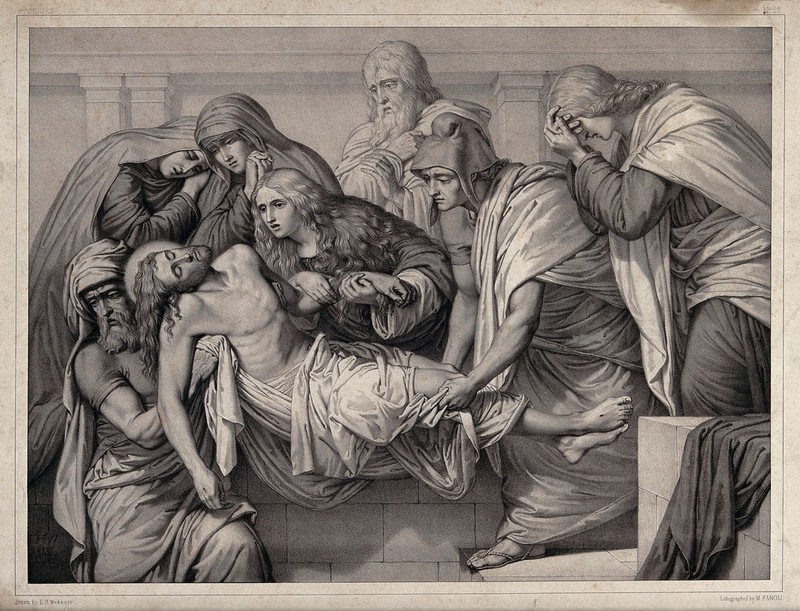
Christ is laid into a tomb. Lithograph by M. Fanoli after E.R. Wehnert, 1849., 1 June 1849, by Edward Henry Wehnert
Edward Henry Wehnert · Wellcome Collection, London · Wellcome Collection
Life and career
Dated record
Life and career
The full dated record · 2 entries
1813
Edward Henry Wehnert was born on 14 April 1813.
1868
Edward Henry Wehnert died on 1 January 1868.
Notes from the source article
Cited by Wikipedia
Notes from the source article
These works are cited by the source article, in its own numbering. They are recorded as its citations, not as sources VALÉORINE has verified.
- 1.Genealogical details of the family are online. E.H.Wehnert is #27 in the list.
- 2."The quarry at Mont Mado" can be viewed online
- 3.Further details are online
- 4.W.J.Linton, Memories, London 1895, chapter 23
- 5.or "Wickliffe denying the mendicant friars"
- 6.Pinterest
- 7.Fotolibra.
- 8.Hayes, David. From Southwood Smith to Octavia Hill: a remarkable family's Camden years. Camden History Review. 33. 9. 2009.
- 9.It was formerly in a niche in the 'Kensington Valhalla'
References
Citations
References
Each reference names the institution holding it, so a reader may go to the document itself.
authority record
General reference
The Encyclopedia exists whether or not anything is for sale. Corrections are recorded rather than overwritten, and every version of this record is kept. Published 17 August 2026.
Elsewhere in Illustration
5,224 published records in this field, each with its sources named.
- Edward Frederick BrewtnallIllustrator
- Edward GoreyIllustrator
- Edward Harrison ComptonIllustrator
- Edward Henry PotthastIllustrator
- Edward Joseph LoweIllustrator
- Edward KluzIllustrator
- Edward LearIllustrator
- Edward Manteuffel-SzoegeIllustrator
Best supported in this field
For owners
Own a work by Edward Henry Wehnert?
A specialist will read what you send and tell you what the house can establish, what it cannot, and whether the object is suited to sale. There is no charge and no obligation. The object stays with you throughout; nothing is shipped to us unless it is arranged in writing beforehand.