
Eduard Hanslick
Eduard Hanslick (11 September 1825 – 6 August 1904) was an Austrian music critic, aesthetician and historian. Among the leading critics of his time, he was the chief music critic of the Neue Freie Presse from 1864 until the end of his life. His best known work, the 1854 treatise Vom Musikalisch-Schönen (On the Musically Beautiful), was a landmark in the aesthetics of music and outlines much of his artistic and philosophical beliefs on music.
Eduard Hanslick
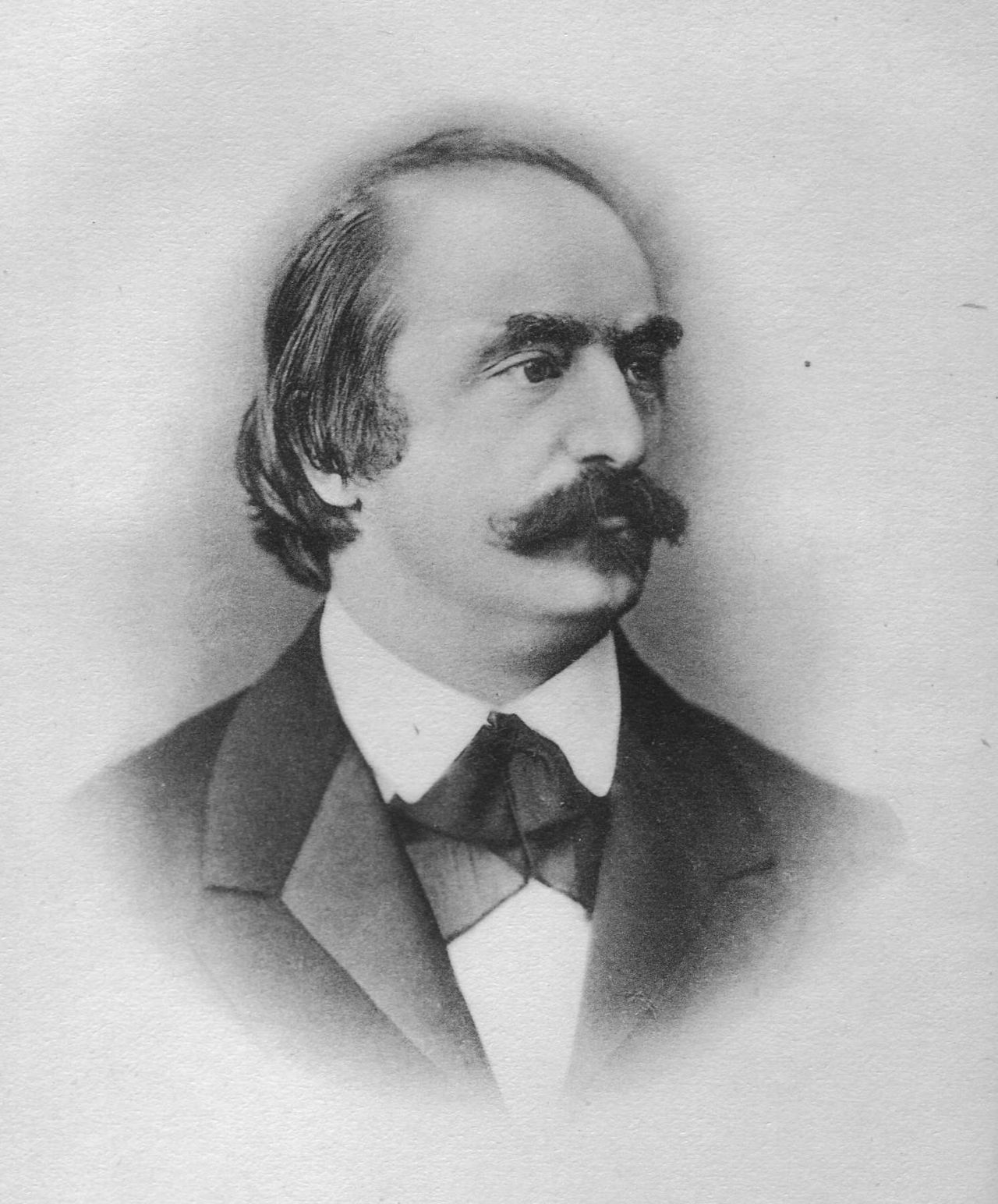
Eduard Hanslick: Aus meinem Leben, 1894 (memories). Scan by Hrmhll · Public domain
- Name
- Eduard Hanslick
- Born
- 11 September 1825
- Birthplace
- Prague, Bohemia, Austrian Empire
- Died
- 6 August 1904
- Place of death
- Baden, Austria-Hungary
- Occupation
- * Music critic
- Nationality
- Austria–Hungary
VALÉORINE Encyclopedia
VALÉORINE documentary reading
Documentary summary
Eduard Hanslick (11 September 1825 – 6 August 1904) was an Austrian music critic, aesthetician and historian. Among the leading critics of his time, he was the chief music critic of the Neue Freie Presse from 1864 until the end of his life. His best known work, the 1854 treatise Vom Musikalisch-Schönen (On the Musically Beautiful), was a landmark in the aesthetics of music and outlines much of his artistic and philosophical beliefs on music.
Admitted source layer · organised and presented by VALÉORINE
Note VALÉORINE
Eduard Hanslick (1825–1904) was an aesthetician, composer and critic, among other activities, of Austro-Hungarian nationality. The aesthetician was born in Prague.
Eduard Hanslick was educated at Charles University and University of Vienna. The aesthetician worked for University of Vienna. Languages used include German.
Composed from admitted, traceable facts · 26 September 2026
VALÉORINE
Reference Check
Propose documentary evidence for Eduard Hanslick. A contribution is never written directly as fact: identity, source, rights and evidence gates still decide.
Sign in to contribute
Documentary evidence
Evidence Panel
not yet certified
- Identity
- resolved
- Independent source families
- 0
- Admitted assertions
- 0
- Open conflicts
- 0
Authority files
wikidata · Q84246 · wikipedia · Eduard Hanslick
In this article
Biography
Biography
Hanslick was a conservative critic and championed absolute music over programmatic music for much of his career.
Key facts
Key facts
• Name — Eduard Hanslick • Born — 11 September 1825 • Birthplace — Prague, Bohemia, Austrian Empire • Died — 6 August 1904 • Place of death — Baden, Austria-Hungary • Occupation — * Music critic • aesthetician • historian
Life and career
Life and career
Eduard Hanslick was born in Prague, Bohemia (then in the Austrian Empire), the son of Joseph Adolph Hanslik, a bibliographer and music teacher from a German-speaking family, and one of Hanslik's piano pupils, the daughter of a Jewish merchant from Vienna. At the age of eighteen Hanslick went to study music with Václav Tomášek, one of Prague's renowned musicians. He also studied law at Prague University and obtained a degree in that field, but his amateur study of music eventually led to writing music reviews for small town newspapers, then the Wiener Musik-Zeitung and eventually the Neue Freie Presse, where he was music critic until retirement. Whilst still a student, in 1845, he met Richard Wagner in Marienbad (now Mariánské Lázně, Czech Republic); the composer, noting the young man's enthusiasm, invited him to Dresden to hear his opera Tannhäuser; here Hanslick also met Robert Schumann. • Illustration — Grave of Hanslick at Zentralfriedhof, Vienna In 1854 he published his influential book On the Beautiful in Music. By this time his interest in Wagner had begun to cool; he had written a disparaging review of the first Vienna production of Lohengrin. From this point on, Hanslick found his sympathies moving away from the so-called 'music of the Future' associated with Wagner and Franz Liszt, and more towards music he conceived as directly descending from the traditions of Mozart, Beethoven and Schumann — in particular the music of Johannes Brahms (who dedicated to him his set of waltzes opus 39 for piano duet). In 1869, in a revised edition of his essay Jewishness in Music, Wagner attacked Hanslick as 'of gracefully concealed Jewish origin', and asserted that his supposedly Jewish style of criticism was anti-German. It is sometimes claimed that Wagner caricatured Hanslick in his opera Die Meistersinger von Nürnberg as the carping critic Beckmesser (whose name was originally to be Veit Hanslich). Hanslick's unpaid lectureship at the University of Vienna led in 1870 to a full professorship in history and aesthetic of music and later to a doctorate honoris causa. Hanslick often served on juries for musical competitions and held a post at the Austrian Ministry of Culture and fulfilled other administrative roles. He retired after writing his memoirs, but still wrote articles on the most important premieres of the day, up to his death in 1904 in Baden.
Views on music
Views on music
• Illustration — Eduard Hanslick offering incense to Brahms; cartoon from the Viennese satirical magazine, Figaro, 1890 Hanslick's tastes were conservative; in his memoirs he said that for him musical history really began with Mozart and culminated in Beethoven, Schumann and Brahms. He is best remembered today for his critical advocacy of Brahms as against the school of Wagner, an episode in 19th century music history sometimes called the War of the Romantics. The critic Richard Pohl, of the Neue Zeitschrift für Musik, represented the progressive composers of the "Music of the Future". Being a close friend of Brahms from 1862, Hanslick possibly had some influence on Brahms's composing, often getting to hear new music before it was published. Hanslick saw Wagner's reliance on dramatics and word painting as inimical to the nature of music, which he thought to be expressive solely by virtue of its form, and not through any extra-musical associations. On the other hand, he referred to extra-musicality when he asked, "When you play Chopin's mazurkas, do you not feel the mournful and oppressive air of the Battle of Ostroleka?" (Hanslick 1848, p. 157). The theoretical framework of Hanslick's criticism is expounded in his book of 1854, Vom Musikalisch-Schönen (On the Beautiful in Music), which started as an attack on the Wagnerian aesthetic and established itself as an influential text, subsequently going through many editions and translations in several languages. Other targets for Hanslick's heavy criticism were Anton Bruckner and Hugo Wolf. Of Tchaikovsky's Violin Concerto, he accused both Tchaikovsky and the soloist, Adolph Brodsky, of putting the audience "through hell" with music "which stinks to the ear"; he was also lukewarm towards the same composer's Sixth Symphony. Hanslick is noted as one of the first widely influential music critics. While his aesthetics and his criticism are typically considered separately, they are importantly connected. Hanslick was an outspoken opponent of the music of Liszt and Wagner, which broke down traditional musical forms as a means of communicating something extra-musical. His opposition to "the music of the future" is congruent with his aesthetics of music: the meaning of music is the form of music. It is along these lines that Hanslick became one of Brahms's champions and often pitted him against Wagner.
Life and career
Dated record
Life and career
The full dated record · 2 entries
1825
Eduard Hanslick was born on 11 September 1825.
1904
Eduard Hanslick died on 1 January 1904.
Works (German editions)
• Eduard Hanslick, "Vom Musikalisch-Schönen". Leipzig 1854 (online version) • Eduard Hanslick, "Geschichte des Konzertwesens in Wien", 2 vol. Vienna 1869–70 • Eduard Hanslick, "Die moderne Oper", 9 vol. Berlin 1875–1900 • Eduard Hanslick, "Aus meinem Leben", 2 vol. Berlin 1894 • Eduard Hanslick, "Suite. Aufsätze über Musik und Musiker". Vienna 1884
Primary material
Documents and archives
Institutional database
- Wikidata, structured authority record Q84246: Eduard Hanslick
Scholarly · Wikimedia Foundation
reference work
- “Eduard Hanslick”, English Wikipedia, consulted as further reading
Reputable secondary · Wikipedia
Notes from the source article
Cited by Wikipedia
Notes from the source article
These works are cited by the source article, in its own numbering. They are recorded as its citations, not as sources VALÉORINE has verified.
- 1.Newman, Ernest. The Life of Richard Wagner, volume 3. Cambridge University Press, Cambridge 1976, , p.199
Bibliography printed in the source article · 10
- Frisch, Walter. Brahms and His World. Princeton University Press. 1990.
- Grey, Thomas S. Hanslick, Eduard. Grove Music Online. Oxford University Press. 2001. 978-1-56159-263-0.
- Grimes, Nicole. Eduard Hanslick. Oxford Bibliographies: Music. Oxford University Press. 2015. 10.1093/OBO/9780199757824-0014.
- Hanslick, Eduard. Music Criticism 1846-99. Penguin Books. 1963.
- Ambros Wilhelmer, "Der junge Hanslick. Sein 'Intermezzo' in Klagenfurt 1850-1852". Klagenfurt 1959
- Ludvová, Jitka. Dokonalý antiwagnerián Eduard Hanslick. Paměti/Fejetony/Kritiky (Praha 1992).
- Grey, Thomas. Wagner's Musical Prose: Texts and Contexts. Cambridge University Press. 1995.
- Eduard Hanslick, "Censur und Kunst-Kritik," Wiener Zeitung, 24 March 1848, republished in his Sämtliche Schriften, vol 1, part 1, p. 157, Ed. Dietmar Strauß
- Christian Jung: Wagner und Hanslick. Kurze Geschichte einer Feindschaft. In: Österreichische Musikzeitschrift 67 (2012), p.. 14–21.
- Nicole Grimes et al., ed., Rethinking Hanslick: Music, Formalism, and Expression, University of Rochester Press, 2013
References
Citations
References
Each reference names the institution holding it, so a reader may go to the document itself.
Institutional database
Wikidata, structured authority record Q84246: Eduard HanslickWikimedia Foundation
Verifiedreference work
Partially resolved
Further particulars
Held on the record
Further particulars
Open the remaining particulars
Eduard Hanslick studied at Charles University and University of Vienna. He trained under Václav Tomášek. Each of those relationships is stated by the authority record rather than inferred from style.
Eduard Hanslick is recorded with the occupation musicologist. Recorded as musicologist, writer, music critic and professor.
The Encyclopedia exists whether or not anything is for sale. Corrections are recorded rather than overwritten, and every version of this record is kept. Published 14 August 2026.
Elsewhere in Music memorabilia
42,307 published records in this field, each with its sources named.
- Eduard ErdmannPerson
- Eduard FlipsePerson
- Eduard FranckPerson
- Eduard GrellPerson
- Eduard HolstPerson
- Eduard KhanokPerson
- Eduard KolmanovskyPerson
- Eduard KünnekePerson
Best supported in this field
For owners
Own a work by Eduard Hanslick?
A specialist will read what you send and tell you what the house can establish, what it cannot, and whether the object is suited to sale. There is no charge and no obligation. The object stays with you throughout; nothing is shipped to us unless it is arranged in writing beforehand.