
Yosa Buson
Yosa • Illustration — Yosa Buson, drawing by Matsumura Goshun • Illustration — Xiao He chases Han Xin by Yosa Buson (Nomura Art Museum) • Illustration — Yosa Buson, Crows and Falcon Yosa (no) Buson was a Japanese poet and painter of the Edo period. He lived from 1716 – January 17, 1784. Along with Matsuo Bashō and Kobayashi Issa, Buson is considered among the greatest poets of the Edo Period.
Also recorded as Yosa no Buson
Yosa Buson
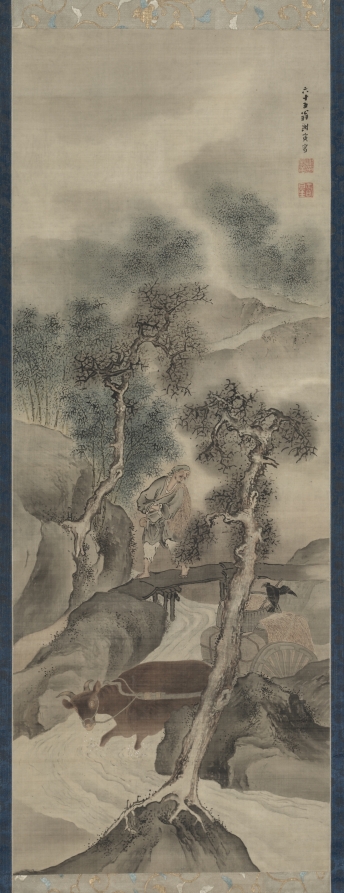
Yosa Buson · The Cleveland Museum of Art · John L. Severance Fund · CC0
- Born
- 1716
- Died
- 1784
- Nationality
- Japan
- Occupation
- haiku poet · writer · painter · calligrapher
- Fields
- haiku
- Known for
- Snowclad Houses in the Night · Ten Pleasures
VALÉORINE Encyclopedia
VALÉORINE documentary reading
Documentary summary
Yosa • Illustration — Yosa Buson, drawing by Matsumura Goshun • Illustration — Xiao He chases Han Xin by Yosa Buson (Nomura Art Museum) • Illustration — Yosa Buson, Crows and Falcon Yosa (no) Buson was a Japanese poet and painter of the Edo period. He lived from 1716 – January 17, 1784. Along with Matsuo Bashō and Kobayashi Issa, Buson is considered among the greatest poets of the Edo Period.
Admitted source layer · organised and presented by VALÉORINE
Note VALÉORINE
Yosa Buson (1716–1784) was a Japanese calligrapher, haiku poet and painter, among other activities. Born in Kema, the calligrapher died in Heian-kyō.
Works include Snowclad Houses in the Night and Ten Pleasures. Genres include haiku. Languages used include Japanese.
Composed from admitted, traceable facts · 26 September 2026
VALÉORINE
Reference Check
Propose documentary evidence for Yosa Buson. A contribution is never written directly as fact: identity, source, rights and evidence gates still decide.
Sign in to contribute
Documentary evidence
Documentary basis
Authority files
getty · 500121069 · wikidata · Q31523 · wikipedia · Yosa Buson
In this article
Early life, training, and travels
Early life, training, and travels
He is also known for completing haiga as a style of art, working with haibun prose, and experimenting with a mixed Chinese-Japanese style of poetry.
Buson was born in the village of Kema in Settsu Province (present-day Kema, Miyakojima Ward, Osaka). His original family name was Taniguchi. Buson scarcely discussed his childhood, but it is commonly thought that he was the illegitimate son of the village head and a migrant worker from Yoza. According to the Taniguchi family in Yosano, Kyoto, Buson was the son of a servant woman named Gen, who had come to work in Osaka and had a child with her master. A grave of Gen survives in Yosano. There is an oral tradition that the young Buson had been cared for at the Seyaku-ji temple in Yosano, and later, when Buson returned to Tango Province, he gave the temple a folding screen painting as a gift. Around the age of 20, Buson moved to Edo (present-day Tokyo). He learned poetry under the tutelage of the haikai master Hayano Hajin, who named the house he taught in Yahantei (Midnight Pavilion). After Hajin died, Buson moved to Shimōsa Province (present-day Ibaraki Prefecture). Following in the footsteps of his idol, Matsuo Bashō, Buson travelled through the wilds of northern Honshū that had been the inspiration for Bashō's famous travel diary, Oku no Hosomichi (The Narrow Road to the Interior). He published his notes from the trip in 1744, marking the first time he published under the name Buson. After travelling through various parts of Japan, including Tango (the northern part of present-day Kyoto Prefecture) and Sanuki Province (present-day Kagawa Prefecture), Buson settled down in the city of Kyoto at the age of 42. Around this time, he began to write under the name of Yosa, which he took from his mother's birthplace (Yosa, Tango Province). Between 1754 and 1757, Buson worked on the collection of haiga-style picture scrolls, Buson yōkai emaki. Buson married at the age of 45 and had one daughter, Kuno. At the age of 51, he left his wife and children in Kyoto and went to Sanuki Province to work on many works.
Later work and death
Later work and death
After returning to Kyoto again, he wrote and taught poetry at the Sumiya. As models for his pupils, he singled out four of Bashō's disciples: Kikaku, Kyorai, Ransetsu, and Sodō. In 1770, he assumed the haigō (俳号, haiku pen name) of Yahantei II (夜半亭二世, "Midnight Studio"), which had been the pen name of his teacher Hajin. Buson died at the age of 68 and was buried at Konpuku-ji temple in Kyoto. The cause of death was previously diagnosed as severe diarrhea, but recent investigations indicate that it was myocardial infarction. His work is kept in many museums worldwide, including the Seattle Art Museum, the Metropolitan Museum of Art, the University of Michigan Museum of Art, the Harvard Art Museums, the Worcester Art Museum, the Kimbell Art Museum, and the British Museum.
Sample poems
Sample poems
• 隅々に残る寒さや梅の花 • Sumizumi ni nokoru samusa ya ume no hana • In nooks and corners • Cold remains: • Flowers of the plum • (translated by RH Blyth)
Peony Petals
Peony Petals
Peony petals fall, two or three on each other Other Hokku the morning glory— in each flower, the color of a deep pool spring drizzle barely enough to moisten seashells on the beach
Life and career
Dated record
Life and career
The full dated record · 2 entries
1716
Yosa Buson was born in 1716.
1784
Yosa Buson died at Heian-kyō.
English editions
• The King of Hell's Mouth. Calambac Publishing House, Germany 2017, ISBN 978-3-943117-94-3.
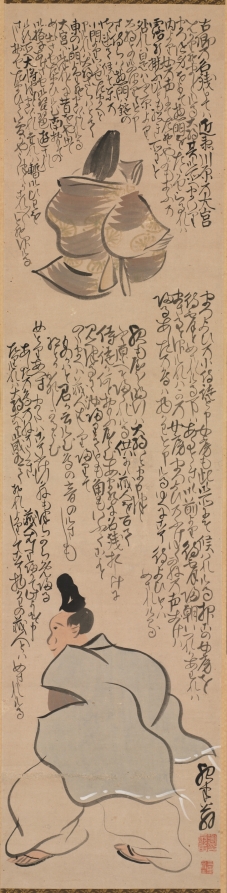
Moon Viewing, from The Tale of Heike, 1700s, by Yosa Buson
Yosa Buson · The Cleveland Museum of Art · Sundry Purchase Fund
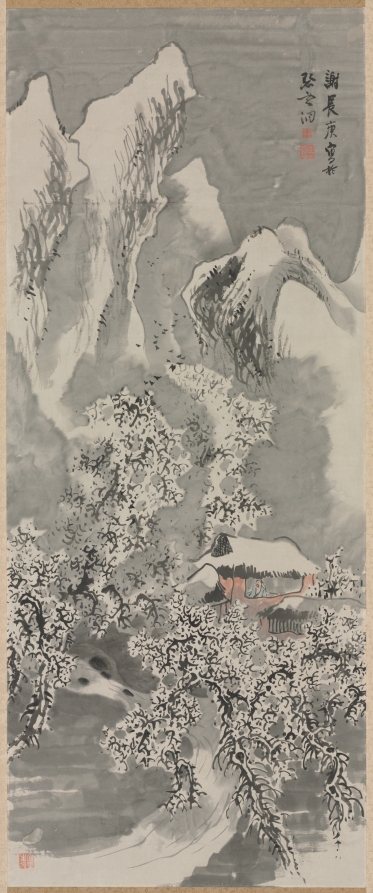
Snow Landscape, mid-1770s, by Yosa Buson
Yosa Buson · The Cleveland Museum of Art · Bequest of Mrs. A. Dean Perry
Reception
Buson believed that poems should be natural, without strict rules or guidelines. His training in Yahantei had promoted a light-hearted approach that stressed individual style, rather than replicating the work of a master. Because of Buson's lack of interest in the modern trends of his time in terms of poetry, his works were considered by some to be outdated. Buson's paintings, on the other hand, were more widely accepted in his time. Painting was the main source of his income, so he could not afford to approach it as he did poetry.
Primary material
Documents and archives
Institutional database
- Wikidata, structured authority record Q31523: Yosa Buson
Scholarly · Wikimedia Foundation
authority file
- Getty Union List of Artist Names 500121069, Yosa Buson.
General reference · The Getty Research Institute
reference work
- “Yosa Buson”, English Wikipedia, consulted as further reading
Reputable secondary · Wikipedia
Notes from the source article
Cited by Wikipedia
Notes from the source article
These works are cited by the source article, in its own numbering. They are recorded as its citations, not as sources VALÉORINE has verified.
- 1.Sanseidō. 10 March 2025.
- 2.Buson (Japanese artist and poet). Britannica Online Encyclopedia.
- 3.都島区役所総務課. 蕪村と都島. 都島の歴史に関する調査研究委員会. 2. 1996.
- 4.Kenji Watanabe. An Edo anthology : literature from Japan's mega-city, 1750-1850. University of Hawai i Press. 2013. 978-0-8248-3776-1.
- 5.Kenji Watanabe. An Edo anthology : literature from Japan's mega-city, 1750-1850. University of Hawai i Press. 2013. 978-0-8248-3776-1.
- 6.与謝野蕪村/遅咲きの文人 丹後の寄り道. The Nikkei, morning edition. 9–11. October 6, 2019.
- 7.Henry Trubner, Tsugio Mikami, Idemitsu Bijutsukan. Treasures of Asian art from the Idemitsu Collection. Seattle Art Museum, 1981. p174
- 8.Hyōgo Kenritsu Rekishi Hakubutsukan. Zusetsu Yōkaiga no keifu. Kawade Shobō Shinsha. 2009. 978-4-309-76125-1.
- 9.Shin 'chi, Fujita. 別冊太陽 与謝蕪村 画俳ふたつの道の達人. 平凡社. 170. 2012. 978-4-582-92202-8.
- 10.S Addiss, The Art of Haiku (2012) p. 192
- 11.Sugiura, Morikuni. 江戸期文化人の死因. 思文閣出版. 2008. 978-4-7842-1422-8.
- 12.Works – Yosa Buson – Artists – eMuseum. art.seattleartmuseum.org.
- 13.Travels through Mountains and Fields. www.metmuseum.org.
- 14.Exchange: Crows Flying Through Rain. exchange.umma.umich.edu.
- 15.Harvard. From the Harvard Art Museums' collections Crossing a Mountain Stream by a Bridge. harvardartmuseums.org.
- 16.Travelers on Horseback on a Mountain in Spring Worcester Art Museum. www.worcesterart.org.
- 17.Landscape with a Solitary Traveler Kimbell Art Museum. www.kimbellart.org.
- 18.hanging scroll; painting British Museum. The British Museum.
- 19.Blyth, R.H., (translator). Haiku: Spring. Volume 2 of Haiku, Hokuseido Press, 1981, p572
- 20.Stanford University Press. The path of flowering thorn : the life and poetry of Yosa Buson. 1998. 0-8047-3042-3.
References
Citations
References
Each reference names the institution holding it, so a reader may go to the document itself.
Institutional database
Wikidata, structured authority record Q31523: Yosa BusonWikimedia Foundation
Institutional witnessauthority file
Getty Union List of Artist Names 500121069, Yosa Buson.The Getty Research Institute
Secondary witnessreference work
Secondary witness
The Encyclopedia exists whether or not anything is for sale. Corrections are recorded rather than overwritten, and every version of this record is kept. Published 14 August 2026.
Elsewhere in Paintings
19,183 published records in this field, each with its sources named.
- YongrongArtist
- Yoo YoungkukArtist
- York WilsonArtist
- Yoryi MorelArtist
- Yoshimatsu GosedaArtist
- Yoshio MarkinoArtist
- YoshitoshiArtist
- Youla ChapovalArtist
Best supported in this field
For owners
Own a work by Yosa Buson?
A specialist will read what you send and tell you what the house can establish, what it cannot, and whether the object is suited to sale. There is no charge and no obligation. The object stays with you throughout; nothing is shipped to us unless it is arranged in writing beforehand.