
William Turner
William Turner (29 November 1789 – 7 August 1862) was a British painter who specialised in watercolour landscapes. He is often known as William Turner of Oxford or just Turner of Oxford to distinguish him from his contemporary, J. Turner (known as William). Many of Turner's paintings depicted the countryside around the city of Oxford.
Also recorded as William Turner of Oxford · Turner of Oxford · William Turner (1789-1862)
William Turner

William Turner · Art UK · Public domain
- Name
- William Turner
- Born
- 29 November 1789
- Birthplace
- Black Bourton, Oxfordshire, England
- Died
- 7 August 1862
- Place of death
- St John Street, Oxford, England
- Known for
- Watercolours
- Nationality
- United Kingdom of Great Britain and Ireland · Kingdom of Great Britain
- Occupation
- painter
- Languages
- English
Reference Check
Propose documentary evidence for William Turner. A contribution is never written directly as fact: identity, source, rights and evidence gates still decide.
Sign in to contribute
World of VALÉORINE
Documentary connections
Only confirmed graph relationships appear here. Images are shown only when their identity and reuse rights both pass the documentary gate.
Documentary evidence
Documentary basis
Authority files
wikidata · Q8019587
VALÉORINE Encyclopedia
The documentary record
Statements marked “Documentary record” are set in the article beside the passage they confirm. Each is read from the authority records of the institutions named here; select “Prove” to see the record it was read from, where in that record, and when.
Institutions cited
Deutsche Nationalbibliothek
Not stated by the sources cited: nationality
Complete reading chain (JSON)In this article
Biography
Biography
One of his best-known pictures is a view of Oxford from Hinksey Hill. In 1898, the Ashmolean Museum in Oxford held a retrospective exhibition of his work. Some of his paintings are still on permanent display at the museum. In 1984, the Oxfordshire County Council presented his work in an exhibition at the Oxfordshire County Museum in Woodstock. His paintings are also held in national and international collections, for example at the Tate Gallery (London, UK), the Metropolitan Museum of Art (New York City, US), and the Dunedin Public Art Gallery (New Zealand).
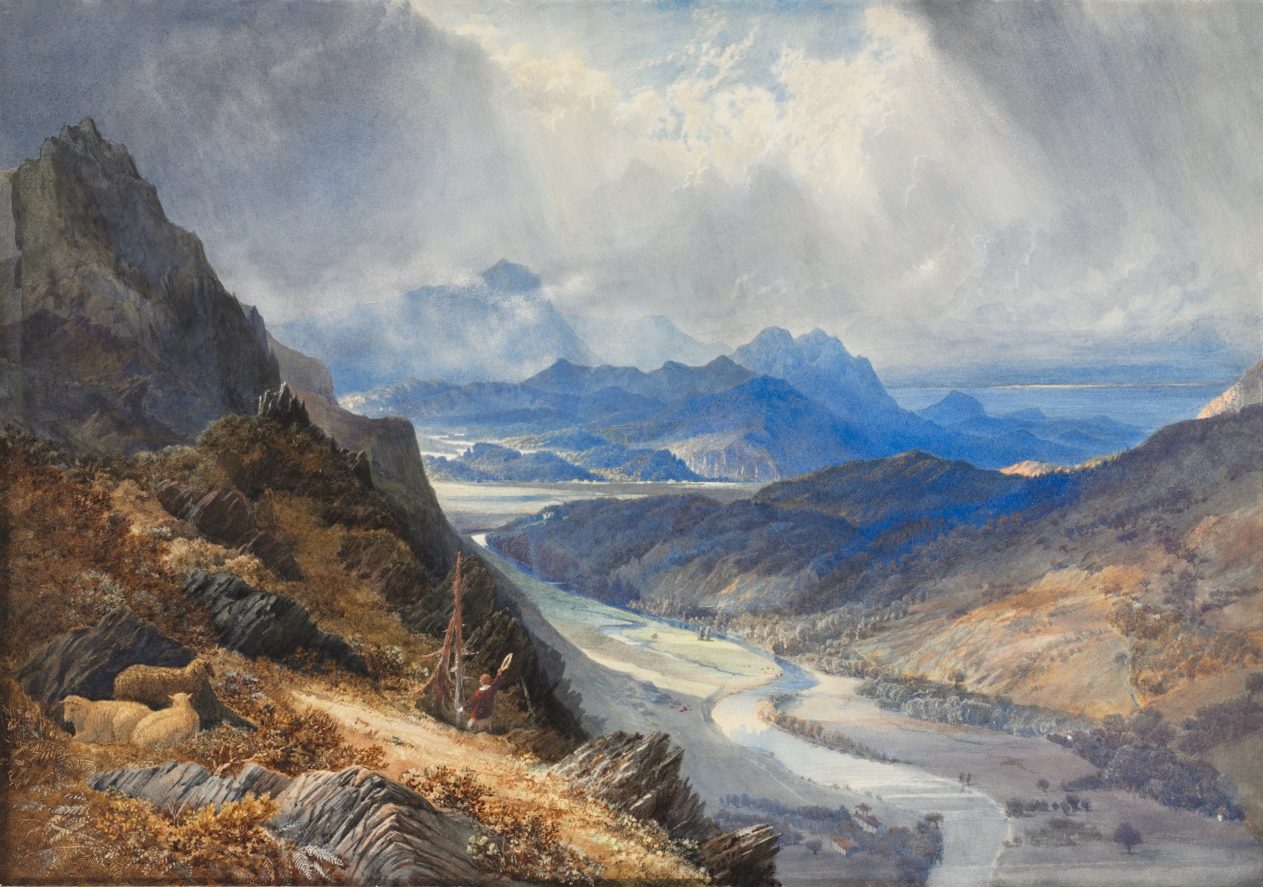
A View from Moel
William Turner · The Cleveland Museum of Art · Purchase from the J. H. Wade Fund
Key facts
Key facts
• Name — William Turner • Born — 29 November 1789 • Birthplace — Black Bourton, Oxfordshire, England • Died — 7 August 1862 • Place of death — St John Street, Oxford, England • Known for — Watercolours • Notable Works — Oxford from Hinksey Hill (c.1840) • Honorific Suffix — RWS
Documentary record
William Turner appears in the authority records of the Deutsche Nationalbibliothek as an artist and painter (1789 – 1862). William Turner was born in 1789 and died in 1862.
Life
Life
Turner was born at Black Bourton, Oxfordshire. He was the eldest of three children and had two younger sisters. His father died in 1791, and he was raised during this early part of his life by his mother. In 1803, he went to live with his uncle, also called William Turner. Initially they lived in Burford but in 1804 moved to the manor house at Shipton-on-Cherwell in Oxfordshire. • Illustration — Oxford from Hinksey Hill, painted c. 1840 by William Turner of Oxford (private collection) Because of his interest in drawing, Turner joined John Varley in London. In 1807, he had his first exhibition at the Royal Academy. He was elected as a full member of the Royal Watercolour Society in 1808, and for the rest of his life participated in their yearly exhibitions. In 1810, Turner returned to Oxfordshire. He lived in Woodstock until 1811. After that, he lived in and around Oxford. In 1824, Turner married Elizabeth Ilott at Shipton-on-Cherwell and lived at London Road, St Clement's. From 1833 onwards, he lived at 16 St John Street in central Oxford. In 1831, the parish church at Shipton-on-Cherwell was demolished, and a Georgian Gothic Revival church designed in a Decorated Gothic style by William Turner was built in its place. • Illustration — Blue plaque for William Turner in St John Street, Oxford Turner died at his home in St John Street, Oxford, in 1862. A blue plaque marks the house where he lived. William and his wife are buried in Holy Cross parish churchyard at Shipton-on-Cherwell. In 1896, a memorial chancel screen was installed in the church, with a brass plaque reading "Erected in memory of William Turner of Oxford, Water Colour Painter and architect of this church."
Places
Named by the record
Places
Only places the record itself states, plotted where the house gazetteer settles their coordinates. Nothing is inferred from a name or a nationality.
William Turner was born at Black Bourton.
Birthplace
William Turner died at St John Street.
Deathplace
Black Bourton.
Birth place
St John Street.
Death place
Text attribution
Licensing
Text attribution
Part of the biographical narrative on this page reuses licensed material. Its origin, revision and licence are recorded here.
The biographical narrative on this page is based on the Wikipedia article William Turner (painter), revision 1337881998 (EN edition), by its contributors. VALÉORINE has edited that text and built its own documentary record around it. The reused material is available under CC BY-SA 4.0, and this page's reuse of it is offered under the same licence. Everything else on this page — the chronology, the holdings, the evidence, the plates and the connections — is VALÉORINE's own record. Sources and licences.
Notes from the source article
Cited by Wikipedia
Notes from the source article
These works are cited by the source article, in its own numbering. They are recorded as its citations, not as sources VALÉORINE has verified.
- 1.Harrison, Colin. Turner's Oxford. Ashmolean Museum. 2000. 978-1854441386.
- 2.Herrmann, Luke. William Turner of Oxford (1789-1862). Oxoniensia. Oxfordshire Architectural and Historical Society. XXVI–XXVII. 312–318. 1963. 0308-5562.
- 3.Sherwood, Jennifer. The Buildings of England: Oxfordshire. Penguin Books. 1974. 0-14-071045-0.
- 4.Oxfordshire Blue Plaques Board. William TURNER ‘of Oxford’ (1789–1862) – Artist – 16 St John Street, Oxford.
Bibliography printed in the source article · 1
- Lisle, Nickola. A Pastoral Painter. Oxfordshire Limited Edition. The Oxford Times. February 2007. 2007.
References
Citations
References
Each reference names the institution holding it, so a reader may go to the document itself.
authority record
General reference
The Encyclopedia exists whether or not anything is for sale. Corrections are recorded rather than overwritten, and every version of this record is kept. Published 18 August 2026.
Elsewhere in Paintings
19,279 published records in this field, each with its sources named.
- William StottArtist
- William Thomas SmedleyArtist
- William ThorntonArtist
- William Trost RichardsArtist
- William Turner DannatArtist
- William UtermohlenArtist
- William Valentine SchevillArtist
- William VerelstArtist
Best supported in this field
For owners
Own a work by William Turner?
A specialist will read what you send and tell you what the house can establish, what it cannot, and whether the object is suited to sale. There is no charge and no obligation. The object stays with you throughout; nothing is shipped to us unless it is arranged in writing beforehand.