
William Hilton
Illustration — Self-portrait,19th century, The Collection, Usher Gallery • Illustration — The poet John Clare (1793–1864) by Hilton, 1820 William Hilton (3 June 178630 December 1839) was a British portrait and history painter. He is also known as "William Hilton the Younger".
Also recorded as William Hilton II · William, Jr. Hilton · William II Hilton · William, II Hilton
William Hilton
William Hilton · Wellcome Collection, London · Wellcome Collection · Public Domain Mark
- Died
- 1839 · London.
- Nationality
- United Kingdom of Great Britain and Ireland · Kingdom of Great Britain
- Occupation
- painter
- Fields
- painting
- Education
- Royal Academy of Arts
- Teachers
- John Raphael Smith
- Languages
- English
Reference Check
Propose documentary evidence for William Hilton. A contribution is never written directly as fact: identity, source, rights and evidence gates still decide.
Sign in to contribute
World of VALÉORINE
Documentary connections
Only confirmed graph relationships appear here. Images are shown only when their identity and reuse rights both pass the documentary gate.
Citizen Of · outgoing
Kingdom of Great Britain
Place

Died In · outgoing
London
Place
Pencil sketch by George Henry Harlow, 1814, http://www.npg.org.uk/collections/search/largerimage.php?mkey=mw05495

Educated At · outgoing
Royal Academy of Arts
Organisation
This file was donated to Wikimedia Commons as part of a project by the Metropolitan Museum of Art . See the Image and Data Resources Open Access Policy
Documentary evidence
Documentary basis
Authority files
gnd · 1025880943 · wikidata · Q2579290
VALÉORINE Encyclopedia
The documentary record
Statements marked “Documentary record” are set in the article beside the passage they confirm. Each is read from the authority records of the institutions named here; select “Prove” to see the record it was read from, where in that record, and when.
Institutions cited
Getty Union List of Artist Names
Complete reading chain (JSON)In this article
Life and work
Life and work
William Hilton studied at Royal Academy of Arts. Training under John Raphael Smith is recorded. The recorded working language is English. The field of work recorded is painting. Subjects and genres recorded for the work are history and portrait. Places of work recorded in the authority are London. Work by William Hilton is recorded in the collections of Auckland Art Gallery, Tate, Yale Center for British Art, National Portrait Gallery and National Gallery.
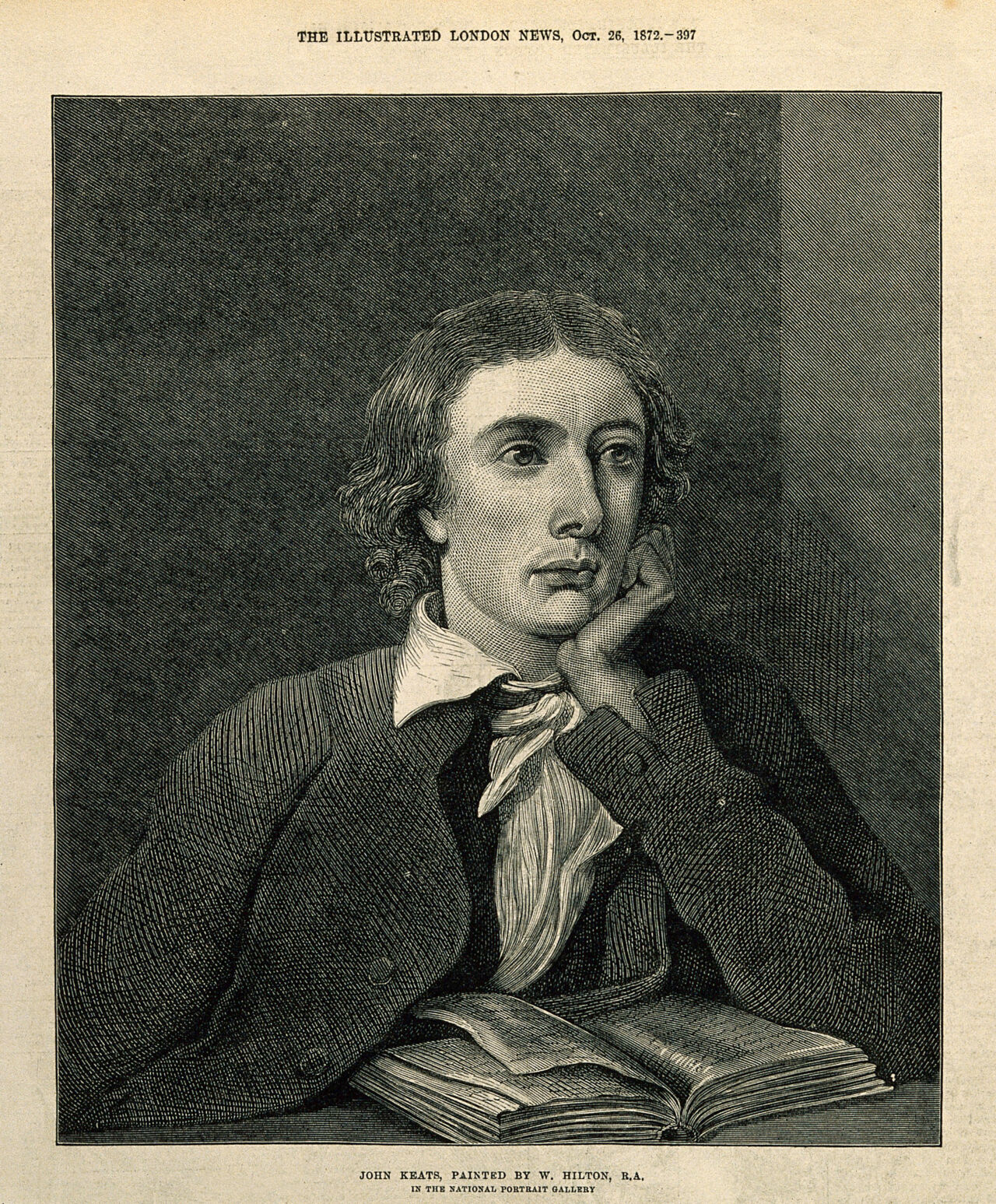
William Hilton was born in the gatehouse of the Vicar's Court in The Close, Lincoln, England, a son of Mary and William Hilton (1752–1822). His father, a native of Newark, was a portrait painter and scenery painter for Mr and Mrs James Edward Miller and later Thomas Shaftoe Robertson's theatre companies. William was baptised at the church of St Mary le Wigford, Lincoln. William initially worked with his father. The company toured the Lincoln Theatre Circuit, and young William was encouraged by theatre proprietor Fanny Robertson to pursue a career as an artist. After he rose to become a Royal Academician he painted her. She retired to live near the Georgian Theatre (now Angles Theatre in Wisbech), and his painting of Fanny in the role of "Beatrice" was in 1866 in the nearby Wisbech Working Men's Institute. Although he is best known today for simple portraits of the poets John Keats and John Clare, he was successful in his lifetime with huge history paintings in the "Grand Manner", which have not benefited from the revival of interest in 19th-century British Academic art, and are unlikely to be on display in the museums that own them. In 1800, Hilton was apprenticed to the engraver John Raphael Smith, and around the same time enrolled at the Royal Academy Schools. Another apprentice from 1802 was Peter De Wint; they were inseparable friends and lived together in Broad Street, Golden Square. De Wint married William's only sister Harriett. De Wint visited Hilton's home in Up-Hill, Lincoln and painted many of his charming landscapes in the district. In Lincoln cathedral is a cenotaph erected by Mrs De Wint in memory of the two artists – De Wint her husband, and Hilton, her brother. Hilton first exhibited at the Royal Academy in 1803, sending a Group of Banditti, and soon established a reputation for choice of subject and qualities of design and colour superior to the great mass of his contemporaries. He made a tour in Italy with Thomas Phillips, the portraitist. In 1813, having exhibited "Miranda and Ferdinand with the Logs of Wood", he was elected as an associate of the Academy, and in 1820 as a full academician; his diploma-picture representing Ganymede. In 1823, he produced "Christ crowned with Thorns", a large and important work regarded as his masterpiece, subsequently bought as the first purchase of the Chantrey Fund in 1878. In 1827 he succeeded Henry Thomson as Keeper of the Royal Academy. Two of his works were bought by the British Institution for churches for £525 and £1050, but the failure of "Edith finding the Body of Harold" (1834) to make more than £200 marked the end of the taste for such works. Hilton may be compared with Benjamin Haydon, though he was always more successful. In 1828 he was awarded the Freedom of Lincoln. He died in London on 30 December 1839. He was buried in the family grave in the Savoy Chapel (destroyed by fire on 7 July 1864). The chapel was restored in 1866 and Mrs De Wint placed a beautiful font in the edifice. Close by a tablet bears the words: 'This font was presented to the Chapel Royal of the Savoy by Harriet De Wint, in place of a Monument previously erected to the memory of her brother William Hilton R.A. her husband Peter de Wint, and other members of her family, whose remains are interred in the adjoining cemetery. The Monument was destroyed by the fire, July VII., MDCCCLXIV. May this tribute be long preserved to the glory of God'. • Illustration — The cenotaph of Hilton at Lincoln Cathedral In Lincoln Cathedral, a Cenotaph to the joint memory of her husband and brother was erected by Mrs De Wint. The following year an engraving by Charles Wass, of a portrait in chalk of Keats by Hilton was used in The Poetical works of John Keats published by Taylor and Walton, London (1840). In 1921 the artist's great-niece Harriet Helen Tatlock (1848–1921) bequeathed a canvas by his father William Hilton snr, and five of the son's pictures, including a self portrait (exhibited in the National Portrait Exhibition of 1868) to the Lincoln City and County Museum. Some of his best-regarded pictures include "Angel releasing Peter from Prison" (life-size), painted in 1831, "Una with the Lion entering Corceca's Cave" (1832), the "Murder of the Innocents", his last exhibited work (1838), "Comus" and "Amphitrite". The Tate Gallery now owns "Edith finding the Body of Harold" (1834), "Cupid Disarmed, Rebecca and Abraham's Servant" (1829), "Nature blowing Bubbles for her Children" (1821), and "Sir Calepine rescuing Serena" (from The Faerie Queene) (1831). In the National Portrait Gallery is his likeness of John Keats, with whom he was acquainted.
Documentary record
William Hilton (1786 – 1839) was a history artist, portraitist and painter. The birth of William Hilton is recorded in 1786 in Lincoln, and the death in 1839 in London.
Notable works
Notable works
• Illustration — Venus in Search of Cupid Surprises Diana, 1820 • Illustration — Marc Antony Reading the Will of Caesar, 1834 • Murder of the Innocents, his last exhibited work, 1838. • Edith finding the Body of Harold, 1834. • Venus in Search of Cupid Surprises Diana (Before 1820), Wallace Collection, London. • Hebe • Rape of Ganumede, 1806, Royal Academy of Art Collection, London • Cupid and the Nymphs, 1830, Royal Academy of Art Collection, London • Rape of Proserpine • Una and Satyrs, Lincolnshire County Council art collection. • Phaeton, c 1820, Manchester Art Gallery. • John Clare, portrait, 1820, National Portrait Gallery, London • John Keats, portrait, c1822, National Portrait Gallery, London • Diana at the Bath c. 1820, Tate Gallery, London • Nature Blowing Bubbles for her Children exhibited 1821, Tate Gallery, London • Cupid and Nymph exhibited 1828, Tate Gallery, London • Sir Calepine Rescuing Serena exhibited 1831, Tate Gallery, London • Rebecca and Abraham's Servant at the Well exhibited 1833, Tate Gallery, London • Editha and the Monks Searching for the Body of Harold 1834, Tate Gallery, London
Identity and overview
Identity and overview
The following is established of the heading itself.
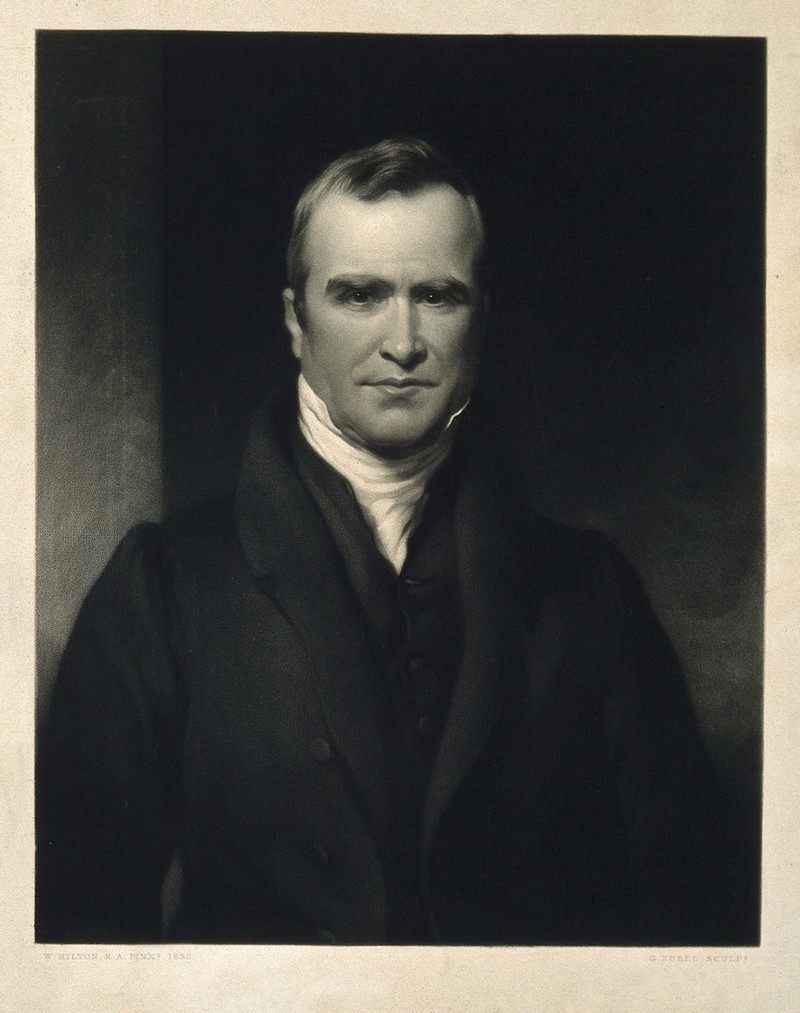
George Darling. Photogravure by G. Zobel, 1855, after W. Hilton, 1832., by William Hilton
William Hilton · Wellcome Collection, London · Wellcome Collection
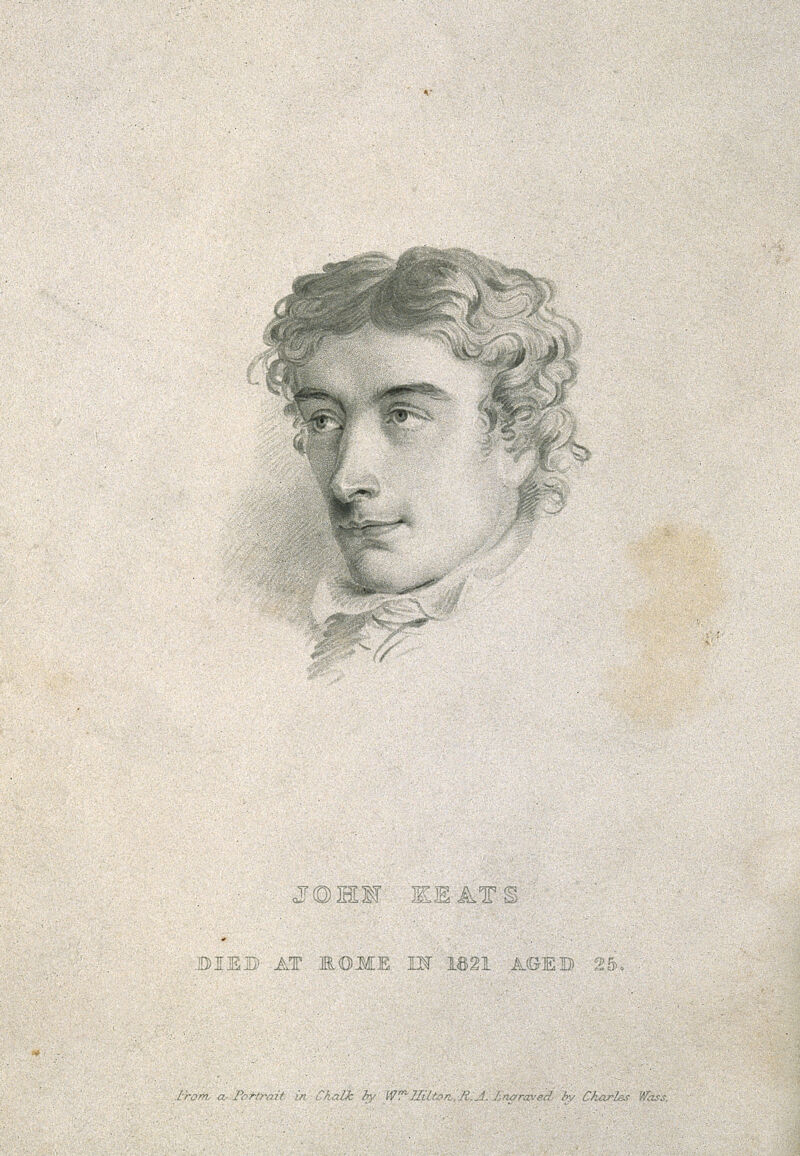
John Keats. Stipple engraving by C.W. Wass, 1841, after W. Hilton., by William Hilton
William Hilton · Wellcome Collection, London · Wellcome Collection
Places
Named by the record
Places
Only places the record itself states, plotted where the house gazetteer settles their coordinates. Nothing is inferred from a name or a nationality.
Lincoln.
Birth place
London.
Death place
Text attribution
Licensing
Text attribution
Part of the biographical narrative on this page reuses licensed material. Its origin, revision and licence are recorded here.
The biographical narrative on this page is based on the Wikipedia article William Hilton (painter), revision 1364712015 (EN edition), by its contributors. VALÉORINE has edited that text and built its own documentary record around it. The reused material is available under CC BY-SA 4.0, and this page's reuse of it is offered under the same licence. Everything else on this page — the chronology, the holdings, the evidence, the plates and the connections — is VALÉORINE's own record. Sources and licences.
Notes from the source article
Cited by Wikipedia
Notes from the source article
These works are cited by the source article, in its own numbering. They are recorded as its citations, not as sources VALÉORINE has verified.
- 1.Stamford Mercury. 3. 9 May 1794.
- 2.Neil R Wright. Treading the Boards. SLHA. 2016.
- 3.in Mrs Catherine Bentham. Leeds Mercury. 7. 21 February 1887.
- 4.Hilton, William. 13. 470.
- 5.The Late William Hilton. Dublin Monitor. 3. 9 January 1840.
- 6.R. N. Wornum, Descriptive and historical catalogue of the pictures in the National gallery (1869), p. 120
- 7.Gerald Reitlinger. The Economics of Taste, Vol I: The Rise and Fall of Picture Prices 1760–1960, Barrie and Rockliffe, London, 1961, p. 84
- 8.Lincoln 31st January. Stamford Mercury. 3. 1 February 1828.
- 9.Family grave of William Hilton, Esq, R.A. Tower Hamlets Independent and East End Local. 12 January 1901.
- 10.William Hilton R.A. Lincolnshire Echo. 3. 29 December 1921.
- 11.William Hilton R.A. Lincolnshire Echo. 3. 29 December 1921.
- 12.Hilton in the Tate database
- 13.Hilton's obituary in The Spectator
References
Citations
References
Each reference names the institution holding it, so a reader may go to the document itself.
Institutional database
Wikidata, structured authority record Q2579290: William HiltonWikimedia Foundation
Institutional witness
People, houses and institutions
Knowledge graph
People, houses and institutions
Teachers, collaborators, publishers and institutions recorded against this person, each on a stated basis.
Studied at
1- Royal Academy of ArtsOrganisation
Established from a fact already recorded on a verified source.
The Encyclopedia exists whether or not anything is for sale. Corrections are recorded rather than overwritten, and every version of this record is kept. Published 17 August 2026.
Elsewhere in Paintings
19,456 published records in this field, each with its sources named.
- William Henry HuntArtist
- William Henry JacksonArtist
- William Henry MargetsonArtist
- William Henry PowellArtist
- William HodgesArtist
- William Holbrook BeardArtist
- William HydeArtist
- William IveyArtist
Best supported in this field
For owners
Own a work by William Hilton?
A specialist will read what you send and tell you what the house can establish, what it cannot, and whether the object is suited to sale. There is no charge and no obligation. The object stays with you throughout; nothing is shipped to us unless it is arranged in writing beforehand.