
William Heste
William Hastie (c. 1753 – 4 June 1832) was a Russian architect, civil engineer and town planner of Scottish descent. His name is also transliterated back from Russian as William Heste or, seldom, Vasily Heste.
Also recorded as William Hastie · Vasily Heste · William Geste · Vasily Ivanovich Hastie
William Heste
Vasily Sadovnikov · Панорама Невского Проспекта (фрагмент) · Public domain
- Name
- William Heste
- Born
- 1753 or 1763
- Birthplace
- Scotland
- Died
- 4 June 1832 (aged 78/79 or 68/69)
- Place of death
- Tsarskoye Selo, Russian Empire
- Nationality
- Russian Empire and Kingdom of Great Britain.
- Occupation
- architect and civil engineer.
- Honours
- Order of St. Vladimir and 4th class.
- Languages
- English.
VALÉORINE Encyclopedia
VALÉORINE documentary reading
Documentary summary
William Hastie (c. 1753 – 4 June 1832) was a Russian architect, civil engineer and town planner of Scottish descent. His name is also transliterated back from Russian as William Heste or, seldom, Vasily Heste.
Admitted source layer · organised and presented by VALÉORINE
Reference Check
Propose documentary evidence for William Heste. A contribution is never written directly as fact: identity, source, rights and evidence gates still decide.
Sign in to contribute
World of VALÉORINE
Documentary connections
Only confirmed graph relationships appear here. Images are shown only when their identity and reuse rights both pass the documentary gate.
Documentary evidence
Documentary basis
Authority files
wikidata · Q2992025 · wikipedia · William Heste
In this article
Biography
Biography
Because of his influence at court Heste's designs for buildings and whole towns can be seen throughout Russia.

Plan of Cherkasy city. 1826
Complete collection of laws of the Russian empire. Book of drafts and pictures (plans of cities) - 1839
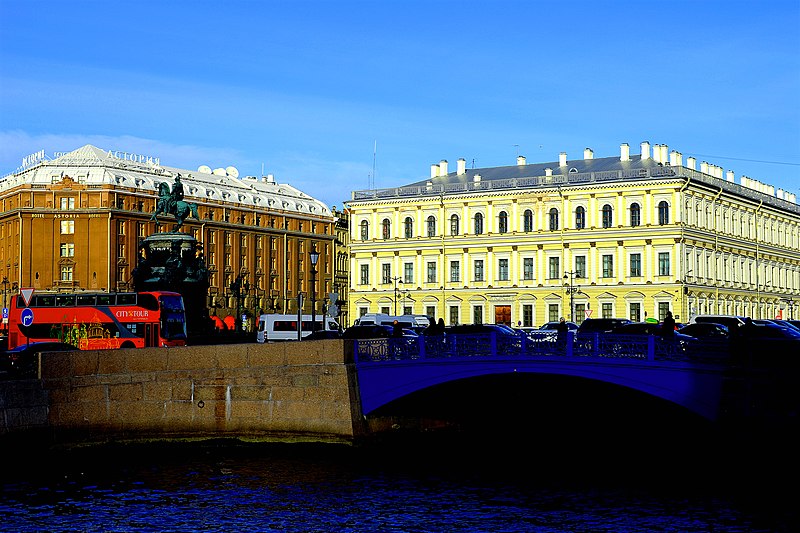
Blue Bridge, 1818 (engineer V.I. Geste): Moika River. Admiralteysky District, St. Petersburg.
GAlexandrova
Key facts
Key facts
• Name — William Heste • Born — 1753 or 1763 • Birthplace — Scotland • Died — 4 June 1832 (aged 78/79 or 68/69) • Place of death — Tsarskoye Selo, Russian Empire
Biography
Biography
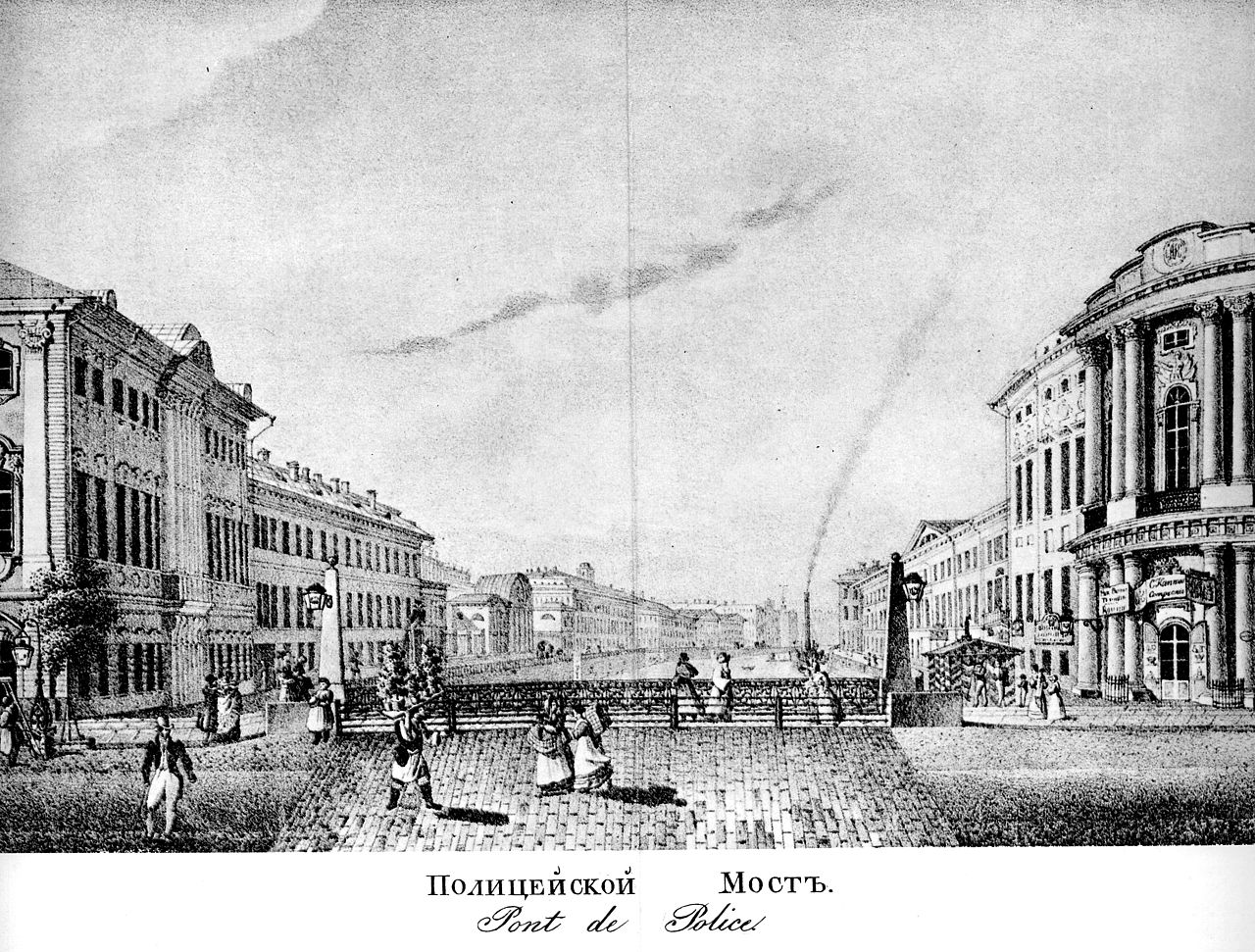
William Hastie was born in either 1753 or 1763 in Scotland. (A service roll from the year 1822 gives Hastie's age as 69, hence 1753, but the Peterburg Necropolis lists him as being born in 1763.) He came to Russia in 1784 with a group of 73 Scottish craftsmen hired in Edinburgh by Charles Cameron to work on construction sites in Tsarskoe Selo. Hastie and his compatriot Adam Menelaws made the most distinguished careers among this group, becoming notable professional architects. • Illustration — The Police Bridge (Green bridge) over the Moyka River opened on 14 November 1806 Hastie never returned to Scotland, and instead in 1792 he entered the service of the Russian Imperial Chancellery, designing model buildings for mass construction. In July 1795 he joined the Yekaterinoslav Governorate administration as its chief architect; in particular, in the Crimea Hastie surveyed the Bakhchisaray Palace and other Tatar and Greek relics. Hastie left the southern provinces in June 1799, but returned to their architecture in the 1810s, producing a master plan for the redevelopment of Yekaterinoslav, which was approved in 1817 and generally followed throughout the 19th century. After serving in Yekaterinoslav Governorate, he came back to Saint Petersburg in 1803, and joined Charles Gascoigne as his assistant on the construction site of the Izhorsky Zavod. Hastie is credited with designing and erecting the plant's administrative building and, together with Gascoigne, with building the dam across the Izhora River. Here Hastie acquired practical skills in metalworking and bridge engineering. In February 1805 Hastie returned to Saint Petersburg and was assigned to building bridges over the city's smaller rivers. He built the Blue, Green, Red and Potseluev bridges. They were the first in Saint Petersburg to be made from cast iron. From 1808 to 1832 Hastie was the head architect of Tsarskoye Selo. He created a general plan for construction in the town. From 1810 Hastie was involved in most urban construction projects in Russia. After the 1812 fire of Moscow which destroyed three quarters of the city Hastie was the first to propose a detailed redevelopment plan. It rejected for disregarding the historical background of the city. William Hastie died on 4 June 1832 in Tsarskoye Selo, where he was buried in a Protestant cemetery.
Life and career
Dated record
Life and career
The full dated record · 2 entries
1753
William Heste born at Scotland.
1832
William Heste died at Tsarskoye Selo.
Places
Named by the record
Places
Only places the record itself states, plotted where the house gazetteer settles their coordinates. Nothing is inferred from a name or a nationality.
Scotland.
Birth place
Tsarskoye Selo.
Death place
Notes from the source article
Cited by Wikipedia
Notes from the source article
These works are cited by the source article, in its own numbering. They are recorded as its citations, not as sources VALÉORINE has verified.
- 1.Kuznetsov, p. 213, provides a detailed account of this hiring and subsequent protest by the Foreign Office
- 2.Cross, p. 248
- 3.See also Shvidkovsky, 1996, for a detailed description of Cameron's workforce in Tsarskoye Selo.
- 4.Anthony Cross, ‘Hastie, William (1754/5–1832)’, Oxford Dictionary of National Biography, Oxford University Press, Oct 2009 accessed 28 Nov 2013
Bibliography printed in the source article · 6
- Korshunova, Miliza. William Hastie in Russia. Architectural History. Oxford. 17. 14–21, 53–56. 1974. 10.2307/1568342.
- Cross, Anthony Glenn. By the Banks of the Neva: Chapters from the Lives and Careers of the British in Eighteenth-century Russia. Cambridge University Press. 1997. 978-0-521-55293-6.
- Architects of Tsarskoe Selo
- Heste on the site 300 years of St. Petersburg
- Kuznetsov, S. O. Adam Menelas na rossiyskoy zemle (Адам Менелас на российской земле. Возможные пути интерпретации творчества архитектора императора Николая I). The Philosophical Age. Almanac 6. Russia at the Time of Nicholas I: Science, Politics, Enlightenment. Ed. by T. Khartanovich, M. Mikeshin. St. Petersburg, 1998. 1998.
- Shvidkovsky, Dmitry. The Empress & the Architect: British Architecture and Gardens at the Court of Catherine the Great. Yale University Press. 1996. 978-0-300-06564-0.
References
Citations
References
Each reference names the institution holding it, so a reader may go to the document itself.
reference work
Secondary witnessreference work
Wikidata, structured authority record Q2992025: William HesteWikimedia Foundation
Secondary witness
Further particulars
Held on the record
Further particulars
Open the remaining particulars
The authorities additionally record the headings William Hastie, Vasily Heste, William Geste, Vasily Ivanovich Hastie and William Gesti. His recorded language was English. Recorded as architect and civil engineer.
Identity and origins
Vladimir, 4th class.
The Encyclopedia exists whether or not anything is for sale. Corrections are recorded rather than overwritten, and every version of this record is kept. Published 16 August 2026.
Elsewhere in Design
11,558 published records in this field, each with its sources named.
- William Henry MillerDesigner
- William Henry PlayfairDesigner
- William Henry Romaine-WalkerDesigner
- William Henry SkinnerDesigner
- William HillDesigner
- William HolabirdDesigner
- William Holford, Baron HolfordDesigner
- William HollinsDesigner
Best supported in this field
For owners
Own a work by William Heste?
A specialist will read what you send and tell you what the house can establish, what it cannot, and whether the object is suited to sale. There is no charge and no obligation. The object stays with you throughout; nothing is shipped to us unless it is arranged in writing beforehand.