
William Henry Hamilton Trood
Illustration — "Wait till the clouds roll by": an 1893 painting by Trood William Henry Hamilton Trood (1859 – 2 November 1899) was an English artist of the latter half of the 19th century. Trood was born in Taunton, Somerset, the son of William and Myra Jane Trood. He is described in The Dictionary of Victorian Painters (1978) as a painter of animals, especially dogs.
Also recorded as W. H. Trood
William Henry Hamilton Trood
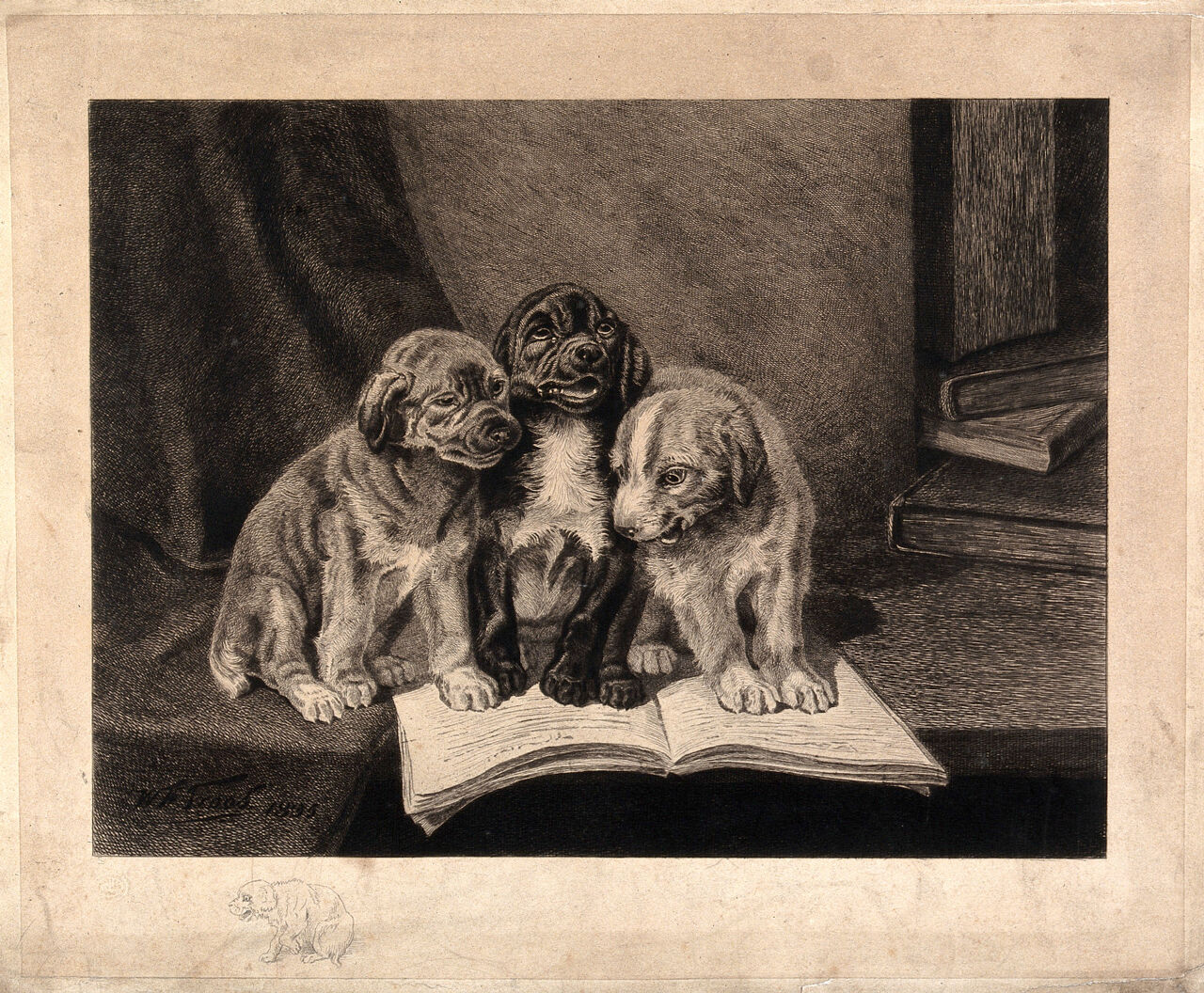
William Henry Hamilton Trood · Wellcome Collection, London · Wellcome Collection · Public Domain Mark
- Died
- 1899 · London.
- Nationality
- United Kingdom of Great Britain and Ireland
- Occupation
- animal painter · sculptor
VALÉORINE Encyclopedia
VALÉORINE documentary reading
Documentary summary
Illustration — "Wait till the clouds roll by": an 1893 painting by Trood William Henry Hamilton Trood (1859 – 2 November 1899) was an English artist of the latter half of the 19th century. Trood was born in Taunton, Somerset, the son of William and Myra Jane Trood. He is described in The Dictionary of Victorian Painters (1978) as a painter of animals, especially dogs.
Admitted source layer · organised and presented by VALÉORINE
Reference Check
Propose documentary evidence for William Henry Hamilton Trood. A contribution is never written directly as fact: identity, source, rights and evidence gates still decide.
Sign in to contribute
World of VALÉORINE
Documentary connections
Only confirmed graph relationships appear here. Images are shown only when their identity and reuse rights both pass the documentary gate.

Documentary evidence
Documentary basis
Authority files
wikidata · Q21289969
In this article
Life and career
Dated record
Life and career
The full dated record · 2 entries
1848
William Henry Hamilton Trood born at Taunton.
1899
William Henry Hamilton Trood died on 3 November 1899.
Places
Named by the record
Places
Only places the record itself states, plotted where the house gazetteer settles their coordinates. Nothing is inferred from a name or a nationality.
Taunton.
Birth place
London.
Death place
References and sources
References and sources
The dictionary adds, "His pictures usually have sentimental titles", e.g. 'A Coveted Bone', 'The Old Man's Darling', 'Home Sweet Home' etc.". According to an obituary notice in 1899, "in thousands of homes throughout England one may see his work. Perhaps the most popular of all his productions is the picture entitled 'Cause and Effect', a study of some puppies frightened by a soda-water bottle which has burst." In addition to being a popular painter of animals, Trood was well known as an Orientalist. For several years he travelled in the east and Africa, amassing a collection of arms and armour. Trood worked in Chelsea for many years. He died of pneumonia in Taunton, aged 39.
=
Notes from the source article
Cited by Wikipedia
Notes from the source article
These works are cited by the source article, in its own numbering. They are recorded as its citations, not as sources VALÉORINE has verified.
- 1."William Henry Trood", Somerset, England, Church of England Baptisms, 1813–1914
- 2.Wood, p. 479
- 3."Obituary: Mr W. H. Trood", The Daily News, 6 November 1899, p. 3
Bibliography printed in the source article · 1
- Wood, Christopher. The Dictionary of Victorian Painters. Antique Collectors' Club. 1978. 0902028723.
References
Citations
References
Each reference names the institution holding it, so a reader may go to the document itself.
authority record
General reference
The Encyclopedia exists whether or not anything is for sale. Corrections are recorded rather than overwritten, and every version of this record is kept. Published 17 August 2026.
Elsewhere in Sculpture
6,174 published records in this field, each with its sources named.
- William EdmondsonArtist
- William G. TuckerArtist
- William Goscombe JohnArtist
- William HackwoodArtist
- William Henry RinehartArtist
- William Kellock BrownArtist
- William KingArtist
- William LaingArtist
Best supported in this field
For owners
Own a work by William Henry Hamilton Trood?
A specialist will read what you send and tell you what the house can establish, what it cannot, and whether the object is suited to sale. There is no charge and no obligation. The object stays with you throughout; nothing is shipped to us unless it is arranged in writing beforehand.