
William Charles Ross
Sir William Charles Ross (3 June 1794 – 20 January 1860) was an English portrait and portrait miniature painter of Scottish descent; early in his career, he was known for historical paintings. He became a member of the Royal Academy in 1842.
Also recorded as Sir William Charles Ross · Sir William Ross · Sir Ross
William Charles Ross
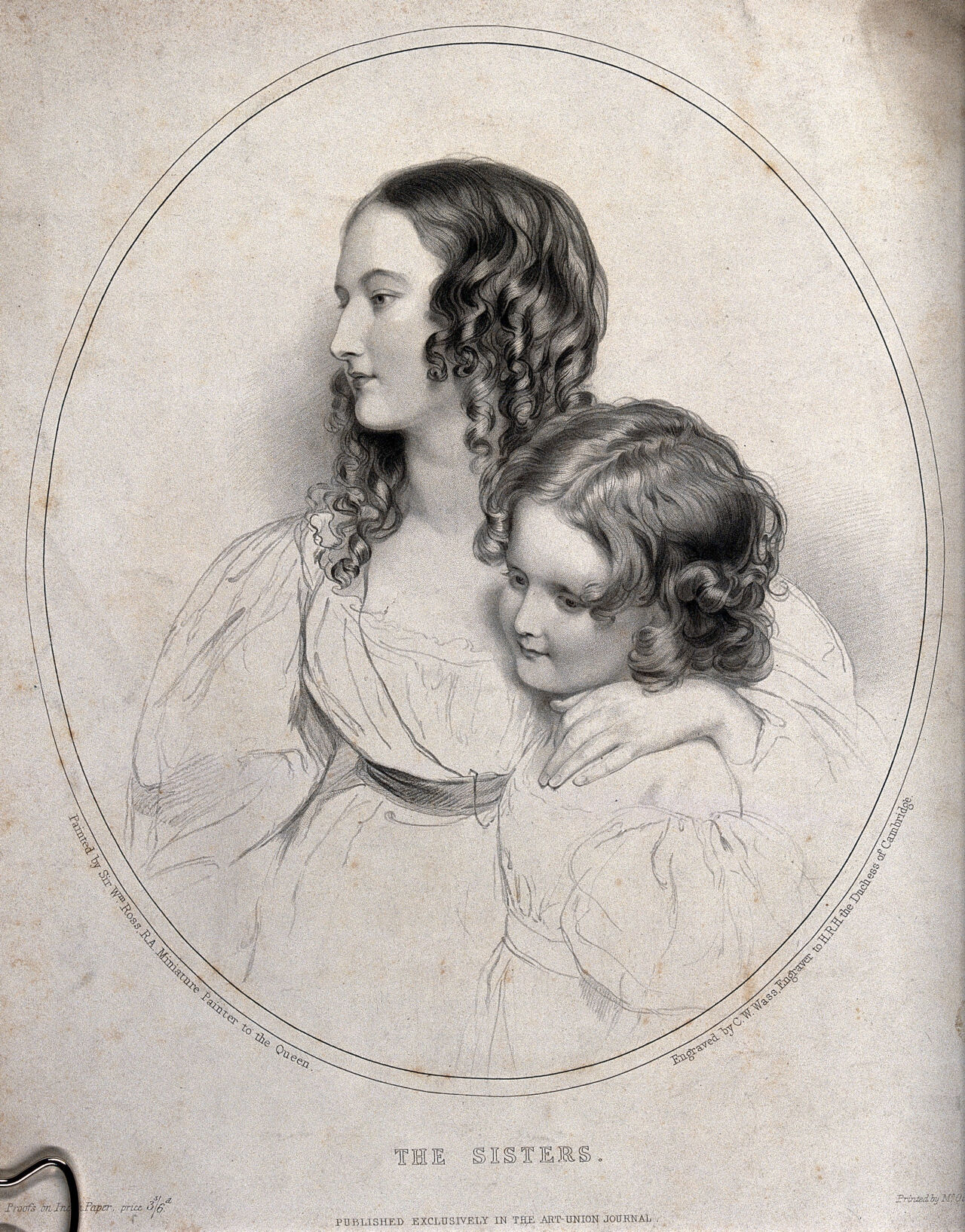
William Charles Ross · Wellcome Collection, London · Wellcome Collection · Public Domain Mark
- Born
- 1794 · London.
- Nationality
- United Kingdom
- Occupation
- painter · miniaturist
- Fields
- portrait
- Teachers
- Benjamin West
- Languages
- English
VALÉORINE Encyclopedia
VALÉORINE documentary reading
Documentary summary
Sir William Charles Ross (3 June 1794 – 20 January 1860) was an English portrait and portrait miniature painter of Scottish descent; early in his career, he was known for historical paintings. He became a member of the Royal Academy in 1842.
Admitted source layer · organised and presented by VALÉORINE
Note VALÉORINE
William Charles Ross (1794–1860) was a miniaturist and painter, of British nationality. The miniaturist was born and died in London.
William Charles Ross was a member of Royal Academy of Arts and worked in London. Activity centred on portrait.
The work spans history and portrait. Languages used include English. Works are held at Cincinnati Art Museum, Kenwood House and National Gallery, among others.
Composed from admitted, traceable facts · 26 September 2026
VALÉORINE
Reference Check
Propose documentary evidence for William Charles Ross. A contribution is never written directly as fact: identity, source, rights and evidence gates still decide.
Sign in to contribute
World of VALÉORINE
Documentary connections
Only confirmed graph relationships appear here. Images are shown only when their identity and reuse rights both pass the documentary gate.

Born In · outgoing
London
Place
Pencil sketch by George Henry Harlow, 1814, http://www.npg.org.uk/collections/search/largerimage.php?mkey=mw05495
Died In · outgoing
London
Place
Pencil sketch by George Henry Harlow, 1814, http://www.npg.org.uk/collections/search/largerimage.php?mkey=mw05495
Citizen Of · outgoing
United Kingdom
Place
Documentary evidence
Documentary basis
Authority files
wikidata · Q3568501 · wikipedia · William Charles Ross
In this article
Life and work
Life and work
Training under Benjamin West is recorded. The recorded working language is English. The field of work recorded is portrait. Subjects and genres recorded for the work are history and portrait. Places of work recorded in the authority are London. Work by William Charles Ross is recorded in the collections of Nationalmuseum, The Nelson-Atkins Museum of Art, National Gallery of Victoria, National Portrait Gallery and Cincinnati Art Museum.
• Illustration — Maria II, Queen of Portugal, c. 1852. Ross was born on 3 June 1794, in London, and descended from a Scottish family who had settled at Tain in Ross-shire. He was the son of William Ross, a miniature-painter and teacher of drawing, who exhibited at the Royal Academy from 1809 to 1825. His mother, Maria Smith, a sister of Anker Smith, the line-engraver, was a portrait-painter, who exhibited at the Royal Academy between 1791 and 1814, and died in London on 20 March 1836, aged 70. At an early age young Ross showed great ability in art, and in 1807 received the "lesser silver palette" from the Society of Arts for a copy in chalk of Anker Smith's engraving of James Northcote's "Death of Wat Tyler". In 1808, he was admitted into the schools of the Royal Academy, where he received from Benjamin West much kind advice, and in 1810 gained a silver medal for a drawing from life. The Society of Arts also, in 1808, awarded him a silver medal for an original drawing of the "Judgment of Solomon", and in 1809 the larger silver palette for an original miniature of "Venus and Cupid", which he exhibited with two other works, "Mordecai Rewarded" and "The Judgment of Solomon", at the Royal Academy in the same year. For some years afterwards his exhibited works were mainly of a classical character, and in 1825 he sent to the Royal Academy a large picture representing "Christ casting out Devils". In 1810, he again received a silver medal, and 20 guineas, from the Society of Arts, for an original drawing of "Caractacus brought before Claudius Cæsar"; in 1811, the silver medal and twenty guineas for an original drawing of "Samuel presented to Eli"; in 1816, the gold Isis medal for an original portrait of the Duke of Norfolk, president of the society; and in 1817, the gold medal for an original historical painting, "The Judgment of Brutus". At the age of twenty he became an assistant to Andrew Robertson (1777–1845), the eminent Scottish miniature-painter, and, although his first ambition was to excel in historical painting, he thought it advisable to concentrate on the more lucrative speciality of miniature-painting. He soon acquired a sizeable and elite clientele. In 1837 Queen Victoria and the Duchess of Kent sat for him, and in succeeding years Queen Adelaide, the Prince Consort, the royal children, and various members of the royal families of France, Belgium, Portugal, and Saxe-Coburg. He is known to have produced more than 2,200 miniatures, of which about 300 were exhibited at the Royal Academy. Those of Queen Victoria and of the Prince Consort were engraved by Henry Thomas Ryall; that of the Duchess of Nemours by Charles Heath, for the "Keepsake" of 1843 (a short-lived art annual); that of Prince Louis Napoleon Bonaparte, by F. J. Joubert; and those of Charlotte, Duchess of Marlborough, and of James, 3rd Marquis of Ormonde, by W. J. Edwards. • Illustration — Grave of Sir William Charles Ross in Highgate Cemetery He was elected an associate of the Royal Academy in 1838, and in 1843 a royal academician, and was knighted on 1 June 1842. The Westminster Hall competition of 1843 led him to turn his hand once more to historical composition, and he sent a cartoon of "The Angel Raphael discoursing with Adam", which was awarded an extra premium of £100. He continued to hold a preeminent position amongst miniature-painters until 1857, when he was struck down by paralysis while engaged on portraits of the Duke and Duchess of Aumale, with their two sons. He never entirely recovered, and died unmarried at his home at 38 Fitzroy Square, London, on 20 January 1860. He was buried on the western side of Highgate cemetery (plot no.10093). The memorial, which is in an elevated position on the western side of the cutting path, no longer has a decipherable inscription and is leaning.
Family
Family
• Illustration — Portrait miniature of Ross's sister Magdalena Dalton (c. 1835–40, Watercolour on ivory) Hugh Ross (1800–1873), younger brother of Sir William Charles Ross, was also a miniature-painter, and exhibited at the Royal Academy from 1814 to 1845. Magdalene Ross (1801–1874), a sister, who likewise practised the same branch of art, exhibited at the Royal Academy between 1820 and 1856; she married Edwin Dalton, a portrait-painter.
Gallery
Gallery
• Illustration — Jane Digby, Lady Ellenborough (1807-1881) • Illustration — Zénaïde Clary, Princesse et Duchesse de Wagram • Illustration — Queen Adelaide of the United Kingdom, 1844 • Illustration — Feodora, Princess of Hohenlohe-Langenburg (1807-1872), sister of Queen Victoria of the United Kingdom (1819-1901). • Illustration — King Ferdinand II of Portugal, 1852 • Illustration — Ernest II, Duke of Saxe-Coburg-Gotha (1818-1893) when Hereditary Prince of Saxe-Coburg-Gotha.
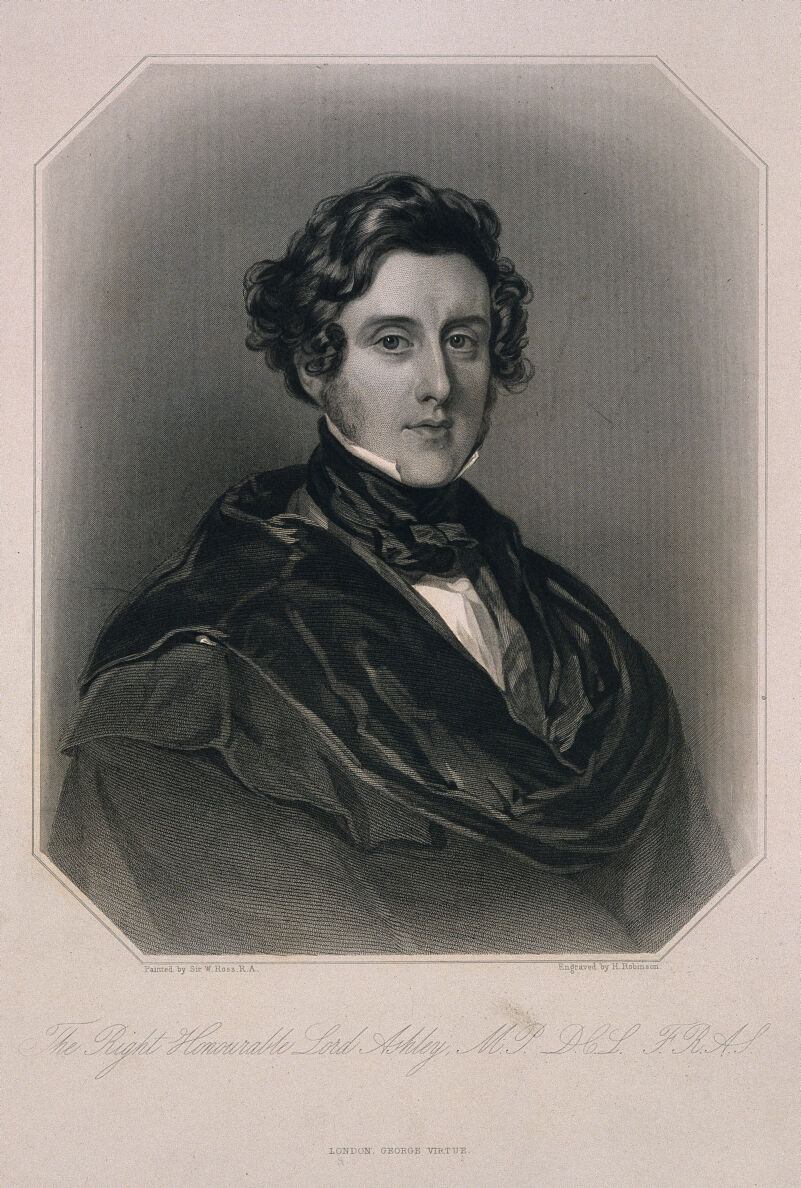
Anthony Ashley Cooper, 7th Earl of Shaftesbury. Stipple engraving by H. Robinson after Sir W. Ross., by William Charles Ross
William Charles Ross · Wellcome Collection, London · Wellcome Collection
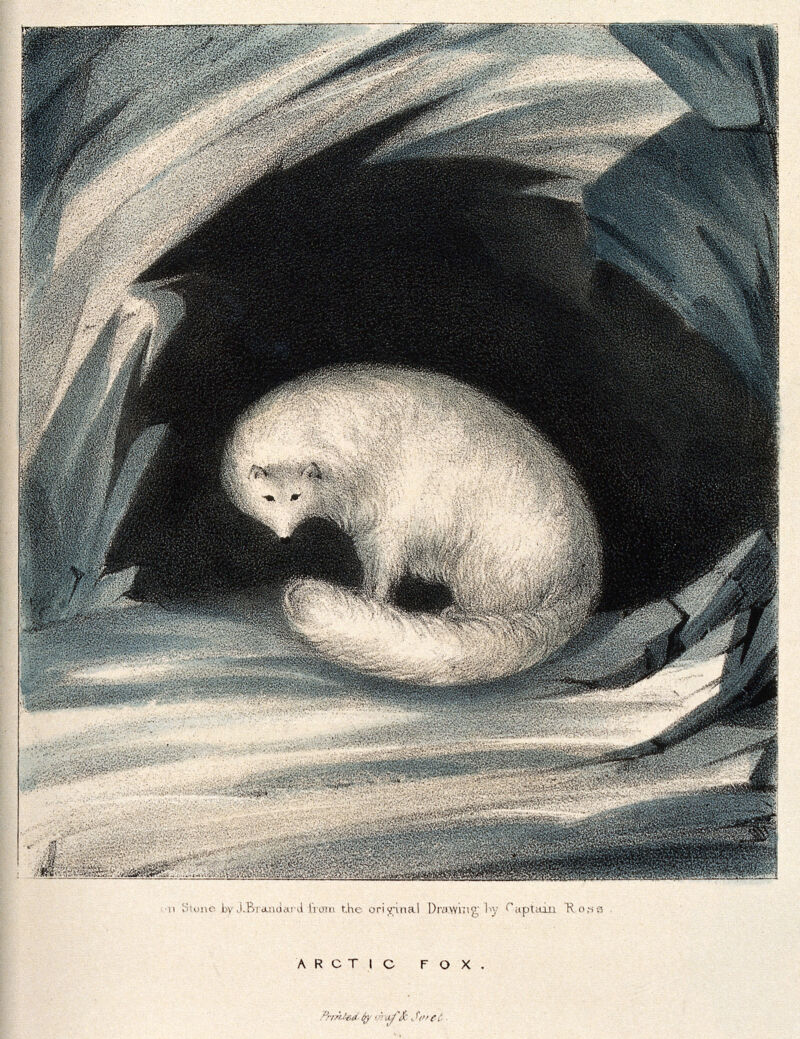
An arctic fox. Colour lithograph by J Brandard after Captain Ross., by William Charles Ross
William Charles Ross · Wellcome Collection, London · Wellcome Collection
Legacy
Ross's portrait was painted by Thomas Henry Illidge, and engraved on wood for The Art Journal of 1849; a miniature was also painted by his brother, Hugh Ross. An exhibition of miniatures by him was held at the Society of Arts early in 1860, and in June his remaining works were sold by the auctioneers Christie, Manson & Woods. Ross held the same position with respect to miniature-painters that Thomas Lawrence did among portrait-painters. Writing for the Dictionary of National Biography, Robert Edmund Graves noted that "others have surpassed him in power of expression, but in refinement, in purity of colour, and in truth, he had no rival. His portraits of men are marked by a strong individuality, while his women charm by their grace and delicacy".
Notes from the source article
Cited by Wikipedia
Notes from the source article
These works are cited by the source article, in its own numbering. They are recorded as its citations, not as sources VALÉORINE has verified.
- 1.Ross, William Charles.
- 2.Royal Collection 420385 Maria II, Da Gloria, Queen of Portugal (1819-1853) William Charles Ross
- 3.Cansick, Frederick Teague. The Monumental Inscriptions of Middlesex Vol 2. J Russell Smith. 141. 1872.
- 4.Victoria and Albert Museum. Portrait of Magdalena Dalton, born Ross. Paintings & Drawings.
References
Citations
References
Each reference names the institution holding it, so a reader may go to the document itself.
reference work
Secondary witnessreference work
Secondary witness
The Encyclopedia exists whether or not anything is for sale. Corrections are recorded rather than overwritten, and every version of this record is kept. Published 17 August 2026.
Elsewhere in Paintings
18,623 published records in this field, each with its sources named.
- William CaparneArtist
- William CaponArtist
- William CarpenterArtist
- William CarseArtist
- William Charles Thomas DobsonArtist
- William CheseldenArtist
- William Clarke WontnerArtist
- William ColdstreamArtist
Best supported in this field
For owners
Own a work by William Charles Ross?
A specialist will read what you send and tell you what the house can establish, what it cannot, and whether the object is suited to sale. There is no charge and no obligation. The object stays with you throughout; nothing is shipped to us unless it is arranged in writing beforehand.