
William Barraud
William Barraud (1810 – 1 October 1850) was an English animal painter and illustrator, the brother of Henry Barraud, with whom he collaborated on many works.
Also recorded as W. Barraud · william barraud · w.h. barraud · barraud
William Barraud
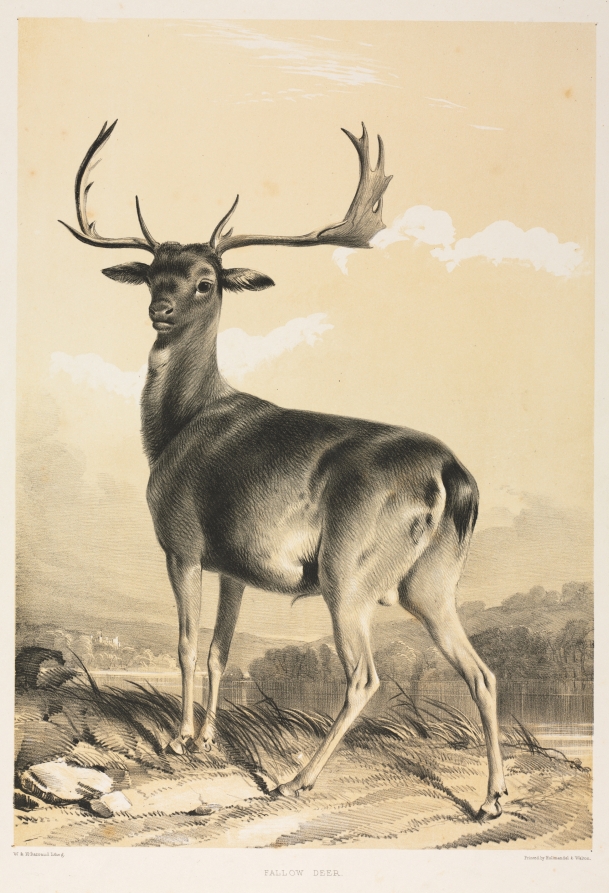
William Barraud · The Cleveland Museum of Art · Gift of John Bonebrake · CC0
- Name
- William Barraud
- Born
- 1810
- Birthplace
- Lambeth, London
- Died
- 1 October 1850
- Place of death
- Kensington, London
- Occupation
- Painter, illustrator
- Spouse
- Mary Ratliff Margaret Harrison.
- Nationality
- United Kingdom
- Languages
- English
VALÉORINE Encyclopedia
VALÉORINE documentary reading
Documentary summary
William Barraud (1810 – 1 October 1850) was an English animal painter and illustrator, the brother of Henry Barraud, with whom he collaborated on many works.
Admitted source layer · organised and presented by VALÉORINE
Note VALÉORINE
William Barraud (1810–1850) was a painter and photographer, of British nationality. The painter was born in London and died in Kensington.
Languages used include English. Works are held at Yale Center for British Art.
Composed from admitted, traceable facts · 27 September 2026
VALÉORINE
Reference Check
Propose documentary evidence for William Barraud. A contribution is never written directly as fact: identity, source, rights and evidence gates still decide.
Sign in to contribute
World of VALÉORINE
Documentary connections
Only confirmed graph relationships appear here. Images are shown only when their identity and reuse rights both pass the documentary gate.

Documentary evidence
Documentary basis
Authority files
wikidata · Q8005106 · wikipedia · William Barraud
In this article
Key facts
Key facts
• Name — William Barraud • Born — 1810 • Birthplace — Lambeth, London • Died — 1 October 1850 • Place of death — Kensington, London • Occupation — Painter, illustrator • Spouse — Mary Ratliff Margaret Harrison. • Children — 1 • Relatives — Henry Barraud (brother) • Illustration — Portrait of a saddled black hunter with a sheep dog in a stable (1837)
Biography
Biography
William was born in Lambeth in London, one of 17 children of William Francis Barraud (1783–1833), a clerk in the Custom House, and Sophia (née) Hull. His paternal grandfather was Paul Philip Barraud an eminent chronometer maker in Cornhill, and his maternal grandfather, Thomas Hull, a miniature painter. The family was of French Huguenot origin that had come over to England at the time of the revocation of the Edict of Nantes. His younger brother Henry Barraud was also a notable artist, and another, Edward, though talented in art did not take it up as a profession. On leaving school he is said to have become a clerk in the Custom House where his father worked (although there are no records of this), but eventually became a pupil of artist Abraham Cooper. As an animal artist he specialised in painting horses and dogs, exhibiting at the Royal Academy from 1829–50, the British Institution from 1828–49, the Society of British Artists and at other venues. His work was popular with huntsmen and dog-fanciers. He also produced some historical and landscape paintings. William shared a studio, from 1835 until his untimely death, with his brother Henry, and collaborated on many subject pictures with himself painting the animals and Henry the figures. Several of these joint works were exhibited at the Royal Academy. The brothers also produced a book together entitled "Sketches of Figures and Animals" (H. Graves and Co. c. 1850). William also collaborated on another book with fellow artist Thomas Fairland (1804–52) called "The book of animals drawn from nature" (C. Tilt, 1846). In 1841 William married Mary Ratliff and they had a son Clement William Barraud (1843–1926), who went on to become a stained-glass designer (for Lavers, Barraud and Westlake), a Jesuit priest, poet and playwright. Mary died soon after the birth and in 1850 William married Margaret Harrison. William died in Kensington, London from dysentery and typhoid fever on 1 October 1850, in his fortieth year.
Life and career
Dated record
Life and career
The full dated record · 2 entries
1810
William Barraud was born on 1 January 1810.
1850
William Barraud died in 1850 at Kensington.
Places
Named by the record
Places
Only places the record itself states, plotted where the house gazetteer settles their coordinates. Nothing is inferred from a name or a nationality.
London.
Birth place
Kensington.
Death place
Primary material
Documents and archives
reference work
- “William Barraud”, English Wikipedia, consulted as further reading
Reputable secondary · Wikipedia
authority record
- Wikidata, structured authority record Q8005106: William Barraud
General reference · Wikidata
Notes from the source article
Cited by Wikipedia
Notes from the source article
These works are cited by the source article, in its own numbering. They are recorded as its citations, not as sources VALÉORINE has verified.
- 1.3. 275.
- 2.Biography (Richard Green Fine Paintings).
- 3.Biography (Lacewing Fine Arts).
- 4.Biography (John Bennett Fine Paintings).
- 5.Gordon-Gorman, William James. Converts to Rome: a biographical list of the more notable converts to the Catholic Church in the United Kingdom during the last sixty years (London: Sands, 1910) p14.
- 6.The studio was in Park Street, Grosvenor Square.
References
Citations
References
Each reference names the institution holding it, so a reader may go to the document itself.
reference work
Secondary witnessauthority record
General reference
The Encyclopedia exists whether or not anything is for sale. Corrections are recorded rather than overwritten, and every version of this record is kept. Published 18 August 2026.
Elsewhere in Photography
11,392 published records in this field, each with its sources named.
- William Albert AllardPhotographer
- William Archer PricePhotographer
- William Arthur PoucherPhotographer
- William BambridgePhotographer
- William BaverstockPhotographer
- William BeattiePhotographer
- William BlandowskiPhotographer
- William CarrickPhotographer
Best supported in this field
For owners
Own a work by William Barraud?
A specialist will read what you send and tell you what the house can establish, what it cannot, and whether the object is suited to sale. There is no charge and no obligation. The object stays with you throughout; nothing is shipped to us unless it is arranged in writing beforehand.