
Wilhelm Bockslaff
Wilhelm Ludwig Nikolai Bockslaff (Vilhelms Ludvigs Nikolajs Bokslafs; 24 October, Riga – 9 March 1945, Poznań) was a Baltic German architect working in Riga. He is considered one of the most important representatives of Eclecticism, Neo-Gothic and Art Nouveau styles in the city. He is noted in particular for his construction of churches.
Also recorded as Wilhelm Ludwig Nicholas Bockslaff · Wilhelm Ludwig Nikolai Bockslaff
Wilhelm Bockslaff
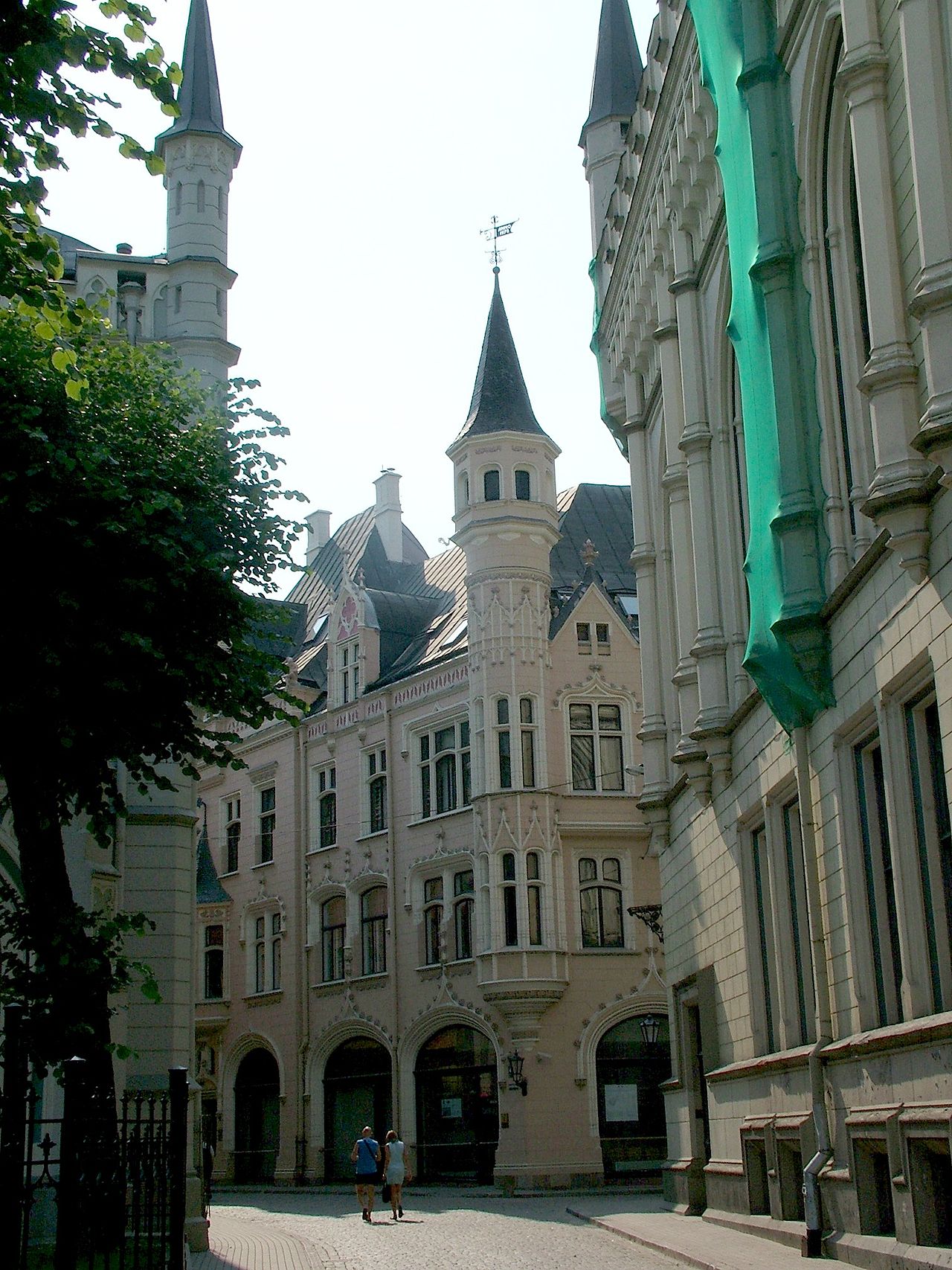
Horvat · Public domain
- Name
- Wilhelm Bockslaff
- Born
- 24 October
- Birthplace
- Riga, Governorate of Livonia, Russian Empire
- Died
- 9 March 1945
- Place of death
- Posen, Wartheland, Nazi Germany
- Field
- Architecture
- Movement
- Eclecticism, Art Nouveau
- Education
- Riga Polytechnicum
- Nationality
- Russian Empire · Latvia
- Occupation
- architect · university teacher · art historian
- Movements
- eclecticism
- Languages
- Latvian · German
VALÉORINE Encyclopedia
VALÉORINE documentary reading
Documentary summary
Wilhelm Ludwig Nikolai Bockslaff (Vilhelms Ludvigs Nikolajs Bokslafs; 24 October, Riga – 9 March 1945, Poznań) was a Baltic German architect working in Riga. He is considered one of the most important representatives of Eclecticism, Neo-Gothic and Art Nouveau styles in the city. He is noted in particular for his construction of churches.
Admitted source layer · organised and presented by VALÉORINE
Reference Check
Propose documentary evidence for Wilhelm Bockslaff. A contribution is never written directly as fact: identity, source, rights and evidence gates still decide.
Sign in to contribute
World of VALÉORINE
Documentary connections
Only confirmed graph relationships appear here. Images are shown only when their identity and reuse rights both pass the documentary gate.
Associated With · outgoing
eclecticism
Term
Citizen Of · outgoing
Latvia
Place

Educated At · outgoing
Riga Technical University
Organisation
https://www.flickr.com/photos/12982516@N02/4818077455/in/photolist-8kKUyX-8kLbVx-8kPPcN-8kK5aK-8kLGUz-8kKtsa-8kNVjh-8kLYzt-8kNajA-8kK3uB-8kKrJD-8kNFzC-8kNLpE-8kK3kp-8kJPap-8kN3fj-8kPWWd-8kNLvm-8kLgrg-
Citizen Of · outgoing
Russian Empire
Place
Documentary evidence
Documentary basis
Authority files
wikidata · Q323916 · wikipedia · Wilhelm Bockslaff
In this article
Key facts
Key facts
• Name — Wilhelm Bockslaff • Born — 24 October • Birthplace — Riga, Governorate of Livonia, Russian Empire • Died — 9 March 1945 • Place of death — Posen, Wartheland, Nazi Germany • Field — Architecture • Movement — Eclecticism, Art Nouveau • Education — Riga Polytechnicum
Biography
Biography
Wilhelm Bockslaff was born in Riga on 12 October 1858. His father was the wealthy merchant and industrialist Nicholas Ludwig Bockslaff. In 1878 he started architecture studies in Riga Polytechnicum and graduated in 1885. After graduation, he stayed in the polytechnicum to work as an assistant. He also worked in the offices of architects Johann Koch and Heinrich Scheel. Later he established his own architects office. In this period he studied the history of St. Peter's church in Riga and other medieval buildings in the city. In 1894 he married Eva Riker. Bockslaff worked mainly in eclectic styles, especially in the Neo-Gothic style. However, he also designed buildings in forms of Art Nouveau. Most notable buildings are Jaunmokas Manor near Tukums and the Commercial school in Riga (Now Art Academy of Latvia). The architect also restored many manors after the Revolution of 1905. He also has designed a large number of churches and various industrial objects such as factories and water towers. In the 1930s he designed an impressive memorial for him and his wife in Riga Great Cemetery. However, only his wife was buried there in 1939. He himself was forced to leave Latvia together with a majority of Baltic Germans and settled in Posen. He died on 9 March 1945 in the bombing of Posen. His daughter buried him in the garden of their residence. After the war he was anonymously reburied in a local cemetery.
Identity and origins
Identity and origins
The authorities additionally record the headings Wilhelm Ludwig Nicholas Bockslaff and Wilhelm Ludwig Nikolai Bockslaff. His recorded languages were Latvian and German. He was the child of Anna Juliane Bockslaff.
Career and activity
Career and activity
Wilhelm Bockslaff worked in architecture. His work is associated with eclecticism. He was employed by Riga Technical University. He belonged to Corps Rubonia. He worked at Riga.
Identity
Identity
Wilhelm Bockslaff is recorded with the occupation university teacher. Recorded as architect, university teacher and art historian.
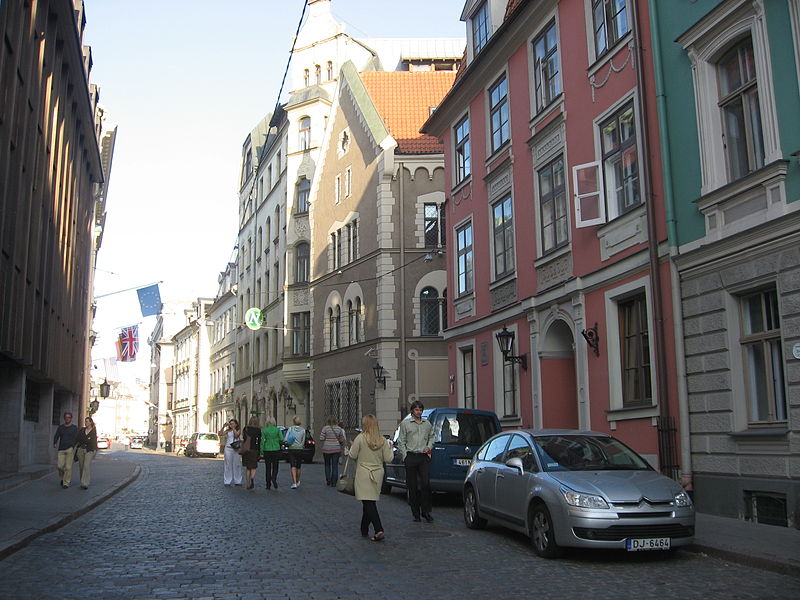
uličky v centru Rigy
Dezidor

Mālpils, Vilhelms Bokslafs
Sirujs Enobs
Life and career
Dated record
Life and career
The full dated record · 2 entries
1858
Wilhelm Bockslaff was born on 24 October 1858.
1945
Wilhelm Bockslaff died on 9 March 1945.
Places
Named by the record
Places
Only places the record itself states, plotted where the house gazetteer settles their coordinates. Nothing is inferred from a name or a nationality.
Riga.
Birth place
Poznań.
Death place
Primary material
Documents and archives
authority record
- Wikidata, structured authority record Q323916: Wilhelm Bockslaff
General reference · Wikidata
reference work
- “Wilhelm Bockslaff”, English Wikipedia, consulted as further reading
Reputable secondary · Wikipedia
Honour
In honor of the architect's 150th birthday, a monument was erected in the park of Mālpils Manor. • Illustration — Jaunmokas Manor. Built in 1901 • Illustration — Commercial School built in 1902–1905. (Now Art Academy of Latvia.) • Illustration — Building at the Amatu street 4, Old Riga. Built in 1903 • Illustration — Church of the Cross, Riga. Built in 1910 • Illustration — Building in Jauniela 25/29 (Neuburg house) Old Riga. Built in 1903 • Illustration — Building at the Nometņu street 47 (1909) • Illustration — Water tower at the Alīses street 4, Riga. Built in 1910 • Illustration — Building of the former Leutner bicycle factory on Brīvības street 137 Riga. Built in 1894.
Literature
Scholarly footprint
A count of publications is evidence of attention, not of standing, and is given here only as a measure.
Notes from the source article
Cited by Wikipedia
Notes from the source article
These works are cited by the source article, in its own numbering. They are recorded as its citations, not as sources VALÉORINE has verified.
- 1.Krastiņš, Jānis. Rīgas arhitektūras meistari 1850–1940 : The masters of architecture of Riga 1850–1940. Jumava. 2002. 9984-05-450-0.
- 2.Schloss Jaunmoku (sic!) auf latvia.travel.
- 3.Gunars Priede: Der Architekt Wilhelm Bockslaff und Riga, p. 60.
References
Citations
References
Each reference names the institution holding it, so a reader may go to the document itself.
authority record
Secondary witnessreference work
Secondary witness
People, houses and institutions
Knowledge graph
People, houses and institutions
Teachers, collaborators, publishers and institutions recorded against this person, each on a stated basis.
Studied at
1- Riga Technical UniversityOrganisation
Established from a fact already recorded on a verified source.
Further particulars
Held on the record
Further particulars
Open the remaining particulars
Wilhelm Bockslaff is connected to 1 other published record in the VALÉORINE Encyclopedia.
The Encyclopedia exists whether or not anything is for sale. Corrections are recorded rather than overwritten, and every version of this record is kept. Published 16 August 2026.
Elsewhere in Design
11,558 published records in this field, each with its sources named.
- Wilfrid LacroixDesigner
- Wilfried StallknechtDesigner
- Wilfried van WindenDesigner
- Wilhelm BöckmannDesigner
- Wilhelm Christian SuhrkeDesigner
- Wilhelm DörpfeldDesigner
- Wilhelm Eduard BrodtbeckDesigner
- Wilhelm Emil MeerweinDesigner
Best supported in this field
For owners
Own a work by Wilhelm Bockslaff?
A specialist will read what you send and tell you what the house can establish, what it cannot, and whether the object is suited to sale. There is no charge and no obligation. The object stays with you throughout; nothing is shipped to us unless it is arranged in writing beforehand.