
Vincenzo Gemito
Vincenzo Gemito (July 16, 1852 – March 1, 1929) was an Italian sculptor and artist.[1][2] Although he worked in various studios of well-known artists in his native Naples, Rome, and Paris, he is considered to have largely been self-taught, the reason he produced such distinctive works for that time, replacing sentiment with outstanding realism. His work was part of the sculpture event in the art competition at the 1924 Summer Olympics.[3]
Vincenzo Gemito
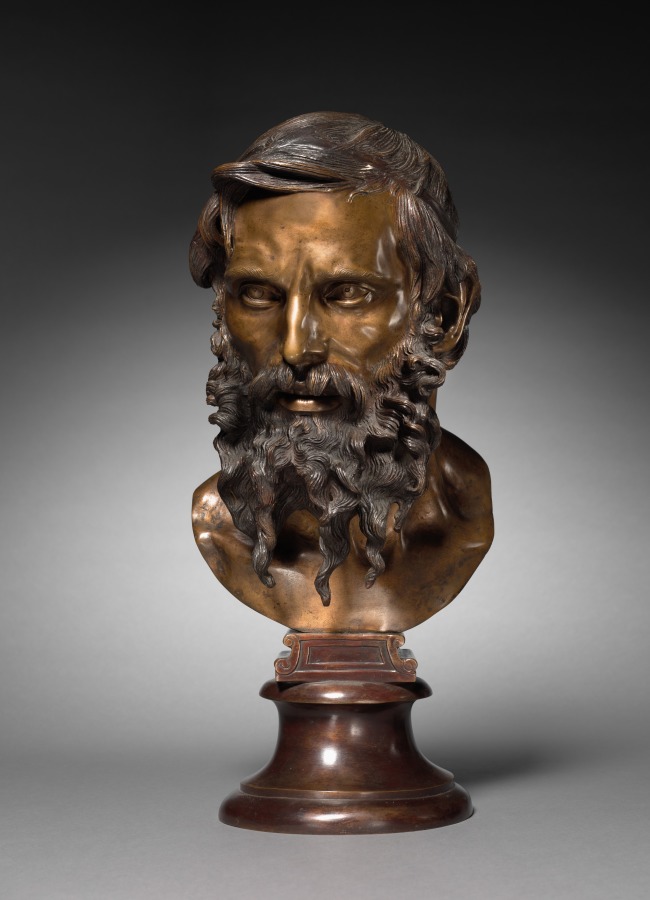
Vincenzo Gemito · The Cleveland Museum of Art · The Thomas L. Fawick Memorial Collection · CC0
- Name
- Vincenzo Gemito
- Born
- 16 July 1852
- Birthplace
- Naples, Kingdom of the Two Sicilies
- Died
- 1 March 1929
- Place of death
- Naples, Italy
- Field
- Painting, drawing, sculpture, smithing
- Training
- Accademia di Belle Arti di Napoli
- Nationality
- Kingdom of Italy.
- Occupation
- sculptor, painter, pastellist and draftsperson.
- Fields
- art of sculpture.
- Education
- Accademia di Belle Arti di Napoli.
- Teachers
- Stanislao Lista.
VALÉORINE Encyclopedia
VALÉORINE documentary reading
Documentary summary
Vincenzo Gemito (July 16, 1852 – March 1, 1929) was an Italian sculptor and artist.[1][2] Although he worked in various studios of well-known artists in his native Naples, Rome, and Paris, he is considered to have largely been self-taught, the reason he produced such distinctive works for that time, replacing sentiment with outstanding realism. His work was part of the sculpture event in the art competition at the 1924 Summer Olympics.[3]
Admitted source layer · organised and presented by VALÉORINE
Note VALÉORINE
Vincenzo Gemito (1852–1929) was an Italian draftsperson, painter and pastellist, among other activities. The draftsperson was born and died in Naples.
Vincenzo Gemito studied at Accademia di Belle Arti di Napoli. The draftsperson was a member of Accademia delle Arti del Disegno and worked in Paris. Vincenzo Gemito was active in art of sculpture.
Works include The fisherboy, The Water Seller and Water carrier. Languages used include Italian. Works by the draftsperson are held at Bargello National Museum, Gallerie d'Italia and Museo Casa Natale di Michelangelo Buonarroti, among others.
Composed from admitted, traceable facts · 30 September 2026
VALÉORINE
Reference Check
Propose documentary evidence for Vincenzo Gemito. A contribution is never written directly as fact: identity, source, rights and evidence gates still decide.
Sign in to contribute
World of VALÉORINE
Documentary connections
Only confirmed graph relationships appear here. Images are shown only when their identity and reuse rights both pass the documentary gate.
Documentary evidence
Documentary basis
Authority files
wikidata · Q1228666 · wikipedia · Vincenzo Gemito
In this article
Biography
Biography
Vincenzo Gemito studied at Accademia di Belle Arti di Napoli. Training under Stanislao Lista is recorded. Luigi Pepe Diaz is recorded as having studied under Vincenzo Gemito. The recorded working language is Italian. The field of work recorded is art of sculpture. Places of work recorded in the authority are Paris. Works named in the authority record are Water carrier, The Water Seller and The fisherboy. Work by Vincenzo Gemito is recorded in the collections of J. Paul Getty Museum, National Gallery of Canada, Pau Casals Museum, Museo del Prado and Museo di Capodimonte.
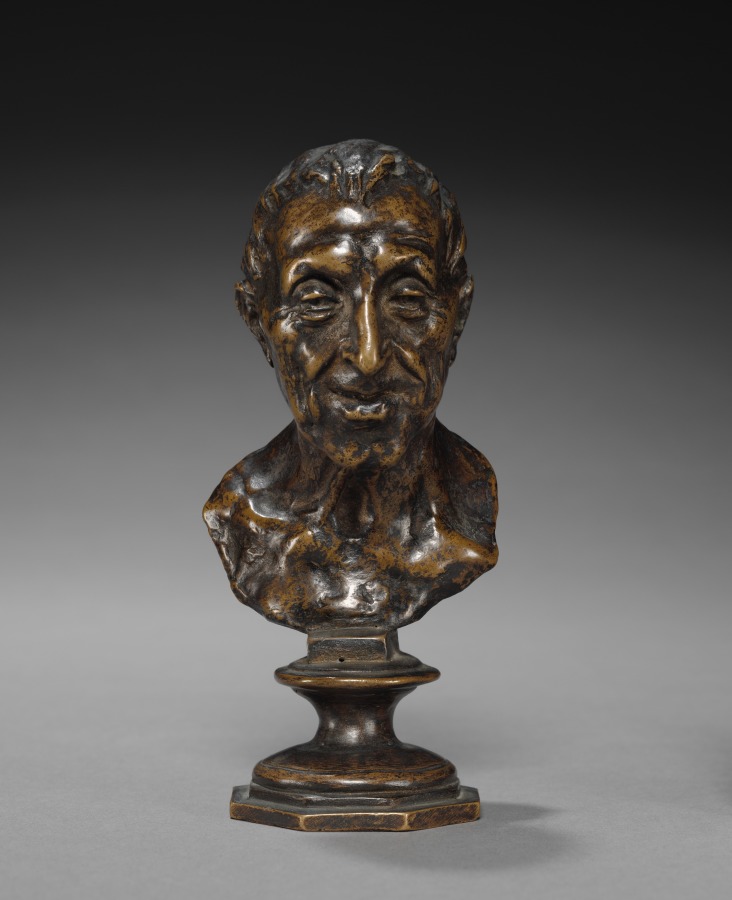
Head of a Man, c. 1875 – 1929, by Vincenzo Gemito
Vincenzo Gemito · The Cleveland Museum of Art · Bequest of Noah L. Butkin
Key facts
Key facts
• Name — Vincenzo Gemito • Born — 16 July 1852 • Birthplace — Naples, Kingdom of the Two Sicilies • Died — 1 March 1929 • Place of death — Naples, Italy • Field — Painting, drawing, sculpture, smithing • Notable Works — The Cards Player (Il giocatore di carti) • Training — Accademia di Belle Arti di Napoli • Partner — Mathilde Duffaud (1873-1881)
Biography
Biography
• Illustration — Charles V, Holy Roman Emperor Gemito was born in Naples to a poor woodcutter's family. The day after his birth, his mother left him on the steps of the dell'Annunziata orphanage and he was taken in to live with the other foundlings. He was given the surname Genito - for generato (“born” in Italian), as was common for orphans, but this somehow became Gemito in orphanage records.[4] On July 30, 1852, he was adopted by a young family that had recently lost a child. The father was an artisan, and as a young child Gemito was probably encouraged to use his hands. He was working as an apprentice in painter and sculptor Emanuele Caggiano's studio before he was 10 years old, demonstrating a dexterity and inventiveness which he eventually became famous for. He also worked in Stanislao Lista's studio. As a 12-year-old he was enrolled at the Naples Academy of Fine Arts (where he became a lifelong friend of artist Antonio Mancini), and also attended the Domenico Maggiore Academy for night classes. He moulded the terracotta piece, The Player, (Il Giocatore), one of his most famous works, when only 16 years old. It created excitement when exhibited at the Promotrice in Naples, so much so that King Victor Emmanuel II purchased it and presented it to the Museo di Capodimonte for permanent display. Gemito moved to Paris in 1877 where he found a great friend in noted French artist Jean-Louis-Ernest Meissonier. As he was creating new works in various media in Paris, he also exhibited his works in noted salons and galleries, and at the Universal Exposition of 1878. It was at the Paris Salon the previous year where he experienced a triumph, with the showing of his Neapolitan Fisherboy, which he had worked on for some years to perfect. The acclaim surrounding that work brought him widespread fame, and lucrative commissions for portraits. He remained in Paris three years before returning to Naples (1880) after his partner died. He went to Capri for a short time, where he married Anna Cutolo. In 1883 he once again demonstrated his determination to work outside the norm when he constructed his own foundry on the via Mergellina in Naples. He did so to revive the lost-wax process for bronze casting, which had been used during the Renaissance. In 1887, Gemito was commissioned to create a marble statue of the Holy Roman Emperor, Charles V, to be erected outside the Royal Palace of Naples. Marble was the least liked medium for Gemito, and he fretted that this work was below his capabilities. He suffered a mental breakdown and withdrew to a one-room apartment, and spent periods in a mental hospital.[5] For the next 21 years he worked on drawing but remained a recluse, and it wasn't until 1909 that he resumed sculpting to once again produce masterful works. In 1952, a postage stamp was issued in Italy to celebrate the 100 years since Gemito's birth[6].
Gallery
Gallery
• Illustration — Statue of Messonier, National Gallery of Art • Illustration — Il Pescatorello (small fishboy), Museo del Bargello Florence • Illustration — Gemito's Fisherboy, replica at the Louvre, Paris • Illustration — The philosopher or Saint Paul, 1917 • Illustration — Self-portrait, 1887 • Illustration — The Cards Player, 1868
Life and career
Dated record
Life and career
Explore 1852–1929
The full dated record · 3 entries
1852
Vincenzo Gemito born at Naples.
1915
A girl reading a letter is dated 1915.
1929
Vincenzo Gemito died at Naples.
Notes from the source article
Cited by Wikipedia
Notes from the source article
These works are cited by the source article, in its own numbering. They are recorded as its citations, not as sources VALÉORINE has verified.
- 1.spectacles-selection.com. VINCENZO GEMITO (1852-1929). 2019-11-13.
- 2.Petit Palais. Vincenzo Gemito (1852-1929). October 2019.
- 3.Vincenzo Gemito. Olympedia.
- 4.Gallerie di Piazza Scala. SCULPTURES AND DRAWINGS BY VINCENZO GEMITO. Gallerie d'Italia. 12 September 2016.
- 5.J. Paul Getty Museum. Vincenzo Gemito.
- 6.https://www.ibolli.it/php/em-italia-903-Ritratto%20di%20Vincenzo%20Gemito.php
References
Citations
References
Each reference names the institution holding it, so a reader may go to the document itself.
reference work
Wikidata, structured authority record Q1228666: Vincenzo GemitoWikimedia Foundation
Secondary witnessreference work
Secondary witness
Further particulars
Held on the record
Further particulars
Open the remaining particulars
Vincenzo Gemito studied at Accademia di Belle Arti di Napoli. He trained under Stanislao Lista. Each of those relationships is stated by the authority record rather than inferred from style.
Vincenzo Gemito is recorded as sculptor, painter, pastellist and draftsperson.
Recognition and collections
Work by Vincenzo Gemito is
J. Paul Getty Museum, National Gallery of Canada, Pau Casals Museum and Museo del Prado
A girl reading a letter
1915
The Encyclopedia exists whether or not anything is for sale. Corrections are recorded rather than overwritten, and every version of this record is kept. Published 14 August 2026.
Elsewhere in Paintings
18,717 published records in this field, each with its sources named.
- Vincenzo DaminiArtist
- Vincenzo DandiniArtist
- Vincenzo FoppaArtist
- Vincenzo FredianiArtist
- Vincenzo IrolliArtist
- Vincenzo La BellaArtist
- Vincenzo LoriaArtist
- Vincenzo MarinelliArtist
Best supported in this field
For owners
Own a work by Vincenzo Gemito?
A specialist will read what you send and tell you what the house can establish, what it cannot, and whether the object is suited to sale. There is no charge and no obligation. The object stays with you throughout; nothing is shipped to us unless it is arranged in writing beforehand.