
Tsubaki Chinzan
Illustration — Self-portrait • Illustration — Bird and Flowers Tsubaki Chinzan, originally Tasuku (Japanese:椿 椿山; 14 July 1801, Edo - 6 August 1854, Edo) was a Japanese painter in the nanga style. His other art names include Hekiin Sambō (壁陰 山房), Kyūan (休庵), Shikyūan (四休庵) and Takukadō (琢華堂).
Also recorded as Chinzan Tsubaki
Tsubaki Chinzan
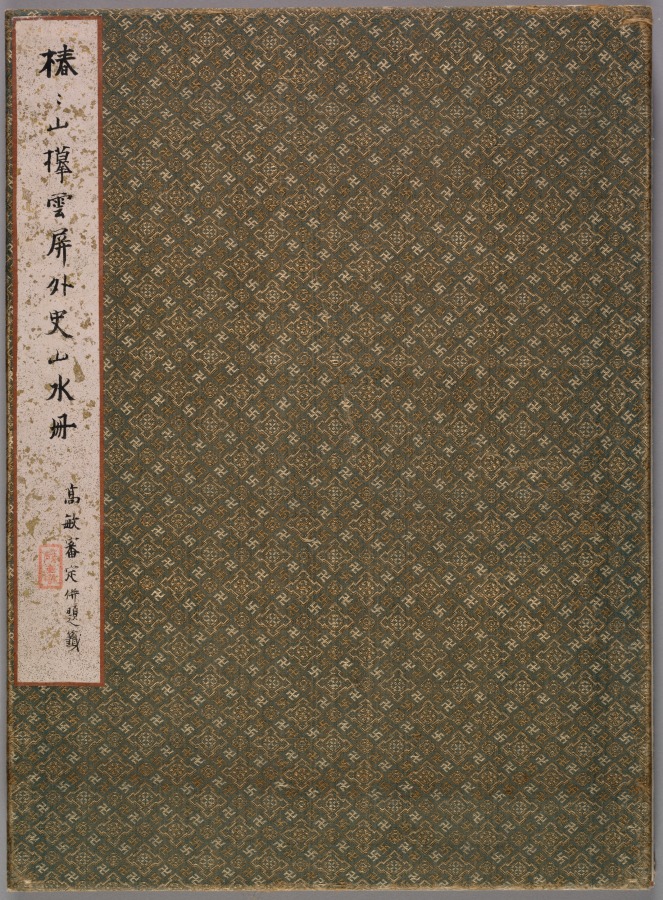
Tsubaki Chinzan · The Cleveland Museum of Art · The Kelvin Smith Collection, given by Mrs. Kelvin Smith · CC0
- Born
- 1801 · Edo.
- Died
- 1854
- Nationality
- Japan
- Occupation
- painter · artist
- Fields
- portrait
- Teachers
- Watanabe Kazan
VALÉORINE Encyclopedia
VALÉORINE documentary reading
Documentary summary
Illustration — Self-portrait • Illustration — Bird and Flowers Tsubaki Chinzan, originally Tasuku (Japanese:椿 椿山; 14 July 1801, Edo - 6 August 1854, Edo) was a Japanese painter in the nanga style. His other art names include Hekiin Sambō (壁陰 山房), Kyūan (休庵), Shikyūan (四休庵) and Takukadō (琢華堂).
Admitted source layer · organised and presented by VALÉORINE
Note VALÉORINE
No house-authored Note is published until its assertions and sources pass the VALÉORINE evidence contract. The documentary article remains available in full while that enrichment is being consolidated.
Documentary enrichment in progress · no unsupported statement published
Reference Check
Propose documentary evidence for Tsubaki Chinzan. A contribution is never written directly as fact: identity, source, rights and evidence gates still decide.
Sign in to contribute
Documentary evidence
Evidence Panel
identity unresolved · checked 25 September 2026
- Identity
- unresolved
- Independent source families
- 0
- Admitted assertions
- 0
- Open conflicts
- 0
Authority files
wikidata · Q3541614 · wikipedia · Tsubaki Chinzan
In this article
Life and work
Training under Watanabe Kazan is recorded. Shima Kakoku and Tachihara Bokujirō are recorded as having studied under Tsubaki Chinzan. Subjects and genres recorded for the work are portrait. Work by Tsubaki Chinzan is recorded in the collections of Minneapolis Institute of Art, The Nelson-Atkins Museum of Art, Metropolitan Museum of Art, Yale University Art Gallery and Cleveland Museum of Art.
He was born in the Koishikawa district of Edo. He was the son of a Samurai who was a retainer of the Shogunate and served as head of the Spear Corps. His father died when he was seven and, following the hereditary system, he was trained in martial arts and horsemanship. He was personally more inclined to an artistic career. However, to help supplement his meager income, he began to study painting. His first lessons came from Kaneko Kinryō, followed by Tani Bunchō and, lastly, at the age of seventeen, with Watanabe Kazan; becoming his favorite student. In 1839, when Kazan was caught up in the "Bansha no goku" and imprisoned, Tsubaki was part of the team that rescued him. After Kazan committed seppuku in 1841, he helped raise his son, Shōka (artist), and gave him painting lessons. As a result of this affair, he resigned from the Samurai service. He painted portraits of many of his associates in the Japanese art world, which show some European influence. His other works, mostly flowers and birds, are firmly grounded in traditional styles. At the age of fifty, he designed two six piece screens (Byōbu). The second, featuring orchids and bamboo (蘭竹図屏風), is one of his most familiar works and is known as the "Ranchiku Screen" in English. It was said that he was very austere; refraining from alcohol, smoking and, until he was married, female companionship. He also slept little. In addition to painting, he wrote haiku, practiced the tea ceremony and played the shō. His son, Kakoku, was also a talented painter, but died at the age of twenty-six, before his father. Tsubaki's work is held in the permanent collections of many institutions, including the Metropolitan Museum of Art, the Tochigi Prefectural Museum of Fine Arts, the Seattle Art Museum, the Birmingham Museum of Art, the University of Michigan Museum of Art, the Los Angeles County Museum of Art, the Herbert F. Johnson Museum of Art, the Philadelphia Museum of Art, and the Detroit Institute of Arts.
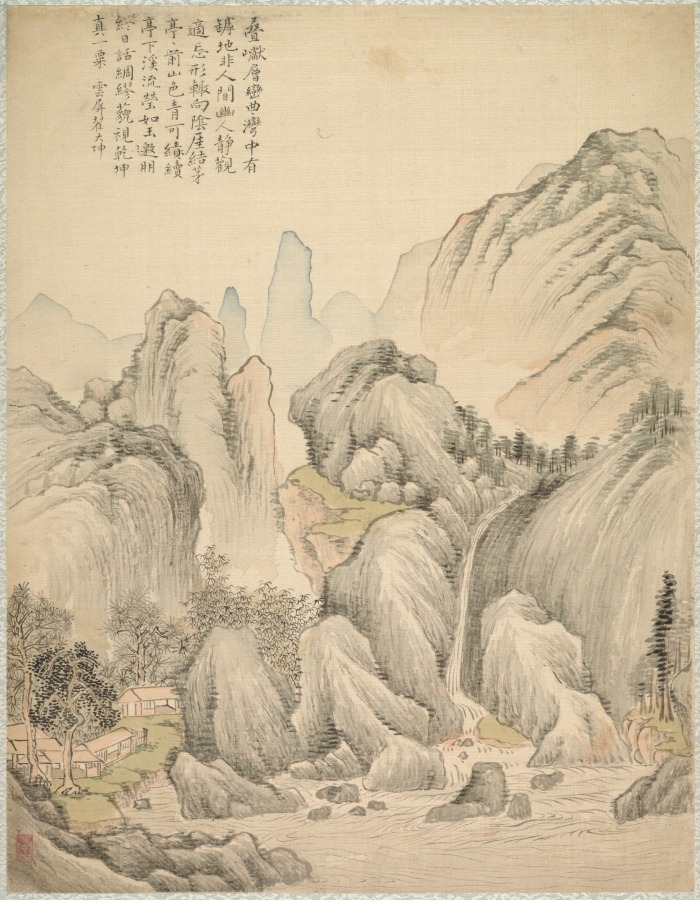
Folded Hills and Layered Peaks, 1847, by Tsubaki Chinzan
Tsubaki Chinzan · The Cleveland Museum of Art · The Kelvin Smith Collection, given by Mrs. Kelvin Smith
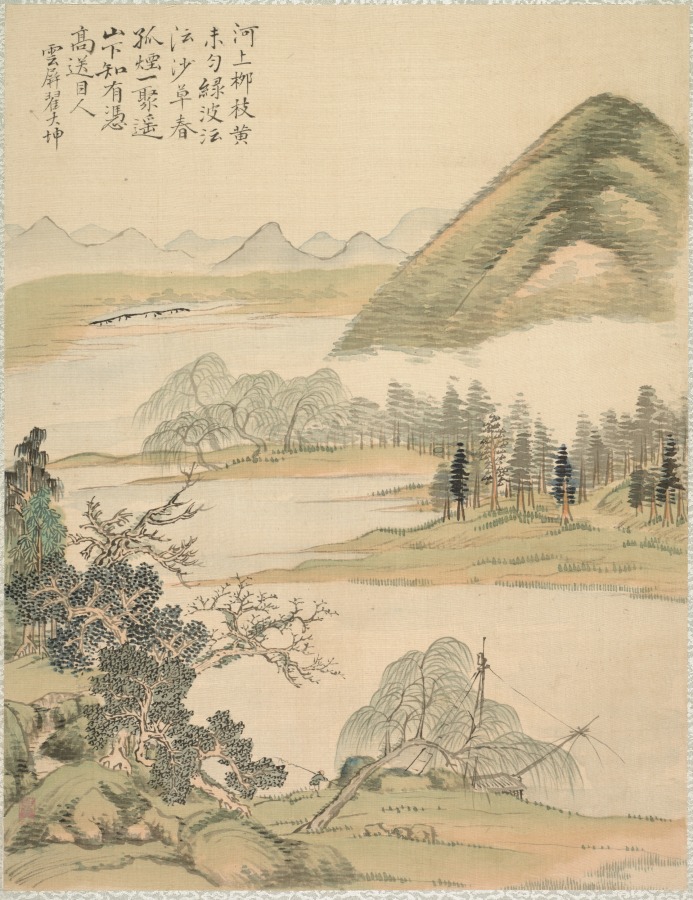
Willow Branches in Spring, 1847, by Tsubaki Chinzan
Tsubaki Chinzan · The Cleveland Museum of Art · The Kelvin Smith Collection, given by Mrs. Kelvin Smith
Notes from the source article
Cited by Wikipedia
Notes from the source article
These works are cited by the source article, in its own numbering. They are recorded as its citations, not as sources VALÉORINE has verified.
- 1.Carpenter, John T. The Poetry of Nature: Edo Paintings from the Fishbein-Bender Collection. Metropolitan Museum of Art. 97. 2018-02-26. 978-1-58839-654-9.
- 2.Search the Collection The Metropolitan Museum of Art. www.metmuseum.org.
- 3.TSUBAKI, Chinzan|TOCHIGI PREFECTURAL MUSEUM OF FINE ARTS. www.art.pref.tochigi.lg.jp.
- 4.Album painting in fan shape. Seattle Art Museum.
- 5.In the Rice Fields Birmingham Museum of Art.
- 6.Exchange: Flowers. exchange.umma.umich.edu.
- 7.Portrait of Yue Fei LACMA Collections. collections.lacma.org.
- 8.Works – Tsubaki Chinzan – People – eMuseum. emuseum.cornell.edu.
- 9.Philadelphia Museum of Art - Collections : Search Collections. www.philamuseum.org.
- 10.Flowers and Insects. www.dia.org.
Bibliography printed in the source article · 2
- Takeda, Kōichi: Tsubaki Chinzan. In: Nihon no Nanga. Tōshindō, 2000. .
- Laurance P. Roberts: Chinzan. In: A Dictionary of Japanese Artists. Weatherhill, 1976. .
References
Citations
References
Each reference names the institution holding it, so a reader may go to the document itself.
reference work
Partially resolvedreference work
Partially resolved
The Encyclopedia exists whether or not anything is for sale. Corrections are recorded rather than overwritten, and every version of this record is kept. Published 04 September 2026.
Elsewhere in Paintings
18,452 published records in this field, each with its sources named.
- Trygve ThorsenArtist
- Tsanko LavrenovArtist
- Tseng Yu-hoArtist
- Tshibumba Kanda MatuluArtist
- Tsuchida BakusenArtist
- Tsuji KakōArtist
- TsukimaroArtist
- Tsuruko YamazakiArtist
Best supported in this field
For owners
Own a work by Tsubaki Chinzan?
A specialist will read what you send and tell you what the house can establish, what it cannot, and whether the object is suited to sale. There is no charge and no obligation. The object stays with you throughout; nothing is shipped to us unless it is arranged in writing beforehand.