
Thomas Uwins
Illustration — The Henry VII Chapel (1812 engraving) Thomas Uwins (24 February 1782, in London – 26 August 1857) was a British portrait, subject, genre and landscape painter in watercolour and oil, and a book illustrator. He became a full member of the Old Watercolour Society and a Royal Academician, and held a number of high-profile art appointments including the librarian of the Royal Academy, Surveyor of Pictures to Queen Victoria and the Keeper of the National Gallery.
Also recorded as Uwins · T. Uwins · R.A. Uwins
Thomas Uwins
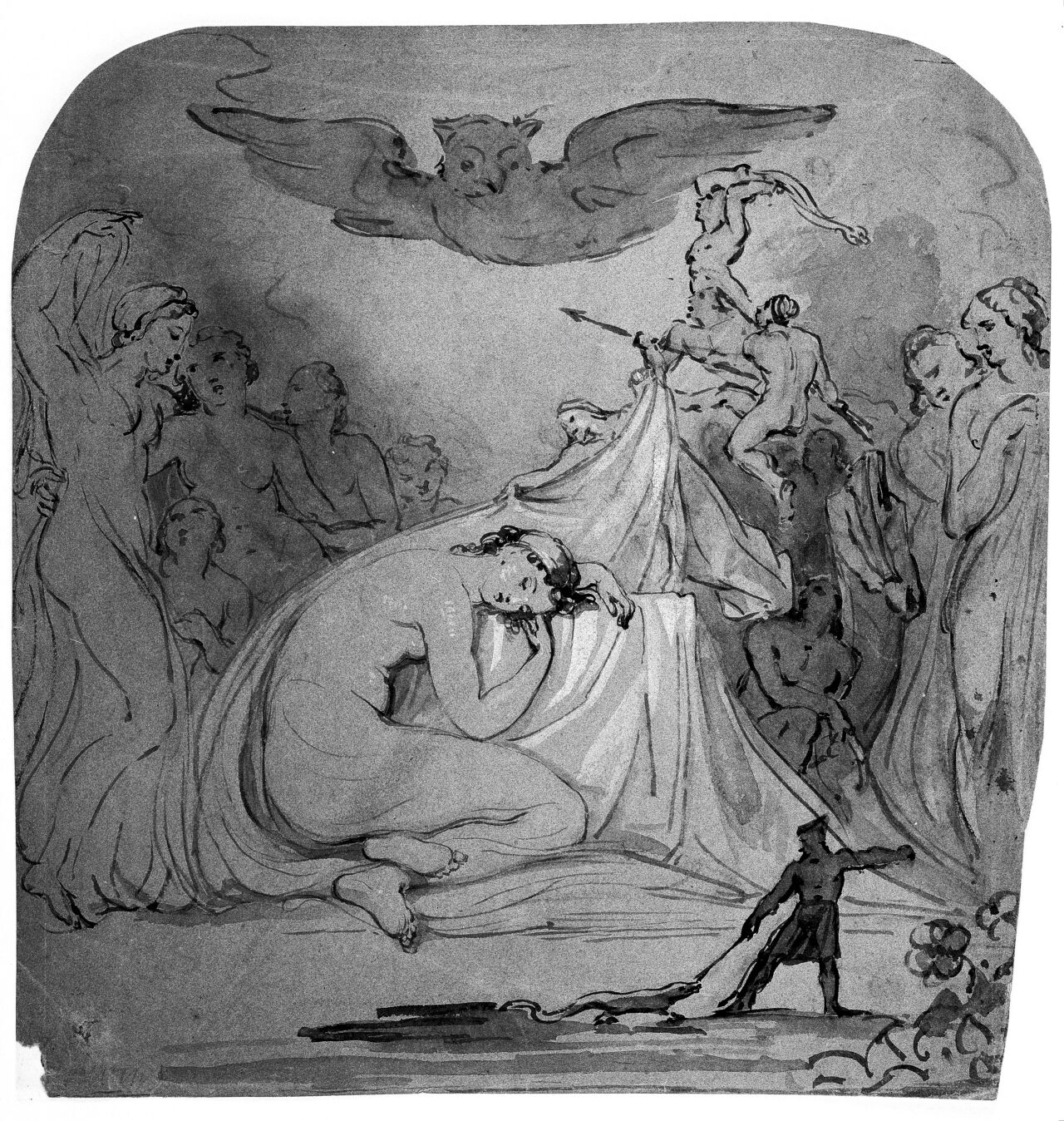
Thomas Uwins · Wellcome Collection, London · Wellcome Collection · Public Domain Mark
- Born
- 1782 · London.
- Died
- 1857
- Nationality
- United Kingdom of Great Britain and Ireland
- Occupation
- painter · illustrator
- Fields
- genre · portrait
- Languages
- English
VALÉORINE Encyclopedia
VALÉORINE documentary reading
Documentary summary
Illustration — The Henry VII Chapel (1812 engraving) Thomas Uwins (24 February 1782, in London – 26 August 1857) was a British portrait, subject, genre and landscape painter in watercolour and oil, and a book illustrator. He became a full member of the Old Watercolour Society and a Royal Academician, and held a number of high-profile art appointments including the librarian of the Royal Academy, Surveyor of Pictures to Queen Victoria and the Keeper of the National Gallery.
Admitted source layer · organised and presented by VALÉORINE
Note VALÉORINE
Thomas Uwins (1782–1857) was a British illustrator and painter. The illustrator was born in London.
Thomas Uwins was a member of Royal Academy of Arts and held the position of Surveyor of the Queen's Pictures. The illustrator worked in Kingdom of the Two Sicilies, Papal States and United Kingdom of Great Britain and Ireland.
Genres include genre and portrait. Languages used include English. Works by Thomas Uwins are held at Auckland Art Gallery, Manchester Art Gallery and Royal Museums Greenwich, among others.
Composed from admitted, traceable facts · 26 September 2026
VALÉORINE
Reference Check
Propose documentary evidence for Thomas Uwins. A contribution is never written directly as fact: identity, source, rights and evidence gates still decide.
Sign in to contribute
World of VALÉORINE
Documentary connections
Only confirmed graph relationships appear here. Images are shown only when their identity and reuse rights both pass the documentary gate.

Documentary evidence
Documentary basis
Authority files
wikidata · Q7794639 · wikipedia · Thomas Uwins
In this article
Early years and training
Early years and training
The recorded working language is English. Subjects and genres recorded for the work are genre and portrait. Places of work recorded in the authority are United Kingdom of Great Britain and Ireland, Kingdom of the Two Sicilies and Papal States. Positions recorded include Surveyor of the Queen's Pictures. Work by Thomas Uwins is recorded in the collections of Auckland Art Gallery, Tate, Royal Museums Greenwich, Smithsonian American Art Museum and Victoria and Albert Museum.
• Illustration — Portrait of Sir William Gell (1832 engraving) Uwins was born at Hermes Hill, Pentonville in London. He was the youngest of the four children of Thomas Uwins, a clerk in the Bank of England. David Uwins (c. 1780-1837), physician and medical writer, was his elder brother. Thomas showed talent as an artist from an early age, and had some instruction from the drawing-master at his sister's school. He was a day scholar at Mr. Crole's school in Queen's Head Lane, Islington, for 6 years, and in 1797, at the age of 15, was apprenticed to the engraver Benjamin Smith (d. 1833). While with Smith he engraved part of a plate for John Boydell's editions of 'Shakespeare' but had an attack of jaundice, said to have been caused by overwork and dislike of the drudgery of engraving, and left without completing the apprenticeship. In 1798, Uwins entered the schools of the Royal Academy, London, and joined Sir Charles Bell's anatomical class, supporting himself mainly by painting portrait miniature. He exhibited a portrait of a "Mr. G. Meyers" at the academy in 1799. He also - now or later - gave lessons in drawing, and about 1808 began to design frontispieces and vignettes to Thomas Day's "The History of Sandford and Merton", 'Robinson Crusoe' and others, for J. Walker of Paternoster Row. He also designed for bookseller Thomas Tegg (1776–1845), drew engravers' outlines for Charles Warren the engraver, and produced work for Rudolph Ackermann's 'Repository of Fashions' for which he also wrote articles signed 'Arbiter Elegantiarum'. One of his drawings exhibited at the academy in 1808 was a portrait of Charles Warren's daughter, Mrs. Luke Clennell, as Belphoebe in Spenser's 'Faerie Queene'.
Life in Scotland
Life in Scotland
In 1818 Uwins resigned from the Old watercolour society to concentrate on paying off a debt relating to a security given to the Society of Arts. Continual work on miniatures seriously injured his eyesight, and in 1820 he went to Scotland to make topographical drawings to illustrate works by Sir Walter Scott, with whom he became well acquainted. He spent two years in Edinburgh painting and drawing portraits with much success, and on the occasion of the visit of George IV to Edinburgh in 1822, he executed two transparencies, one of which was twelve feet high.
Seven years in Italy
Seven years in Italy
In 1824 Uwins travelled to Italy for his health. There he settled for the winter in Rome where he met a number of English artists, including Charles Eastlake and Joseph Severn. Uwins and Eastlake became close friends. Eastlake influenced Uwins in his technique, encouraging him to lighten his palette and to work on a larger scale. He also encouraged his friend to adopt similar themes to his own paintings. Uwin's subject matter began to include peasants and bandits in imitation of Eastlake. The following spring he visited Naples and met Richard Acton who commissioned him to paint a number of Italian scenes. He remained in Naples for several years painting portraits of British and Austrian visitors. While in Italy he kept up a correspondence with his two brothers Zechariah and David, which was published after his death in A memoir of Thomas Uwins. From 1829–30 Uwins sent his pictures of Italian subjects to the exhibitions of the British Institution and Royal Academy. In 1830 he exhibited "Neapolitans dancing the Tarantella", and, in 1832, The Neapolitan Saint Manufactury proved a great success in the RA exhibition. At about this time he returned to England and became gradually more involved in arts administration. He was elected an associate of the Royal Academy (ARA) in 1833, and a full academician (RA) in 1838.
Later work
Later work
In 1839 he exhibited one of his best pictures, Le Chapeau de Brigand. The little girl depicted was a daughter of a friend named Joseph, with whom he lived for some time. By 1870 it was one of the most frequently copied paintings at the National Gallery. It is now also at Tate. In 1843 he painted a fresco of the lady in John Milton's 'Comus' for the Queen's Pavilion in Buckingham Palace Gardens. In 1844 he was made librarian of the Royal Academy, and Surveyor of pictures to Queen Victoria (completing the first catalogue raisonné of the Royal Collection), and from 1847–55, keeper of the National Gallery - succeeding Sir Charles Eastlake. In 1850 he married Sarah Kirby, and though without issue, the union was said to be a happy one. In 1854 he had a serious illness, and in 1855 gave up his various offices and retired to Staines, in Middlesex, an invalid. He carried on painting, however, until his death on 26 August 1857.
Identity and overview
Identity and overview
The following is established of the heading itself.
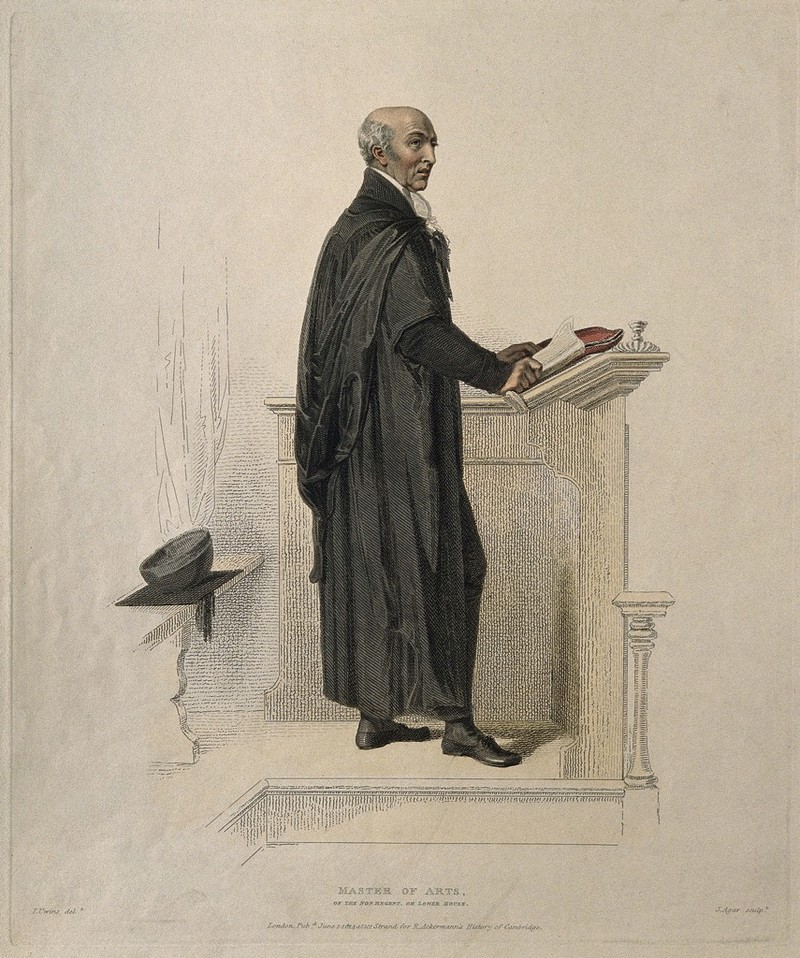
William Farish. Line engraving by J. Agar, 1814, after T. Uwins., by Thomas Uwins
Thomas Uwins · Wellcome Collection, London · Wellcome Collection
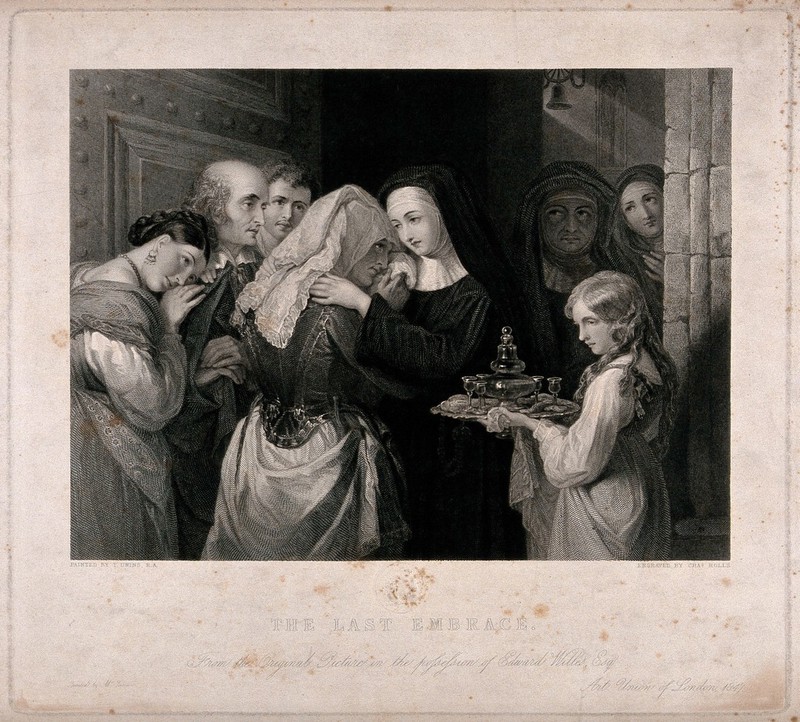
A woman entering a nunnery as a novice and saying goodbye to her family. Engraving by C. Rolls after T. Uwins., 1847, by Thomas Uwins
Thomas Uwins · Wellcome Collection, London · Wellcome Collection
Primary material
Documents and archives
scholarly publication
- Uwins, Thomas (1782–1857), painter, illustrator, and art administrator, Oxford Dictionary of National Biography, 2004
Scholarly · Crossref registry · 2004
Institutional database
- Wikidata, structured authority record Q7794639: Thomas Uwins
Scholarly · Wikimedia Foundation
reference work
- “Thomas Uwins”, English Wikipedia, consulted as further reading
Reputable secondary · Wikipedia
Watercolour Society and travels to France
• Illustration — Illustration to George Herbert's "Mattens" (1834 engraving) In 1809 Uwins joined the "Old Watercolour Society" as associate member, and in 1813 became a full member. From 1809 to 1818 he was a constant contributor to the society's exhibitions, sending illustrations of works by Henry Fielding, John Bunyan, Shakespeare, Laurence Sterne, and other authors, besides numerous pastoral scenes and figures. He served as secretary of the society in 1813–14 and 1816–17. In 1811 he stayed at Farnham, Surrey, studying the hopfields, and in 1815 visited the Lake District, where he met Wordsworth. In 1817, after the Napoleonic Wars, he went to France to paint vintage scenes. He stayed for a short while at Paris, and was provided with letters of introduction,He passed through the Burgundy country to Bordeaux, where he stayed with the Cabareuss family, and visited the chateaux of all the principal growers. The result was seen in two drawings sent to the 'Old Watercolour' Society's exhibition of 1818. Some of his sketches later became the basis for the oil painting The Vintage (1847; Tate, London).
Notes from the source article
Cited by Wikipedia
Notes from the source article
These works are cited by the source article, in its own numbering. They are recorded as its citations, not as sources VALÉORINE has verified.
- 1.58. 79-80.
- 2.Oxford Dictionary of National Biography (2004).
- 3.Biography (Answers.com).
- 4.Works by Unwins (Tate Collection, London).
- 5.Avery-Quash, Susanna. Art for the Nation: The Eastlakes and the Victorian Art World. The National Gallery. 22–23. 2011. 9781857095074.
- 6.Sarah Uwins, vol. 2, p 3 ff. (1858).
- 7.Le Chapeau de brigand (Tate Collection).
- 8.Conlin, Jonathan. The Nation's Mantelpiece: A History of the National Gallery. Pallas Athene. 474. 2006. 9781843680208.
Bibliography printed in the source article · 2
- Sarah Uwins. A Memoir of Thomas Uwins: Volume 1, Volume 2 (London: Longman, Brown, Green, Longmans & Roberts, 1858).
- J. F. C. Phillips, Thomas Uwins, R.A., 1782–1857 (The Gallery Downstairs, 1989).
References
Citations
References
Each reference names the institution holding it, so a reader may go to the document itself.
scholarly publication
Uwins, Thomas (1782–1857), painter, illustrator, and art administrator, Oxford Dictionary of National Biography, 2004Crossref registry
Institutional witnessInstitutional database
Wikidata, structured authority record Q7794639: Thomas UwinsWikimedia Foundation
Institutional witnessreference work
Secondary witness
The Encyclopedia exists whether or not anything is for sale. Corrections are recorded rather than overwritten, and every version of this record is kept. Published 17 August 2026.
Elsewhere in Illustration
5,224 published records in this field, each with its sources named.
- Thomas ShearerIllustrator
- Thomas Shotter BoysIllustrator
- Thomas ThiemeyerIllustrator
- Thomas TrevelyonIllustrator
- Thomas Victor HallIllustrator
- Thomas WarmingIllustrator
- Thomas WatlingIllustrator
- Thorbjørn EgnerIllustrator
Best supported in this field
For owners
Own a work by Thomas Uwins?
A specialist will read what you send and tell you what the house can establish, what it cannot, and whether the object is suited to sale. There is no charge and no obligation. The object stays with you throughout; nothing is shipped to us unless it is arranged in writing beforehand.