
Takashi Miike
Takashi Miike (三池 崇史, Miike Takashi; born August 24, 1960) is a Japanese filmmaker and actor. He has directed over 100 films and television productions, in a variety of genres such as action, children's films, comedy, drama, horror, musicals, and jidaigeki period dramas. He is best known internationally for the horror films Audition (1999), Ichi the Killer (2001), Visitor Q (2001), Gozu (2003), and One Missed Call (2003).
Takashi Miike
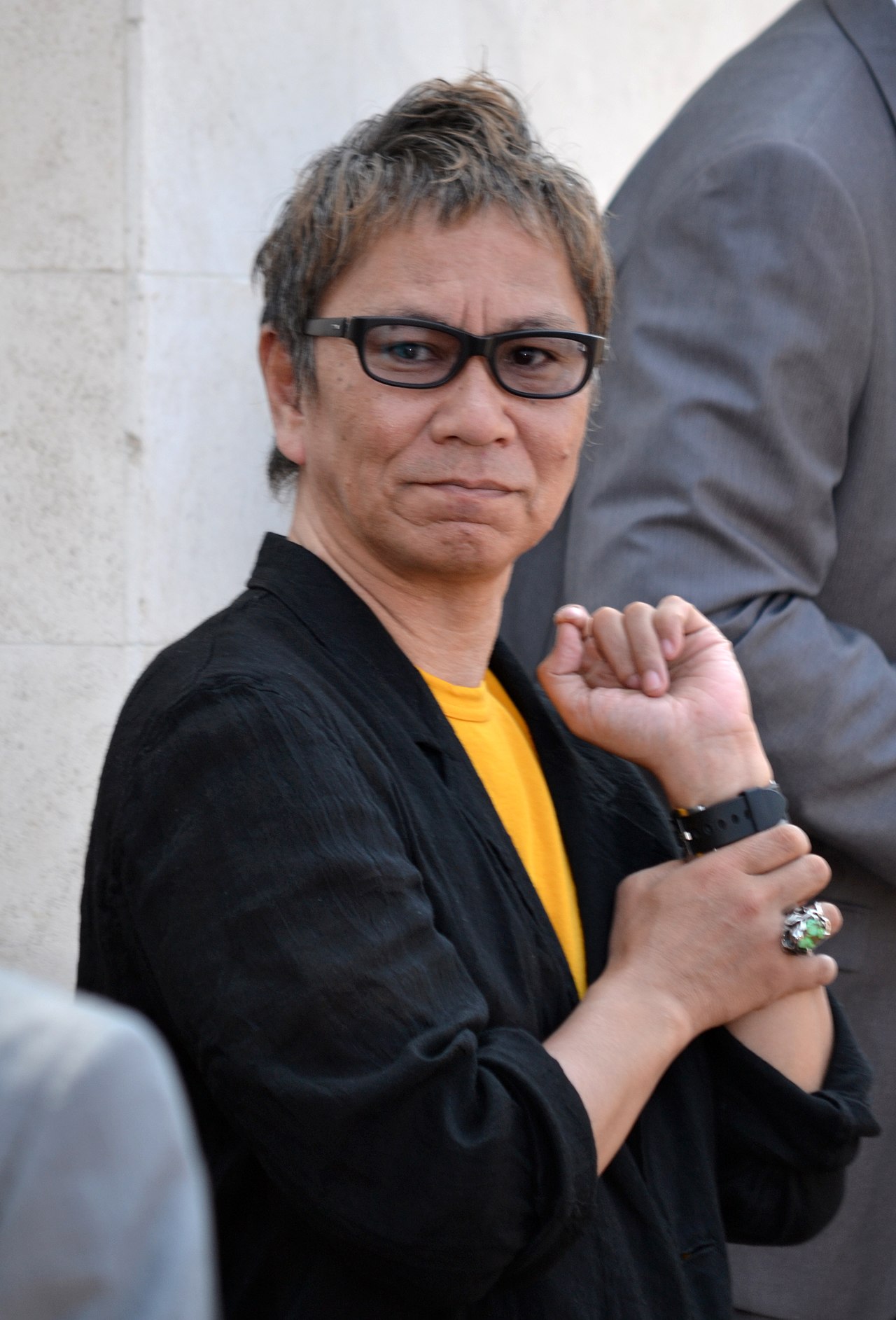
Olivier Strecker · CC BY-SA 3.0
- Born
- 1960 · Yao.
- Nationality
- Japan
- Occupation
- film producer · screenwriter · actor · director
- Education
- Japan Institute of the Moving Image
- Honours
- Nikkan Sports Film Award for Best Director · Mainichi Film Award for Best Director · Sitges Grand Honorary Award · Time Machine Award · Dr.M.A Wazed Miah Gold Medal
- Languages
- Japanese
VALÉORINE Encyclopedia
VALÉORINE documentary reading
Documentary summary
Takashi Miike (三池 崇史, Miike Takashi; born August 24, 1960) is a Japanese filmmaker and actor. He has directed over 100 films and television productions, in a variety of genres such as action, children's films, comedy, drama, horror, musicals, and jidaigeki period dramas. He is best known internationally for the horror films Audition (1999), Ichi the Killer (2001), Visitor Q (2001), Gozu (2003), and One Missed Call (2003).
Admitted source layer · organised and presented by VALÉORINE
Note VALÉORINE
Takashi Miike (born 1960) is a Japanese actor, director and film producer, among other activities. The actor was born in Yao.
Takashi Miike studied at Japan Institute of the Moving Image. The actor worked in Japan.
Languages used include Japanese. Takashi Miike received Dr.M.A Wazed Miah Gold Medal, Mainichi Film Award for Best Director and Nikkan Sports Film Award for Best Director, among others.
Composed from admitted, traceable facts · 27 September 2026
VALÉORINE
Reference Check
Propose documentary evidence for Takashi Miike. A contribution is never written directly as fact: identity, source, rights and evidence gates still decide.
Sign in to contribute
Documentary evidence
Evidence Panel
not yet certified
- Identity
- resolved
- Independent source families
- 0
- Admitted assertions
- 0
- Open conflicts
- 0
Authority files
wikidata · Q185421 · wikipedia · Takashi Miike
In this article
Early life and education
Early life and education
He is also known for samurai and yakuza films such as Dead or Alive (1999), Graveyard of Honor (2002), 13 Assassins (2010), earning a Japan Academy Film Prize nomination for Director of the Year, and Hara-Kiri: Death of a Samurai (2011). He has also acted in more than 20 films. Miike spent much of his career as a controversial figure who had several of his films criticized for their extreme graphic violence and other transgressive content, especially Ichi the Killer, which was banned in several countries. However, in his later career, he shifted towards work more acceptable to the mainstream; his films Hara-Kiri and Straw Shield (2013) were both nominated for the Palme d'Or at the Cannes Film Festival, while both Sukiyaki Western Django (2007) and 13 Assassins were nominated for the Venice Film Festival's Golden Lion. Several of his films have developed cult followings.
Takashi Miike studied at Japan Institute of the Moving Image. The recorded working language is Japanese. Places of work recorded in the authority are Japan. Distinctions recorded are Nikkan Sports Film Award for Best Director, Mainichi Film Award for Best Director, Sitges Grand Honorary Award and Time Machine Award.
Miike was born in Yao, Osaka, on August 24, 1960. His mother was a seamstress and his father was a welder. His father was born in Seoul, which was then part of Japanese Korea, as his paternal grandfather was stationed in Korea and China during World War II. He was interested in motorcycles during his childhood, and considered racing professionally. He graduated from Jōshō Gakuen Junior and Senior High School. At the age of 18, he joined the Yokohama Vocational School of Broadcast and Film (now the Japan Institute of the Moving Image), where he came under the guidance of the school's founder Shohei Imamura. When a local television company came looking for unpaid interns on a production, he was nominated by the school, despite his later claim that he only rarely attended classes.
Career
Career
Miike's first films were television productions, but he also began directing several direct-to-video V-Cinema releases. He still intermittently directs these due to the creative freedom afforded by the less stringent censorship of the medium and the riskier content that producers will allow. Miike's theatrical debut was the film The Third Gangster (Daisan no gokudō), but Shinjuku Triad Society (1995) was his first theatrical release to gain public attention. The film showcased his extreme style and his recurring themes, and its success allowed him to work on higher-budgeted pictures. Shinjuku Triad Society was the first film in what is labeled his "Black Society Trilogy", which also includes Rainy Dog (1997) and Ley Lines (1999). Miike gained international fame in the early 2000s when his horror film Audition (1999), his violent yakuza epic Dead or Alive (1999), and his controversial 2001 adaptation of the manga Ichi the Killer all played at international film festivals. He gained a strong cult following in the West that grew with the increase in DVD releases of his works. During the international premiere of Ichi the Killer at the 2001 Toronto International Film Festival, the audience received "barf bags" emblazoned with the film's logo as a promotional gimmick. The BBFC refused to allow the release of the film uncut in the United Kingdom, citing its extreme levels of sexual violence towards women, and it required just over three minutes of footage to be removed before its release. In Hong Kong, 17 minutes of footage were cut. The film was outright banned in Germany, Malaysia, and Norway. In 2005, Miike was invited to direct an episode of the anthology series Masters of Horror, intended to provide horror directors with creative freedom and relaxed restrictions on violent and sexual content. However, when Showtime acquired the rights to the series, Miike's episode "Imprint" was deemed too disturbing for broadcast. Showtime cancelled it from the broadcast lineup even after extended negotiations, though it was retained as part of the series' DVD release. Mick Garris, creator and executive producer of the series, described the episode as "amazing [but] hard to watch" and "definitely the most disturbing" production he had ever seen. "Imprint" has yet to air in the United States but was shown on Bravo in the United Kingdom, Nelonen in Finland, Rai Tre in Italy, and FX in multiple other countries. Anchor Bay Entertainment, which handled the American DVD releases for Masters of Horror, released the episode uncut on September 26, 2006. In his later career, Miike has shifted towards work more acceptable to the mainstream; his samurai film Hara-Kiri: Death of a Samurai (2011) premiered in competition at the 2011 Cannes Film Festival and his spy thriller film Straw Shield (2013) was nominated for the Palme d'Or at the 2013 Cannes Film Festival.
Stage directing
Stage directing
In 2005, Miike directed a Kabuki-style play titled Demon Pond. The DVD recording of the performance was released by Cinema Epoch. Miike directed the play Zatoichi based on the eponymous character. The stage production was performed and filmed on December 12, 2007, and the DVD was released on May 30, 2008.
Style
Style
Miike achieved notoriety for depicting shocking scenes of extreme violence and sexual perversions. Many of his films contain graphic and lurid bloodshed, portrayed in an over-the-top and cartoonish manner. Much of his work depicts the activities of criminals, especially yakuza, or concern themselves with gaijin (foreigners living in Japan). He is known for his films' dark comedy and for pushing the boundaries of censorship. Miike has directed films in a range of genres. He has created lighthearted children's films (Ninja Kids!!!, The Great Yokai War), period pieces (Sabu), a road movie (The Bird People in China), a teen drama (Andromedia), a farcical musical comedy horror (The Happiness of the Katakuris), video game adaptations (Like a Dragon, Ace Attorney), manga adaptations (Blade of the Immortal, Jojo's Bizarre Adventure: Diamond Is Unbreakable, Terra Formers, The Mole Song Trilogy) and character driven crime dramas (Ley Lines, Agitator). While Miike often creates films that are less accessible and target arthouse audiences and fans of extreme cinema, such as Izo and the "Box" segment in Three... Extremes, he has created several mainstream and commercial titles such as the horror film One Missed Call and the fantasy drama The Great Yokai War. Reflecting his unusual approach to filmmaking, Miike has said of his career: I became a director because I didn't have another choice. I dreamed of becoming a motorbike racer because I love motorbikes a lot. I think anyone can become a director, especially if you have money. Even Haruki Kadokawa became a director. To become a famous musician is also a way to become a director and, like Takeshi Kitano, achieving fame as a comedian and then becoming a director gives you a lot of freedom. There are so many ways to become a director. If there is a 1–10 scale for talent, then a 10-point talent is a director, but a one-point person can also become a director if he has the talent to make the right contacts. In motorbike racing, on the other hand, the winner is always an extreme talent. Even if we train a lot, we can't beat them. I admire that kind of world. But I didn't have a choice. I never thought about becoming a director before. I considered the occupation of film director as being for the intelligentsia.
Personal life
Personal life
Miike rarely discusses his private life. He is in a long-term relationship with his longtime producing partner Misako Saka.
Anime series
Anime series
Onimusha (2023) (chief director) Nyaight of the Living Cat (2025) (chief director)
Commercials
Commercials
地球兄弟 (Chikyu kyodai) (Blue Planet Brothers) (2013), ten 6-minute commercials for Japan Tobacco Midnight (2024), short online film for iPhone 15 Pro
Music videos
Music videos
Pandōra (2002)
Theatrical films
Direct-to-video
Influences
Miike cited the American science-fiction action film Starship Troopers (1997) as his favorite film. He has expressed admiration for fellow Japanese filmmakers Akira Kurosawa and Hideo Gosha. He named American filmmaker David Lynch as his favorite director from the English-speaking world, and cited Dutch filmmaker Paul Verhoeven (who directed Starship Troopers) as the director who fascinates him the most. He also said that he likes Canadian filmmaker David Cronenberg.
Primary material
Documents and archives
reference work
- Wikidata, structured authority record Q185421: Takashi Miike
Reputable secondary · Wikidata
- “Takashi Miike”, English Wikipedia, consulted as further reading
Reputable secondary · Wikipedia
scholarly publication
- Takashi Miike, Outlaw Masters of Japanese Film, 2005
Scholarly · Crossref registry · 2005
Notes from the source article
Cited by Wikipedia
Notes from the source article
These works are cited by the source article, in its own numbering. They are recorded as its citations, not as sources VALÉORINE has verified.
- 1.Strusiewicz, Cezary Jan. Takashi Miike: The Cult Horror Director Switches to Magical Girls. Tokyo Weekender. 2021-07-21.
- 2.Cassell Illustrated. 501 Movie Directors. 597. 2007. 9781844035731.
- 3.Mes, Tom. Agitator: The Cinema of Takashi Miike. Godalming: FAB Press, 2003. . p. 15.
- 4.Takashi Miike - Biography - IMDb. IMDb.
- 5.Toho Publishing, "KAMINOGE" vol. 65, pp. 74-85
- 6.Mes, pp. 16–18.
- 7.Mes, Tom. Agitator: The Cinema of Takashi Miike. Godalming: FAB Press, 2003. . p. 57.
- 8.Wong, Aliza S. Spaghetti Westerns: A Viewer's Guide. Rowman & Littlefield. December 15, 2018. 978-1-4422-6904-0.
- 9.Ichi the Killer tiff.net.
- 10.Ichi the Killer (18). British Board of Film Classification. November 12, 2002.
- 11.Ichi the Killer (Comparison). www.movie-censorship.com.
- 12.Filmart Flashback: In 2001, Takashi Miike Brought Ultra Violence to the Mainstream with 'Ichi the Killer' Hollywood Reporter. www.hollywoodreporter.com. March 19, 2018.
- 13.Kehr, Dave. Horror Film Made for Showtime Will Not Be Shown. The New York Times. January 19, 2006.
- 14.bravo.co.uk. Masters of Horror.
- 15.Masters of Horror: Imprint. Amazon. September 26, 2006.
- 16.Festival de Cannes: Official Selection. Cannes.
- 17.2013 Official Selection. Cannes. April 18, 2013.
- 18.Demon Pond (2005).
- 19.Brown, Todd. Miike Stage Production DEMON POND Coming To DVD!. December 27, 2007.
- 20.Interview Footage included in special features on American Region 1 DVD of Gozu
- 21.Hoad, Phil. Takashi Miike: Why I am bringing Japanese classics back to life. The Guardian. May 5, 2011.
- 22.『私と東映』 x 三池 崇史監督 (第1回 / 全2回). Facebook.
- 23.Takashi Miike director of Gozu by Anderswolleck – SuicideGirls.
- 24.Hendrix, Grady. Kaiju Shakedown: Takashi Miike. Film Comment. October 2014.
- 25.ULTRAMAN MAX Official Episode Guide. June 3, 2007.
- 26.高橋ヒロシ「QP」が深夜ドラマに、監督は再び三池崇史. コミックナタリー.
- 27.10月期深夜ドラマ「QP」. www.ntv.co.jp.
- 28.金曜ナイトドラマ『警部補ダイマジン』 テレビ朝日. www.tv-asahi.co.jp.
- 29.Loo, Egan. Mitsuteru Yokoyama's Kamen no Ninja Akakage Manga Gets Live-Action Series by Takashi Miike. Anime News Network. 2025-09-06.
- 30.監督・三池崇史で「仮面の忍者 赤影」がよみがえる、主演はFANTASTICS佐藤大樹(コメントあり). 映画ナタリー.
- 31.三池崇史がNスペ「富士山大噴火」のドラマパート演出、出演に伊藤淳史・前田亜季・松平健. 映画ナタリー.
- 32.Netflix Official Twitter. twitter.com.
- 33.Pineda, Rafael Antonio. Nyaight of the Living Cat TV Anime's Teaser Reveals Staff, Theme Song. Anime News Network. December 5, 2024.
- 34.<三池崇史の短編の穴>〜地球兄弟編〜.
- 35.Meale, Raffaele. Midnight (2024) di Takashi Miike - Recensione Quinlan.it. Quinlan. 2024-04-08.
- 36.Blue Planet Brothers (2013).
- 37.Shot on iPhone 15 Pro Midnight Apple.
- 38.Brzeski, Patrick. Apple Releases 19-Minute Takashi Miike Short Film Shot on an iPhone. The Hollywood Reporter. 2024-03-06.
- 39.Maglio, Tony. Takashi Miike Releases Secret Short Film Shot on an iPhone — Watch 'Midnight' Here. IndieWire. 2024-03-06.
Bibliography printed in the source article · 5
- Mes, Tom. Agitator: The Cinema of Takashi Miike. Godalming: FAB Press, 2003.
- Williams, Tony. "Takashi Miike's Cinema of Outrage." cineACTION 64 (2004): 54–62
- "Izo: Takashi Miike's History Lesson." Asian Cinema 16.2 (2005): 85–109.
- Gerow, Aaron. "The Homelessness of Style and the Problems of Studying Miike Takashi." Canadian Journal of Film Studies 18.1 (2009): 24–43
- Black, Art. Takashi Miike Revisited. Asian Cult Cinema. 38. 1st Quarter. 12–17. 2003.
References
Citations
References
Each reference names the institution holding it, so a reader may go to the document itself.
scholarly publication
Takashi Miike, Outlaw Masters of Japanese Film, 2005Crossref registry
Verifiedreference work
Partially resolvedreference work
Partially resolved
The Encyclopedia exists whether or not anything is for sale. Corrections are recorded rather than overwritten, and every version of this record is kept. Published 14 August 2026.
Elsewhere in Film memorabilia
37,298 published records in this field, each with its sources named.
- Takao OkawaraPerson
- Takao ŌsawaPerson
- Takashi KoizumiPerson
- Takashi KondōPerson
- Takashi ShimizuPerson
- Takashi ShimuraPerson
- Takashi SorimachiPerson
- Takashi TsukamotoPerson
Best supported in this field
For owners
Own a work by Takashi Miike?
A specialist will read what you send and tell you what the house can establish, what it cannot, and whether the object is suited to sale. There is no charge and no obligation. The object stays with you throughout; nothing is shipped to us unless it is arranged in writing beforehand.