
Shen Zhou
Also recorded as Shen Chou · Shitian · Qu'ian (style name) · Qinan Shen
Shen Zhou
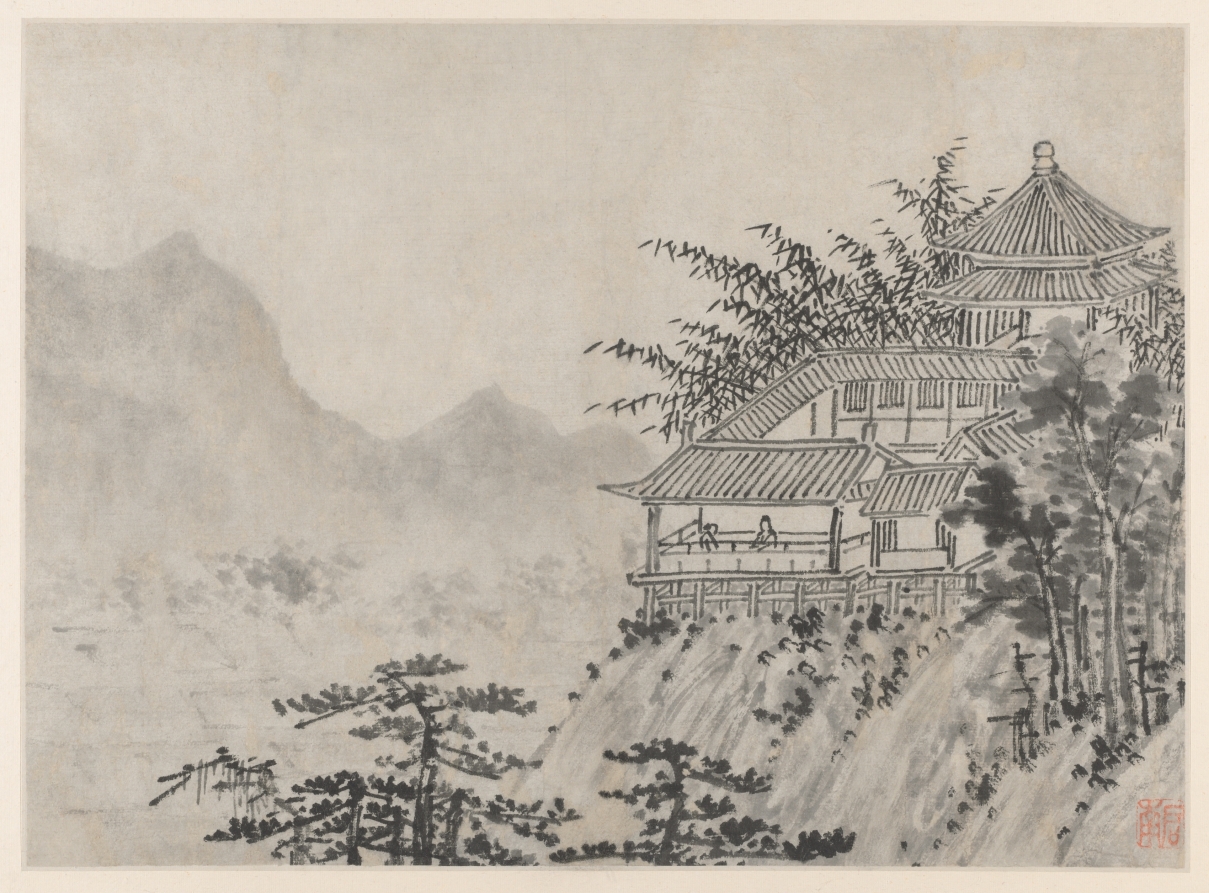
Shen Zhou · The Cleveland Museum of Art · Leonard C. Hanna Jr. Fund · CC0
- Name
- Shen Zhou
- Birth Name
- Xiangcheng, Suzhou, China
- Born
- 1427
- Birthplace
- Xiangcheng, Jiangsu
- Died
- 1509
- Known for
- Shan shui
- Movement
- Wu School, Four Masters of the Ming dynasty
- Nationality
- Ming dynasty
- Occupation
- painter · writer · poet · calligrapher
- Fields
- shan shui · ink wash painting · bird-and-flower painting · semi-cursive script
- Movements
- Wu School
- Teachers
- Chen Kuan · Du Qiong
Reference Check
Propose documentary evidence for Shen Zhou. A contribution is never written directly as fact: identity, source, rights and evidence gates still decide.
Sign in to contribute
World of VALÉORINE
Documentary connections
Only confirmed graph relationships appear here. Images are shown only when their identity and reuse rights both pass the documentary gate.
Documentary evidence
Evidence Panel
not yet certified
- Identity
- resolved
- Independent source families
- 0
- Admitted assertions
- 0
- Open conflicts
- 0
Authority files
getty · 500121310 · gnd · 11899459X · wikidata · Q558863 · wikipedia · Shen Zhou
In this article
Biography
Biography
Training under Chen Kuan and Du Qiong is recorded. The field of work recorded is shan shui, ink wash painting and bird-and-flower painting. Subjects and genres recorded for the work are landscape. Huang Tingjian and Four Masters of the Yuan Dynasty are recorded as an influence. Work by Shen Zhou is recorded in the collections of Art Institute of Chicago, The Nelson-Atkins Museum of Art, Metropolitan Museum of Art, National Palace Museum and Yale University Art Gallery.
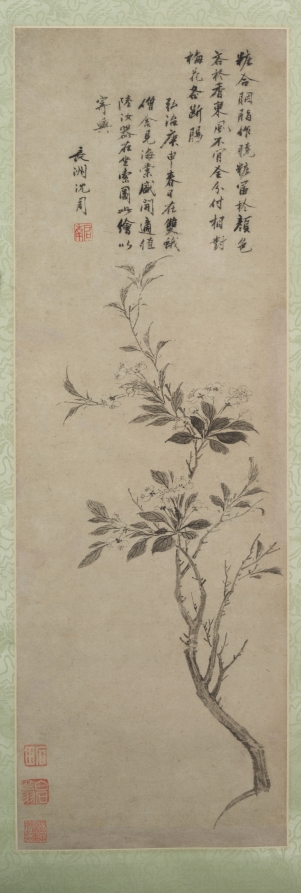
Flowering Crab Apple, 1500, by Shen Zhou
Shen Zhou · The Cleveland Museum of Art · Bequest of Mrs. A. Dean Perry
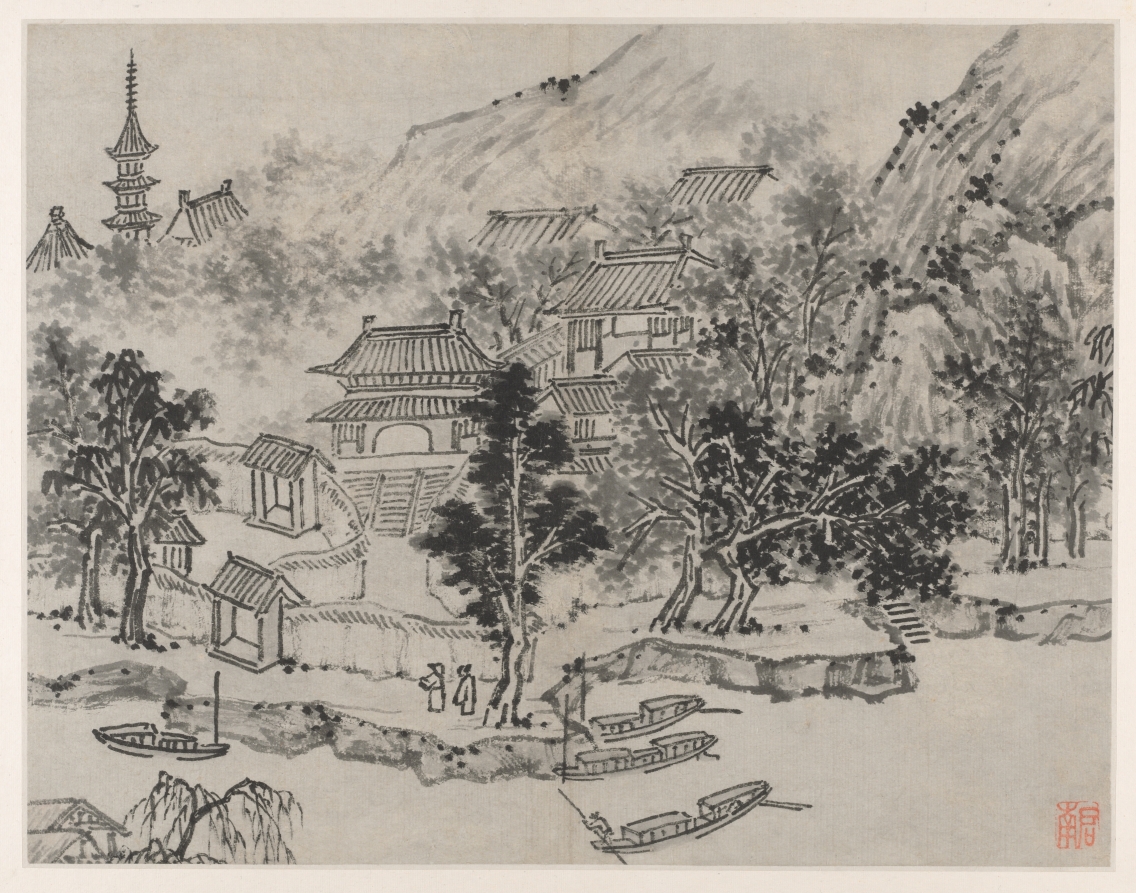
Distant View of Tiger Hill from the Canal Mooring, from Twelve Views of Tiger Hill, Suzhou, after 1490, by Shen Zhou
Shen Zhou · The Cleveland Museum of Art · Leonard C. Hanna Jr. Fund
Key facts
Key facts
• Name — Shen Zhou • Birth Name — Xiangcheng, Suzhou, China • Born — 1427 • Birthplace — Xiangcheng, Jiangsu • Died — 1509 • Known for — Shan shui • Movement — Wu School, Four Masters of the Ming dynasty
Key facts
Key facts
• C — 沈周 • Altname — Shen Qinan • T2 — 沈啟南 • S2 — 沈启南 • Altname3 — Shen Shitian • C3 — 沈石田 • P — Shěn Zhōu • J — sam2 zau1 • Y — Sám Jāu • W — Shen 3 Chou 1 • Bpmf — ㄕㄣˇ ㄓㄡ • P2 — Shěn Qǐnán • Bpmf2 — ㄕㄣˇ ㄑㄧˇ ㄋㄢˊ • W2 — Shen 3 Ch‘i 3 -nan 2 • Y2 — Sám Káinàahm • J2 — sam2 kai2 naam4 • P3 — Shěn Shítián • Bpmf3 — ㄕㄣˇ ㄕˊ ㄊㄧㄢˊ • W3 — Shen 3 Shih 2 -t‘ian 2 • Y3 — Sám Sehktìhn • J3 — sam2 sek6 tin4 Shen Zhou (1427–1509), courtesy names Qinan (启南) and Shitian (石田), was a Chinese painter in the Ming dynasty. He lived during the post-transition period of the Yuan conquest by the Ming. His family worked closely with the government and maintained its wealthy status. Shen later retired and lived a reclusive life, spending most of his time painting and taking care of his widowed mother. He was a contributor to the more individualist Wu School of Chinese art. Besides painting, he was also accomplished in history and the classics.
Life
Life
Shen Zhou was born into a wealthy family in Xiangcheng, near the thriving city of Suzhou, in the Jiangsu province, China. His genealogy traces his family's wealth to the late Yuan period, but only as far as Shen's paternal great-grandfather, Shen Liang-ch’en, who became a wealthy landowner following the dissolution of Mongol rule. After the collapse of the Yuan and the emergence of the new Ming dynasty, the position of tax collector was assigned to the head of the Shen family, under the Hongwu emperor's new lijia system. This steadily and amply increased the family's wealth, while freeing Shen Liang-ch’en's male descendants from obligatory careers as Ming officials, and allowing them to live the majority of their lives as retired scholar-artists. Upon the death of his father, Shen Heng-chi, Shen Zhou decided to forgo official examinations and devote his life to the care of his widowed mother, Chang Su-wan. It is probable that he never intended to become an official, but refrained from making this obvious until his father had died. He thus renounced the life of official service while still preserving his reputation in an enduring act of filial piety. In this way, he was able to live a reclusive life, free of responsibility (except that of caring for his mother), and devote his time to artwork, socializing, and monastic contemplation of the natural world around him. Shen was privileged that he could paint what he wanted, since he was rich and therefore did not require a wealthy patron and sponsor.
Cultural and historical context
Cultural and historical context
• Illustration — Poet on a Mountaintop Shen Zhou lived at a pivotal point in the history of Chinese painting, and contributed greatly to the artistic tradition of China, founding the new Wu School in Suzhou. Under the Yuan dynasty (1279–1368), painters had practiced with relative freedom, cultivating a more “individualist,” innovative approach to art that deviated noticeably from the more superficial style of the Song masters who preceded them. However, at the outset of the Ming, the Hongwu emperor (reg 1368–1398) decided to import the existing master painters to his court in Nanjing, where he had the ability to cultivate their styles to conform to the paintings of the Song masters. As Hongwu was notorious for his attempts to marginalize and persecute the scholar class, this was seen as an attempt to banish the gentry's influence from the arts. The dominant style of the Ming court painters was called the Zhe School. However, following the ascension of the Yongle emperor (reg 1403–1424), the capital was moved from Nanjing to Beijing, putting a large distance between imperial influence and Shen's city of Suzhou, which was nearby Nanjing. These new conditions led to the rise of the Wu School of painting, a somewhat subversive style that revived the ideal of the inspired scholar-painter in Ming China.
Work
Work
• Illustration — Lofty Mt. Lu by Shen Zhou. 1467, Hanging scroll, 6′ × 3′. National Palace Museum, Taipei. Shen Zhou's scholarly upbringing and artistic training had instilled in him a reverence for China's historical tradition that influenced both his life and his art from an early age. He was accomplished in history and the classics, and his paintings reveal a disciplined obedience to the styles of the Yuan dynasty, to China's history, and to the orthodox Confucianism that he embodied in his filial life. He is most famous for his landscapes and for his "boneless" renderings of flowers, which are meticulously created in the style of the Yuan masters. However, he did not always paint within strict boundaries. • Illustration — Poetic Feeling of Fallen Flowers by Shen Zhou. Album leaf, ink and color on paper, 35.9 x 60.1 cm. Nanjing Museum, China. Shen possessed a large collection of paintings from the late Yuan and early Ming, which he and his scholar-painter colleagues used as models in forging the revivalist approach of the Wu style. He frequently combined experimental elements with the more rigid styles of the Yuan masters. Much of his work was done in collaboration with others, combining painting, poetry, and calligraphy at gatherings with his literati friends. It was upon these ideals that his Wu School was founded. For Wu painters, painting was a meditation, rather than an occupation. Shen Zhou never coveted his paintings, although they were frequently coveted and imitated by others. Through Shen Zhou's eyes, a painting was not a commodity, but the very extension of the painter himself. His paintings depict soaring mountains and towering trees, while human works are reduced to specks in this immensity. This was made to make nature feel all empowering while dwarfing the human element. His most famous work from 1487, Rainy Thoughts (now in the National Palace Museum, Taipei), shows the rain dominating the composition while an insignificant house blurs with the mountains that towers over it. He is usually contrasted with Wu Wei, a painter that places humankind as the center of attention in his paintings. This artist should not be confused with another Chinese artist named Shen Zhou who lived in 1848–1903.
Identity
Identity
Shen Zhou is recorded with the occupation calligrapher. Classed in the genre landscape painting. Recorded as a citizen of Ming dynasty. Associated with Wu School.
Life and career
Dated record
Life and career
The full dated record · 2 entries
1427
Shen Zhou was born on 1 January 1427.
1509
Shen Zhou died on 1 January 1509.
Primary material
Documents and archives
authority file
- Gemeinsame Normdatei 11899459X, Shen, Zhou.
Unverified · Deutsche Nationalbibliothek
- Getty Union List of Artist Names 500121310, Shen Zhou.
Unverified · The Getty Research Institute
reference work
- Wikidata, structured authority record Q558863: Shen Zhou
Reputable secondary · Wikimedia Foundation
- “Shen Zhou”, English Wikipedia, consulted as further reading
Reputable secondary · Wikipedia
Notes from the source article
Cited by Wikipedia
Notes from the source article
These works are cited by the source article, in its own numbering. They are recorded as its citations, not as sources VALÉORINE has verified.
Bibliography printed in the source article · 5
- Cahill, James. Parting at the Shore: Chinese Painting of the Early and Middle Ming Dynasty, 1368-1580. New York: Weatherhill, 1978.
- Edwards, Richard. The Field of Stones: A Study of the Art of Shen Chou (1427-1509). Baltimore: Port City Press, 1962, xvi.
- Edwards, Richard. “Shen Chou and the Scholarly Tradition.” The Journal of Aesthetics and Art Criticism, Vol. 24, No. 1 Oriental Aesthetics (Autumn, 1965), 45-52.
- Liscomb, Kathlyn. "Shen Chou’s Collection of Early Ming Paintings and the Origins of the Wu School’s Eclectic Revivalism." Artibus Asiae vol. 52, No. 3/4 (1992),215-254.
- Shan, Guoqiang, "Shen Zhou". Encyclopedia of China, 1st ed.
References
Citations
References
Each reference names the institution holding it, so a reader may go to the document itself.
authority file
Gemeinsame Normdatei 11899459X, Shen, Zhou.Deutsche Nationalbibliothek
Partially resolvedauthority file
Getty Union List of Artist Names 500121310, Shen Zhou.The Getty Research Institute
Partially resolvedreference work
Wikidata, structured authority record Q558863: Shen ZhouWikimedia Foundation
Partially resolvedreference work
Partially resolved
Further particulars
Held on the record
Further particulars
Open the remaining particulars
Formation and teaching. He trained under Chen Kuan and Du Qiong. His recorded influences include Huang Tingjian and Four Masters of the Yuan Dynasty. Zhou worked in shan shui, ink wash painting, bird-and-flower painting and semi-cursive script. His work is associated with Wu School. He belonged to Four Masters of the Ming Dynasty.
Career and activity
Recognition and collections
Work by Shen Zhou is
Art Institute of Chicago, The Nelson-Atkins Museum of Art, Metropolitan Museum of Art and National Palace Museum
The Encyclopedia exists whether or not anything is for sale. Corrections are recorded rather than overwritten, and every version of this record is kept. Published 14 August 2026.
Elsewhere in Paintings
18,705 published records in this field, each with its sources named.
- Sheila CussonsArtist
- Sheila FellArtist
- Sheldon PeckArtist
- Shen QuanArtist
- Sheng MaoArtist
- Sheri MartinelliArtist
- Sherman LeeArtist
- Shi RuiArtist
Best supported in this field
For owners
Own a work by Shen Zhou?
A specialist will read what you send and tell you what the house can establish, what it cannot, and whether the object is suited to sale. There is no charge and no obligation. The object stays with you throughout; nothing is shipped to us unless it is arranged in writing beforehand.