
Sesshū Tōyō
1420 – August 26, 1506, also known simply as Sesshū, was a Japanese Zen monk and painter who is considered a great master of Japanese ink painting. Initially inspired by Chinese landscapes, Sesshū's work holds a distinctively Japanese style that reflects Zen Buddhist aesthetics. His prominent work captured images of landscapes, portraits, birds and flowers paintings, infused with Zen Buddhist beliefs, flattened perspective, and emphatic lines.
Also recorded as Toĭo Oda · Tōyō Sesshū · Tōyō Oda · Sesshū
Sesshū Tōyō
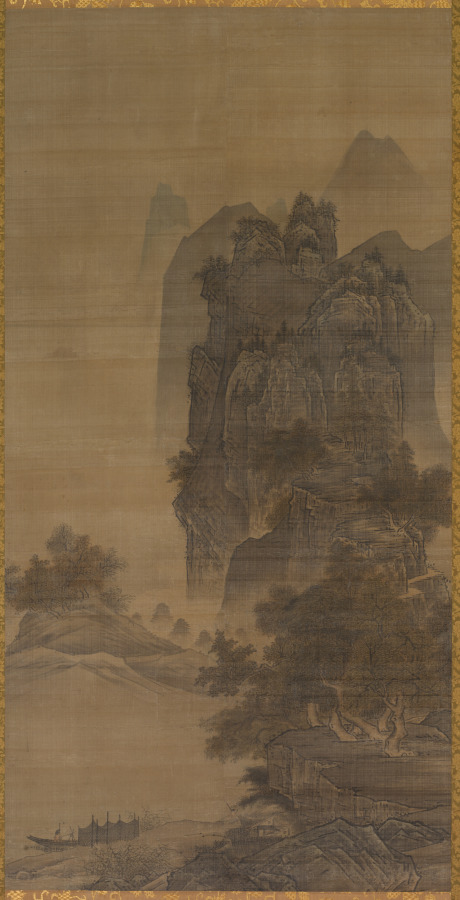
Sesshū Tōyō · The Cleveland Museum of Art · Gift from the Collection of George Gund III · CC0
- Name
- Sesshū
- Born
- c. 1420
- Birthplace
- Bitchū, Ashikaga shogunate
- Died
- 26 August 1506 1420
- Nationality
- Japan
- Occupation
- Buddhist monk · painter
- Fields
- portrait painting
- Known for
- Haboku sansui · Landscape of the Four Seasons · Autumn and Winter Landscapes · Landscape by Sesshū · View of Amanohashidate · Huike Offering His Arm to Bodhidharma
VALÉORINE Encyclopedia
VALÉORINE documentary reading
Documentary summary
1420 – August 26, 1506, also known simply as Sesshū, was a Japanese Zen monk and painter who is considered a great master of Japanese ink painting. Initially inspired by Chinese landscapes, Sesshū's work holds a distinctively Japanese style that reflects Zen Buddhist aesthetics. His prominent work captured images of landscapes, portraits, birds and flowers paintings, infused with Zen Buddhist beliefs, flattened perspective, and emphatic lines.
Admitted source layer · organised and presented by VALÉORINE
Note VALÉORINE
No house-authored Note is published until its assertions and sources pass the VALÉORINE evidence contract. The documentary article remains available in full while that enrichment is being consolidated.
Documentary enrichment in progress · no unsupported statement published
Reference Check
Propose documentary evidence for Sesshū Tōyō. A contribution is never written directly as fact: identity, source, rights and evidence gates still decide.
Sign in to contribute
Documentary evidence
Evidence Panel
not yet certified
- Identity
- resolved
- Independent source families
- 0
- Admitted assertions
- 0
- Open conflicts
- 0
Authority files
wikidata · Q48514 · wikipedia · Sesshū Tōyō
In this article
Biography
Biography
Sesshū was born into the samurai Oda family and trained at Shōkoku-ji temple in Kyoto, Japan, as a Zen monk. From his early childhood, Sesshū showed a talent for painting and eventually became widely revered throughout Japan as a wise, reputable Zen scholar, and the greatest painter priest of Zen-Shu. Sesshū worked in a painting atelier whilst training under Tenshō Shūbun (c. But upon visiting China, his work took on a distinctive Chinese influence, merging Japanese and Chinese styles to develop his individualistic style of Zen paintings. Sesshū's influence on painting was so wide that many schools of art appointed him their founder. Sesshū's most acclaimed works are Winter Landscape (c. 1470s), Birds and Flowers (1420–1506) and Four Landscape Scrolls of the Seasons (1420–1506).
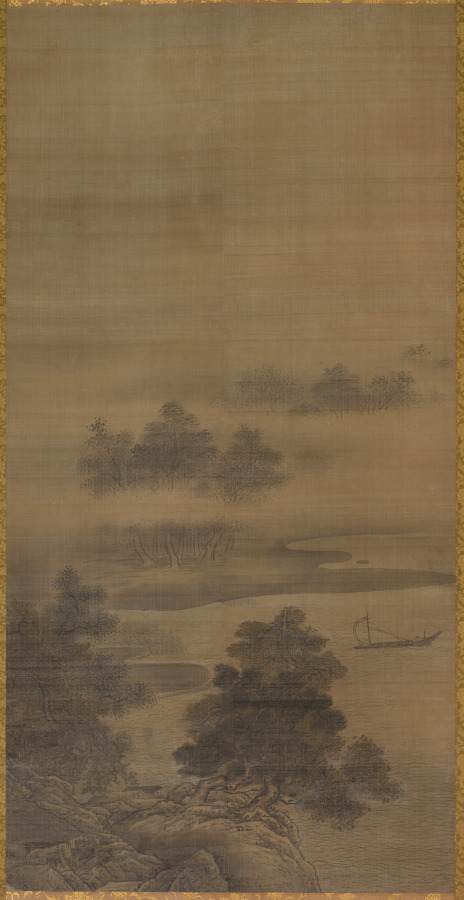
Returning Sails off a Distant Shore, from Eight Views of Xiao-Xiang, 1460s to 1550s, by Sesshū Tōyō
Sesshū Tōyō · The Cleveland Museum of Art · Gift from the Collection of George Gund III
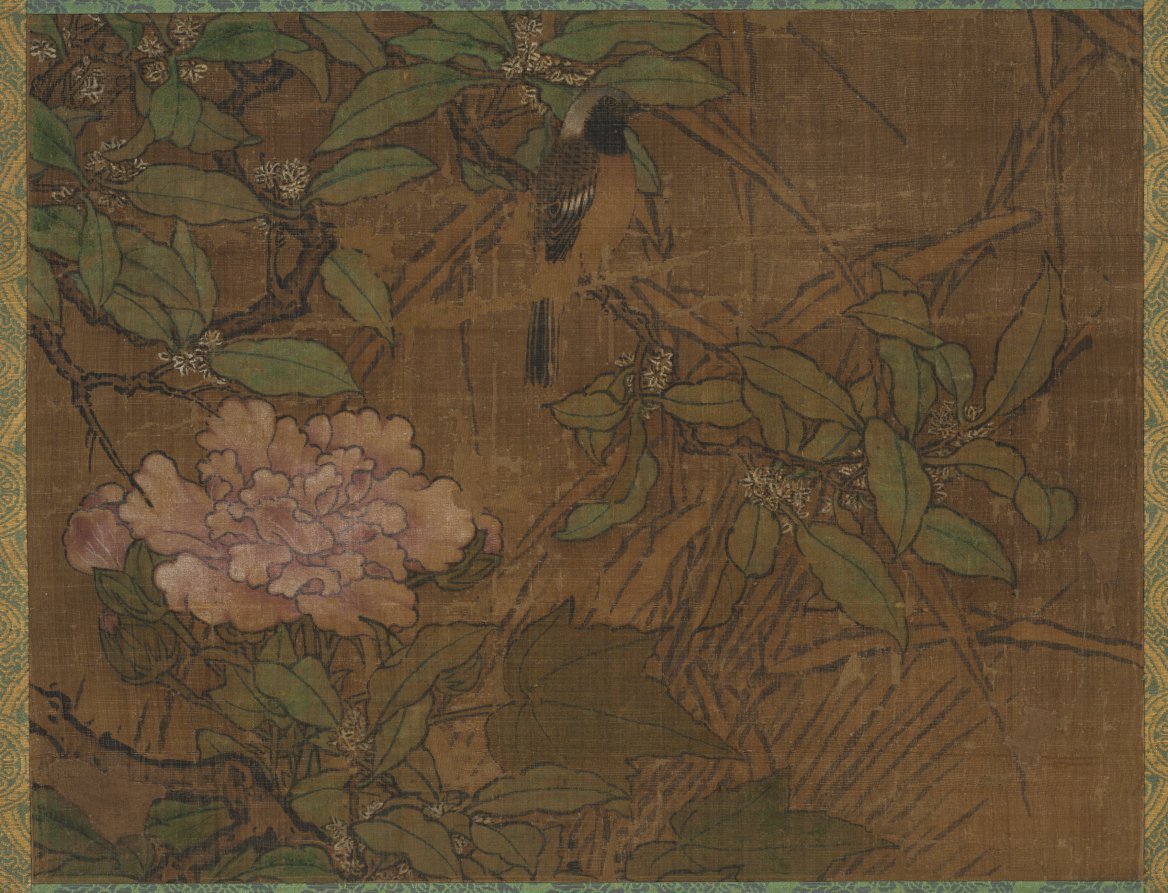
Birds and Flowers, mid-1400s–early 1500s, by Sesshū Tōyō
Sesshū Tōyō · The Cleveland Museum of Art · Gift of Mrs. A. Dean Perry
Key facts
Key facts
• Name — Sesshū • Born — c. 1420 • Birthplace — Bitchū, Ashikaga shogunate • Died — 26 August 1506 1420 • Religion — Buddhism • School — Rinzai • Title — * Suibokuga master • Zen Master • Notable Works — Landscape by Sesshū • Teacher — Tenshō Shūbun
Biography
Biography
• Illustration — Sculpture of Sesshū, by Miwa Zaiei. Edo period, 1787
Early life
Early life
Sesshū Tōyō was born in Akahama (now Sōja City), a settlement in Bitchū Province, which is now a part of the Okayama Prefecture, during the Muromachi period. As a child, Sesshū entered the Buddhist community at the Hofukuji temple in Okayama, Japan. Little is known about Sesshū's early life, but there is a well-known tale that, whilst at Hofukuji Temple, Sesshū's instructor was forced to discipline him by tying him to a temple post. After a few hours passed, Sesshū used his tears as ink to draw a mouse on the wooden floor. The mouse was so realistic that it sprung to life and gnawed at the tight ropes to set him free. At the age of twelve or thirteen years old, Sesshū entered the Shōkoku-ji temple in Kyoto, Japan, as an acolyte under the head priest of all zen temples, Shunrin Shuto, and eventually became a zen monk. Shōkoku-ji temple held a close relationship with the Muromachi government as the temple's main supporters were a part of the ruling Ashikaga family. Whilst at Shōkoku-ji temple, Sesshū was a pupil of Tenshō Shūbun, who was often regarded as Japan's first great master of ink landscape painting. Sesshū worked under Shūbun for 20 years before leaving Kyoto for a small provincial zen temple in western Japan. Here, he was left free from monastic and political duties to focus on painting.
China
China
• Illustration — Self-portrait by Sesshū Funded by a wealthy warrior clan that engaged in trade with China, then ruled by the Ming Dynasty, Sesshū travelled to China in 1467 as a member of a Japanese envoy. He travelled to China for three years, exploring the Chan monasteries, landscapes, and studied professional artists' Chinese paintings, rather than those by literati masters. Here, Sesshū had the opportunity to study traditional Chinese master paintings, learning about their realistic styles. During his travels from Ningbo to Peking, Sesshū felt the vastness of nature, learning from the original references used in Chinese ink painting. This influenced his following work greatly since, before visiting China, Sesshū worked under Shūbun's style. Following Sesshū's three years in China, his familiarity with Chinese landscapes showed in succeeding works as they held a distinct Chinese influence with his developing individualistic style.
Return to Japan and death
Return to Japan and death
In the last years of Sesshū's life, he visited Masuda, Japan, to study zen whilst painting and creating spiritual gardens called Sesshū's gardens. In 1506, at 87 years old, Sesshū died at Tokoji temple, but his remains were taken to Ikoji temple, subsequently known as Sesshū temple, where they were cremated. Following Sesshū's death, his pupil, Shutoku, inherited his studio, Unkoku-an.
Winter Landscape (c. 1470s)
Winter Landscape (c. 1470s)
Following his sojourn in China, Sesshū painted Winter Landscape (c. 1470s) in Japan's rural provinces, demonstrating how Sesshū combined his artistic techniques and zen concepts. Sesshū solely used black sumi ink diluted to shades of grey. Flat, overlapping mountains depict the snowy landscape. Through short, expressive brushstrokes, Sesshū depicts a male figure trekking up a steeped pathway to a barren temple complex, suggesting the arduousness of his journey during the peak of winter. Common to Sesshū's paintings, the single figure is surrounded by a towering landscape that draws on the concept of mono no aware, humankind being present with nature, to create a secluding atmosphere. Throughout the composition, Sesshū uses the shumpo technique, varying the firmness and thickness of outlines to depict three-dimensionality and textures. This modelling is enhanced by the diluted ink washes and rendering using fine lines. In the foreground, the rocks and trees show weighted, dark lines whilst the left distant mountains are outlined against the grey sky with a single brushstroke to capture the moment. The intensity of Sesshū’s work is shown by the sharp, angular brushstrokes in the centre, reflecting Zen Buddhism's influence. Similarly, he uses ink wash for the rolling mist to divide the space between solid and void, mirroring the Taoist metaphysical concept of tension between subjects. This is heightened by the sharp diagonals of the opposing foreground rocks as they bring a sense of inescapable, pent up energy. The background features a single, strong, lightning-like brushstroke that outlines the central cliffs as the tip vanishes into the mist, suggesting transitory moments in time, as believed in Zen Buddhism. Overall, Winter Landscape represents Sesshū's stylistic choices and implementation of Zen Buddhist concepts, notably drawing on Chinese landscapes that symbolised a virtuous man’s dedication to remaining honourable during strenuous moments.
Four Landscape Scrolls of the Seasons (c. 1420–1506)
Four Landscape Scrolls of the Seasons (c. 1420–1506)
Painted at 67 years old, Sesshū Tōyō's Four Landscape Scrolls of the Seasons (c. 1420–1506) depicts the flow of the four seasons whilst reflecting on his experiences with Japanese and Chinese landscapes. Each scroll is composed of two silk strips as the paintings were originally screen panels, but were later arranged on a single kakemono. Despite depicting the seasons sequentially as Spring-Summer-Autumn-Winter, the Autumn scroll is distinctively different. From Sesshū's travels, Autumn holds a dominating Chinese stylistic influence. For example, Sesshū's use of the Chinese technique progressive vision, where using several viewpoints creates an image more accurate to one's experience with nature, suggesting a synthesis of time and space. Sesshū's treatment of pine needles aligns with the method of sung-yeh-tien whilst the dotted leaves mirror ku-chiao-tien (black-pepper-dots), which were techniques shared by Chinese artists before Sesshū. Within this painting, Sesshū reduces proportions as the space recedes whilst placing distant objects higher in the composition. This is heightened through atmospheric perspective where Sesshū ambiguously manipulates the line quality and texture for recession. Overall, Four Landscape Scrolls of the Seasons demonstrates Chinese influences on Sesshū's work and his use of space and composition to represent the soul of nature in the landscapes.
Birds and Flowers (c. 1420–1506)
Birds and Flowers (c. 1420–1506)
The influences of Sesshū's studies in China are reflected in two famous hanging scrolls of seasonal landscape paintings of birds and flowers, painted in ink and colour on silk, in the Perry Collection. Sesshū paints assertive rock contours and textures using a wet brush with splitting hairs. This brings a scratchy, rough texture to give the rocks a sense of solidity and tangibility. Such technique can be seen in the Four Landscape Scrolls of the Seasons Autumn and Winter landscapes. As a recurring motif in Sesshū's landscapes, the rock is trapezoidal with two indentations on top. Like in Winter Landscape, Sesshū uses a zigzag, or lighting shape to contribute to the composition's structure. Within this composition, Sesshū flattens space using spatial ambiguities and variations in scale. Sesshū's contrast in scale creates an illusion similar to the Zen notion of zero time and space, where there are no distinctions between past, present or future. Compositionally, there is no distinction between the whole image and the subjects that make it. Sesshū purposefully controls tonal intensities to suggest atmospheric perspective through subtle ink gradations for the mist to evoke poetic autumnal feelings. • Illustration — View of Amanohashidate (1501–1506) • Illustration — Flowers and Birds of the Four Seasons, second panel of a byōbu • Illustration — Vimalakirti • Illustration — Jurōjin • Illustration — Shennong • Illustration — Portrait of Sue Hiromori (1484) • Illustration — Huike Offers His Arm to Bodhidharma (1496) • Illustration — Jōei-ji Temple Gardens, design attributed to Sesshū • Illustration — Ogawa Family Gardens, Shimane
Landscapes
Landscapes
• Four Landscape Scrolls of the Seasons (c. 1420–1506) • Winter Landscapes from Landscapes of the Four Seasons (c. 1420–1506); Tokyo National Museum) • Autumn and Winter Landscapes (c. 1470s; Tokyo National Museum) • Short Scroll of Landscapes (c. 1474–1490; Kyoto National Museum) • Long Scroll of Landscapes (c. 1486; Mori Collection, Yamaguchi, Japan) • Haboku Sansui, "splashed-ink" technique scroll (1495; Tokyo National Museum) • View of Ama-no-Hashidate (c. 1502–1505; Kyoto National Museum) • Landscape by Sesshū • Chinese Landscape with rocky mountains (circa 1440-1460); British Museum
Other
Other
• Portrait of Masuda Kanetaka (1479; Masuda Collection, Tokyo) • Huike Offering His Arm to Bodhidharma (Daruma and Hui K'o) (1496; Sainen-ji, Aichi, Japan) • Flowers and Birds, pair of sixfold screens (undated; Kosaka Collection, Tokyo)
Life and career
Dated record
Life and career
Explore 1420–1506
The full dated record · 3 entries
1420
Sesshū Tōyō born at Bitchū Province.
1506
Sesshū Tōyō died at Masuda.
1506
Landscape by Sesshū (Ken'ichirō Ōhara).
Paintings and techniques
Sesshū's works are predominantly suibokuga, meaning "water and ink paintings". For suibokuga artists, the exclusivity of black ink allowed them to focus on the essential character of the subject since Zen Buddhism stresses material simplicity and sensitivity to the natural world. To create his monochrome paintings in diluted greys and black ink, Sesshū used black sumi, meaning charcoal or soot-based solid ink on paper or silk, thus following the art of sumi-e Some of Sesshū's most acclaimed works include Winter Landscape (c. 1470s), Four Landscape Scrolls of the Seasons (c. 1420 – 1506) and, Birds and Flowers (c. 1420 – 1506), demonstrating his style of flattened space, emphatic outlines, and angular brushstrokes to portray zen beliefs. • Illustration — Winter Landscape (c. 1470s), Collection of the Tokyo National Museum.
Legacy
• Illustration — Sesshū depicted on a 1952 USSR stamp Sesshū's emphasis on Zen Buddhism, personal interpretation and economical expression in painting was the basis of his legacy for succeeding Japanese artists. Subsequently, his rendering techniques were widely used by sixteenth-century artists, notably those who attended Sesshū's painting schools. The canonization of Sesshū in Japanese modern art history began "in late nineteenth to early twentieth centuries". This included an incorporation into a new dynamic or system with participation of government officials, academics, and collectors.
References
Citations
References
Each reference names the institution holding it, so a reader may go to the document itself.
reference work
Wikidata, structured authority record Q48514: Sesshū TōyōWikimedia Foundation
Partially resolvedreference work
Partially resolved
Further particulars
Held on the record
Further particulars
Open the remaining particulars
The authorities additionally record the headings Toĭo Oda, Tōyō Sesshū, Tōyō Oda, Sesshū and Sesshu Toyo. His recorded language was Japanese. His recorded confession was Buddhism. Work and production. Works recorded as notable number 6: Haboku sansui, Landscape of the Four Seasons, Autumn and Winter Landscapes, Landscape by Sesshū, View of Amanohashidate and Huike Offering His Arm to Bodhidharma. His recorded genre is portrait.
Identity and origins
The Encyclopedia exists whether or not anything is for sale. Corrections are recorded rather than overwritten, and every version of this record is kept. Published 14 August 2026.
Elsewhere in Paintings
18,717 published records in this field, each with its sources named.
- Serhiy PoyarkovArtist
- Serhiy SvetoslavskyArtist
- Serik AkhmetovArtist
- Servando Cabrera MorenoArtist
- Sesson ShukeiArtist
- Seta ManoukianArtist
- Setsuko Klossowska de RolaArtist
- Setsuko MigishiArtist
Best supported in this field
For owners
Own a work by Sesshū Tōyō?
A specialist will read what you send and tell you what the house can establish, what it cannot, and whether the object is suited to sale. There is no charge and no obligation. The object stays with you throughout; nothing is shipped to us unless it is arranged in writing beforehand.