
pointillism
Illustration — Detail from Seurat's Parade de cirque, 1889, showing the contrasting dots of paint which define Pointillism Pointillism (also) is a technique of painting in which small, distinct dots of color are applied in patterns to form an image. Georges Seurat and Paul Signac developed the technique in 1886, branching from Impressionism. The term "Pointillism" was coined by art critics in the late 1880s to ridicule the works of these artists, but is now used without its earlier pejorative connotation.
Also recorded as pointillisme · divisionism
pointillism

Vincent van Gogh · [1] · Public domain
- Field
- Neo-impressionism · Impressionism
VALÉORINE Encyclopedia
VALÉORINE documentary reading
Documentary summary
Illustration — Detail from Seurat's Parade de cirque, 1889, showing the contrasting dots of paint which define Pointillism Pointillism (also) is a technique of painting in which small, distinct dots of color are applied in patterns to form an image. Georges Seurat and Paul Signac developed the technique in 1886, branching from Impressionism. The term "Pointillism" was coined by art critics in the late 1880s to ridicule the works of these artists, but is now used without its earlier pejorative connotation.
Admitted source layer · organised and presented by VALÉORINE
Note VALÉORINE
No house-authored Note is published until its assertions and sources pass the VALÉORINE evidence contract. The documentary article remains available in full while that enrichment is being consolidated.
Documentary enrichment in progress · no unsupported statement published
Reference Check
Propose documentary evidence for pointillism. A contribution is never written directly as fact: identity, source, rights and evidence gates still decide.
Sign in to contribute
World of VALÉORINE
Documentary connections
Only confirmed graph relationships appear here. Images are shown only when their identity and reuse rights both pass the documentary gate.

Associated With · incoming
Charles Angrand
Artist
http://www.the-athenaeum.org/art/detail.php?ID=96027
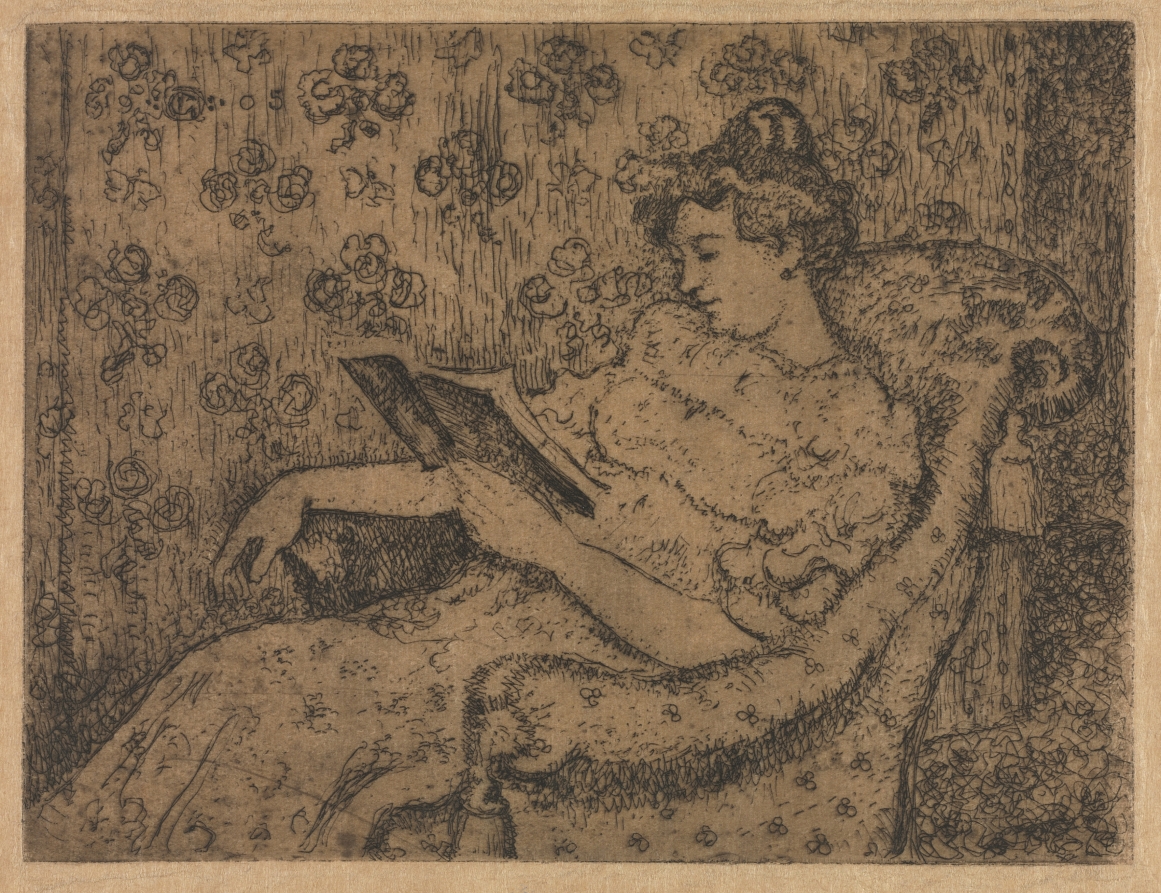
Associated With · incoming
Georges Lemmen
Engraver
Purchase from the Karl B. Goldfield Trust
Broader Term · outgoing
Impressionism
Term

Broader Term · incoming
intimism
Movement
Christie's , LotFinder: entry 5147441 (sale 5590, lot 18, Paris, 1 December 2008)

Associated With · incoming
Jo Koster
Designer
https://www.museumgouda.nl/tentoonstelling/jo-koster-kunstenaar/

Associated With · incoming
Leon Viorescu
Illustrator
http://alis.ro/rpictura.htm

Associated With · incoming
Ludvig Karsten
Artist
Norsk kunstnerleksikon
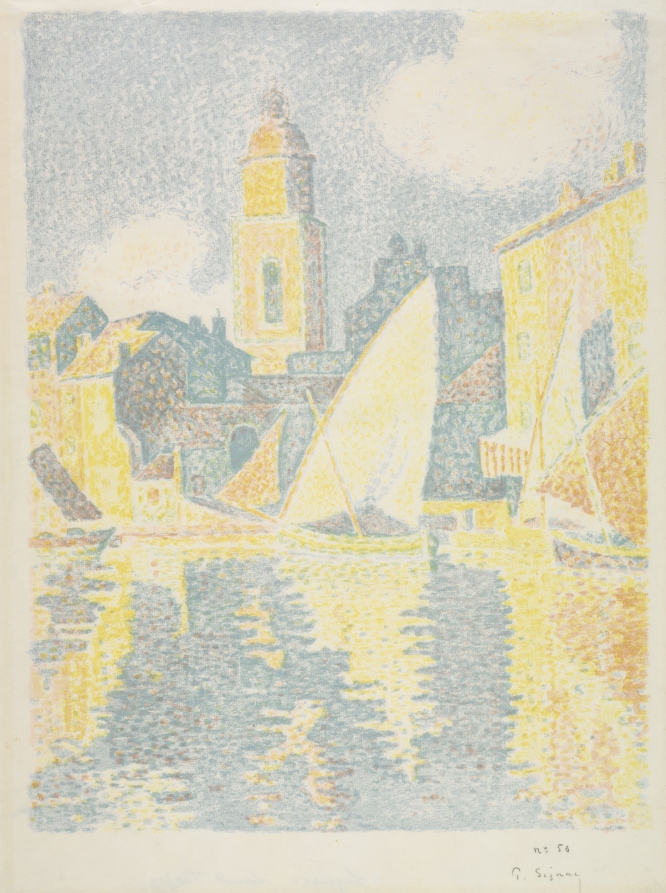
Associated With · incoming
Paul Signac
Engraver
Gift of The Print Club of Cleveland in memory of William J. Eastman
Documentary evidence
Evidence Panel
wikipedia incomplete · checked 25 September 2026
- Identity
- resolved
- Independent source families
- 0
- Admitted assertions
- 0
- Open conflicts
- 0
Authority files
gnd · 1061220842 · wikidata · Q200034 · wikipedia · Pointillism
In this article
Music
Music
Pointillism also refers to a style of 20th-century music composition. Different musical notes are made in seclusion, rather than in a linear sequence, giving a sound texture similar to the painting version of Pointillism. This type of music is also known as punctualism or klangfarbenmelodie. In the 21st century, Australian composer Georges Lentz’s music, influenced by the subtle dot paintings of Kathleen Petyarre and by the starry night sky in the Australian Outback, has also, in some aspects, been described as pointillistic.
Notable artists
Notable artists
• Illustration — Vincent van Gogh, Self Portrait, 1887, using pointillist technique. • Illustration — Maximilien Luce, Morning, Interior, 1890, using pointillist technique. • Albert Dubois-Pillet • Alfred William Finch • Camille Pissarro • Charles Angrand • Chuck Close • Gale D. Jones • Georges Lemmen • Georges Seurat • Henri Delavallée • Henri-Edmond Cross • Hippolyte Petitjean • Jan Toorop • Jean Metzinger • John Roy • Louis Fabien (pseudonym) • Maximilien Luce • Paul Signac • Théo van Rysselberghe • Vincent van Gogh • Anna Boch
Gallery
Gallery
• Illustration — Georges Seurat, 1884, Bathers at Asnières, oil on canvas, 201 × 301 cm, National Gallery, London • Illustration — Georges Seurat, 1884–1886, A Sunday Afternoon on the Island of La Grande Jatte, oil on canvas, 207.6 x 308 cm, Art Institute of Chicago • Illustration — Théo van Rysselberghe, 1887, Sailboats and Estuary, oil on canvas, 50.2 x 61 cm, Musée d'Orsay • Illustration — Camille Pissarro, 1888, La Récolte des pommes, oil on canvas, 61 x 74 cm, Dallas Museum of Art • Illustration — Jan Toorop, 1889, Bridge in London, Kröller-Müller Museum • Illustration — Georges Seurat, c.1889-90 Young Woman Powdering Herself, Courtauld Gallery • Illustration — Georges Lemmen, c.1891-92, The Beach at Heist, Musée d'Orsay Paris • Illustration — Théo van Rysselberghe, 1894, Portrait of Irma Sèthe • Illustration — Théo van Rysselberghe, 1899, His wife Maria and daughter Elisabeth • Illustration — Paul Signac, 1901, L'Hirondelle Steamer on the Seine, oil on canvas, National Gallery in Prague • Illustration — Henri-Edmond Cross, 1903–04, Regatta in Venice, oil on canvas, 73.7 x 92.7 cm, Museum of Fine Arts, Houston • Illustration — Jean Metzinger, c.1906, Femme au Chapeau (Woman with a Hat), oil on canvas, 44.8 x 36.8 cm, Korban Art Foundation • Illustration — Robert Delaunay, 1906, Portrait de Metzinger, oil on canvas, 55 x 43 cm • Illustration — Hippolyte Petitjean, 1919, Femmes au bain, oil on canvas, 61.1 X 46 cm, private collection • Illustration — Paul Signac, Femmes au Puits, 1892, showing a detail with constituent colors. Musée d'Orsay, Paris • Illustration — Henri-Edmond Cross, L'air du soir, c.1893, Musée d'Orsay
Figures, places and works
Knowledge graph
Figures, places and works
Those recorded within this movement, and the places and works associated with it.
Associated with
2- Leon ViorescuIllustrator
Established from a fact already recorded on a verified source.
- Paul SignacEngraver
Established from a fact already recorded on a verified source.
Technique
Technique
The movement Seurat began with this technique is known as Neo-impressionism. The Divisionists used a similar technique of patterns to form images, though with larger cube-like brushstrokes.
The technique relies on the ability of the eye and mind of the viewer to blend the color spots into a fuller range of tones. It is related to Divisionism, a more technical variant of the method. Divisionism is concerned with color theory, whereas pointillism is more focused on the specific style of brushwork used to apply the paint. Pointillism is a technique with few serious practitioners today and is notably seen in the works of Seurat, Signac, and Cross. From 1905 to 1907, Robert Delaunay and Jean Metzinger painted in a Divisionist style with large squares or 'cubes' of color: the size and direction of each gave a sense of rhythm to the painting, yet color varied independently of size and placement. This form of Divisionism was a significant step beyond the preoccupations of Signac and Cross. In 1906, the art critic Louis Chassevent recognized the difference and, as art historian Daniel Robbins pointed out, used the word "cube" which would later be taken up by Louis Vauxcelles to baptize Cubism. Chassevent writes: • M. Metzinger is a mosaicist like M. Signac but he brings more precision to the cutting of his cubes of color which appear to have been made mechanically [...].
Practice
Practice
The practice of Pointillism is in sharp contrast to the traditional methods of blending pigments on a palette. Pointillism is analogous to the four-color CMYK printing process used by some color printers and large presses that place dots of cyan, magenta, yellow, and key (black). Televisions and computer monitors use a similar technique to represent image colors using red, green and blue (RGB) colors. If red, blue, and green light (the additive primaries) are mixed, the result is something close to white light (see Prism (optics)). Painting is inherently subtractive, but Pointillist colors often seem brighter than typical mixed subtractive colors. This may be partly because subtractive mixing of the pigments is avoided, and because some of the white canvas may be showing between the applied dots. The painting technique used for Pointillist color mixing is at the expense of the traditional brushwork used to delineate texture. The majority of Pointillism is done in oil paint. Anything may be used in its place, but oils are preferred for their thickness and tendency not to run or bleed.
Notable paintings
• A Sunday Afternoon on the Island of La Grande Jatte by Georges Seurat • Bathers at Asnières by Georges Seurat • The Windmills at Overschie by Paul Signac • Banks of Seine by Georges Seurat • A Coastal Scene by Théo van Rysselberghe • Family in the Orchard by Théo van Rysselberghe • Countryside at Noon by Théo van Rysselberghe • Afternoon at Pardigon by Henri-Edmond Cross • Rio San Trovaso, Venice by Henri-Edmond Cross • The Seine in front of the Trocadero by Henri-Edmond Cross • The Pine Tree at St. Tropez by Paul Signac • Opus 217. Against the Enamel of a Background Rhythmic with Beats and Angles, Tones, and Tints, Portrait of M. Félix Fénéon in 1890 by Paul Signac • The Yellow Sail, Venice by Paul Signac • Notre Dame Cathedral by Maximilien Luce • Le Pont De Pierre, Rouen by Charles Angrand • The Beach at Heist by Georges Lemmen • Aline Marechal by Georges Lemmen • Vase of Flowers by Georges Lemmen • Two Nudes in an Exotic Landscape by Jean Metzinger
Primary material
Documents and archives
reference work
- Wikidata, structured authority record Q200034: pointillism
Reputable secondary · Wikidata
- “Pointillism”, English Wikipedia, consulted as further reading
Reputable secondary · Wikipedia
Institutional database
- arXiv, Cornell University, preprints naming “pointillism”
Scholarly · arXiv (Cornell University)
authority file
- Gemeinsame Normdatei 1061220842, Exhibition Seurat - Master of Pointillism (2014 : Otterlo).
Unverified · Deutsche Nationalbibliothek
Citations
References
Each reference names the institution holding it, so a reader may go to the document itself.
Institutional database
arXiv, Cornell University, preprints naming “pointillism”arXiv (Cornell University)
Verifiedauthority file
Gemeinsame Normdatei 1061220842, Exhibition Seurat - Master of Pointillism (2014 : Otterlo).Deutsche Nationalbibliothek
Partially resolvedreference work
Partially resolvedreference work
Partially resolved
The Encyclopedia exists whether or not anything is for sale. Corrections are recorded rather than overwritten, and every version of this record is kept. Published 14 August 2026.
Elsewhere in Terminology
620 published records in this field, each with its sources named.
- pictorialismMovement
- PlasticienMovement
- Poetic realismMovement
- PoetismMovement
- Polish Film SchoolMovement
- Polish School of PostersMovement
- Polyphonic EraMovement
- Pompeian StylesMovement
Best supported in this field
For owners
Own an object connected with pointillism?
A specialist will read what you send and tell you what the house can establish, what it cannot, and whether the object is suited to sale. There is no charge and no obligation. The object stays with you throughout; nothing is shipped to us unless it is arranged in writing beforehand.