
Pierre-Paul Prud'hon
Pierre-Paul Prud'hon (4 April 1758 – 16 February 16, 1823) was a French Neo-classical painter and draughtsman best known in his own time for his allegorical paintings and portraits, now for his drawings. He painted a portrait of Napoleon's wife Empress Josephine. He was an early influence on Théodore Géricault.
Also recorded as Pierre Prud'hon · Pierre Paul Prud'hon · Pierre Paul Prudhon · P. P. Prud'hon
Pierre-Paul Prud'hon
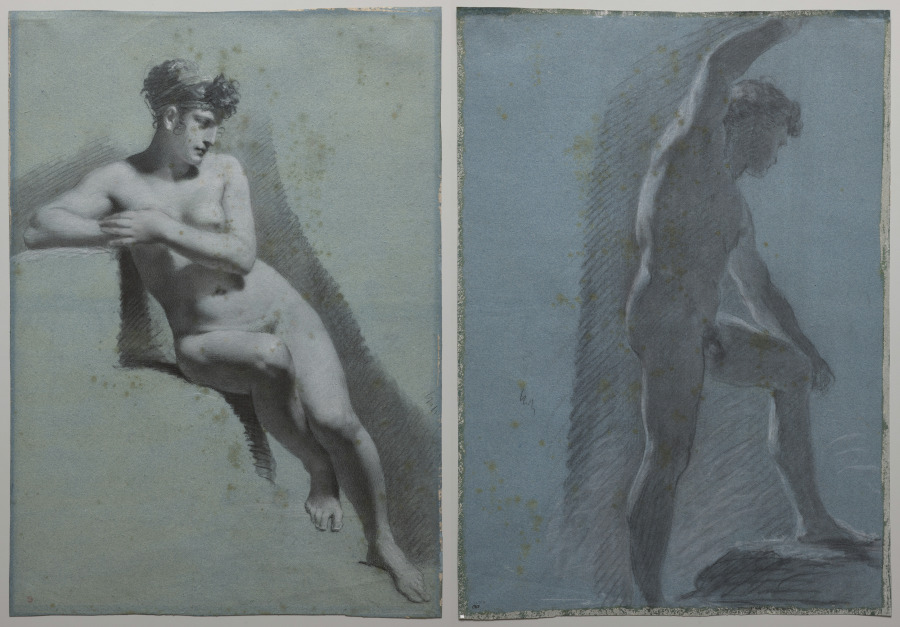
Pierre-Paul Prud'hon · The Cleveland Museum of Art · Purchase from the J. H. Wade Fund · CC0
- Name
- Pierre-Paul Prud'hon
- Born
- 4 April 1758
- Birthplace
- Cluny, Saône-et-Loire, France
- Died
- 16 February 1823
- Place of death
- Paris, France
- Field
- Painting, drawing
- Movement
- Neoclassicism, Romanticism
- Nationality
- France
- Occupation
- painter · draftsperson
- Fields
- history
- Teachers
- François Devosge
- Known for
- L'enlèvement de Psyché · Portrait of Rutger Jan Schimmelpenninck and his Family
VALÉORINE Encyclopedia
VALÉORINE documentary reading
Documentary summary
Pierre-Paul Prud'hon (4 April 1758 – 16 February 16, 1823) was a French Neo-classical painter and draughtsman best known in his own time for his allegorical paintings and portraits, now for his drawings. He painted a portrait of Napoleon's wife Empress Josephine. He was an early influence on Théodore Géricault.
Admitted source layer · organised and presented by VALÉORINE
Note VALÉORINE
No house-authored Note is published until its assertions and sources pass the VALÉORINE evidence contract. The documentary article remains available in full while that enrichment is being consolidated.
Documentary enrichment in progress · no unsupported statement published
Reference Check
Propose documentary evidence for Pierre-Paul Prud'hon. A contribution is never written directly as fact: identity, source, rights and evidence gates still decide.
Sign in to contribute
Documentary evidence
Evidence Panel
not yet certified
- Identity
- resolved
- Independent source families
- 0
- Admitted assertions
- 0
- Open conflicts
- 0
Authority files
wikidata · Q469056 · wikipedia · Pierre-Paul Prud'hon
In this article
Biography
Biography
After 1803 he worked so closely with artist Constance Mayer on many paintings, that it is almost impossible to tell where the contribution of one ends and the other begins.
Training under François Devosge is recorded. Pierre Jérôme Lordon and Constance Mayer are recorded as having studied under Pierre-Paul Prud'hon. The recorded working language is French. Subjects and genres recorded for the work are history. Places of work recorded in the authority are Paris. Works named in the authority record are L'enlèvement de Psyché and Portrait of Rutger Jan Schimmelpenninck and his Family. Work by Pierre-Paul Prud'hon is recorded in the collections of Städel Museum, Minneapolis Institute of Art, Art Institute of Chicago, Finnish National Gallery and J. Paul Getty Museum.
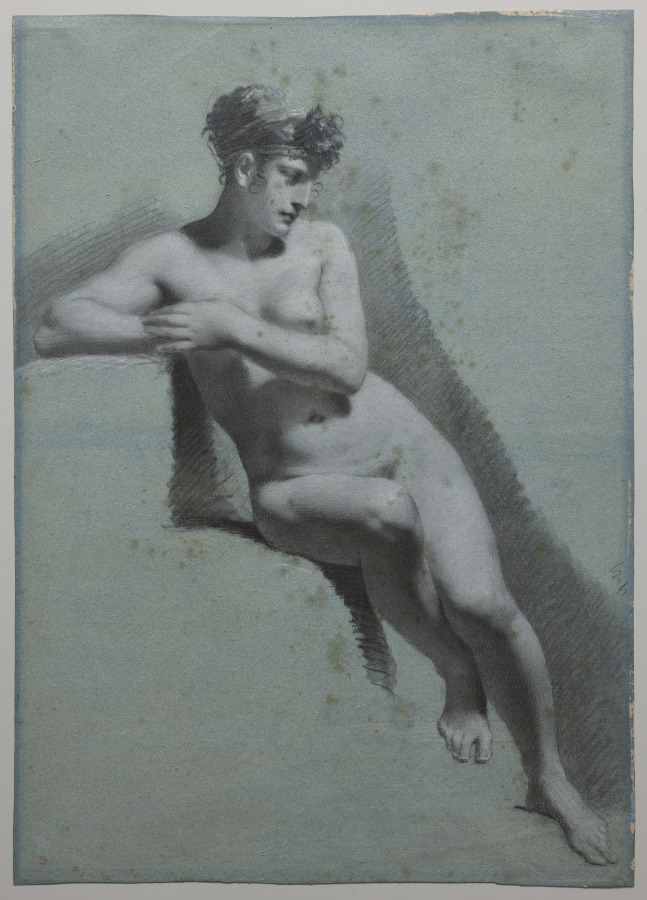
Study of a Nude Woman, Seated Looking to the Right (recto), c. 1810, by Pierre-Paul Prud'hon
Pierre-Paul Prud'hon · The Cleveland Museum of Art · Purchase from the J. H. Wade Fund
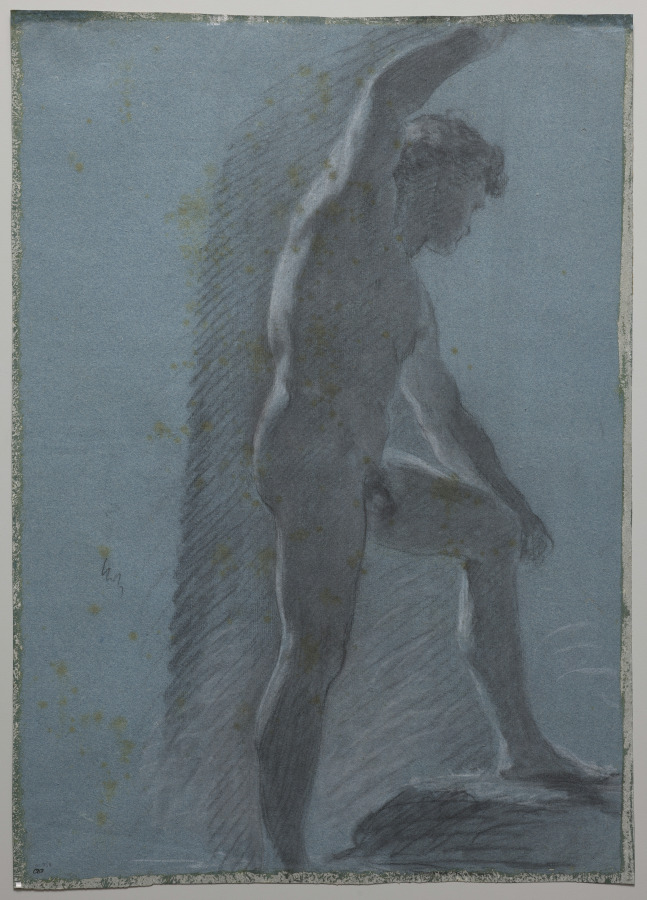
Study of a Male Nude (verso), c. 1810, by Pierre-Paul Prud'hon
Pierre-Paul Prud'hon · The Cleveland Museum of Art · Purchase from the J. H. Wade Fund
Key facts
Key facts
• Name — Pierre-Paul Prud'hon • Born — 4 April 1758 • Birthplace — Cluny, Saône-et-Loire, France • Died — 16 February 1823 • Place of death — Paris, France • Field — Painting, drawing • Movement — Neoclassicism, Romanticism • Works — Madame Georges Anthony and Her Two Sons
Biography
Biography
• Illustration — Justice and Divine Vengeance Pursuing Crime, 1808. The darkness and the sprawling naked figure anticipate Théodore Géricault's painting The Raft of the Medusa. Pierre-Paul Prud'hon was born in Cluny, Saône-et-Loire, France. He received his artistic training in the French provinces He married Jeanne Pennet in 1778 in Cluny. They had six children. He went to Italy when he was twenty-six years old to continue his education. In Paris he became an enthusiastic supporter of the Revolution and made drawings of mythological and republican allegories which were engraved and published by his friend Jacques-Louis Copia. Prud'hon made some portraits during this period including one of Louis de Saint-Just, one of the key figures in the Reign of Terror. At the fall of Robespierre, in 1794, Prud'hon found it prudent to leave Paris. He spent two years in Franche-Comte, painting portraits and making book illustrations. In 1796, it was safe to return to Paris. He decorated rooms in some private mansions with allegories of art, philosophy, wealth, and pleasure. In 1802 several artists, including Prud'hon received studios in the Sorbonne. In 1803, Constance Mayer, already an accomplished artist, entered Prud'hon's studio as a student. She soon became his close collaborator and mistress. She tried to replace the absent mother of his children. His wife had been separated from him and confined to an insane asylum. Prud'hon and Mayer worked very well as a team. He produced plans and sketches for an allegory or literary subject and she patiently rendered the final painting. Often the paintings were exhibited as her work. This arrangement left him time for portraits and other work. Prud'hon's Portrait of Empress Josephine shows her alone in the garden of her home, Malmaison. After the divorce of Napoleon and Josephine, he was also employed by Napoleon's second wife Marie-Louise. He taught her drawing and designed furniture. His commission for a portrait of Marie-Louise was given to François Gérard and Robert Lefèvre because of Prud'hon's meticulous and time consuming working method. He was appreciated by other artists and writers, including Stendhal, Delacroix, Millet and Baudelaire, for his chiaroscuro and convincing realism. He painted Crucifixion (1822) for St. Etienne's Cathedral in Metz; it now hangs in the Louvre. The young Théodore Géricault had painted copies of work by Prud'hon, whose "thunderously tragic pictures" include his masterpiece, Justice and Divine Vengeance Pursuing Crime, where oppressive darkness and the compositional base of a naked, sprawled corpse obviously anticipate Géricault's painting The Raft of the Medusa.
Gallery
Gallery
• Illustration — Male Nude Study, National Gallery of Art • Illustration — Louise Antoinette Lannes, Duchess of Montebello • Illustration — Portrait of Louis de Saint-Just, 1793 • Illustration — Nicolas Perchet, 1795, Princeton University Art Museum • Illustration — Female Nude, 1800 • Illustration — Portrait of Joséphine de Beauharnais, at the Louvre, Paris, 1805 • Illustration — Portrait of Charles Maurice de Talleyrand-Périgord, 1817 • Illustration — Study for The Dream of Happiness (with Constance Mayer), 1819
General studies
General studies
Adapted from a following source: * * * * * * * * * * * * *
Reference works
Reference works
* * *
Identity and origins
Identity and origins
The authorities additionally record the headings Pierre Prud'hon, Pierre Paul Prud'hon, Pierre Paul Prudhon, P. Prud'hon and Pierre Prudon.
Life and career
Dated record
Life and career
The full dated record · 2 entries
1758
Pierre-Paul Prud'hon born at Cluny.
1823
Pierre-Paul Prud'hon died at Paris.
Places
Named by the record
Places
Only places the record itself states, plotted where the house gazetteer settles their coordinates. Nothing is inferred from a name or a nationality.
Cluny.
Birth place
Paris.
Death place
Primary material
Documents and archives
Institutional database
- Wikidata, structured authority record Q469056: Pierre-Paul Prud'hon
Scholarly · Wikimedia Foundation
reference work
- “Pierre-Paul Prud'hon”, English Wikipedia, consulted as further reading
Reputable secondary · Wikipedia
References
Citations
References
Each reference names the institution holding it, so a reader may go to the document itself.
Institutional database
Wikidata, structured authority record Q469056: Pierre-Paul Prud'honWikimedia Foundation
Verifiedreference work
Partially resolved
People, houses and institutions
Knowledge graph
People, houses and institutions
Teachers, collaborators, publishers and institutions recorded against this person, each on a stated basis.
Died at
1- ParisPlace
Established from a fact already recorded on a verified source.
Further particulars
Held on the record
Further particulars
Open the remaining particulars
Formation and teaching. He trained under François Devosge. Each of those relationships is stated by the authority record rather than inferred from style. Work and production. Works recorded as notable number 2: L'enlèvement de Psyché and Portrait of Rutger Jan Schimmelpenninck and his Family. His recorded genre is history.
Recognition and collections
Work by Pierre-Paul Prud'hon is
Städel Museum, Minneapolis Institute of Art, Art Institute of Chicago and Finnish National Gallery
The Encyclopedia exists whether or not anything is for sale. Corrections are recorded rather than overwritten, and every version of this record is kept. Published 14 August 2026.
Elsewhere in Paintings
18,792 published records in this field, each with its sources named.
- Pierre-Luc-Charles CiceriArtist
- Pierre-Narcisse GuérinArtist
- Pierre-Nicolas BrissetArtist
- Pierre-Nolasque BergeretArtist
- Pierre-Paul-Léon GlaizeArtist
- Pierre-Victor GallandArtist
- Piers FacciniArtist
- Piet OuborgArtist
Best supported in this field
For owners
Own a work by Pierre-Paul Prud'hon?
A specialist will read what you send and tell you what the house can establish, what it cannot, and whether the object is suited to sale. There is no charge and no obligation. The object stays with you throughout; nothing is shipped to us unless it is arranged in writing beforehand.