
Philip Burne-Jones
Sir Philip William Burne-Jones, 2nd Baronet (1 October 1861 – 21 June 1926), was a Victorian Era British aristocrat, whose life and professional career as a painter spanned into the Edwardian. He was the first child of more famed British Pre-Raphaelite artist Sir Edward Burne-Jones and his wife Georgiana Macdonald, and a cousin of both author Rudyard Kipling and prime minister Stanley Baldwin. He produced more than 60 paintings, including portraits, landscapes, and poetic fantasies.
Also recorded as Sir Philip Burne-Jones · Sir Burne-Jones · Philip, Sir Burne-Jones · Philip, Sir, 2nd Bart. Burne-Jones
Philip Burne-Jones
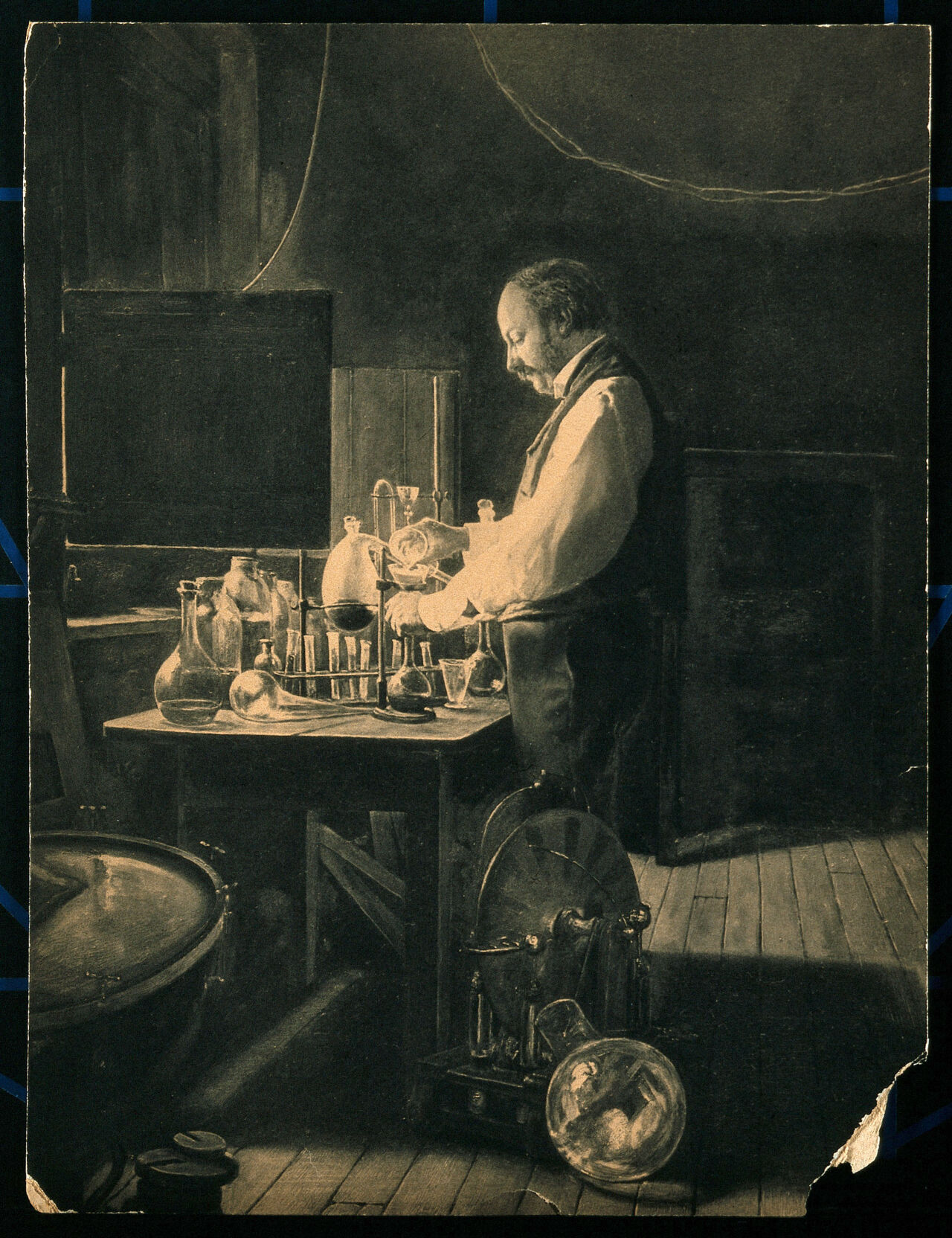
Philip Burne-Jones · Wellcome Collection, London · Wellcome Collection · Public Domain Mark
- Name
- Philip Burne-Jones
- Born
- 1 October 1861
- Birthplace
- London, England
- Died
- 21 June 1926
- Nationality
- United Kingdom of Great Britain and Ireland
- Occupation
- painter
- Education
- Marlborough College · University College and Oxford · University of Oxford
VALÉORINE Encyclopedia
VALÉORINE documentary reading
Documentary summary
Sir Philip William Burne-Jones, 2nd Baronet (1 October 1861 – 21 June 1926), was a Victorian Era British aristocrat, whose life and professional career as a painter spanned into the Edwardian. He was the first child of more famed British Pre-Raphaelite artist Sir Edward Burne-Jones and his wife Georgiana Macdonald, and a cousin of both author Rudyard Kipling and prime minister Stanley Baldwin. He produced more than 60 paintings, including portraits, landscapes, and poetic fantasies.
Admitted source layer · organised and presented by VALÉORINE
Reference Check
Propose documentary evidence for Philip Burne-Jones. A contribution is never written directly as fact: identity, source, rights and evidence gates still decide.
Sign in to contribute
World of VALÉORINE
Documentary connections
Only confirmed graph relationships appear here. Images are shown only when their identity and reuse rights both pass the documentary gate.

Born In · outgoing
London
Place
Pencil sketch by George Henry Harlow, 1814, http://www.npg.org.uk/collections/search/largerimage.php?mkey=mw05495
Died In · outgoing
London
Place
Pencil sketch by George Henry Harlow, 1814, http://www.npg.org.uk/collections/search/largerimage.php?mkey=mw05495
Educated At · outgoing
Marlborough College
Organisation
Educated At · outgoing
University of Oxford
Organisation
Documentary evidence
Documentary basis
Authority files
wikidata · Q1370807 · wikipedia · Philip Burne-Jones
In this article
Key facts
Key facts
• Honorific Prefix — Sir • Name — Philip Burne-Jones • Born — 1 October 1861 • Birthplace — London, England • Died — 21 June 1926 • Place of death — London, England • Relatives — * John William Mackail (brother-in-law) • Angela Thirkell (niece) • Denis Mackail (nephew) • Clare Mackail (niece) • Illustration — A black and white reproduction of The Vampire, Burne-Jones's most famous work (1897)
Life and career
Life and career
He was born in London, England, in 1861 and was educated at Marlborough College. He attended Oxford University for two years, but left before graduating. To appease his parents for this failure, he agreed to take lessons in painting in London. Philip studied painting seriously. His skill was great and he exhibited his work in well-known galleries in London and Paris. The Royal Academy exhibited his work eleven times between 1898 and 1918, and his work was also shown in the Paris Salon of 1900. There he exhibited his portrait of his father, now in the National Portrait Gallery. He painted portraits of many well-known people. His most famous work, The Vampire (1897), depicting a woman leaning over an unconscious man, was believed to have been modelled by the actress Mrs Patrick Campbell, with whom Burne-Jones had been associated romantically. The painting also inspired his cousin Rudyard Kipling's poem of the same name. The location of the original painting is unknown. In July 1902 several papers including the Baltimore Sun and the St. Louis Republic reported the painting was sold to W.K. Vanderbilt; however, Burne-Jones denied the reports. Having a famous father was difficult for him, and it was Philip's fate in life that his work was often compared unfavourably with that of his father. Upon his father's death in 1898, Philip succeeded to the title of baronet that had been bestowed on his father during 1894. It is said that his father had accepted the title only because Philip was keen to inherit it. Philip visited the United States during 1902, where he was popular in fashionable society and contributed to the then-fashionable travelogue literary genre by publishing an account (Dollars and Democracy) of his time spent there. He lived most of his life in London, where he died in 1926.
Racial views
Racial views
Philip expressed racist attitudes toward Black Americans in his 1904 American travelogue Dollars and Democracy. Burne-Jones stated that he did not think highly of negroes and was sceptical of their belonging in American society. He wrote "among a highly civilized and strenuous people the negroes are in an absolutely false position," "the negro is not, and can never be, the equal of his white brother," and considering "exceptions here and there, the best that can be said for them is that they make tolerably good servants." In spite of holding these commonly held views, he was aware they were exaggerated by his conditioning, a reflection of where he grew up, how, and when: "When aversion to race is instinctive and deep-seated, it is a bit difficult to write fairly on the subject"; and repeatedly offered his regrets and commiseration over their difficult situation in America, stating it was a "real tragedy", for which "they deserve our profound sympathy". He summed up his overview on the matter in his final remark on the subject: "I am sorry for the negroes, and I wish they weren't in America at all."
Identity
Identity
Philip Burne-Jones is established in Library of Congress under nr00017828. Established in RKDartists under 14293. Established in VIAF under 9683914. Established in FAST under 1555997. Recorded as painter.
Life and career
Dated record
Life and career
Explore 1861–1926
The full dated record · 5 entries
1861
Philip Burne-Jones born at London.
1897
The Vampire is dated 1897.
1912
Porträt der Irene Spencer is dated 1912.
1926
Dies at London.
1926
Philip Burne-Jones died 21 June 1926.
Primary material
Documents and archives
reference work
- “Philip Burne-Jones”, English Wikipedia, consulted as further reading
Reputable secondary · Wikipedia
institutional register
- Wikidata, structured authority record Q1370807: Philip Burne-Jones
General reference · Wikimedia Foundation
References
Citations
References
Each reference names the institution holding it, so a reader may go to the document itself.
reference work
Secondary witnessinstitutional register
Wikidata, structured authority record Q1370807: Philip Burne-JonesWikimedia Foundation
General reference
Further particulars
Held on the record
Further particulars
Open the remaining particulars
Philip Burne-Jones is connected to 2 other published records in the VALÉORINE Encyclopedia.
Recognition and collections
Work by Philip Burne-Jones is
National Portrait Gallery, Victoria Memorial, Delaware Art Museum and Touchstones Rochdale
Within the Encyclopedia
The Encyclopedia exists whether or not anything is for sale. Corrections are recorded rather than overwritten, and every version of this record is kept. Published 17 August 2026.
Elsewhere in Paintings
19,065 published records in this field, each with its sources named.
- Phil JuddArtist
- Phil. MacquetArtist
- Philibert Charles BerjeauArtist
- Philip AbsolonArtist
- Philip Campbell CurtisArtist
- Philip CastleArtist
- Philip ConnardArtist
- Philip Francis StephanoffArtist
Best supported in this field
For owners
Own a work by Philip Burne-Jones?
A specialist will read what you send and tell you what the house can establish, what it cannot, and whether the object is suited to sale. There is no charge and no obligation. The object stays with you throughout; nothing is shipped to us unless it is arranged in writing beforehand.