
Paulus Moreelse
Paulus Moreelse (1571 – 6 March 1638) was a Dutch painter, mainly of portraits. • Illustration — Self-portrait, c. 1630 (Mauritshuis, The Hague).
Also recorded as Paulus Morcells · Paulus Moreelis · Paulus Jansz. Moreelse · Paulus Moreels
Paulus Moreelse
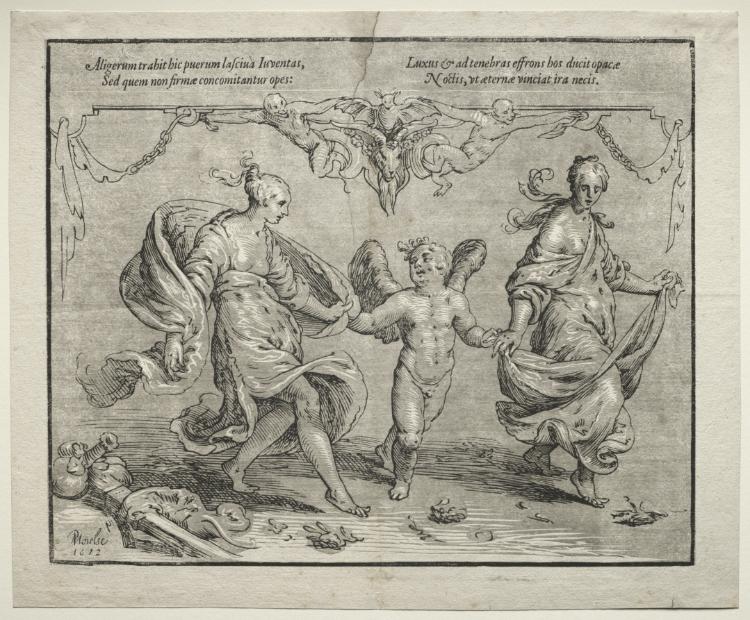
Paulus Moreelse · The Cleveland Museum of Art · Dudley P. Allen Fund · CC0
- Born
- 1571
- Died
- 1638
- Nationality
- Dutch Republic
- Occupation
- architect · draftsperson · painter · xylographer · miniature painter · urban planner
- Fields
- portrait painting · allegory · genre painting · history painting · portrait
- Known for
- Self-Portrait · Portrait of a Lady · Portrait of Maria van Utrecht (c. 1552/53-1629)
Reference Check
Propose documentary evidence for Paulus Moreelse. A contribution is never written directly as fact: identity, source, rights and evidence gates still decide.
Sign in to contribute
Documentary evidence
Documentary basis
Authority files
wikidata · Q59620 · wikipedia · Paulus Moreelse
VALÉORINE Encyclopedia
The documentary record
Statements marked “Documentary record” are set in the article beside the passage they confirm. Each is read from the authority records of the institutions named here; select “Prove” to see the record it was read from, where in that record, and when.
Institutions cited
Bibliothèque nationale de France · Deutsche Nationalbibliothek · Getty Union List of Artist Names
Complete reading chain (JSON)In this article
Life
Life
Moreelse was born and lived most of his life in Utrecht. He was a pupil of the Delft portrait painter Michiel Jansz. van Mierevelt, who had himself been a pupil of Anthonie van Blocklandt. He took a study-trip to Italy, where he received many portrait commissions. Back in Utrecht, in 1596 he became a member of the zadelaarsgilde (Saddler's guild), which then embraced the painters as well. In 1611, along with Abraham Bloemaert, he was one of the founders of a new painters' guild, called "St. Lucas-gilde", and became its first deken. Moreelse was a well known portrait painter who received commissions from right across the Dutch Republic. His earliest known work dates to 1606. Other than portraits, he also painted a few history paintings in the Mannerist style and in the 1620s produced pastoral scenes of herders and shepherds. He belonged to the same generation as Abraham Bloemaert and Joachim Wtewael, and like Wtewael he played an important role in the public life of their city. His version of Diana and Callisto was engraved by Jan Saenredam. In 1618, when the anti-remonstrants came to power in Utrecht, he was expelled from the council (raadslid). Moreelse was also active as an architect, building Utrecht's Catharijnepoort (1626, demolished c.1850) and possibly also the Vleeshuis (still extant) on Voorstraat from 1637. He taught at Utrecht's tekenacademie, and among his many pupils was Dirck van Baburen. On his death, he was buried in the Buurkerk in Utrecht.
Documentary record
Paulus Moreelse (1571 – 6 March 1638) was a miniature painter, architect, urban planner, draughtsman, portraitist and printmaker. The birth of Paulus Moreelse is recorded in 1571, and the death on 6 March 1638. Paulus Moreelse was born in Utrecht, Netherlands, according to the Deutsche Nationalbibliothek, the Getty Union List of Artist Names and the Bibliothèque nationale de France. Paulus Moreelse died in Utrecht, Netherlands, according to the Bibliothèque nationale de France and the Getty Union List of Artist Names.
Works
Works
• Illustration — Portrait of Maria van Utrecht, 1615 (Rijksmuseum, Amsterdam). • Illustration — Venus and Cupid, 1617 (Hermitage, St Petersburg). • Illustration — Portrait of a man, 1625 (Rijksmuseum, Amsterdam). • Illustration — Johanna Martens, 1625 (Prado, Madrid). • Illustration — Girl with a Mirror - Allegory of Profane Love, 1627 (Fitzwilliam Museum, Cambridge). • Illustration — Vertumnus and Pomona, 1630 (Museum Boijmans Van Beuningen, Rotterdam). • Illustration — A Shepherdess, 1630 (Rijksmuseum, Amsterdam). • Illustration — Girl at a mirror, 1632 (Rijksmuseum, Amsterdam). • Illustration — Mythological portrait, 1633 (Museum of Fine Arts, Boston) • Illustration — Portrait of a Young Lady, 1620 (Art Institute of Chicago)
Identity and origins
Identity and origins
The authorities additionally record the headings Paulus Morcells, Paulus Moreelis, Paulus Jansz. Moreelse, Paulus Moreels and Paulus Moreils. His recorded language was Dutch. 2 children are recorded: Hendrick Moreelse and Johannes Moreelse.
Life and career
Dated record
Life and career
The full dated record · 2 entries
1571
Paulus Moreelse born at Utrecht.
1638
Paulus Moreelse died at Utrecht.
Public collections
Public collections
Among the public collections holding works by Paulus Moreelse are: • Museum de Fundatie, Zwolle, The Netherlands • Rijksmuseum, Amsterdam
Context
Primary material
Context
The circumstances in which Paulus Moreelse stands.
Text attribution
Licensing
Text attribution
Part of the biographical narrative on this page reuses licensed material. Its origin, revision and licence are recorded here.
The biographical narrative on this page is based on the Wikipedia article Paulus Moreelse, revision 1290094790 (EN edition), by its contributors. VALÉORINE has edited that text and built its own documentary record around it. The reused material is available under CC BY-SA 4.0, and this page's reuse of it is offered under the same licence. Everything else on this page — the chronology, the holdings, the evidence, the plates and the connections — is VALÉORINE's own record. Sources and licences.
References
Citations
References
Each reference names the institution holding it, so a reader may go to the document itself.
reference work
Wikidata, structured authority record Q59620: Paulus MoreelseWikimedia Foundation
Secondary witnessreference work
Secondary witness
Further particulars
Held on the record
Further particulars
Open the remaining particulars
He trained under Michiel Jansz. Van Mierevelt. Each of those relationships is stated by the authority record rather than inferred from style.
Work and production. Works recorded as notable number 3: Self-Portrait, Portrait of a Lady and Portrait of Maria van Utrecht (c. His recorded genres are portrait, allegory, genre and history.
Recognition and collections
Work by Paulus Moreelse is
Museum Boijmans Van Beuningen, Minneapolis Institute of Art, Museo del Prado and Art Institute of Chicago
The Encyclopedia exists whether or not anything is for sale. Corrections are recorded rather than overwritten, and every version of this record is kept. Published 14 August 2026.
Elsewhere in Paintings
19,456 published records in this field, each with its sources named.
- Pauline Rifer de CourcellesArtist
- Pauline SoltauArtist
- Pauline ThompsonArtist
- Paulus BorArtist
- Paulus RoetterArtist
- Paulus van Hillegaert (I)Artist
- Paulus VerschuurArtist
- PausiasArtist
Best supported in this field
For owners
Own a work by Paulus Moreelse?
A specialist will read what you send and tell you what the house can establish, what it cannot, and whether the object is suited to sale. There is no charge and no obligation. The object stays with you throughout; nothing is shipped to us unless it is arranged in writing beforehand.