
Paul Gachet
Paul-Ferdinand Gachet (30 July 1828 – 9 January 1909) was a French physician most famous for treating the painter Vincent van Gogh during his last weeks in Auvers-sur-Oise. Gachet was a great supporter of artists and the Impressionist movement. He was an amateur painter, signing his works "Paul van Ryssel", referring to his birthplace: Rijsel is the Dutch name of Lille.
Also recorded as Paul Van Ryssel · Dr. Paul Gachet · Docteur Paul Gachet · Van Ryssel Gachet
Paul Gachet
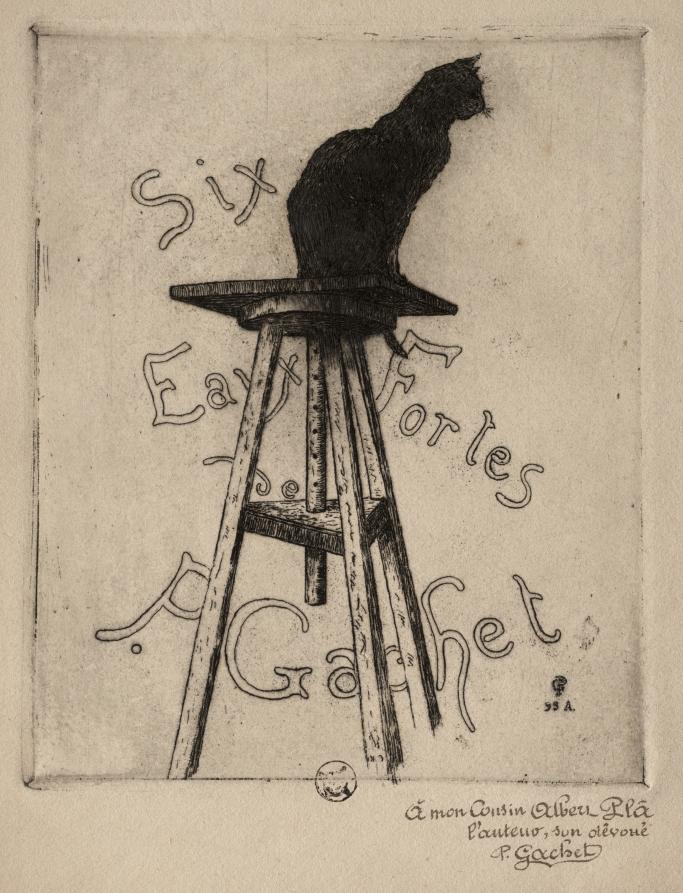
Paul Gachet · The Cleveland Museum of Art · Gift of Elizabeth Carroll Shearer in memory of Robert Lundie Shearer · CC0
- Name
- Paul Gachet
- Education
- University of Paris
- Born
- 30 July 1828
- Birthplace
- Lille, France
- Died
- 9 January 1909
- Occupation
- Physician
- Nationality
- France.
- Languages
- French.
VALÉORINE Encyclopedia
VALÉORINE documentary reading
Documentary summary
Paul-Ferdinand Gachet (30 July 1828 – 9 January 1909) was a French physician most famous for treating the painter Vincent van Gogh during his last weeks in Auvers-sur-Oise. Gachet was a great supporter of artists and the Impressionist movement. He was an amateur painter, signing his works "Paul van Ryssel", referring to his birthplace: Rijsel is the Dutch name of Lille.
Admitted source layer · organised and presented by VALÉORINE
Note VALÉORINE
Paul Gachet (1828–1909) was a French art collector, painter and physician, among other activities. Born in Lille, the art collector died in Auvers-sur-Oise. Paul Gachet was also known as Paul van Ryssel.
Paul Gachet studied at Faculty of Medicine of Montpellier and University of Paris. The art collector worked in Paris.
Languages used include French. Works by Paul Gachet are held at Art Institute of Chicago, Hecht Museum and Metropolitan Museum of Art, among others.
Composed from admitted, traceable facts · 26 September 2026
VALÉORINE
Reference Check
Propose documentary evidence for Paul Gachet. A contribution is never written directly as fact: identity, source, rights and evidence gates still decide.
Sign in to contribute
World of VALÉORINE
Documentary connections
Only confirmed graph relationships appear here. Images are shown only when their identity and reuse rights both pass the documentary gate.
Documentary evidence
Evidence Panel
not yet certified
- Identity
- resolved
- Independent source families
- 0
- Admitted assertions
- 0
- Open conflicts
- 0
Authority files
wikidata · Q1369513 · wikipedia · Paul Gachet
In this article
Biography
Biography
Paul Gachet studied at University of Paris and Faculty of Medicine of Montpellier. The recorded working language is French. Places of work recorded in the authority are Paris. Work by Paul Gachet is recorded in the collections of Art Institute of Chicago, The Nelson-Atkins Museum of Art, National Gallery of Canada, Musée d'Orsay and Print Collection.
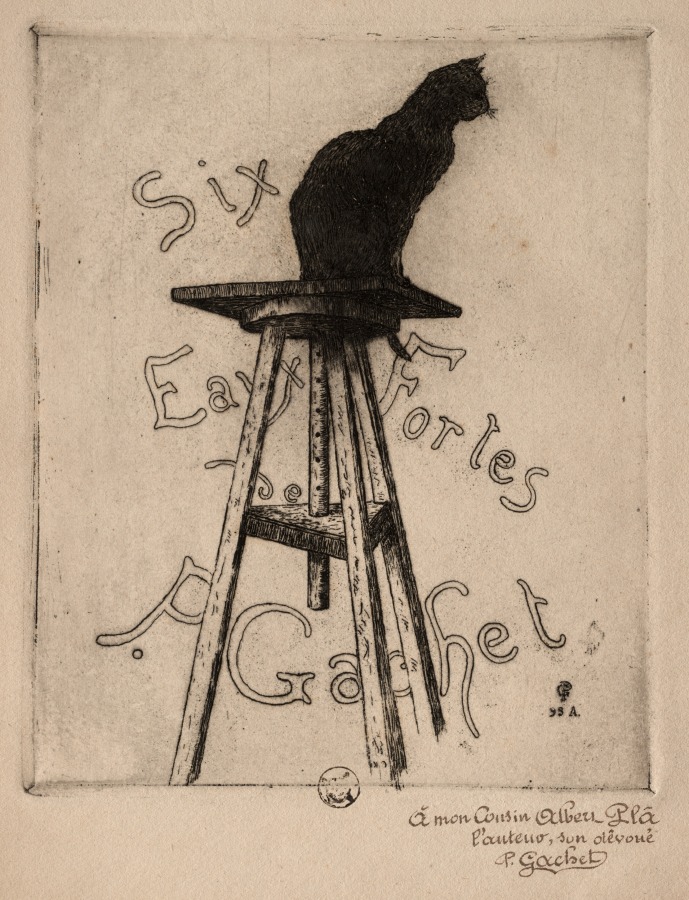
Six Etchings, 1895, by Paul Gachet
Paul Gachet · The Cleveland Museum of Art · Gift of Elizabeth Carroll Shearer in memory of Robert Lundie Shearer
Key facts
Key facts
• Name — Paul Gachet • Education — University of Paris • Born — 30 July 1828 • Birthplace — Lille, France • Died — 9 January 1909 • Resting Place — Père Lachaise Cemetery, Paris • Occupation — Physician • Children — Marguerite Gachet (1869–1949), Paul Gachet Jr (1873–1962)
Biography
Biography
He was born and raised in Lille. His family moved to Mechelen, whence Gachet's father was transferred in 1844/1845 to start a new branch of the firm he was working for. While a student at the University of Paris, he learned drawing in his spare time, and collected paintings by Gustave Courbet and Édouard Manet. After gaining his BA degree, he worked at the mental hospitals of Bicêtre and Salpêtrière. His teachers included Armand Trousseau. In 1858 he received a medical degree for his thesis Étude sur la Mélancolie. He returned to Paris and set up a private homeopathic practice. Gachet married Blanche Castets in 1868. Their daughter, Marguerite Clémentine Elisa was born in 1869. In 1872 he bought a house in Auvers-sur-Oise, a village around 27 km from Paris that was popular with artists. There he welcomed artists such as Camille Pissarro, Armand Guillaumin, Victor Vignon, and Paul Cézanne, Cézanne helping him establish his own studio in his attic. Gachet also knew Gustave Courbet, Champfleury and Victor Hugo. He was a friend of the chemist Henri Nestlé and prescribed Nestlé's new powdered milk supplement to some of his child patients. Under the pen-name Blanche de Mézin, he published articles as an art critic. He spent much time with Charles Méryon after the etcher's committal to Charenton. He oversaw Auguste Renoir's recovery from pneumonia in 1882. He advised Édouard Manet against the amputation of his leg. However, Manet did not follow this advice. Gachet's tomb is situated in section 52 of Père Lachaise Cemetery in Paris.
Gachet and Vincent van Gogh
Gachet and Vincent van Gogh
• Illustration — Paul Gachet, painting by Vincent van Gogh (1890), second version (see below) Vincent van Gogh suffered from a mental disorder and committed himself to an asylum on 8 May 1889. He was released from the asylum on 16 May 1890, but continuation of medical attention was required, which included Van Gogh being under supervision. Vincent's brother, Theo van Gogh, thought that Gachet's background and sensitivity toward artists would make him an ideal doctor for Vincent during his recovery. Very soon after he began seeing Gachet, however, Vincent began to doubt the doctor's usefulness. Vincent described Gachet as: "sicker than I am, I think, or shall we say just as much". However, after a while of meeting up with Gachet, Van Gogh's opinion of him improved. Van Gogh found a friend in him; he mentions that he was not only a muse but also a caretaker. Vincent wrote of the doctor, 'I have found in him a complete friend, even something like a new brother,... '. Gachet has been the subject of criticism over the years regarding Van Gogh's suicide. According to van Gogh biographer Wilfred Arnold, "there was not much else available to any physician of the day which could have reversed the course of Vincent's illness," and he summarizes the medical treatment that Van Gogh received from his various doctors thus: "The overall assessment is rather that they did as well as expected with an unfamiliar disease and a difficult patient."
Subject in art
Subject in art
Gachet was friends with and treated Pissarro, Renoir, Manet, Cézanne and Goeneutte, to name just a few. He had amassed a substantial impressionist art collection before he died in 1909. Gachet, his wife and his home were the subjects of several pieces of art by celebrated artists. • Illustration — Portrait of Dr. Gachet, painting by Vincent van Gogh (1890), first version • Illustration — Dr. Gachet, etching by Vincent van Gogh (1890) • Illustration — Paul Gachet by Charles Leandre (c. 1887) • Illustration — Paul Gachet by Ambroise Detrez (1850-1852) • Illustration — Paul Gachet, painting by Norbert Goeneutte (1891), Musée d'Orsay, Paris • Illustration — Paul Cézanne, The House of Doctor Gachet in Auvers (1872-1873) Musée d’Orsay
Portrayals
Portrayals
Everett Sloane played Gachet in Vincente Minnelli’s Lust for Life. Gachet is prominently featured in Maurice Pialat's 1991 film Van Gogh where he is played by Gérard Séty. Mathieu Amalric plays Gachet in Julian Schnabel's At Eternity's Gate, which depicts van Gogh (Willem Dafoe) painting Gachet's portrait in one scene. Jerome Flynn plays Gachet in the 2017 film Loving Vincent (notable for being animated entirely through oil paintings in van Gogh's style), in a scene where he discusses his own role in Vincent's final days.
In popular culture
In popular culture
"Dr. Gachet", a song written and sung by Rod MacDonald in 1997, tells the painting's history and notes "the painting Van Gogh couldn't sell / has become too valuable / for anyone to ever see again."
Life and work
Life and work
Paul Gachet was born on 30 July 1828 in Lille. Gachet held the nationality of France. Gachet was educated at University of Paris and Faculty of Medicine of Montpellier. Married to: Blanche Castets. Recorded child: Paul-Louis Gachet and Marguerite Gachet. Gachet worked as physician, art collector, painter and psychiatrist. Gachet was active from 1850 to 1909. Gachet worked in Paris. Gachet worked in French. Gachet died on 9 January 1909 in Auvers-sur-Oise. Gachet is buried at Père Lachaise Cemetery.
Life and career
Dated record
Life and career
Explore 1828–1909
The full dated record · 3 entries
1828
Paul Gachet born at Lille.
1909
Dies at Auvers-sur-Oise.
1909
Paul Gachet died at Auvers-sur-Oise.
Places
Named by the record
Places
Only places the record itself states, plotted where the house gazetteer settles their coordinates. Nothing is inferred from a name or a nationality.
Lille.
Birth place
Auvers-sur-Oise.
Death place
Catalogued output
Writings and published texts
These are catalogued publications carrying the name — editions and printings, distinct from the works they contain and from writing about the subject. The 1950s are the densest part of the run, with 9 titles, and that concentration is a fact about what the registers have catalogued rather than a judgement on the work itself.
The run opens with Souvenirs de Cézanne et de Van Gogh a Auvers and closes with Les 70 jours de van Gogh à Auvers
11 editions carry dates between 1928 and 1994
The entries follow Open Library
Souvenirs de Cézanne et de Van Gogh a Auvers
1928
Cézanne à Auvers
1952
Van Gogh a auvers
1953
Vincent van Gogh aux indépendants
1953
Van Gogh et les peintres d'Auvers-sur-Oise
1954
Vincent a auvers les vaches
1954
Cabaner
1954
Deux amis des impressionnistes
1956
Les 70 jours de van Gogh à Auvers
1994
Primary material
Documents and archives
reference work
- “Paul Gachet”, English Wikipedia, consulted as further reading
Reputable secondary · Wikipedia
authority record
- Wikidata, structured authority record Q1369513: Paul Gachet
Unverified · Wikidata
Authority records
Notes from the source article
Cited by Wikipedia
Notes from the source article
These works are cited by the source article, in its own numbering. They are recorded as its citations, not as sources VALÉORINE has verified.
- 1.Similarly, Gachet's son Paul-Louis signed Louis van Ryssel
- 2.A vast chronology of Doctor Gachet's life, compiled by his son, is supplied in Distel, Anne and Stein, Susan Alyson (1999) Cézanne to Van Gogh: The Collection of Doctor Gachet, Metropolitan Museum of Art, New York, , pp. 273–288
- 3.Museyon. Art + Paris Impressionists & Post-Impressionists: The Ultimate Guide to Artists, Paintings and Places in Paris and Normandy. 251–. 1 July 2011. 978-1-938450-24-2.
- 4.Henley, Jon. The remarkable Dr Gachet. The Guardian. 1999-01-28. 0261-3077.
- 5.Discover model, art collector Marguerite Gachet. rkd.nl.
- 6.Henk Tromp. A Real Van Gogh: How the Art World Struggles with Truth. Amsterdam University Press. 257–258. 2010. 978-90-8964-176-2.
- 7.Cimetières de France et d’ailleurs. GACHET Paul Ferdinand (1828-1909).
- 8.Webexhibits.org. Letter from Vincent van Gogh to Theo van Gogh, Auvers-sur-Oise, 10 July 1890.
- 9.Puchko, Kristy. 15 Things You Didn't Know About Van Gogh's Portrait of Dr. Gachet. Mental Floss. 2016-02-09.
- 10.Arnold, Wilfred Niels. Vincent Van Gogh: chemical, crisis, and creativity. Birkhäuser. 66. 1992. 978-3-7643-3616-5.
- 11.Arnold, work cited, page 216. Arnold assumes his own diagnosis of acute intermittent porphyria
- 12.Realfrance.wordpress.com. Who is Dr Gachet. 5 March 2010.
- 13.www.rodmacdonald.net. Dr Gachet.
References
Citations
References
Each reference names the institution holding it, so a reader may go to the document itself.
reference work
Partially resolvedauthority record
Unverified
The Encyclopedia exists whether or not anything is for sale. Corrections are recorded rather than overwritten, and every version of this record is kept. Published 14 August 2026.
Elsewhere in Paintings
18,717 published records in this field, each with its sources named.
- Paul F. Keene Jr.Artist
- Paul FaulknerArtist
- Paul FlandrinArtist
- Paul Friedrich MeyerheimArtist
- Paul GauguinArtist
- Paul GervaisArtist
- Paul GrunwaldtArtist
- Paul GuigouArtist
Best supported in this field
For owners
Own a work by Paul Gachet?
A specialist will read what you send and tell you what the house can establish, what it cannot, and whether the object is suited to sale. There is no charge and no obligation. The object stays with you throughout; nothing is shipped to us unless it is arranged in writing beforehand.