
Oscar Levant
Oscar Levant (December 27, 1906August 14, 1972) was an American concert pianist, composer, conductor and actor born in Pittsburgh, U.S, from Russian-emigrant parents. Levant studied under Zygmunt Stojowski and Arnold Schoenberg, and has 33 albums as a pianist, having recorded works of numerous classical composers. For a period of time during the 1940s, he was the highest paid concert pianist in the United States.
Oscar Levant
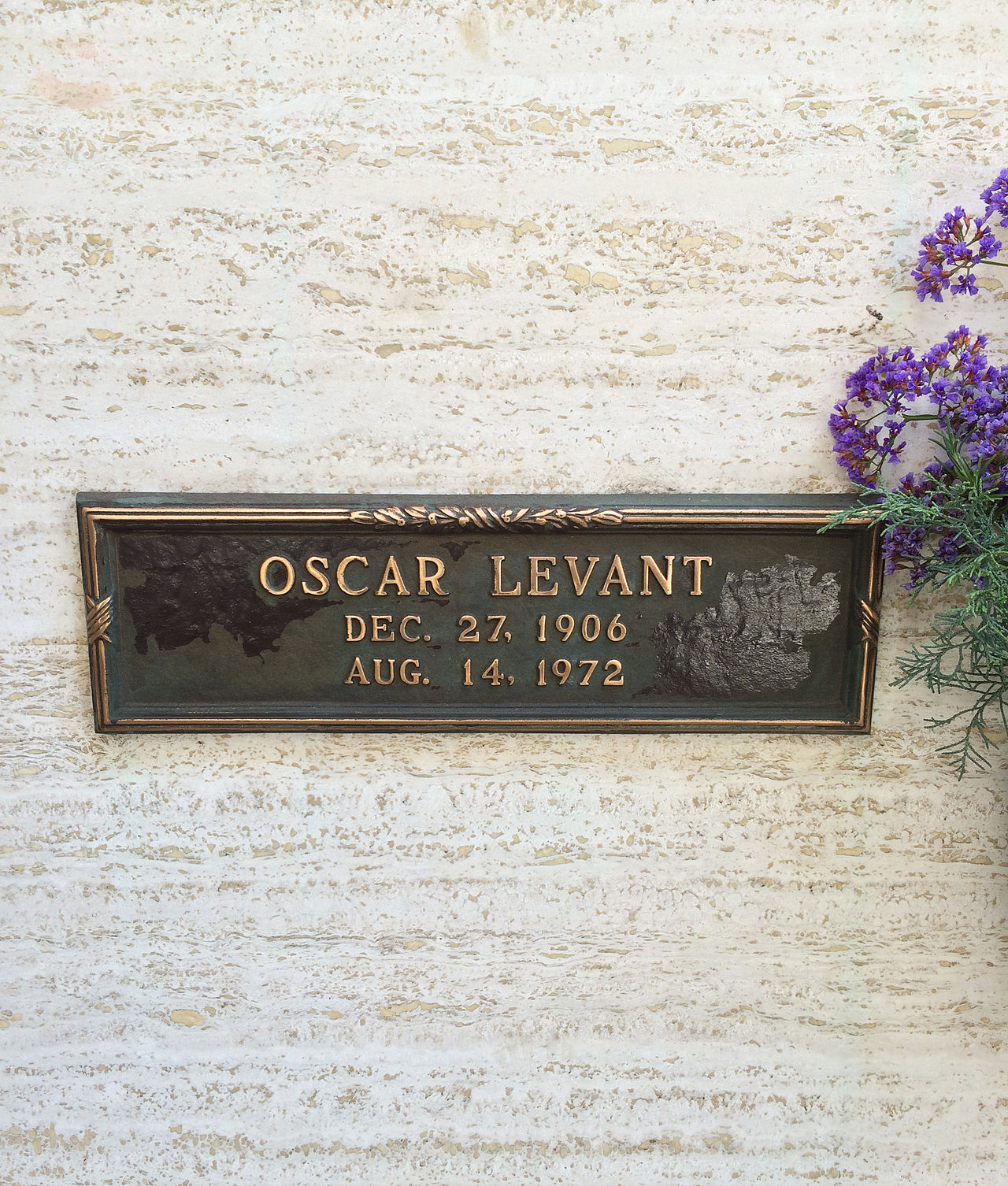
Arthur Dark · CC BY-SA 4.0
- Name
- Oscar Levant
- Born
- 27 December 1906
- Birthplace
- Pittsburgh, Pennsylvania, U.S.
- Died
- 14 August 1972
- Place of death
- Beverly Hills, California, U.S.
- Occupation
- * Concert pianist
- Nationality
- United States
- Fields
- piano performance · literature · acting
- Teachers
- Zygmunt Stojowski
- Honours
- star on Hollywood Walk of Fame
- Languages
- English
VALÉORINE Encyclopedia
VALÉORINE documentary reading
Documentary summary
Oscar Levant (December 27, 1906August 14, 1972) was an American concert pianist, composer, conductor and actor born in Pittsburgh, U.S, from Russian-emigrant parents. Levant studied under Zygmunt Stojowski and Arnold Schoenberg, and has 33 albums as a pianist, having recorded works of numerous classical composers. For a period of time during the 1940s, he was the highest paid concert pianist in the United States.
Admitted source layer · organised and presented by VALÉORINE
Note VALÉORINE
Oscar Levant (1906–1972) was an actor, comedian and composer, among other activities, of American nationality. The actor was born in Pittsburgh and died in Beverly Hills. Activity centred on acting, literature and piano performance.
The work spans classical music and jazz. Languages used include English. Honours include star on Hollywood Walk of Fame.
Composed from admitted, traceable facts · 27 September 2026
VALÉORINE
Reference Check
Propose documentary evidence for Oscar Levant. A contribution is never written directly as fact: identity, source, rights and evidence gates still decide.
Sign in to contribute
World of VALÉORINE
Documentary connections
Only confirmed graph relationships appear here. Images are shown only when their identity and reuse rights both pass the documentary gate.
Documentary evidence
Evidence Panel
not yet certified
- Identity
- resolved
- Independent source families
- 0
- Admitted assertions
- 0
- Open conflicts
- 0
Authority files
gnd · 1162206659 · wikidata · Q945042 · wikipedia · Oscar Levant
In this article
Biography
Biography
Levant worked between 1906 and 1972 across actor, composer, pianist, jazz musician and film actor and 5 further recorded occupations. The registers place that work in jazz and classical music. This article rests on 99 catalogued compositions, 4 published texts, 7 issued recordings, 4 digitised documents and 25 scholarly references drawn from named institutional registers. Every statement below returns to a source shown in the evidence panel; where the record is silent or divided, the article says so instead of resolving it.
Training under Zygmunt Stojowski is recorded. The recorded working language is English. The field of work recorded is piano performance, literature and acting. Subjects and genres recorded for the work are jazz and classical music. Distinctions recorded are star on Hollywood Walk of Fame.
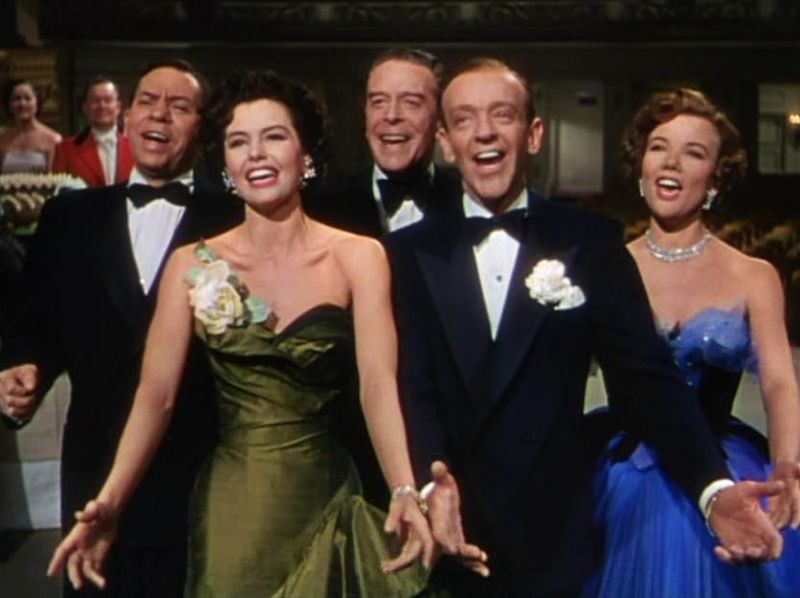
L. to R.: Oscar Levant, Cyd Charisse, Jack Buchanan, Fred Astaire Nanette Fabray (final number That's Entertainment!) in The Band Wagon - trailer (cropped screenshot)
film trailer screenshot (MGM) · The Band Wagon trailer

L. to R.: Georges Guétary, Oscar Levant Gene Kelly in An American in Paris - trailer (cropped screenshot)
film trailer screenshot (MGM) · An American in Paris trailer
Key facts
Key facts
• Name — Oscar Levant • Born — 27 December 1906 • Birthplace — Pittsburgh, Pennsylvania, U.S. • Died — 14 August 1972 • Place of death — Beverly Hills, California, U.S. • Occupation — * Concert pianist • composer • conductor • author • actor • comedian • TV talk show host • radio personality • Years Active — 1923–1965 • Children — 3
Early life
Early life
Levant was born in Pittsburgh, Pennsylvania, United States, in 1906, to Orthodox Jewish Max, a watchmaker, and Annie, who emigrated from Russia. Levant's parents were married by his maternal grandfather, who was a rabbi. Levant moved to New York in 1922. He began studying under Zygmunt Stojowski. In 1925, Levant appeared with Ben Bernie in a short sound film, Ben Bernie and All the Lads, made in New York City with the De Forest Phonofilm sound-on-film system. In the 1920s, Levant recorded with the Ben Bernie Orchestra.
Career
Career
Levant traveled to Hollywood in 1928, where his career took a turn for the better. During his stay, he met and became friends with George Gershwin. From 1929 to 1948, Levant composed the music for more than twenty movies. During this period, he also wrote or co-wrote numerous popular songs that made the hit parade, the most noteworthy being "Blame It on My Youth" (1934), now considered a standard. • Illustration — Levant in An American in Paris (1951) Levant began composing seriously around 1932. He studied under Arnold Schoenberg and impressed Schoenberg sufficiently to be offered an assistantship (which he turned down, considering himself unqualified). These formal studies led to a request by Aaron Copland to play at the Yaddo Festival of contemporary American music on April 30 of that year. Successful, Levant began composing a new orchestral work, a sinfonietta. Levant made his debut as a music conductor in 1938 on Broadway, filling in for his brother Harry in sixty-five performances of George S. Kaufman and Moss Hart's The Fabulous Invalid. In 1939, he was again working on Broadway as composer and conductor of The American Way, another Kaufman and Hart production. He was a talented pianist and was well known for his recorded works of Gershwin, and numerous classical composers. During a time in the 1940s, he was the highest paid concert pianist in the United States. Also, at this time, Levant was becoming known to American audiences as one of the regular panelists on the radio quiz show Information Please. Originally scheduled as a guest panelist, Levant proved so quick-witted and popular that he became a regular fixture on the show in the late-1930s and 1940s, along with fellow panelists Franklin P. Adams and John Kieran and moderator Clifton Fadiman. "Mr. Levant", as he was always called, was often challenged with musical questions, and he impressed audiences with his depth of knowledge and facility with a joke. Kieran praised Levant as having a "positive genius for making offhand cutting remarks that couldn't have been sharper if he'd honed them a week in his mind. Oscar was always good for a bright response edged with acid." Examples include "I knew Doris Day before she was a virgin", "I think a lot of [conductor/composer Leonard] Bernstein—but not as much as he does", and (after Marilyn converted to Judaism when she married playwright Arthur Miller), "Now that Marilyn Monroe is kosher, Arthur Miller can eat her." • Illustration — Georges Guétary, Levant, and Gene Kelly in An American in Paris (1951) • Illustration — The cast of The Band Wagon (1953) L–R: Oscar Levant, Cyd Charisse, Jack Buchanan, Fred Astaire, and Nanette Fabray Levant appeared in feature films, starting from the 1920s until the mid-50s, often playing a pianist or composer. He had supporting roles in the Metro-Goldwyn-Mayer musicals The Barkleys of Broadway (1949), starring Fred Astaire and Ginger Rogers; An American in Paris (1951), starring Gene Kelly; and The Band Wagon (1953), starring Astaire and Cyd Charisse. Oscar Levant regularly appeared on NBC radio's Kraft Music Hall, starring singer Al Jolson. He not only accompanied Jolson on the piano with classical and popular songs, but often joked and ad-libbed with Jolson and his guests. This included comedy sketches. Their individual ties to George Gershwin—Jolson introduced Gershwin's "Swanee"—undoubtedly had much to do with their rapport. Both Levant and Jolson appeared as themselves in the Gershwin biopic Rhapsody in Blue (1945). In the early 1950s, Levant was an occasional panelist on the NBC radio and television game show Who Said That?. Levant hosted a talk show on KCOP-TV in Los Angeles from 1958 until 1960, The Oscar Levant Show, which was later syndicated. It featured his piano playing along with monologues and interviews with guests such as Fred Astaire and Linus Pauling. Full recordings of only two shows are known to have survived, one with Astaire, who paid to have a kinescope recording of the broadcast made so that he could assess his performance.
Personal life
Personal life
Levant married actress Barbara Woodell in 1932. The couple divorced in 1933. In 1939, Levant married singer and actress June Gale; they had three daughters, Marcia, Lorna, and Amanda. Levant talked publicly about his neuroses and hypochondria. Levant became addicted to prescription drugs and was committed to psychiatric hospitals by his wife.
Death
Death
• Illustration — Crypt of Oscar Levant at Westwood Memorial Park On August 14, 1972, Levant died of a heart attack at his home in Beverly Hills, California, at the age of 65. Levant's body was discovered by his wife, June, when she went to wake him from a nap for a scheduled interview with Candice Bergen, who was then working as a photojournalist. Bergen had shot photos of Levant on a previous visit, one of which was published in her memoir, Knock Wood. Levant is interred in the Pierce Brothers Westwood Village Memorial Park Cemetery in Los Angeles.
Filmography
Filmography
• Ben Bernie and All the Lads (1925) as himself (a De Forest phonofilm) • The Dance of Life (1929) as Jerry Evans • Night Parade (1929) as Ann Pennington's piano accompanist (uncredited) • In Person (1935) • Charlie Chan at the Opera (1936) (composed music for film's opera) • Rhythm on the River (1940) as Billy Starbuck • Kiss the Boys Goodbye (1941) as Dick Rayburn aka Oscar • Rhapsody in Blue (1945) as himself • Humoresque (1946) as Sid Jeffers • You Were Meant for Me (1948) as Oscar Hoffman • Romance on the High Seas (1948) as Oscar Farrar (first Doris Day film) • The Barkleys of Broadway (1949) as Ezra Millar • An American in Paris (1951) as Adam Cook, bohemian pianist • O. Henry's Full House (1952) as Bill Peoria (The Ransom of Red Chief) • The I Don't Care Girl (1953) as Charles Bennett • The Band Wagon (1953) as Lester Marton, based on Adolph Green • The Cobweb (1955) as Mr. Capp
Television
Television
• The Oscar Levant Show (1958–1960, TV series) • The Jack Benny Program (1958, TV Series) as himself • The Tonight Show hosted by Jack Paar (early 1960's) • The Joey Bishop Show (1964, TV series) as himself • The Merv Griffin Show (1965, TV series) as himself
Theatre
Theatre
• Burlesque (1927) – musical play – performer • Ripples (1930) – musical – co-composer • Sweet and Low (1930) – musical revue – songwriter • The Fabulous Invalid (1938) – musical play – replacement conductor • The American Way (1939) – musical play – conductor and composer
Quotations
Quotations
Examples of his repartée: • "I knew Doris Day before she was a virgin." • "It's not what you are; it's what you don't become that hurts." • Speaking about his deteriorating mental health on TV he said, "There is a fine line between genius and insanity, I have erased that line."
Life and work
Life and work
Oscar Levant was born on 27 December 1906 in Pittsburgh. Levant held the nationality of United States. Levant studied under Zygmunt Stojowski. Married to: June Gale and Barbara Woodell. Levant worked as actor, composer, pianist and jazz musician, and the authority record catalogues a further 6 occupations under the same name, among them film actor, stage actor, comedian, writer, radio personality and musician. Levant was active from 1923. The fields Levant worked in include jazz and classical music. Levant played the piano. Levant worked in English. Levant died on 14 August 1972 in Beverly Hills. Levant is buried at Westwood Village Memorial Park Cemetery.
Life and career
Dated record
Life and career
Explore 1906–1972
The full dated record · 3 entries
1906
Born at Pittsburgh.
1972
Dies at Beverly Hills.
1972
Oscar Levant died on 14 August 1972.
Places
Named by the record
Places
Only places the record itself states, plotted where the house gazetteer settles their coordinates. Nothing is inferred from a name or a nationality.
Pittsburgh.
Birth place
Beverly Hills.
Death place
Compositions, 1928–1934
Catalogued output
Compositions, 1928–1934
The entries below are works composed by the subject, as the institutional registers catalogue them; later performances and commercial recordings of the same music are listed separately. The run opens with If You Want the Rainbow (You Must Have the Rain) and closes with Blame It on My Youth. They belong to a run of 72 titles in all, from 1928 to 1934.
2 compositions carry dates between 1928 and 1934
If You Want the Rainbow (You Must Have the Rain)
1928
Blame It on My Youth
1934
Compositions without a settled date
Catalogued output
Compositions without a settled date
70 further compositions are catalogued under Levant's name without a date the collections agree on, which is why they are set apart from the dated run rather than placed in it. A selection is set out below and the complete run may be opened beneath it. Piano Sonatina — 3 catalogued parts. 23 — 3 catalogued parts. Children’s Corner, L. 113 — 3 catalogued parts. Préludes, Livre I, L. 117, CD 125 — 3 catalogued parts. Années de pèlerinage, Deuxième année; Italie, S. 161: Sonetto 104 del Petrarca, S. 1 in B-flat major, BWV 825 — 6 catalogued parts. Concerto for Piano and Orchestra in F major — 3 catalogued parts. Étude in E major, op. 70 — 3 catalogued parts. Billy the Kid — 6 catalogued parts. 38 — 3 catalogued parts. 16 — 3 catalogued parts.
I Love Louisa
Danza ritual del fuego
Concerto for Piano and Orchestra no
1 in B-flat minor, op
Lotus Land, op
La plus que lente, L. 121, CD 128
La Soirée dans Grenade
3: Lento ma non troppo
2 in E‐flat major, op
Piano Concerto no
4 in D minor, op
A Weekend in the Country
The complete catalogue · 60
I Love Louisa
Danza ritual del fuego
Concerto for Piano and Orchestra no
1 in B-flat minor, op
Lotus Land, op
La plus que lente, L. 121, CD 128
La Soirée dans Grenade
3: Lento ma non troppo
2 in E‐flat major, op
Piano Concerto no
4 in D minor, op
A Weekend in the Country
Piano Concerto, op
How Much Do You Mean to Me?
L'eventail de Jeanne: VIII. Pastourelle, FP 45
All Dressed Up and No Place to Go
Got a Bran’ New Suit
Concerto in A minor for Piano and Orchestra, op
Deux arabesques, L. 66, CD 74: No
5 in F‐sharp major, op
Träumerei. Étude in C minor, op
12 “Revolutionary”: Allegro con fuoco
Don’t Mention Love to Me
41 in C‐sharp minor, op
Rhapsody in Blue
Préludes, Livre II, L. Général Lavine – eccentric
Dans le style et le mouvement d’un Cakewalk
El sombrero de tres picos: Parte II. Danza del molinero (Farruca)
Lady Play Your Mandolin
17 in B‐flat minor, op
Hungarian Rhapsody no
Le Tombeau de Couperin: III. Let Me Borrow an Hour of To-Morrow
13 Preludes, op
5 in G major: Moderato
10 Preludes, op
3 in D minor: Tempo di minuetto
19 Hungarian Rhapsodies, S. 244 / R. 13 in A minor
Pavane pour une infante défunte
La fille aux cheveux de lin
Le Tombeau de Couperin: II. España, seis hojas de álbum, op
Concertino pour Piano et Orchestre
Out of Sight, Out of Mind
45 in A minor, op
Lovable and Sweet
Polonaise in A major, op
Jardins sous la pluie
Net et vif
Pardon My Love. Étude in C‐sharp minor, op
6 in E-flat major: Andante
Berceuse in D‐flat major, op
Hungarian Rhapsody for Orchestra no
4 in D minor, S. 24 Preludes, op
Allegretto in A minor
Lullaby, from the ballet Gayaneh
Andantino con moto
Images, Livre 1, L. 110, CD 105: No
Reflets dans l’eau
6 Klavierstücke, op
Intermezzo in A-Dur
Andante teneramente. Étude in G‐flat major, op
A further 3 recorded entries stand behind this article and are held on the record.
Catalogued output
Writings on music
These are catalogued publications carrying the name — editions and printings, distinct from the works they contain and from writing about the subject. The 1940s are the densest part of the run, with 2 titles, and that concentration is a fact about what the registers have catalogued rather than a judgement on the work itself.
4 editions carry dates between 1941 and 1968
The run opens with National Symphony Orchestra's pops, 1st season, 1941 and closes with The unimportance of being Oscar
The entries follow Open Library
National Symphony Orchestra's pops, 1st season, 1941
1941
A smattering of ignorance
1942
Memoirs of an amnesiac
1965
Catalogued output
Films and moving-image works
These entries are catalogued as moving-image works. The run opens with Tanned Legs and closes with Made for Each Other. The 1920s are the densest part of the run, with 4 titles, and that concentration is a fact about what the registers have catalogued rather than a judgement on the work itself.
8 films carry dates between 1929 and 1938
Tanned Legs
1929
Side Street
1929
Street Girl
1929
The Delightful Rogue
1929
Flaming Gold
1933
Music Is Magic
1935
Nothing Sacred
1937
Made for Each Other
1938
Legacy
Several plays have been written about Levant including At Wit's End: A Play with Music by Joel Kimmel (performed by Stan Freeman in a one-man show) and For Piano and Harpo by Dan Castellaneta, chronicling Levant's friendship with Harpo Marx. Actor John Garfield used Levant as a model when creating the character of troubled genius Mickey Borden in the 1938 film Four Daughters. Levant was the inspiration for the neurotic, womanizing pianist Henry Orient in Nora Johnson's novel The World of Henry Orient (1964). In April 2023, a play about Levant's life written by Pulitzer Prize winner Doug Wright premiered on Broadway. The play, Good Night, Oscar, premiered at the Belasco Theatre and starred Sean Hayes, who received a Tony Award for Best Actor in a Play for his performance. Good Night, Oscar was a fictionalized version of a true event in Levant's life, when he was given a four-hour leave of absence from a psychiatric hospital to allow him to appear on a TV game show (in the play it's portrayed as The Tonight Show.)
Discography
Discography
Levant had an extensive musical career with over 75 composer credits and 33 albums that he recorded as a pianist.
Recordings and discography
Primary material
Recordings and discography
The discography assembled here shows how Levant's work has been published in sound, not what Levant made. 7 sound issues are catalogued, carrying dates from 1945 to 2024. An issue is a published recording, distinct from the composition it carries, from a printed score of that composition and from any single performance of it; none of the entries below is counted in the catalogue of compositions above, and several of them carry the same work in different readings. 2 issues were published within the subject's lifetime and 5 after 1972, so the greater part of this record is the work of later performers, editors and labels. The performers and issuing labels are as the discographic register states them; where it names no performer the article names none.
A Rhapsody In Blue - The Extraordinary Life Of Oscar Levant
2018
3 / Tchaikovsky: Piano Concerto no
The Sound of Black and White
2021
Rhapsody in Blue / An American in Paris / Concerto in Fa magg. Per piano e orchestra
1991
Digitised primary material
Primary material
Digitised primary material
These are primary documents. They carry the subject's own activity rather than a later account of it, which is why they are set before the rest of the archival material and not among it. The dated documents run from 1942 to 1994.
Oscar Levant - Plays Levant & Gershwin
1994
Oscar Levant plays Chopin
1949
Oscar Levant in a Recital of Modern Music (1941-42)
1942
Documents and archives
Primary material
Documents and archives
institutional register
- IMSLP authority file Category:Levant,_Oscar
Unverified · IMSLP
- MusicBrainz artist record for Oscar Levant
Unverified · MusicBrainz
- Wikidata, structured authority record Q945042: Oscar Levant
Unverified · Wikimedia Foundation
authority file
- Gemeinsame Normdatei 1162206659, A rhapsody in blue (Zusammenstellung, Oscar Levant).
Unverified · Deutsche Nationalbibliothek
reference work
- “Oscar Levant”, English Wikipedia, consulted as further reading
Reputable secondary · Wikipedia
Authority records
Notes from the source article
Cited by Wikipedia
Notes from the source article
These works are cited by the source article, in its own numbering. They are recorded as its citations, not as sources VALÉORINE has verified.
- 1.Oscar Levant. Hollywood Walk of Fame. October 25, 2019.
- 2.Hall, Margaret. Emily Bergl, Alex Wyse, Marchánt Davis, More Join Good Night, Oscar. Playbill. March 14, 2023.
- 3.Wild, Stephi. Full Cast Announced for Good Night, Oscar as Rehearsals Begin. BroadwayWorld.
- 4.Kashner, Sam. A Talent for Genius: The Life and Times of Oscar Levant. Villard/Random House. 3. 1994. 1-879505-39-8.
- 5.Levant, Oscar The Unimportance of Being Oscar, Pocket Books 1969 (reprint of G.P. Putnam 1968), p. 113. .
- 6.Composers – Levant. Classical Net.
- 7.Horowitz, Joseph. 'Completely Unmasked at All Times': On the Complete Piano Recordings of Oscar Levant. Los Angeles Review of Books. August 10, 2019.
- 8.Dunning, John. On the Air: The Encyclopedia of Old-Time Radio. Oxford University Press. May 7, 1998. 9780199840458.
- 9.Giardina, Anthony. The Lives They Lived. The New York Times Magazine. December 23, 2019.
- 10.Reich, Howard. The Laughs Last. Chicago Tribune. January 21, 1990.
- 11.Harding, Les. They Knew Marilyn Monroe: Famous Persons in the Life of the Hollywood Icon. McFarland & Co. 2012. 978-0786466375.
- 12.tv.com. Show Overview: Who Said That?.
- 13.Ethan Thompson. Parody and Taste in Postwar American Television Culture. Routledge. 2011. 9781136839801.
- 14.UCLA Library Catalog – Titles.
- 15.Sam Kashner and Nancy Schoenberger, A Talent For Genius: the Life and Times of Oscar Levant (Villard/Random House, 1994; Silman-James Press, 1998);
- 16.Los Angeles Public Library. Meet your hostess. tessa :: Photo Collection.
- 17.Pianist Levant, the (obscured). The Palm Beach Post. August 15, 1972.
- 18.Teichman, Howard, Smart Aleck, the Wit World and Life of Alexander Woollcott (William Morrow and Company, Inc., 1976), p. 170
- 19.Oscar Levant: Hollywood's First Celebrity Meltdown. NPR. December 24, 2006.
- 20.Bergen, Candice. Knock Wood. Simon & Schuster. 2014. 978-1-476-77013-0.
- 21.Josh Getlin. Remembering the brilliant, troubled Oscar Levant. Los Angeles Times. August 17, 2018.
- 22.Four Daughters. Turner Classic Movies.
- 23.Colapinto, John. A Star is Born, Lost, and Found. The New Yorker. April 3, 2012.
- 24.Jacobs, Julia. Sean Hayes Wins Best Leading Actor in a Play for Good Night, Oscar. The New York Times. June 12, 2023.
- 25.Christian Lewis. Good Night, Oscar Review: Sean Hayes Gives a Bravura Performance as Late-Night TV Virtuoso. Variety. 25 April 2023.
- 26.Jesse Green. Good Night, Oscar Review: Sean Hayes with Demerol and Cadenzas. The New York Times. April 24, 2023.
- 27.Oscar Levant. Discography of American Historical Recordings.
- 28.Oscar Levant. Discogs.
- 29.Internet Broadway Database. Burlesque. IBDB.com.
- 30.Internet Broadway Database. Ripples. IBDB.com.
- 31.Internet Broadway Database. Sweet and Low. IBDB.com.
- 32.Internet Broadway Database. The Fabulous Invalid. IBDB.com.
- 33.Internet Broadway Database. The American Way. IBDB.com.
- 34.My sentimental journey with Doris Day. www.hutchnews.com.
- 35.The Memoirs of an Amnesiac. Classicalmpr.org.
- 36.Levant, Oscar. Quotations at wikiquotes. En.wikiquote.org.
Bibliography printed in the source article · 7
- A Smattering of Ignorance, New York: Doubleday, 1940
- The Memoirs of an Amnesiac, New York: Putnam's, 1965
- The Unimportance of Being Oscar, New York: Putnam's, 1968
- A Talent for Genius: The Life and Times of Oscar Levant, 1994 biography by Sam Kashner and Nancy Schoenberger
- Sam Kashner and Nancy Schoenberger, A Talent For Genius: the Life and Times of Oscar Levant (Villard/Random House, 1994; Silman-James Press, 1998)
- Dr. Charles Barber. "The Concert Music of Oscar Levant". Department of Music, Stanford University, 1998–2000
- Caleb T. Boyd. Oscar Levant: Pianist, Gershwinite, Middlebrow Media Star. PhD diss., Washington University in St. Louis, 2020.
References
Citations
References
Each reference names the institution holding it, so a reader may go to the document itself.
authority file
Gemeinsame Normdatei 1162206659, A rhapsody in blue (Zusammenstellung, Oscar Levant).Deutsche Nationalbibliothek
Partially resolvedinstitutional register
Partially resolvedinstitutional register
MusicBrainz artist record for Oscar LevantMusicBrainz
Partially resolvedinstitutional register
Wikidata, structured authority record Q945042: Oscar LevantWikimedia Foundation
Partially resolvedreference work
Partially resolved
The Encyclopedia exists whether or not anything is for sale. Corrections are recorded rather than overwritten, and every version of this record is kept. Published 14 August 2026.
Elsewhere in Music memorabilia
42,307 published records in this field, each with its sources named.
- Oscar Hammerstein IPerson
- Oscar Hernández FalcónPerson
- Oscar I of SwedenPerson
- Oscar IsaacPerson
- Oscar LopezPerson
- Oscar Lorenzo FernándezPerson
- Oscar MboPerson
- Oscar MilaniPerson
Best supported in this field
For owners
Own a work by Oscar Levant?
A specialist will read what you send and tell you what the house can establish, what it cannot, and whether the object is suited to sale. There is no charge and no obligation. The object stays with you throughout; nothing is shipped to us unless it is arranged in writing beforehand.