
Ogata Kenzan
Ogata Kenzan, originally Ogata Shinsei, was an Edo period Japanese potter, painter, and calligrapher. He was also known by the pseudonyms Shisui, Shōkosai, Shuseidō, Tōin, and Shinshō. He is associated with Kyō ware and Kiyomizu ware.
Also recorded as Gyokudō · Ijū Ogata · Gonpei Ogata · Shōkosai
Ogata Kenzan

Ogata Kenzan · The Cleveland Museum of Art · Cornelia Blakemore Warner Fund and Edward L. Wittemore Fund · CC0
- Name
- Ogata Kenzan
- Birth Name
- Ogata Shinsei
- Born
- 1663
- Birthplace
- Kyoto, Japan
- Died
- 1743
- Place of death
- Edo (now Tokyo), Japan
- Education
- Studied under Nonomura Ninsei
- Known for
- Pottery, painting, calligraphy
- Movement
- Rinpa
- Nationality
- Japan
- Occupation
- ceramicist · painter · potter
Reference Check
Propose documentary evidence for Ogata Kenzan. A contribution is never written directly as fact: identity, source, rights and evidence gates still decide.
Sign in to contribute
Documentary evidence
Documentary basis
Authority files
wikidata · Q534279 · wikipedia · Ogata Kenzan
VALÉORINE Encyclopedia
The documentary record
Statements marked “Documentary record” are set in the article beside the passage they confirm. Each is read from the authority records of the institutions named here; select “Prove” to see the record it was read from, where in that record, and when.
Institutions cited
Bibliothèque nationale de France · Deutsche Nationalbibliothek · Getty Union List of Artist Names
Complete reading chain (JSON)In this article
Key facts
Key facts
• Name — Ogata Kenzan • Birth Name — Ogata Shinsei • Born — 1663 • Birthplace — Kyoto, Japan • Died — 1743 • Place of death — Edo (now Tokyo), Japan • Education — Studied under Nonomura Ninsei • Known for — Pottery, painting, calligraphy • Notable Works — Autumn Ivy, Snow-laden Pine Boughs • Style — Ceramic art • Movement — Rinpa • Patrons — Nijō Tsunahira, Rinnojinomiya Kinkan Ogata
Documentary record
Ogata Kenzan (1663 – 1743) was a calligrapher, potter and painter. The birth of Ogata Kenzan is recorded in 1663 in Kyōto, and the death in 1743 in Kyōto.
Biography
Biography
Ogata Kenzan was the third son born into a rich kimono merchant family in Kyoto. The family's shop, the Kariganeya, was patronized by Oeyo, the wife of Tokugawa Hidetada, and Tokugawa Masako. His father was Ogata Sōken (1621–1687), a calligrapher and patron of Noh. His older brother was the painter Ogata Kōrin (1658–1716). Following his father's death, the eldest of the Ogata brothers took over the Kariganeya, allowing Kenzan and Kōrin to enjoy their inheritance and pursue pottery and painting. From a young age, Ogata received lessons in pottery from Koho and Rakuichi, grandchildren of Hon'ami Kōetsu. In 1689, Ogata established Shuseidō hall south of Ninna-ji. Ogata studied with the potter Nonomura Ninsei whose Omuru kiln was located at the front gate of Ninna-ji. In 1699, Kugyō Nijō Tsunahira provided Ogata with a mountain villa in Ukyō-ku, Kyoto where Kenzan established his own kiln. In 1731, Kenzan was invited by Cloistered Imperial Prince Rinnojinomiya Kinkan to move to Edo where he spent the remainder of his life. He died at the age of 81. Ogata produced a distinctive style of freely brushed grasses, blossoms, and birds as decorative motifs for pottery. His pieces were noted for their perfect relation between design and shape. He often collaborated on the decoration of pottery with his older brother, Ogata Kōrin, after whom the style known as Rinpa was named.
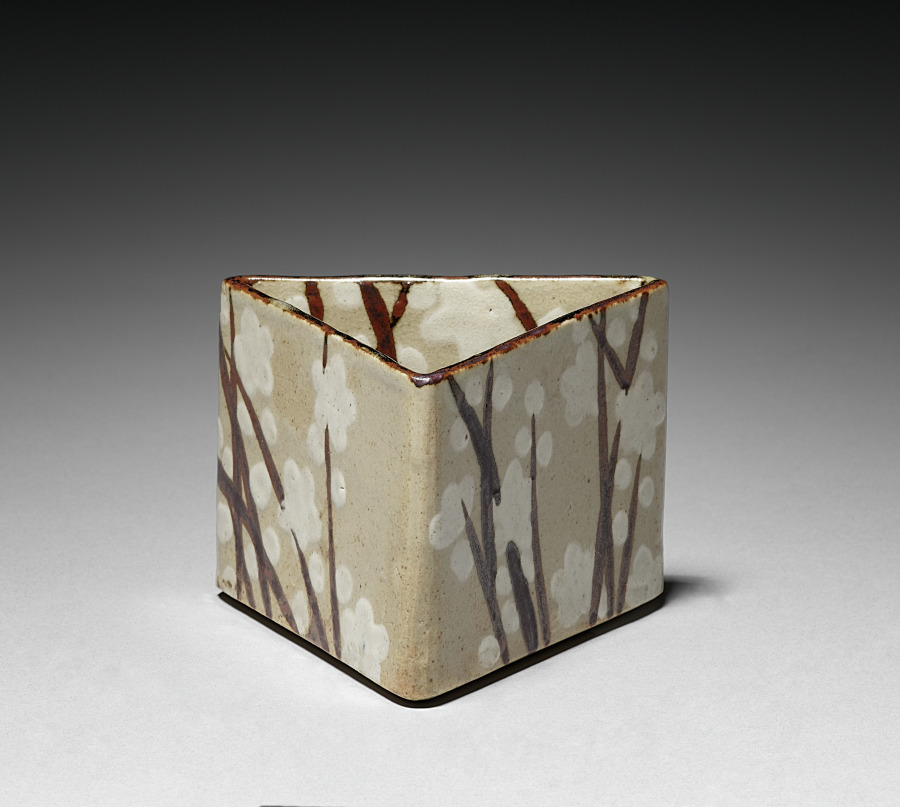
One of Five Serving Bowls (Mukozuke) with Prunus Design, 1700s to mid-1800s, by Ogata Kenzan
Ogata Kenzan · The Cleveland Museum of Art · Cornelia Blakemore Warner Fund and Edward L. Wittemore Fund
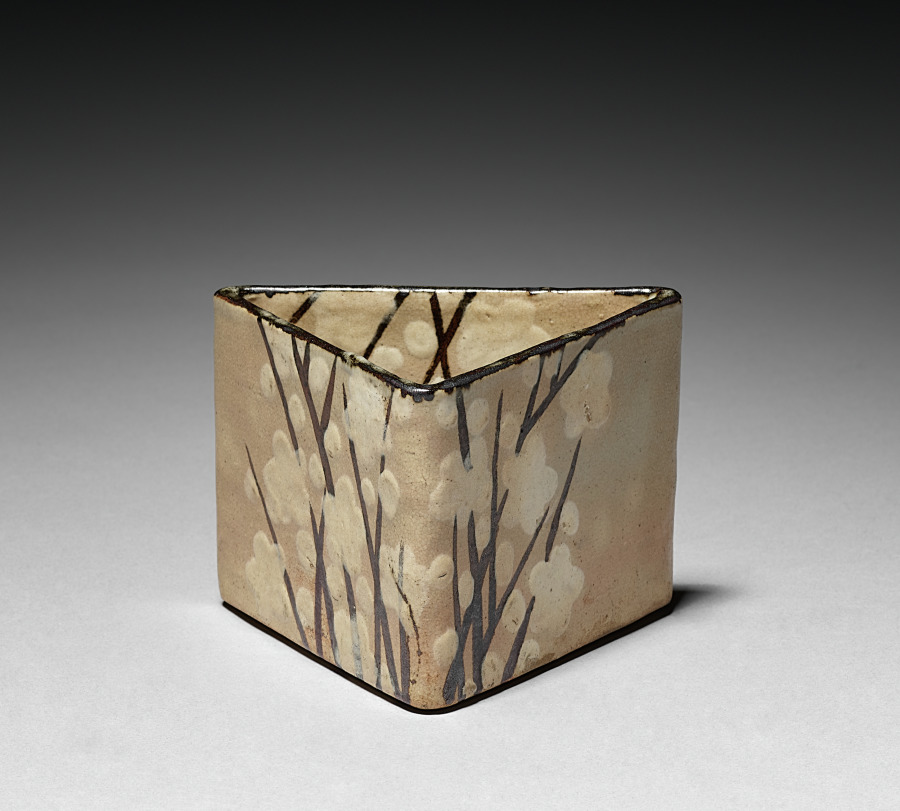
One of Five Serving Bowls (Mukozuke) with Prunus Design, 1700s to mid-1800s, by Ogata Kenzan
Ogata Kenzan · The Cleveland Museum of Art · Cornelia Blakemore Warner Fund and Edward L. Wittemore Fund
Text attribution
Licensing
Text attribution
Part of the biographical narrative on this page reuses licensed material. Its origin, revision and licence are recorded here.
The biographical narrative on this page is based on the Wikipedia article Ogata Kenzan, revision 1333829772 (EN edition), by its contributors. VALÉORINE has edited that text and built its own documentary record around it. The reused material is available under CC BY-SA 4.0, and this page's reuse of it is offered under the same licence. Everything else on this page — the chronology, the holdings, the evidence, the plates and the connections — is VALÉORINE's own record. Sources and licences.
Notes from the source article
Cited by Wikipedia
Notes from the source article
These works are cited by the source article, in its own numbering. They are recorded as its citations, not as sources VALÉORINE has verified.
- 1.Ogata Kenzan.
- 2.Il maestro della concezione Kenzan è qui.
- 3.le muse. De Agostini. VI. 1964.
- 4.Ogata, Kenzan.
- 5.Ogata Kenzan.
- 6.Marco Milone. La xilografia giapponese moderno-contemporanea. Edizioni Clandestine. 2023. 9788865967461.
References
Citations
References
Each reference names the institution holding it, so a reader may go to the document itself.
reference work
Secondary witnessreference work
Secondary witness
The Encyclopedia exists whether or not anything is for sale. Corrections are recorded rather than overwritten, and every version of this record is kept. Published 14 August 2026.
Elsewhere in Ceramics
1,104 published records in this field, each with its sources named.
- Northampton GroupTerminology
- Numa François GilletArtist
- Octave LanduytArtist
- oenochoeTerminology
- Oiva ToikkaArtist
- Okuda EisenArtist
- Olga DormandiArtist
- Olga Rapay-MarkishArtist
Best supported in this field
For owners
Own a work by Ogata Kenzan?
A specialist will read what you send and tell you what the house can establish, what it cannot, and whether the object is suited to sale. There is no charge and no obligation. The object stays with you throughout; nothing is shipped to us unless it is arranged in writing beforehand.