
Michelangelo Buonarroti
Illustration — Portrait by Cristofano Allori (Casa Buonarroti, Florence) • Illustration — La tancia (1612) Michelangelo Buonarroti il Giovane the Younger (baptized 4 November 1568 – 11 January 1646) was a Florentine poet, librettist and man of letters, known as "the Younger" to distinguish him from his granduncle, Michelangelo.
Also recorded as Michelangelo, the younger Buonarroti · Michelangelo Buonarroti the Younger · Michel Angelo Buonarroti · Michelangelo, II Buonarroti
Michelangelo Buonarroti
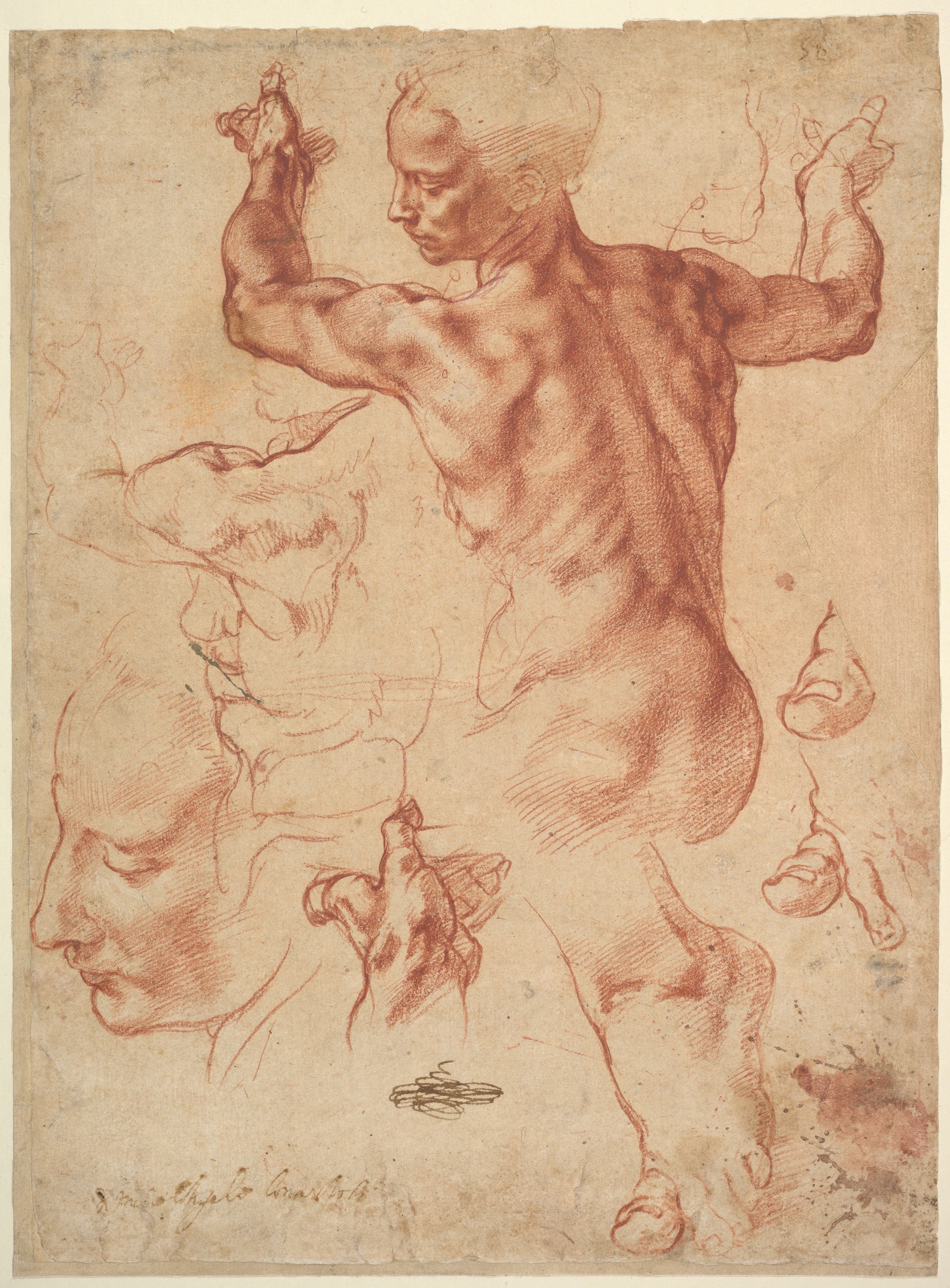
Michelangelo Buonarroti · The Metropolitan Museum of Art, New York · Purchase, Joseph Pulitzer Bequest, 1924 · Public domain (CC0, Met Open Access)
- Born
- 1568. · Florence.
- Died
- 1646. · Florence.
- Occupation
- writer and poet.
- Education
- University of Pisa.
- Languages
- Italian.
VALÉORINE Encyclopedia
VALÉORINE documentary reading
Documentary summary
Illustration — Portrait by Cristofano Allori (Casa Buonarroti, Florence) • Illustration — La tancia (1612) Michelangelo Buonarroti il Giovane the Younger (baptized 4 November 1568 – 11 January 1646) was a Florentine poet, librettist and man of letters, known as "the Younger" to distinguish him from his granduncle, Michelangelo.
Admitted source layer · organised and presented by VALÉORINE
Reference Check
Propose documentary evidence for Michelangelo Buonarroti. A contribution is never written directly as fact: identity, source, rights and evidence gates still decide.
Sign in to contribute
World of VALÉORINE
Documentary connections
Only confirmed graph relationships appear here. Images are shown only when their identity and reuse rights both pass the documentary gate.

Documentary evidence
Documentary basis
Authority files
wikidata · Q1930983 · wikipedia · Michelangelo Buonarroti the Younger
In this article
Education
Education
From 1588 to 1591 he studied mathematics at the University of Pisa, where he became friends with Galileo Galilei and Maffeo Barberini, the future Pope Urban VIII.
Career
Career
Buonarroti was elected to the Accademia Fiorentina in 1585 and the Accademia della Crusca in 1589, and was one of the editors of first Italian dictionary, Vocabolario degli Accademici della Crusca (1612). After the wedding of Marie de' Medici and Henry IV of France in 1600, Buonarroti published a Description of the banquet and was soon commissioned to write court entertainments: Il natal d'Ercole (1605), Il giudizio di Paride (for the wedding of Cosimo II and Maria Maddalena, 1608, music by Jacopo Peri), La Tancia (1611) and Balletto della Cortesia (1614). In 1612, Buonarroti began construction of a gallery (now the Casa Buonarroti) on the Via Ghibellino dedicated to his famous relative and commissioned numerous artists to paint murals, including Artemisia Gentileschi (WP Commons gallery). During this period his name became linked with Francesca Caccini, who composed the music for La Tancia, the Balletto and La Fiera. Buonarroti's career as a courtier took a turn for the worse when the Grand Duchess Christina of Lorraine took offense at salacious language in Fiera (1619). In 1623 he dedicated the publication of verse by the Elder Michelangelo to his friend Maffeo Barberini, newly installed as Pope Urban VIII, and sought patronage from other members of the Barberini family. The last of his theatre pieces was La Siringa, performed at the Palazzo Vecchio in 1634. In 1640 he lost his fortune in a bank failure at a time when the Wars of Castro (in which Rome and Florence took opposite sides) complicated relations with the Barberinis. His final years were spent writing the Satires. He is buried in Santa Croce.
Legacy
Buonarroti's lyrics are found among many 17-century composers' musiche as well as in Luigi Dallapiccola's Sei Cori di Michelangelo Buonarroti il Giovane (1933).
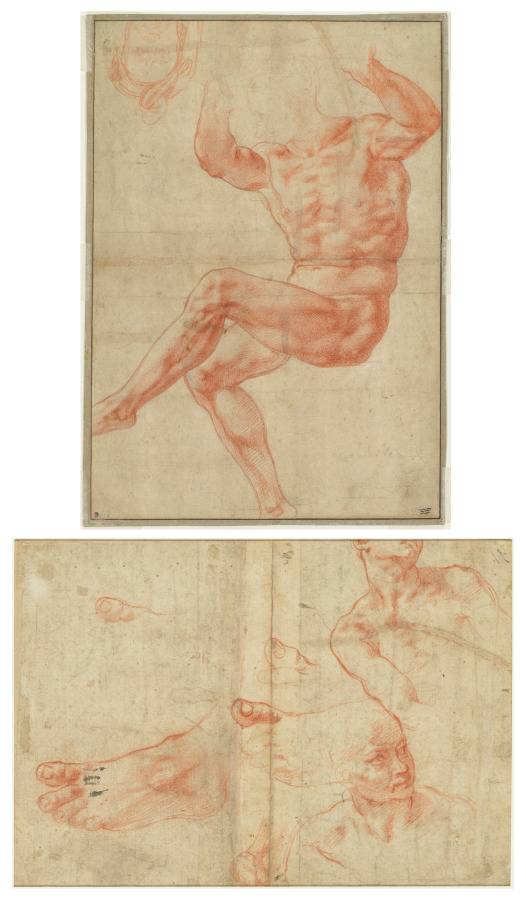
Study for the Nude Youth over the Prophet Daniel (recto); Figure Studies for the Sistine Ceiling (verso), 1510–11, by Michelangelo Buonarroti
Michelangelo Buonarroti · The Cleveland Museum of Art · Gift in memory of Henry G. Dalton by his nephews George S. Kendrick and Harry D. Kendrick
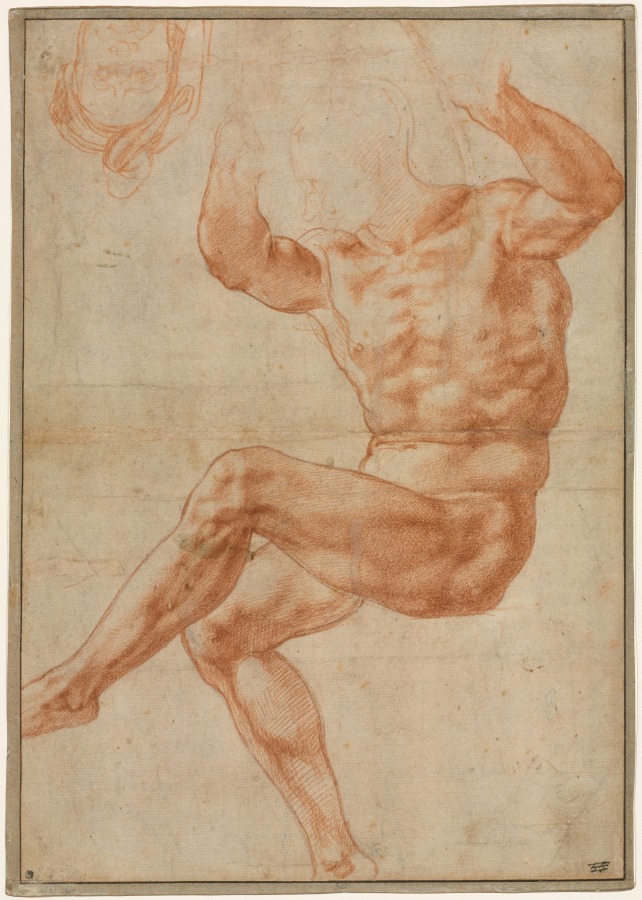
Study for the Nude Youth over the Prophet Daniel (recto), 1510–1511, by Michelangelo Buonarroti
Michelangelo Buonarroti · The Cleveland Museum of Art · Gift in memory of Henry G. Dalton by his nephews George S. Kendrick and Harry D. Kendrick
References
Citations
References
Each reference names the institution holding it, so a reader may go to the document itself.
authority record
General reference
People, houses and institutions
Knowledge graph
People, houses and institutions
Teachers, collaborators, publishers and institutions recorded against this person, each on a stated basis.
Studied at
1- University of PisaOrganisation
Established from a fact already recorded on a verified source.
The Encyclopedia exists whether or not anything is for sale. Corrections are recorded rather than overwritten, and every version of this record is kept. Published 18 August 2026.
Elsewhere in Books
39,078 published records in this field, each with its sources named.
- Michel-Jean BorchAuthor
- Michel-Jean SedaineAuthor
- Michela MarzanoAuthor
- Michela MurgiaAuthor
- Michelangelo SignorileAuthor
- Michèle AudinAuthor
- Michèle CausseAuthor
- Michèle DesbordesAuthor
Best supported in this field
For owners
Own a work by Michelangelo Buonarroti?
A specialist will read what you send and tell you what the house can establish, what it cannot, and whether the object is suited to sale. There is no charge and no obligation. The object stays with you throughout; nothing is shipped to us unless it is arranged in writing beforehand.