
Kulintang a kayo
Illustration — The kulintang a kayo The kulintang a kayo (literally, “wooden kulintang”) is a Philippine xylophone of the Maguindanaon people with eight tuned slabs strung horizontally atop a padded wooden antangan (rack). Made of hand-carved soft wood such as bayug (genus Pterospermum) or more likely tamnag (genus unknown), the kulintang a kayo is rarely found except in Maguindanaon households which have a strong kulintang musical heritage. Traditionally, this homemade instrument was used for self-entertainment purposes inside the house, so that beginning musicians could practice kulintang pieces before performing them on the full-sized metal kulintang sets.
Kulintang a kayo
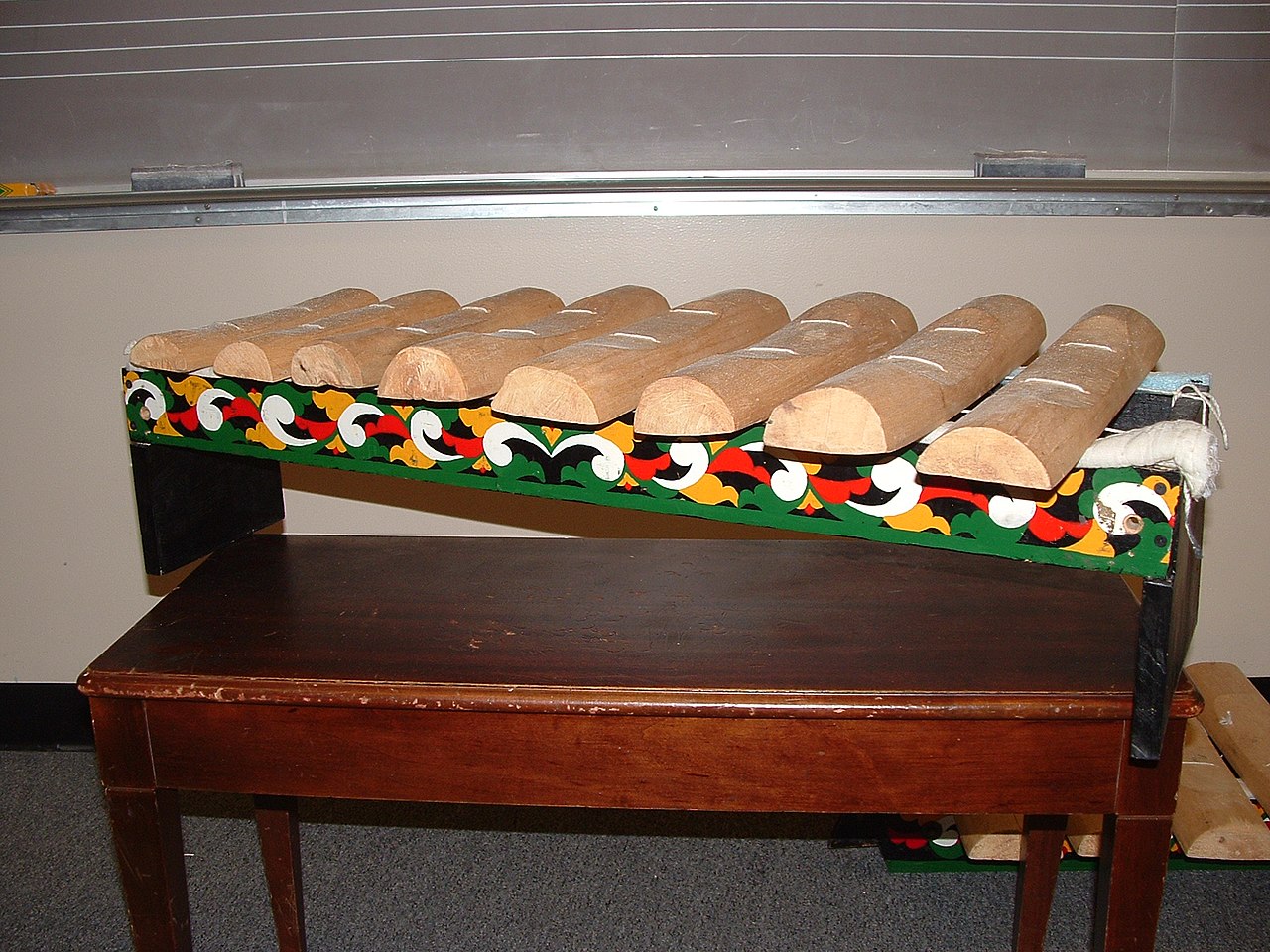
Philip Dominguez Mercurio (PhilipDM) · CC BY-SA 2.5
- Field
- idiophone
VALÉORINE Encyclopedia
VALÉORINE documentary reading
Documentary summary
Illustration — The kulintang a kayo The kulintang a kayo (literally, “wooden kulintang”) is a Philippine xylophone of the Maguindanaon people with eight tuned slabs strung horizontally atop a padded wooden antangan (rack). Made of hand-carved soft wood such as bayug (genus Pterospermum) or more likely tamnag (genus unknown), the kulintang a kayo is rarely found except in Maguindanaon households which have a strong kulintang musical heritage. Traditionally, this homemade instrument was used for self-entertainment purposes inside the house, so that beginning musicians could practice kulintang pieces before performing them on the full-sized metal kulintang sets.
Admitted source layer · organised and presented by VALÉORINE
Reference Check
Propose documentary evidence for Kulintang a kayo. A contribution is never written directly as fact: identity, source, rights and evidence gates still decide.
Sign in to contribute
World of VALÉORINE
Documentary connections
Only confirmed graph relationships appear here. Images are shown only when their identity and reuse rights both pass the documentary gate.

Documentary evidence
Documentary basis
Authority files
wikidata · Q6443033 · wikipedia · Kulintang a kayo
In this article
Overview
Only recently have these instruments been used as part of a wooden kulintang ensemble. This ancient instrument is considered to have existed in the Philippines before the importation of metal gongs from China and therefore is considered a precursor to the present-day kulintang.
Literature
Scholarly footprint
A count of publications is evidence of attention, not of standing, and is given here only as a measure.
Notes from the source article
Cited by Wikipedia
Notes from the source article
These works are cited by the source article, in its own numbering. They are recorded as its citations, not as sources VALÉORINE has verified.
References
Citations
References
Each reference names the institution holding it, so a reader may go to the document itself.
reference work
Secondary witnessreference work
Secondary witness
Connections
Knowledge graph
Connections
Each connection was recorded deliberately, with the basis for it kept on the internal record.
Broader subject
1- idiophoneTerminology
Established from a fact already recorded on a verified source.
The Encyclopedia exists whether or not anything is for sale. Corrections are recorded rather than overwritten, and every version of this record is kept. Published 16 August 2026.
Elsewhere in Collectables
20,755 published records in this field, each with its sources named.
- kuisiTerminology
- kukkumaTerminology
- Kula WorldWork
- kulibitTerminology
- Kulintang a tiniokTerminology
- Kuma\WarWork
- KumuzTerminology
- kunduTerminology
Best supported in this field
For owners
Own an object connected with Kulintang a kayo?
A specialist will read what you send and tell you what the house can establish, what it cannot, and whether the object is suited to sale. There is no charge and no obligation. The object stays with you throughout; nothing is shipped to us unless it is arranged in writing beforehand.