
Kiyohara Yukinobu
Kiyohara Yukinobu (清原雪信, 1643–1682) was a Japanese painter and one of the foremost women identified with the Kanō school. Her father Kusumi Morikage was also a painter and her mother Kuniko was the niece of his longtime teacher and patron Kanō Tan'yū. Yukinobu lived in Kyoto and likely studied under her father.
Also recorded as Kanō Yukinobu · Yuki Kiyohara · Yukinobu · Kiyohara Yokinobu
Kiyohara Yukinobu
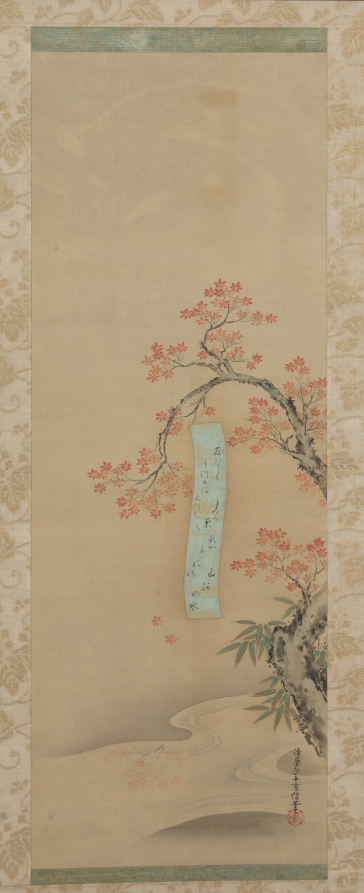
Kiyohara Yukinobu · The Cleveland Museum of Art · Seventy-fifth anniversary gift of Takashi Yanagi · CC0
- Name
- Kiyohara Yukinobu
- Born
- 1643
- Birthplace
- Kyoto, Japan
- Died
- 1682
- Field
- Painting
- Movement
- Kanō school
- Nationality
- Tokugawa shogunate
- Occupation
- painter
VALÉORINE Encyclopedia
VALÉORINE documentary reading
Documentary summary
Kiyohara Yukinobu (清原雪信, 1643–1682) was a Japanese painter and one of the foremost women identified with the Kanō school. Her father Kusumi Morikage was also a painter and her mother Kuniko was the niece of his longtime teacher and patron Kanō Tan'yū. Yukinobu lived in Kyoto and likely studied under her father.
Admitted source layer · organised and presented by VALÉORINE
Note VALÉORINE
Kiyohara Yukinobu (1644–1682) was a painter and a national of Tokugawa shogunate. The painter was born in Kyoto.
Kiyohara Yukinobu was active in painting. The painter was associated with Kanō school. Works by Kiyohara Yukinobu are held at Cleveland Museum of Art, Harvard Art Museums and Los Angeles County Museum of Art, among others.
Composed from admitted, traceable facts · 27 September 2026
VALÉORINE
Reference Check
Propose documentary evidence for Kiyohara Yukinobu. A contribution is never written directly as fact: identity, source, rights and evidence gates still decide.
Sign in to contribute
World of VALÉORINE
Documentary connections
Only confirmed graph relationships appear here. Images are shown only when their identity and reuse rights both pass the documentary gate.

Documentary evidence
Documentary basis
Authority files
wikidata · Q11560527 · wikipedia · Kiyohara Yukinobu
In this article
Biography
Biography
Her work covered a wide variety of formats ranging from small scrolls to large screens. Thematically she was skilled in the Yamato-e style but was also notable for producing many works depicting women including legendary figures such as Murasaki Shikibu. Because many of Yukinobu's works are signed and sealed with her name, it suggests she had achieved enough recognition to receive commissions from middle class townspeople and samurai. A pair of her screens, Birds and Flowers of the Four Seasons (late 17th – early 18th century) was shown publicly for the first time in 2015 as part of an exhibition at the Kosetsu Memorial Museum in Tokyo. Ihara Saikaku's The Life of an Amorous Woman includes a story in which a courtesan commissions a work from Yukinobu.
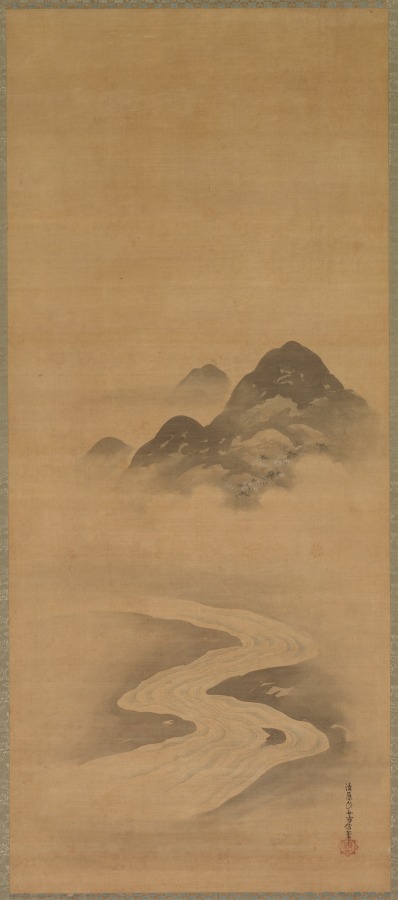
Minamoto no Nakakuni Visits Lady Kogō, late 1600s, by Kiyohara Yukinobu
Kiyohara Yukinobu · The Cleveland Museum of Art · Bequest of Harley C. Lee and Elizabeth K. Lee
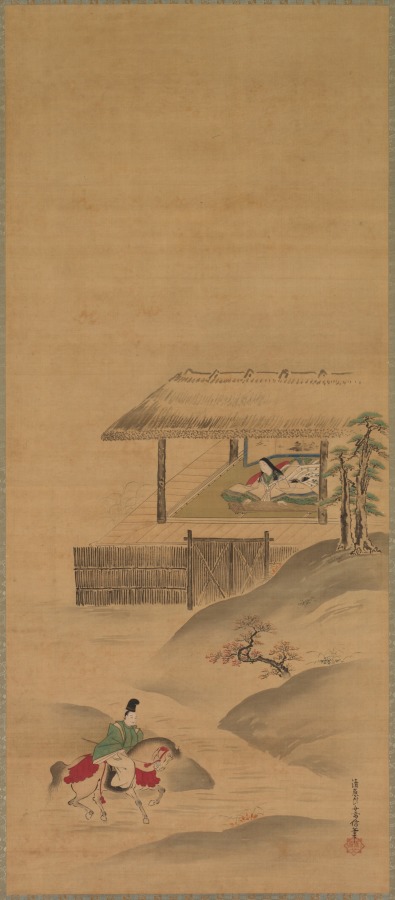
Minamoto no Nakakuni Visits Lady Kogō, late 1600s, by Kiyohara Yukinobu
Kiyohara Yukinobu · The Cleveland Museum of Art · Bequest of Harley C. Lee and Elizabeth K. Lee
Key facts
Key facts
• Name — Kiyohara Yukinobu • Born — 1643 • Birthplace — Kyoto, Japan • Died — 1682 • Field — Painting • Movement — Kanō school • Illustration — Flying Celestial
Identity and overview
Identity and overview
The following is established of the heading itself.
Works and production
Works and production
The following works and productions are recorded by name or by count. The record continues: kiyohara Yukinobu is recorded with the occupation painter. Institutional cataloguing adds that kiyohara Yukinobu is recorded as a citizen of Tokugawa shogunate. It is also recorded that kiyohara Yukinobu is recorded with the gender female. It is also recorded that kiyohara Yukinobu died on 5 June 1682. It is also recorded that kiyohara Yukinobu was born in Kyoto. The record continues: kiyohara Yukinobu is associated with Kanō school.
Primary material
Documents and archives
Institutional database
- Wikidata, structured authority record Q11560527: Kiyohara Yukinobu
Scholarly · Wikimedia Foundation
reference work
- “Kiyohara Yukinobu”, English Wikipedia, consulted as further reading
Reputable secondary · Wikipedia
Notes from the source article
Cited by Wikipedia
Notes from the source article
These works are cited by the source article, in its own numbering. They are recorded as its citations, not as sources VALÉORINE has verified.
- 1.Phaidon Press. Great Women Artists. 217. 2019. 978-0714878775.
- 2.Fister, Patricia. Japanese Women Artists 1600–1900. Spencer Museum of Art, University of Kansas. 34–35. 1988. 0-913689-25-4.
- 3.Weidner. Flowering in the Shadows: Women in the History of Chinese and Japanese Painting. University of Hawaii Press. 1990. 9780824811495.
- 4.Gordenker, Alice. Gordenker, Alice, "Painting Women of Japan". The Japan Times. 2 June 2015.
References
Citations
References
Each reference names the institution holding it, so a reader may go to the document itself.
Institutional database
Wikidata, structured authority record Q11560527: Kiyohara YukinobuWikimedia Foundation
Institutional witnessreference work
Secondary witness
People, houses and institutions
Knowledge graph
People, houses and institutions
Teachers, collaborators, publishers and institutions recorded against this person, each on a stated basis.
Born at
1- KyotoPlace
Established from a fact already recorded on a verified source.
The Encyclopedia exists whether or not anything is for sale. Corrections are recorded rather than overwritten, and every version of this record is kept. Published 16 August 2026.
Elsewhere in Paintings
19,183 published records in this field, each with its sources named.
- Kitagawa UtamaroArtist
- Kitty GarmanArtist
- Kitty Lange KiellandArtist
- Kiyohara TamaArtist
- Kiyokata KaburakiArtist
- Kiyoshi YamashitaArtist
- Kjell NupenArtist
- Kjerstin ØvrelidArtist
Best supported in this field
For owners
Own a work by Kiyohara Yukinobu?
A specialist will read what you send and tell you what the house can establish, what it cannot, and whether the object is suited to sale. There is no charge and no obligation. The object stays with you throughout; nothing is shipped to us unless it is arranged in writing beforehand.