
Karl von Piloty
Karl Theodor von Piloty (1 October 1826 – 21 July 1886) was a German painter, noted for his historical subjects, and recognised as the foremost representative of the realistic school in Germany.
Also recorded as Carl Theodor von Piloty · Karl Theodor von Piloty · Carl Piloty · Karl Von Piloty
Karl von Piloty
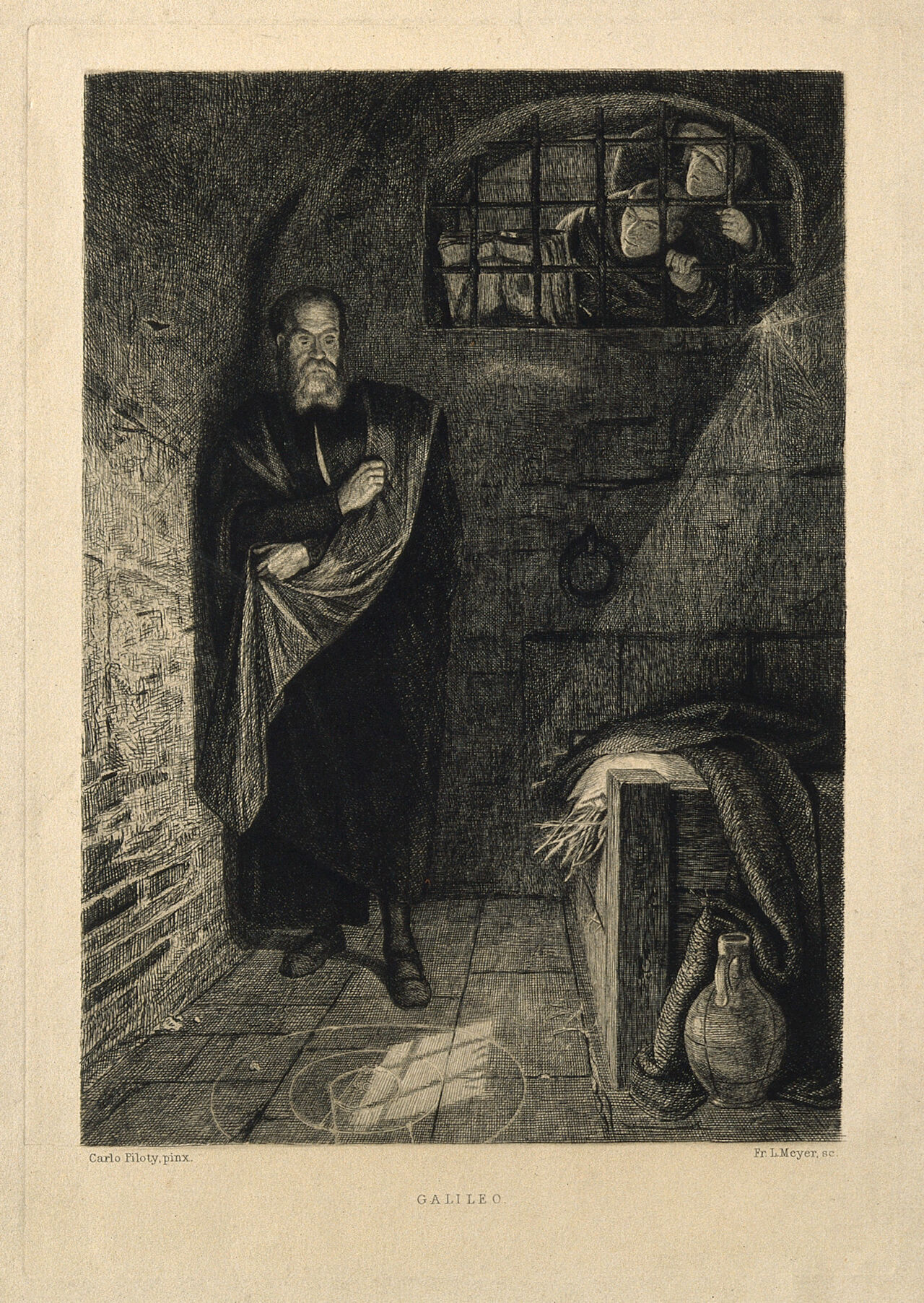
Karl von Piloty · Wellcome Collection, London · Wellcome Collection · Public Domain Mark
- Name
- Karl von Piloty
- Born
- 1 October 1826
- Birthplace
- Munich, Germany
- Died
- 21 June 1886
- Occupation
- Painter and academy keeper
- Education
- Munich Academy
- Nationality
- Kingdom of Bavaria.
- Fields
- history.
- Teachers
- Julius Schnorr von Carolsfeld.
- Honours
- Bavarian Maximilian Order for Science and Art.
- Languages
- German.
VALÉORINE Encyclopedia
VALÉORINE documentary reading
Documentary summary
Karl Theodor von Piloty (1 October 1826 – 21 July 1886) was a German painter, noted for his historical subjects, and recognised as the foremost representative of the realistic school in Germany.
Admitted source layer · organised and presented by VALÉORINE
Note VALÉORINE
No house-authored Note is published until its assertions and sources pass the VALÉORINE evidence contract. The documentary article remains available in full while that enrichment is being consolidated.
Documentary enrichment in progress · no unsupported statement published
Reference Check
Propose documentary evidence for Karl von Piloty. A contribution is never written directly as fact: identity, source, rights and evidence gates still decide.
Sign in to contribute
World of VALÉORINE
Documentary connections
Only confirmed graph relationships appear here. Images are shown only when their identity and reuse rights both pass the documentary gate.
Documentary evidence
Evidence Panel
not yet certified
- Identity
- resolved
- Independent source families
- 0
- Admitted assertions
- 0
- Open conflicts
- 0
Authority files
wikidata · Q505758 · wikipedia · Karl von Piloty
In this article
Biography
Biography
Karl von Piloty studied at Academy of Fine Arts, Munich. Training under Julius Schnorr von Carolsfeld is recorded. Adolf Eberle, Joseph Flüggen and Max Ebersberger are recorded as having studied under Karl von Piloty. The recorded working language is German. Subjects and genres recorded for the work are history. Places of work recorded in the authority are Munich. Employment is recorded with Academy of Fine Arts, Munich. Work by Karl von Piloty is recorded in the collections of Belvedere, Nationalmuseum, Metropolitan Museum of Art, Landesmuseum Hannover and Bavarian State Painting Collections. Distinctions recorded are Bavarian Maximilian Order for Science and Art.
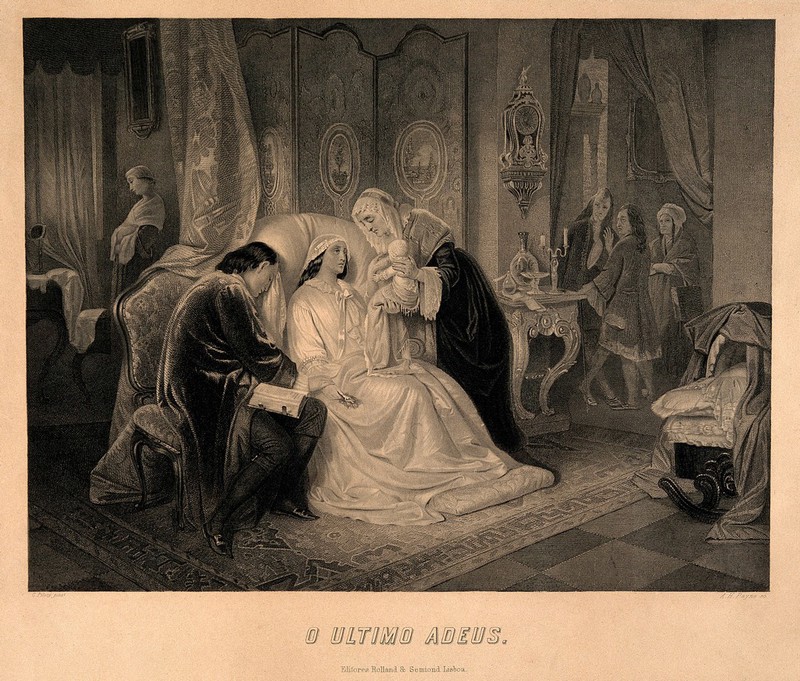
A woman being shown her newborn child for the final time before she receives the last rites. Engraving by A.H. Payne after C. Piloty., by Karl von Piloty
Karl von Piloty · Wellcome Collection, London · Wellcome Collection
Key facts
Key facts
• Name — Karl von Piloty • Birth Name — Karl von Piloty • Born — 1 October 1826 • Birthplace — Munich, Germany • Died — 21 June 1886 • Occupation — Painter and academy keeper • Parents — Ferdinand Piloty (father) • Education — Munich Academy
Life and work
Life and work
Piloty was born in Munich. His father, Ferdinand Piloty (d. 1844), enjoyed a great reputation as a lithographer. In 1840, Karl was admitted as a student of the Munich Academy, under the artists Karl Schorn and Julius Schnorr von Karolsfeld. A year later the acclaimed history paintings (referred to as the 'Belgian paintings'), i.e. the Compromise of the nobles and The Abdication of Charles V by the two Belgian artists Edouard de Bièfve and Louis Gallait, were shown in Munich and their realistic depiction of a historic subject matter made a lasting impression on him. After a journey to Belgium, France and England, Piloty commenced work as a painter of genre pictures, and, in 1853, produced a work, Die Amme (The Wet Nurse), which, on account of its originality of style, caused a considerable sensation in Germany at the time. But he soon forsook this branch of painting in favour of historical subjects, and produced in 1854 for King Maximilian II The Foundation of the Catholic League by Maximilian I in 1609. It was succeeded by Seni at the Dead Body of Wallenstein (1855), which gained for the young painter the membership of the Munich Academy, where he succeeded Schorn (his brother-in-law) as professor in 1856. Among other well-known works by Piloty are the Battle of the White Mountain near Prague, Nero Dancing upon the Ruins of Rome (1861), Godfrey of Bouillon on a Pilgrimage to the Holy Land (1861), Galileo in Prison (1864) and The Death of Alexander the Great (unfinished), his last great work. He also executed a number of mural paintings for the royal palace in Munich. For Baron von Schach, Piloty painted the famous Discovery of America. In 1874, he was appointed keeper of the Munich Academy, being afterwards ennobled by the king of Bavaria. Piloty was the foremost representative of the realistic school in Germany. He was a successful teacher, and among his more famous pupils were Hans Makart, Franz von Lenbach, Franz Defregger, Gabriel von Max, Georgios Jakobides, Eduard von Grützner, and Gyula Benczúr.
Gallery
Gallery
• Illustration — Henry VIII and Anne Boleyn • Illustration — The Death of Wallenstein • Illustration — Thusnelda at the Triumph of Germanicus • Illustration — The Murder of Caesar • Illustration — The Death of Alexander the Great
Identity and origins
Identity and origins
The authorities additionally record the headings Carl Theodor von Piloty, Karl Theodor von Piloty, Carl Piloty, Karl Von Piloty and Piloty. His recorded language was German. He was the child of Ferdinand Piloty. 2 children are recorded: Oskar Piloty and Robert Piloty.
Identity
Identity
Karl von Piloty is recorded as having received Bavarian Maximilian Order for Science and Art. Recognition and collections. Piloty received Bavarian Maximilian Order for Science and Art.
Life and career
Dated record
Life and career
The full dated record · 2 entries
1826
Karl von Piloty born at Munich.
1886
Karl von Piloty died at Ambach.
Places
Named by the record
Places
Only places the record itself states, plotted where the house gazetteer settles their coordinates. Nothing is inferred from a name or a nationality.
Munich.
Birth place
Ambach.
Death place
Primary material
Documents and archives
reference work
- Wikidata, structured authority record Q505758: Karl von Piloty
Reputable secondary · Wikimedia Foundation
- “Karl von Piloty”, English Wikipedia, consulted as further reading
Reputable secondary · Wikipedia
scholarly publication
- Piloty, Karl Von (1826–1886), Historical Dictionary of Romantic Art and Architecture, 2019
Scholarly · Crossref registry · 2019
References
Citations
References
Each reference names the institution holding it, so a reader may go to the document itself.
scholarly publication
Piloty, Karl Von (1826–1886), Historical Dictionary of Romantic Art and Architecture, 2019Crossref registry
Verifiedreference work
Wikidata, structured authority record Q505758: Karl von PilotyWikimedia Foundation
Partially resolvedreference work
Partially resolved
Further particulars
Held on the record
Further particulars
Open the remaining particulars
Karl von Piloty studied at Academy of Fine Arts, Munich. Each of those relationships is stated by the authority record rather than inferred from style.
The Encyclopedia exists whether or not anything is for sale. Corrections are recorded rather than overwritten, and every version of this record is kept. Published 14 August 2026.
Elsewhere in Paintings
18,717 published records in this field, each with its sources named.
- Karl SterrerArtist
- Karl von AppenArtist
- Karl von BlaasArtist
- Karl von KügelgenArtist
- Karl WalserArtist
- Karl Wilhelm BardouArtist
- Karl Wilhelm DiefenbachArtist
- Karl Wilhelm GropiusArtist
Best supported in this field
For owners
Own a work by Karl von Piloty?
A specialist will read what you send and tell you what the house can establish, what it cannot, and whether the object is suited to sale. There is no charge and no obligation. The object stays with you throughout; nothing is shipped to us unless it is arranged in writing beforehand.