
Kanoko Okamoto
1 March 1889 – 18 February 1939 was the pen-name of Kano Ōnuki, a Japanese author, tanka poet, and Buddhist scholar active during the Taishō and early Shōwa periods.
Kanoko Okamoto
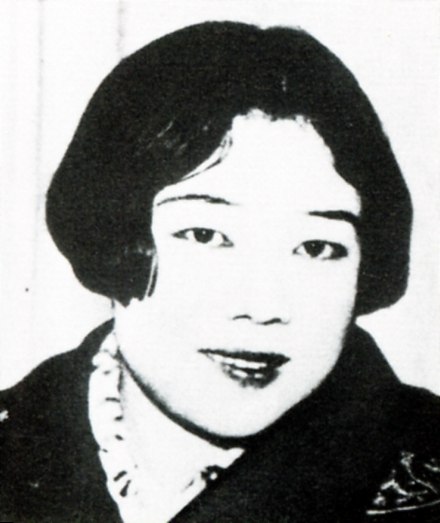
Kamakura Museum of Literature archives · Public domain
- Name
- Kanoko Okamoto
- Birth Name
- Kano Ōnuki
- Born
- 1 March 1889
- Birthplace
- Tokyo, Japan
- Died
- 18 February 1939
- Place of death
- Yokosuka, Kanagawa, Japan
- Occupation
- Writer
- Nationality
- Japan
- Languages
- Japanese
VALÉORINE Encyclopedia
VALÉORINE documentary reading
Documentary summary
1 March 1889 – 18 February 1939 was the pen-name of Kano Ōnuki, a Japanese author, tanka poet, and Buddhist scholar active during the Taishō and early Shōwa periods.
Admitted source layer · organised and presented by VALÉORINE
Note VALÉORINE
Kanoko Okamoto (1889–1939) was a novelist, poet and writer, of Japanese nationality. The novelist was born in Akasaka and died in Yokosuka. Languages used include Japanese.
Composed from admitted, traceable facts · 26 September 2026
VALÉORINE
Reference Check
Propose documentary evidence for Kanoko Okamoto. A contribution is never written directly as fact: identity, source, rights and evidence gates still decide.
Sign in to contribute
Documentary evidence
Documentary basis
Authority files
wikidata · Q1396664 · wikipedia · Kanoko Okamoto
In this article
Key facts
Key facts
• Name — Kanoko Okamoto • Native Name — 岡本 かの子 • Birth Name — Kano Ōnuki • Born — 1 March 1889 • Birthplace — Tokyo, Japan • Died — 18 February 1939 • Place of death — Yokosuka, Kanagawa, Japan • Occupation — Writer • Genre — Novels and poetry • Notable Works — Tsuru wa yamiki
Early life
Early life
Kanoko's maiden name was Ōnuki Kano. She was born in Aoyama, Akasaka-ku (present day Minato, Tokyo), to an extremely wealthy family. Her father suffered from lung disease, and Kanoko was sent to the Ōnuki family estate in Futako Tamagawa, Kawasaki, Kanagawa, where she was raised by a governess. Her tutor encouraged her affinity for music, calligraphy and traditional dance, and introduced her to Japanese classical literature, especially the Tale of Genji and Kokin Wakashū.
Literary career
Literary career
Okamoto was influenced greatly by her older brother, Shosen, and his classmate Jun'ichirō Tanizaki who studied at the First Higher School and Tokyo Imperial University. While still a student at the Atami Gakuen girls' high school, Kanoko called on the poet, Yosano Akiko, and this encounter prompted her to start contributing tanka to the poetry magazine Myōjō ("Bright Star"). Along with Yosano, she joined Hiratsuka Raichō, Tamura Toshiko, and others, to be one of the initial contributors to the influential Bluestocking (ja-Latn) journal, helping to set the course for women writers and feminist ideas, in 1911. Later, she played an active part as a key contributor to another journal, ja-Latn ("Pleiades"). She published Karoki-netami, the first of her five ja-Latn anthologies, in 1912. Okamoto Kanoko is an authority on Buddhism, after she plunged into Buddhist practice and research during her marriage to the famous cartoonist Okamoto Ippei. In 1908, she met cartoonist Okamoto Ippei while on a holiday in Karuizawa, Nagano, together with her father. However, her family was extremely opposed to the relationship, and she created a scandal by moving in together with him in 1910 without marrying. Their eldest son, the avant-garde painter Tarō Okamoto, was born the next year. However, Kanoko's family life was filled with tragedy. Soon after she moved in with Ippei, her brother and then her mother died. Her eldest daughter was born with mental health problems, and soon died. Her common-law husband was opposed to her independence, jealous of her artistic successes and was unfaithful. Her younger son was also born with weak health, and died in infancy. These problems led Okamoto to turn to religion. She was first interested in Protestant Christianity, but did not find it to her liking. She then turned to the Jodo Shinshu sect of Buddhism, as expounded by Shinran, which was the start of her work as a researcher of Buddhism, about which she wrote numerous essays. After releasing her fourth tanka anthology Waga saishū kashū ("My Last Anthology") in 1929, she decided to become a novelist. She took her whole family to Europe to complete her literary studies. They traveled to Paris, London, Berlin, and (leaving their son behind) toured around the United States, returning to Japan in 1932. After returning home, Okamoto continued her researches into Buddhism, but also found time to a novelette called Tsuru wa yamiki ("The Dying Crane"), describing the last days of writer Ryūnosuke Akutagawa, while staying at an inn near Kamakura Station in the summer of 1923. Published in the magazine Bungakukai in 1936, it marked the start of her activity with prose fiction. After that, she published many more works in quick succession, including Boshi jojō ("The Relationship between Mother and Child"), Kingyo ryōran ("A Riot of Goldfish"), and ja-Latn ("Portrait of an Old Geisha"). A recurring theme in her work is the effect of a person's familial ancestral karma on their present-day lives. While praising the richness of her use of language, some critics have felt that she tended towards excessive passion and unnecessary literary flourishes. She died of a brain hemorrhage in 1939. She was 49 years old. Her grave is at the Tama Cemetery in Fuchu, Tokyo. Because she did not begin writing actively until her later years, most of her works were published posthumously. Kanoko Okamoto has always wanted to become a novelist, but only began publishing ‘secular’ fiction until the end of her life. Her reputation as a fiction writer was assured with the publication of her novella Boshi Jojo (A Mother’s Love). Boshi Jojo is published in 1937, and is a daring look at the erotic side of maternal feeling. Okamoto Kanoko dedicated herself to presenting straightforward images of strong, mysterious, even shamanic female characters. The combination of power and female beauty is represented in many of her works including ‘A Mother’s Love,’ ‘A Riot of Goldfish,’ and ‘The Record of Old Geisha.’ Her works like ‘Kakoze’ also explore themes like homoerotic aestheticism and the female gaze.
Selected works
Selected works
• Tsuru wa yamiki (The Dying Crane) (1936) • Manatsu no yoru no yume (A Midsummer Night's Dream) (1937) • Boshi jojō (The Relationship between Mother and Child) (1937) • Kingyo ryōran (A Riot of Goldfish) (1937) • ja-Latn (Portrait of an Old Geisha) (1938) • Kawa akari (Stream of Light) (1938) • Marunouchi sōwa (Story of Inside the Grass Circle) (1939) • Seisei ruten (Lively Ebb and Flow) (1940) • Nyotai kaiken (The Opening of the Female Body) (1943)
English translations
English translations
• A Riot of Goldfish (Kingyo ryōran). Translated by J. Keith Vincent. London, Hesperus Press (2010). (Also includes "The Food Demon" [ja-Latn])

Kanoko Okamoto
Japanese book "Showa Literature Series: Vol.38 (June 1954 issue)" published by Kadokawa Shoten.
Places
Named by the record
Places
Only places the record itself states, plotted where the house gazetteer settles their coordinates. Nothing is inferred from a name or a nationality.
Akasaka.
Birth place
Yokosuka.
Death place
Primary material
Documents and archives
authority record
- Wikidata, structured authority record Q1396664: Kanoko Okamoto
General reference · Wikidata
reference work
- “Kanoko Okamoto”, English Wikipedia, consulted as further reading
Reputable secondary · Wikipedia
Notes from the source article
Cited by Wikipedia
Notes from the source article
These works are cited by the source article, in its own numbering. They are recorded as its citations, not as sources VALÉORINE has verified.
- 1.Mori, Maryellen T. The Splendor of Self-Exaltation. The Life and Fiction of Okamoto Kanoko. Monumenta Nipponica. 50. 1. 67–102. 1995. 0027-0741.
- 2.Tamagawa River and Basin Museum ((ja))
- 3.Entry at Find-a-Grave
- 4.Graves of Japan ((ja))
- 5.Nagaike, Kazumi. Okamoto Kanoko's "Kakoze": Homoerotic Aestheticism and the Female Gaze. U.S.-Japan Women's Journal. 33. 58–74. 2007. 2330-5037.
References
Citations
References
Each reference names the institution holding it, so a reader may go to the document itself.
authority record
Secondary witnessreference work
Secondary witness
The Encyclopedia exists whether or not anything is for sale. Corrections are recorded rather than overwritten, and every version of this record is kept. Published 18 August 2026.
Elsewhere in Books
39,451 published records in this field, each with its sources named.
- KanhopatraAuthor
- Kanijeli Siyavuş PaşaAuthor
- Kanimozhi KarunanidhiAuthor
- KannadasanAuthor
- Kanstantsia BuiloAuthor
- Kansuke NakaAuthor
- Kanthirava Narasaraja Wodeyar IIAuthor
- Kanwal BhartiAuthor
Best supported in this field
For owners
Own a work by Kanoko Okamoto?
A specialist will read what you send and tell you what the house can establish, what it cannot, and whether the object is suited to sale. There is no charge and no obligation. The object stays with you throughout; nothing is shipped to us unless it is arranged in writing beforehand.