
Julius LeBlanc Stewart
Julius LeBlanc Stewart (September 6, 1855, Philadelphia, Pennsylvania — January 4, 1919, Paris, France), was an American artist who spent his career in Paris. A contemporary of fellow expatriate painter John Singer Sargent, Stewart was nicknamed "the Parisian from Philadelphia".
Also recorded as Julius Leblanc Stewart · Julius L. Stewart · Julius Stewart · Jules L. Stewart
Julius LeBlanc Stewart
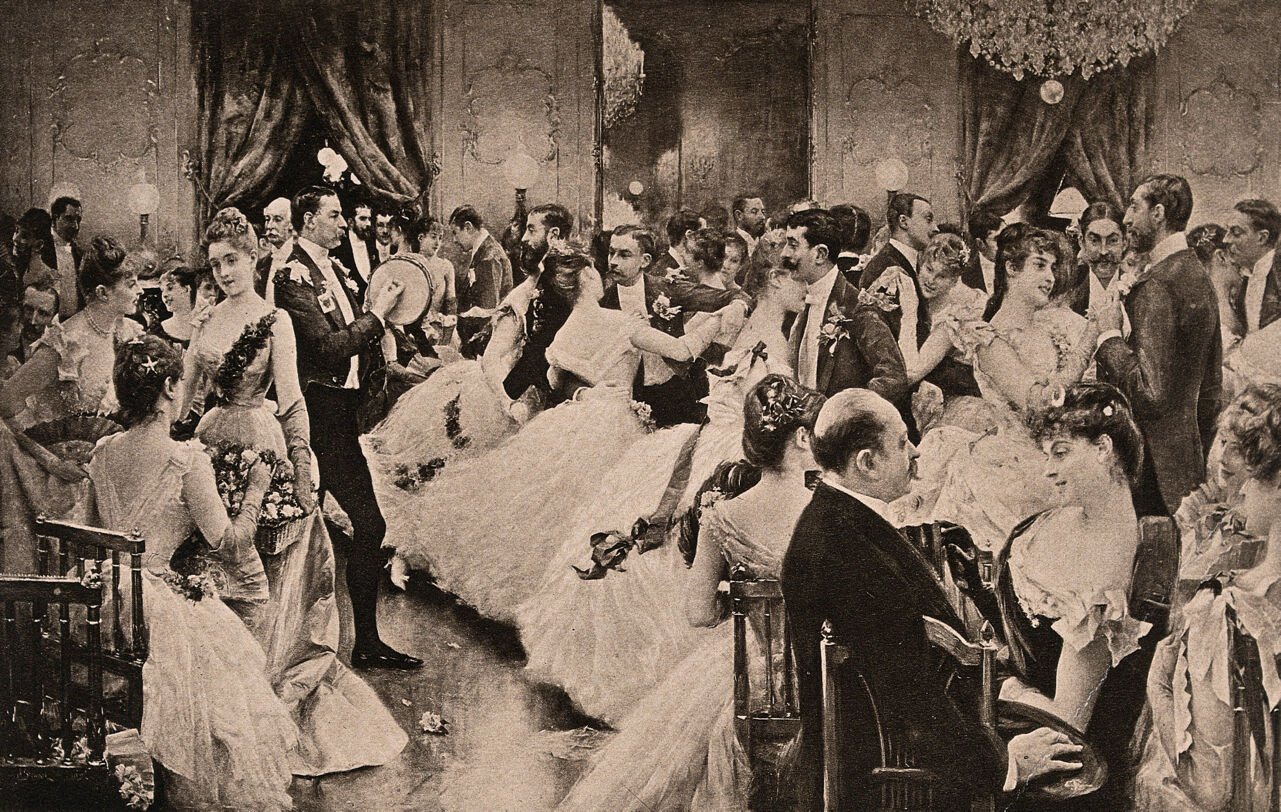
Julius LeBlanc Stewart · Wellcome Collection, London · Wellcome Collection · Public Domain Mark
- Born
- 1855. · Philadelphia.
- Died
- 1919. · Paris.
- Nationality
- United States.
- Occupation
- painter.
- Movements
- Orientalism.
- Education
- Beaux-Arts de Paris.
- Teachers
- Jean-Léon Gérôme.
- Known for
- Nymphs of Nysa.
- Languages
- English.
VALÉORINE Encyclopedia
VALÉORINE documentary reading
Documentary summary
Julius LeBlanc Stewart (September 6, 1855, Philadelphia, Pennsylvania — January 4, 1919, Paris, France), was an American artist who spent his career in Paris. A contemporary of fellow expatriate painter John Singer Sargent, Stewart was nicknamed "the Parisian from Philadelphia".
Admitted source layer · organised and presented by VALÉORINE
Note VALÉORINE
No house-authored Note is published until its assertions and sources pass the VALÉORINE evidence contract. The documentary article remains available in full while that enrichment is being consolidated.
Documentary enrichment in progress · no unsupported statement published
Reference Check
Propose documentary evidence for Julius LeBlanc Stewart. A contribution is never written directly as fact: identity, source, rights and evidence gates still decide.
Sign in to contribute
World of VALÉORINE
Documentary connections
Only confirmed graph relationships appear here. Images are shown only when their identity and reuse rights both pass the documentary gate.

Documentary evidence
Evidence Panel
wikipedia incomplete · checked 25 September 2026
- Identity
- resolved
- Independent source families
- 0
- Admitted assertions
- 0
- Open conflicts
- 0
Authority files
wikidata · Q2205989 · wikipedia · Julius LeBlanc Stewart
In this article
Biography
Biography
Julius LeBlanc Stewart studied at Beaux-Arts de Paris. Training under Jean-Léon Gérôme is recorded. The recorded working language is English. Places of work recorded in the authority are France. Works named in the authority record are Nymphs of Nysa. Work by Julius LeBlanc Stewart is recorded in the collections of Musée d'Orsay, Walters Art Museum, Pennsylvania Academy of the Fine Arts, Los Angeles County Museum of Art and Wadsworth Atheneum Museum of Art.
His father, the sugar millionaire William Hood Stewart, moved the family from Philadelphia, Pennsylvania to Paris in 1865, and became a distinguished art collector and an early patron of Marià Fortuny and the Barbizon artists. Julius studied under Eduardo Zamacois as a teenager, under Jean-Léon Gérôme at the École des Beaux-Arts, and later was a pupil of Raymondo de Madrazo. Stewart's family wealth enabled him to live a lush expatriate life and paint what he pleased, often large-scaled group portraits. The first of these, After the Wedding (Drexel University Art Collection, 1880), showed Charles Stewart (no relation) and his bride Mae, daughter of financier Anthony J. Drexel, leaving for their honeymoon. Subsequent group portraits depicted his friends — including actresses, celebrities and aristocrats — often with a self-portrait somewhere in the crowd. He exhibited regularly at the Paris Salon from 1878 into the early 20th century, and helped organize the "Americans in Paris" section of the 1894 Salon. The Baptism (Los Angeles County Museum of Art, 1892), which reportedly depicts a gathering of the Vanderbilt family, was shown at the 1893 Chicago World's Columbian Exposition, and received acclaim at the 1895 Berlin International Exposition. He painted a series of sailing pictures aboard James Gordon Bennett, Jr.'s yacht Namouna. The most accomplished of these, On the Yacht "Namouna", Venice (Wadsworth Atheneum, 1890), showed a sailing party on deck and included a portrait of the actress Lillie Langtry. Another, Yachting on the Mediterranean (1896), set a record price for the artist, selling in 2005 for US$2.3 million. Late in life, he turned to painting outdoor nudes and Venetian scenes, but Stewart is best remembered for his Belle Époque society portraits.
Selected works
Selected works
Horse Trough on a Cuban Plantation (1876), Pennsylvania Academy of the Fine Arts, Philadelphia, Pennsylvania After the Wedding (aka Parisian Wedding) (1880), Drexel University Museum, Philadelphia, Pennsylvania Five O'Clock Tea (1884), Iris & B. Gerald Cantor collection, New York City The Hunt Ball (1885), Essex Club, Newark, New Jersey. Includes portraits of the actress Lillie Langtry and Baron Rothschild. On the Yacht "Namouna", Venice (1890), Wadsworth Atheneum, Hartford, Connecticut The Baptism (1892), Los Angeles County Museum of Art Reportedly, this shows a gathering of the Vanderbilt family. Yachting on the Mediterranean (1896), private collection The Goldsmith Ladies... in a Peugeot (1897), Musée du Château de Compiègne, France La Clairiere (The Glade) (1900), Detroit Institute of Arts Les Nymphes de Nysa (The Nymphs of Nysa) (1900), Musée d'Orsay, Paris Portrait of Mrs. Francis Stanton Blake (1908), Walters Art Museum, Baltimore, Maryland
Life and career
Dated record
Life and career
The full dated record · 2 entries
1855
Julius LeBlanc Stewart born at Philadelphia.
1919
Julius LeBlanc Stewart died at Paris.
Places
Named by the record
Places
Only places the record itself states, plotted where the house gazetteer settles their coordinates. Nothing is inferred from a name or a nationality.
Philadelphia.
Birth place
Paris.
Death place
Primary material
Documents and archives
reference work
- “Julius LeBlanc Stewart”, English Wikipedia, consulted as further reading
Reputable secondary · Wikipedia
institutional register
- Wikidata, structured authority record Q2205989: Julius LeBlanc Stewart
Unverified · Wikimedia Foundation
Notes from the source article
Cited by Wikipedia
Notes from the source article
These works are cited by the source article, in its own numbering. They are recorded as its citations, not as sources VALÉORINE has verified.
- 1.D. Dodge Thompson, "Julius L. Stewart, a 'Parisian from Philadelphia'", The Magazine Antiques (November 1986), pp. 1046-58.
- 2.Stewart, Julius L. 25. 914.
- 3.Charles T. Stewart was the son of Mrs. Mackintosh Stewart. See 1885 p.2
- 4.Christie?s. Julius LeBlanc Stewart (1855-1919). christies.com.
- 5.Parisian Wedding.
- 6.Five O'Clock Tea by Julius LeBlancStewart.
- 7.Ricci Art - l'Actu High-Tech.
- 8.Archived copy. lacma.org.
- 9.Musée d'Orsay: non_traduit. musee-orsay.fr. 16 February 2009.
- 10.Portrait of Mrs. Francis Stanton Blake. The Walters Art Museum · Works of Art.
References
Citations
References
Each reference names the institution holding it, so a reader may go to the document itself.
reference work
Partially resolvedinstitutional register
Wikidata, structured authority record Q2205989: Julius LeBlanc StewartWikimedia Foundation
Unverified
People, houses and institutions
Knowledge graph
People, houses and institutions
Teachers, collaborators, publishers and institutions recorded against this person, each on a stated basis.
Died at
1- ParisPlace
Established from a fact already recorded on a verified source.
The Encyclopedia exists whether or not anything is for sale. Corrections are recorded rather than overwritten, and every version of this record is kept. Published 14 August 2026.
Elsewhere in Paintings
18,452 published records in this field, each with its sources named.
- Julius HübnerArtist
- Július JakobyArtist
- Julius KronbergArtist
- Julius LangeArtist
- Julius MařákArtist
- Julius PaulsenArtist
- Julius PodlipnyArtist
- Julius RoetingArtist
Best supported in this field
For owners
Own a work by Julius LeBlanc Stewart?
A specialist will read what you send and tell you what the house can establish, what it cannot, and whether the object is suited to sale. There is no charge and no obligation. The object stays with you throughout; nothing is shipped to us unless it is arranged in writing beforehand.