
Julius Kronberg
Illustration — Julius Kronberg, from the Svenskt Porträttgalleri XX Johan Julius Ferdinand Kronberg (11 December 1850 – 17 October 1921) was a Swedish artist and decorative painter.
Also recorded as Johan Ferdinand Kronberg · Julius Johan Ferdinand Kronberg · Julius Johann Ferdinand Kronberg · Johan Julius Ferdinand Kronberg
Julius Kronberg

Sniper Zeta · CC BY-SA 4.0
- Born
- 1850
- Died
- 1921
- Nationality
- Sweden
- Occupation
- painter · university teacher
- Fields
- history painting
VALÉORINE Encyclopedia
VALÉORINE documentary reading
Documentary summary
Illustration — Julius Kronberg, from the Svenskt Porträttgalleri XX Johan Julius Ferdinand Kronberg (11 December 1850 – 17 October 1921) was a Swedish artist and decorative painter.
Admitted source layer · organised and presented by VALÉORINE
Note VALÉORINE
No house-authored Note is published until its assertions and sources pass the VALÉORINE evidence contract. The documentary article remains available in full while that enrichment is being consolidated.
Documentary enrichment in progress · no unsupported statement published
Reference Check
Propose documentary evidence for Julius Kronberg. A contribution is never written directly as fact: identity, source, rights and evidence gates still decide.
Sign in to contribute
Documentary evidence
Evidence Panel
not yet certified
- Identity
- resolved
- Independent source families
- 0
- Admitted assertions
- 0
- Open conflicts
- 0
Authority files
wikidata · Q1604937 · wikipedia · Julius Kronberg
In this article
Biography
Biography
Kronberg was born in Karlskrona, Sweden, in 1850. At 13, he was admitted to the Royal Swedish Academy of Fine Arts. In 1870, he was awarded a gold medal for his portrayal of Gustav Vasa receiving a new translation of the Bible (used on a postage stamp in 1941). He studied with Johan Christoffer Boklund, a history painter who had a major influence on his style and, for a short time, Johan Fredrik Höckert. A travel scholarship in 1873 enabled him to visit Copenhagen, Düsseldorf, and Paris. • Illustration — His reconstructed studio at Skansen • Illustration — Cleopatra by Julius Kronberg, 1883 • Illustration — Julius Kronberg in 1869 After a short stay in Venice, he spent considerable time in Munich. There he became interested in decorative painting and was exposed to the work of Hans Makart, which left a strong impression on him. In 1876, his painting, "Nymph and Faun", was praised by August Strindberg and led to his becoming an "agré" (a type of member candidate) at the Royal Academy. He settled in Rome in 1877 and lightened his palette, somewhat after the style of Giovanni Battista Tiepolo. Upon returning to Stockholm in 1889, he set up a studio in Norra Djurgården and specialized in architectural painting. His motifs were usually taken from mythology or the Bible, as well as works by Shakespeare. Among his best-known works are three ceiling paintings in the west staircase of Stockholm Palace, a portrayal of Jesus' life in the dome of Adolf Fredrik Church, and a proscenium depicting Eros at the Royal Dramatic Theatre. He made a final study trip in 1894 to Würzburg, Madrid and Venice, where he focused on Tiepolo's ceiling paintings. The following year, he accepted a professorship at the Royal Academy but, much to the disappointment of his students, resigned in 1898. In 1885, he had refused to sign a petition criticizing the teaching methods at the Royal Academy and his relationship with the Konstnärsförbundet (Artists' Association) cooled considerably. By 1900, their conflicting views had reached the point where he began to withdraw from public life. He became isolated and his works grew repetitive. Later, he developed an interest in theology. During his final years, he suffered from cancer. After he died in Stockholm in 1921, his studio was bequeathed to the Nordic Museum and, at the expense of Wilhelmina von Hallwyl, was moved and reassembled at Skansen, an open-air museum and zoo. It served as the setting for the cover photograph of the pop group ABBA's 1981 album, The Visitors. • Illustration — Photo of the artist in 1890 His works may be seen at the Gothenburg Museum of Art, Skansen and the Hallwyl Museum.
Selected works
Selected works
• Illustration — Romeo and Juliet on the Balcony (1886) • Illustration — David and Saul (1885) • Illustration — The New Playmate (1873) • Illustration — Cupid with a Bow (1878) • Illustration — Irma von Geijer, born of Hallwyl (1895) • Illustration — Karl XII (1893) • Illustration — Perseus liberating Andromeda • Illustration — Stockholm Palace ceiling with symbolic figures: Religion, Peace, Science, Industry, and more. • Illustration — Perseus Releases Andromeda (1918) • Illustration — Hypatia (1889) • Illustration — Cupids (1881) • Illustration — Sappho (1913) • Illustration — Open Air Concert (1898)

Julius Kornbergs ateljé på Skansen, Stockholm. Ursprungligen på Lilla Skuggan (Heleneberg), Norra Djurgården. Carl Milles skulptur.
Sniper Zeta
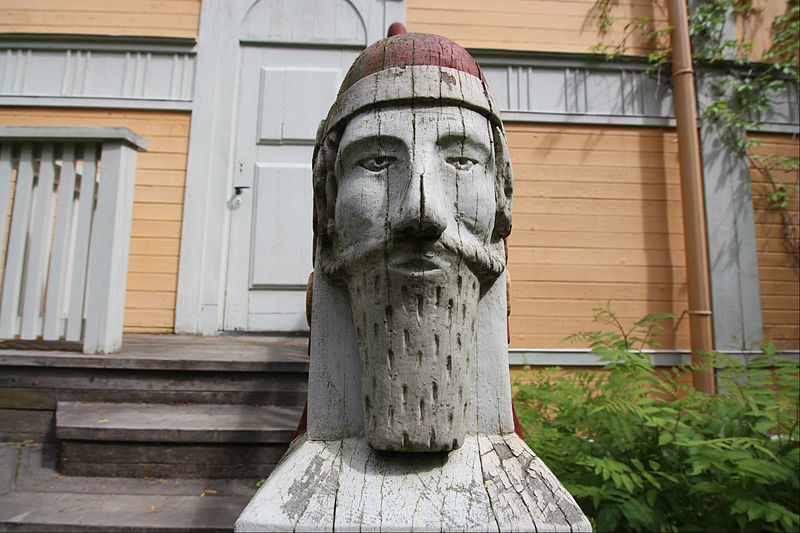
Julius Kornbergs ateljé på Skansen, Stockholm. Ursprungligen på Lilla Skuggan (Heleneberg), Norra Djurgården
Sniper Zeta
Life and career
Dated record
Life and career
The full dated record · 2 entries
1850
Julius Kronberg born at Karlskrona city community.
1921
Julius Kronberg died at Engelbrekt church parish.
Citations
References
Each reference names the institution holding it, so a reader may go to the document itself.
reference work
Wikidata, structured authority record Q1604937: Julius KronbergWikimedia Foundation
Partially resolvedreference work
Partially resolved
The Encyclopedia exists whether or not anything is for sale. Corrections are recorded rather than overwritten, and every version of this record is kept. Published 14 August 2026.
Elsewhere in Paintings
18,705 published records in this field, each with its sources named.
- Julius FriedlænderArtist
- Julius GeertzArtist
- Julius HübnerArtist
- Július JakobyArtist
- Julius LangeArtist
- Julius LeBlanc StewartArtist
- Julius MařákArtist
- Julius PaulsenArtist
Best supported in this field
For owners
Own a work by Julius Kronberg?
A specialist will read what you send and tell you what the house can establish, what it cannot, and whether the object is suited to sale. There is no charge and no obligation. The object stays with you throughout; nothing is shipped to us unless it is arranged in writing beforehand.