
Joseph Parrocel
Joseph Parrocel (3 October 1646 – 1 March 1704) was a French Baroque painter, best known for his paintings and drawings of battle scenes. He was born in Brignoles, into an artistic family that produced fourteen painters over six generations. His grandfather Georges Parrocel (1540 – c.
Also recorded as Joseph Parocell · Parrocel Des Batailles Parrocel Pere Parrocel · Joseph Paroul · Joseph Porocelle
Joseph Parrocel
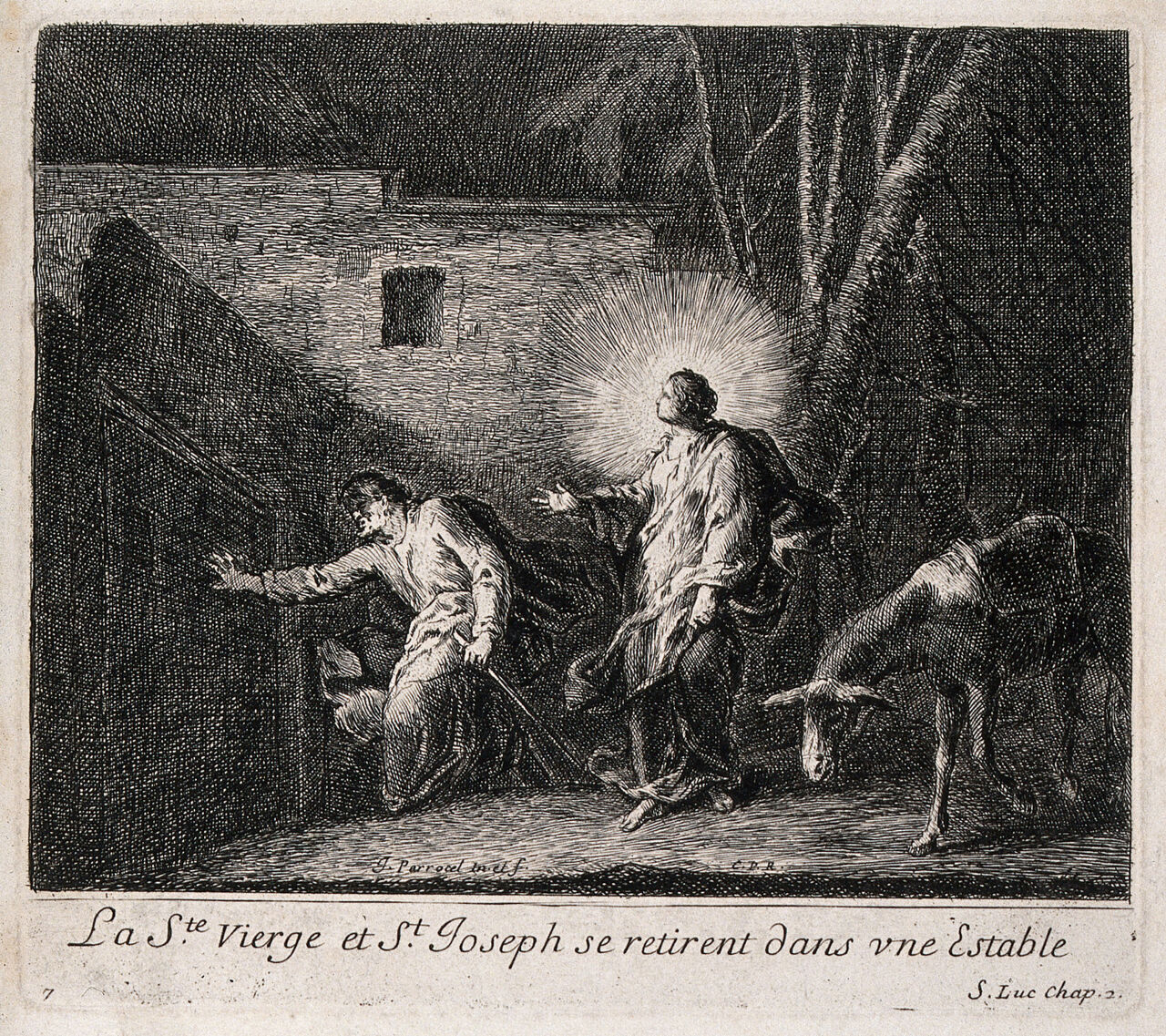
Joseph Parrocel · Wellcome Collection, London · Wellcome Collection · Public Domain Mark
- Born
- 3 October 1646
- Birthplace
- Brignoles
- Died
- 1 March 1704
- Place of death
- Paris
- Known for
- Paintings of battle scenes
- Nationality
- France.
- Occupation
- painter, artist, draftsperson, copper engraver and illustrator.
- Fields
- visual arts, work of art, painting and drawing.
- Teachers
- Jacques Courtois.
- Languages
- French.
VALÉORINE Encyclopedia
VALÉORINE documentary reading
Documentary summary
Joseph Parrocel (3 October 1646 – 1 March 1704) was a French Baroque painter, best known for his paintings and drawings of battle scenes. He was born in Brignoles, into an artistic family that produced fourteen painters over six generations. His grandfather Georges Parrocel (1540 – c.
Admitted source layer · organised and presented by VALÉORINE
Reference Check
Propose documentary evidence for Joseph Parrocel. A contribution is never written directly as fact: identity, source, rights and evidence gates still decide.
Sign in to contribute
World of VALÉORINE
Documentary connections
Only confirmed graph relationships appear here. Images are shown only when their identity and reuse rights both pass the documentary gate.
Documentary evidence
Documentary basis
Authority files
wikidata · Q1366812 · wikipedia · Joseph Parrocel
In this article
Biography
Biography
1614) (no surviving works) and his father Barthélemy Parrocel (1595–1660) were both painters. One badly restored painting of Bathélemy survives in the church of Saint-Sauveur in Brignoles, France. His brothers Jean Barthélemy Parrocel (1631–1653) (no surviving works) and Louis Parrocel (1634–1694) also became painters. His elder brother Louis, who was already established as a painter in the Languedoc, took him under his care and gave him a training as painter. Three years later he ran away from his brother's house to Marseille. His talent as a painter became soon noticed and he got a commission for a number of paintings with scenes of the life of Saint Anthony of Padua for the church Saint-Martin. But he only executed two of them. It is also possible that he painted them during his second stay in the Provence. He left for Paris and stayed there for four years, perfecting his skills. He then returned to the Provence and continued his journey to Italy, where he would stay for eight years. In Rome he became the pupil of Jacques Courtois, a famous painter of battle scenes who was also known als "le Bourguignon" or "il Borgognone". He also studied the works of Salvator Rosa, an unorthodox proto-Romantic painter. Parrocel worked with him in his workshop and was thoroughly influenced by him, even if he gave his style later a more French touch. • Illustration — Alexander the Great defeats King Darius in the battle of Arbelles (c. 1687) Parrocel then started a journey through Italy and finally arrived in Venice. He was planning to settle in this town but after eight brigands had attempted to murder him on the Rialto Bridge, he left Italy in disgust. He settled in Paris in 1675 and earned himself a reputation. He was accepted as an elected member at the Académie Royale de Peinture et de Sculpture on 29 February 1676 and he became an academician on 14 November 1676 with his admission piece "Siege of Maastricht". In 1703 he became a councillor at the Academy. However, Charles Le Brun, who headed the Academy, refused his cooperation in the paintings of scenes of the campaigns of king Louis XIV, designed to become tapestries in the Gobelins manufactory. However the French Secretary of State for War, the Marquis de Louvois recognized the talent of Parrocel and gave him the commission to paint one of the dining halls of Les Invalides in Paris with scenes of conquest by Louis XIV. This was appreciated and led to further prestigious commissions to decorate the Château de Marly and the Palace of Versailles. • Illustration — Battle of Leuze (c. Because Parrocel had not been paid for several paintings, he had obtained a warrant against Mansart, who was arrested in his coach. Through this action, he fell out of favour with Mansart, who sought vengeance for this affront at the first occasion. When Parrocel had finished the painting "Crossing of the Rhine" for the Palace of Versailles, Mansart wanted to remove it. However, the king was so pleased with this painting that he ordered it to be placed in the "Grand Salon du Conseil" in Versailles. During his lifetime, Joseph Parrocel participated in only one exhibition, the Salon of 1699, with twelve paintings. He died, aged 57, in Paris. He is best known for his heroic battle scenes but painted also landscapes, historical pieces and religious works, such as "The temptation of St. Peter in the desert" (1694). He also produced paintings for the church "Notre-Dame des Victoires", the Hôtel de Soubise and the Hôtel de Toulouse, all in Paris. In 1700 he painted "The Fair at Bezons", a precursor of the fêtes galantes of Antoine Watteau. He was also one of the first to paint hunting scenes. • Illustration — Charles I before Hull, after a work by Parrocel His differed from his contemporary academician Adam Frans van der Meulen by being more original and vivid in his execution. He applied broad, nervous layers with dazzling movements, using intense colours. During his lifetime he produced more than 90 prints engravings, many of which are in the Louvre, Paris. His works are exhibited in many French museums, but also abroad in Hannover and in Quebec (Laval University). Parrocel apprenticed his two sons Jean Joseph (1690–1774), who became a draughtsman and engineer, and Charles (1688–1752), who also became a painter and engraver, his nephews Jacques-Ignace (1667–1722) and Pierre (1670–1739), who both became painters and engravers. A number of his paintings are now suggested to be early works of his nephew Jacques-Ignace Parrocel (1667–1722).
Training under Jacques Courtois is recorded. Charles Parrocel and Pierre-Denis Martin are recorded as having studied under Joseph Parrocel. The recorded working language is French. The field of work recorded is visual arts, work of art and painting. Places of work recorded in the authority are Marseille, Paris and Rome. Work by Joseph Parrocel is recorded in the collections of Minneapolis Institute of Art, Art Institute of Chicago, Philadelphia Museum of Art, Musée des Beaux-Arts de Carcassonne and Statens Museum for Kunst.
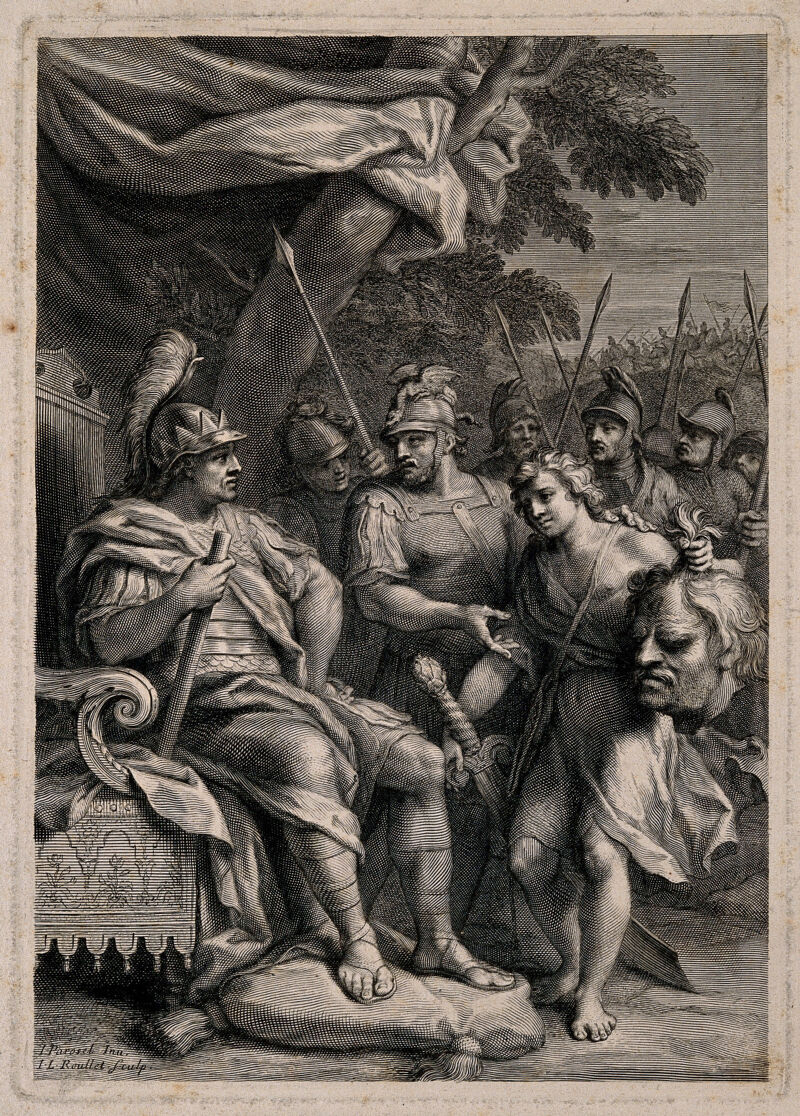
David with the head of Goliath before Saul. Line engraving by J.L. Roullet after J. Parrocel., by Joseph Parrocel
Joseph Parrocel · Wellcome Collection, London · Wellcome Collection
Key facts
Key facts
• Born — 3 October 1646 • Birthplace — Brignoles • Died — 1 March 1704 • Place of death — Paris • Known for — Paintings of battle scenes • Patrons — Louis XIV • Children — Charles Parrocel • Relatives — * Pierre Parrocel (nephew) • Jacques-Ignace Parrocel (nephew) • Étienne Parrocel (grandnephew)
Identity and origins
Identity and origins
The authorities additionally record the headings Joseph Parocell, Parrocel Des Batailles Parrocel Pere Parrocel, Joseph Paroul, Joseph Porocelle and Joseph Parrocell. His recorded language was French. He was the child of Barthélemy Parrocel. One child is recorded: Charles Parrocel.
Identity
Identity
The Encampment is dated c. Recorded as painter, artist, draftsperson, copper engraver and illustrator.
Life and career
Dated record
Life and career
The full dated record · 2 entries
1646
Joseph Parrocel born at Brignoles.
1704
Joseph Parrocel died at Paris.
Places
Named by the record
Places
Only places the record itself states, plotted where the house gazetteer settles their coordinates. Nothing is inferred from a name or a nationality.
Brignoles.
Birth place
Paris.
Death place
Primary material
Documents and archives
scholarly publication
- Parrocel, Joseph François or Joseph Ignace François, Benezit Dictionary of Artists, 2011
Scholarly · Crossref registry · 2011
- Parrocel, Joseph, Benezit Dictionary of Artists, 2011
Scholarly · Crossref registry · 2011
reference work
- Wikidata, structured authority record Q1366812: Joseph Parrocel
Reputable secondary · Wikimedia Foundation
- “Joseph Parrocel”, English Wikipedia, consulted as further reading
Reputable secondary · Wikipedia
Notes from the source article
Cited by Wikipedia
Notes from the source article
These works are cited by the source article, in its own numbering. They are recorded as its citations, not as sources VALÉORINE has verified.
Bibliography printed in the source article · 4
- Michel Lucas: L'oeuvre révélé de Joseph Parrocel: peintures murales aux Invalides; Faton, Dijon, 2005,
- Delaplanche Jérome: Joseph Parrocel, 1646–1704. La Nostalgie de l'Heroisme; Paris, 2006.
- Les Peintres de Louis XIV, catalogue of the exposition in Lille, France, 1968
- Bénézit: Dictionnaire des peintres, sculpteurs, dessinateurs et graveurs), Librairie Gründ, Paris, 1976
References
Citations
References
Each reference names the institution holding it, so a reader may go to the document itself.
scholarly publication
Parrocel, Joseph François or Joseph Ignace François, Benezit Dictionary of Artists, 2011Crossref registry
Institutional witnessscholarly publication
Parrocel, Joseph, Benezit Dictionary of Artists, 2011Crossref registry
Institutional witnessreference work
Wikidata, structured authority record Q1366812: Joseph ParrocelWikimedia Foundation
Secondary witnessreference work
Secondary witness
Further particulars
Held on the record
Further particulars
Open the remaining particulars
Formation and teaching. He trained under Jacques Courtois. Each of those relationships is stated by the authority record rather than inferred from style. Parrocel worked in visual arts, work of art, painting, drawing and copper engraving technique. He belonged to Académie royale de peinture et de sculpture. He worked at Marseille, Paris, Rome and Venice.
Career and activity
Recognition and collections
Work by Joseph Parrocel is
Minneapolis Institute of Art, Art Institute of Chicago, Philadelphia Museum of Art and Musée des Beaux-Arts de Carcassonne
The Encyclopedia exists whether or not anything is for sale. Corrections are recorded rather than overwritten, and every version of this record is kept. Published 16 August 2026.
Elsewhere in Illustration
5,224 published records in this field, each with its sources named.
- Joseph Kuhn-RégnierIllustrator
- Joseph LowIllustrator
- Joseph M. GleesonIllustrator
- Joseph NashIllustrator
- Joseph PaxtonIllustrator
- Joseph Ratcliffe SkeltonIllustrator
- Joseph SimpsonIllustrator
- Joseph W. PapinIllustrator
Best supported in this field
For owners
Own a work by Joseph Parrocel?
A specialist will read what you send and tell you what the house can establish, what it cannot, and whether the object is suited to sale. There is no charge and no obligation. The object stays with you throughout; nothing is shipped to us unless it is arranged in writing beforehand.