
Joseph Anton Koch
Joseph Anton Koch (27 July 1768 – 12 January 1839) was an Austrian painter of Neoclassicism and later the German Romantic movement.
Also recorded as Josef Koch Koch · J. A. Koch · Josef Anton Koch · koch jos. ant.
Joseph Anton Koch
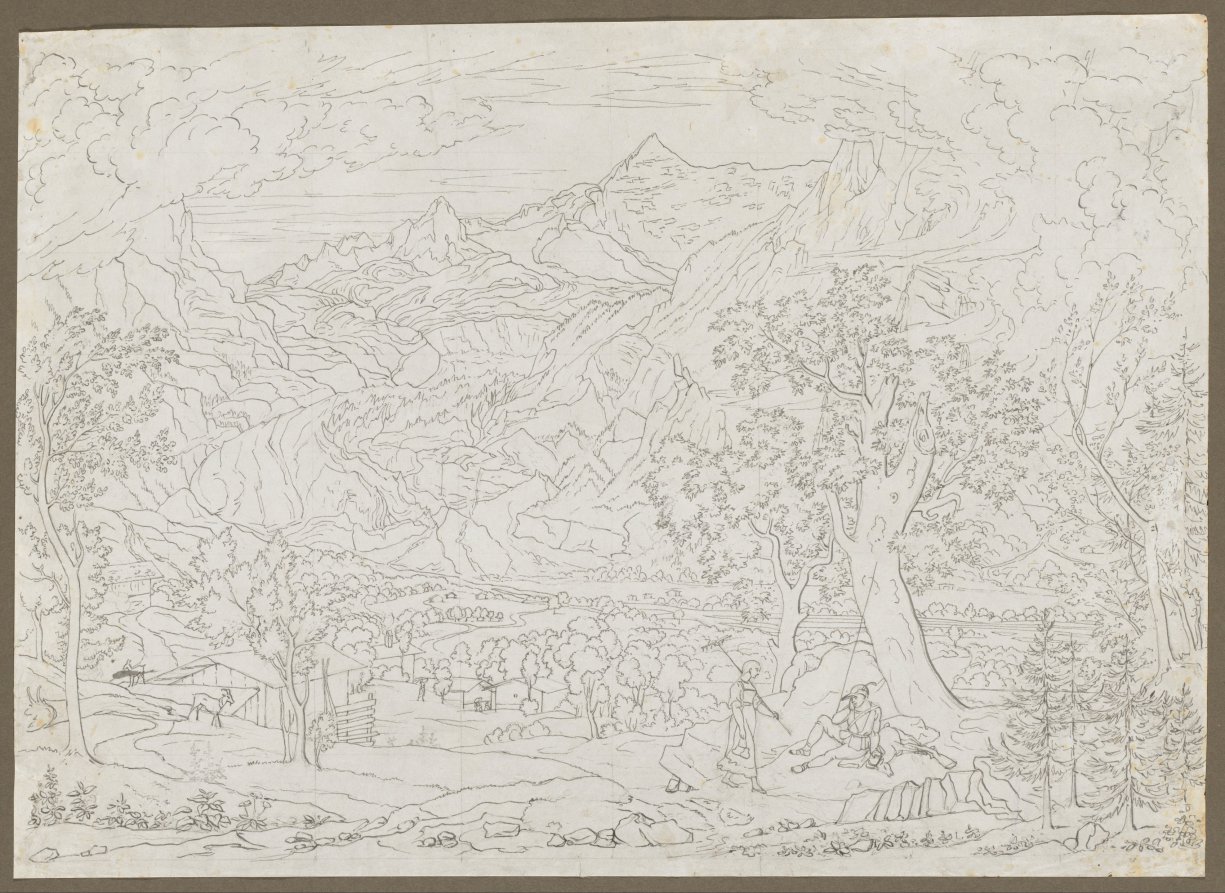
Joseph Anton Koch · The Cleveland Museum of Art · Dudley P. Allen Fund · CC0
- Born
- 1768.
- Died
- 1839.
- Nationality
- Germany.
- Occupation
- painter, graphic artist and illustrator.
- Fields
- landscape painting.
VALÉORINE Encyclopedia
VALÉORINE documentary reading
Documentary summary
Joseph Anton Koch (27 July 1768 – 12 January 1839) was an Austrian painter of Neoclassicism and later the German Romantic movement.
Admitted source layer · organised and presented by VALÉORINE
Note VALÉORINE
No house-authored Note is published until its assertions and sources pass the VALÉORINE evidence contract. The documentary article remains available in full while that enrichment is being consolidated.
Documentary enrichment in progress · no unsupported statement published
Reference Check
Propose documentary evidence for Joseph Anton Koch. A contribution is never written directly as fact: identity, source, rights and evidence gates still decide.
Sign in to contribute
Documentary evidence
Evidence Panel
not yet certified
- Identity
- resolved
- Independent source families
- 0
- Admitted assertions
- 0
- Open conflicts
- 0
Authority files
gnd · 16161168-0 · wikidata · Q263569 · wikipedia · Joseph Anton Koch
In this article
Biography
Biography
The Tyrolese painter was born in Elbigenalp. Early in his life he was tending cattle. Through the recommendation of Bishop Umgelder (1785), he received academic training in the Karlsschule Stuttgart, a strict military academy. In 1791, he ran away, and traveled through France and Switzerland. He arrived in Rome in 1795. Koch was close to the painter Asmus Jacob Carstens and carried on Carstens' "heroic" art, at first in a literal manner. He etched the pages of Carstens' Les Argonautes, selon Pindar, Orphée et Apollonius de Rhode (Rome, 1799). After 1800, Koch developed as a landscape painter. In Rome, he espoused a new type of "heroic" landscape, revising the classical compositions of Poussin and Lorrain with a more rugged, mountainous scenery. In 1812, forced through inadequate income from his work, or in protest of the French invasion, he went to Vienna, where he worked prolifically. He stayed in Vienna until 1815. During this period, he incorporated more non-classical themes in his work. In Vienna, he was influenced by Friedrich Schlegel and enthusiasts of old German art. In response, his style became harsher. Koch returned to Rome, and became a conspicuous figure in the German artists' colony there. He painted, among other works, the four frescoes in the Dante Room of the Villa Massimi (1824–1829). His presence and personality had considerable influence among the younger generation in the art life of Rome, and his new approach had a wide influence on German landscape painters who visited Rome. He wrote Moderne Kunstchronik oder die rumfordische Suppe gekocht und geschrieben von J. A. Koch (Stuttgart, 1834) which was directed humorously against unjustifiable criticism and false connoisseurship. Koch's last years were spent in great poverty. He died in Rome, where he was buried in the Teutonic Cemetery, located next to St. Peter's Basilica within Vatican City.
Works
Works
Landscape with Noah, ca. 1803 – oil on canvas [86 × 116 cm] (Städel Museum, Frankfurt) Schmadribach Falls in the Lauterbach Valley, 1811 Noah's Sacrifice, 1813 Grimsel Pass, 1813 View in the Sabine Mountains, 1813 Monastery of San Francesco di Civitella, 1814 Landscape with Ruth and Boaz, ca. 1823/25 – oil on canvas Grindelwald Glacier in the Alps, 1823, National Museum in Wrocław View of Nauplia, 1830 View Near Subiaco Macbeth and the Witches He etched 20 Italian landscapes and a large sheet representing The Oath of the French at Millesimo; 14 pages after Dante, adding later another 30 pages (published Vicenza, 1904), and 36 pages after Ossian. He contributed American landscape scenes to the works of Alexander von Humboldt (1805).
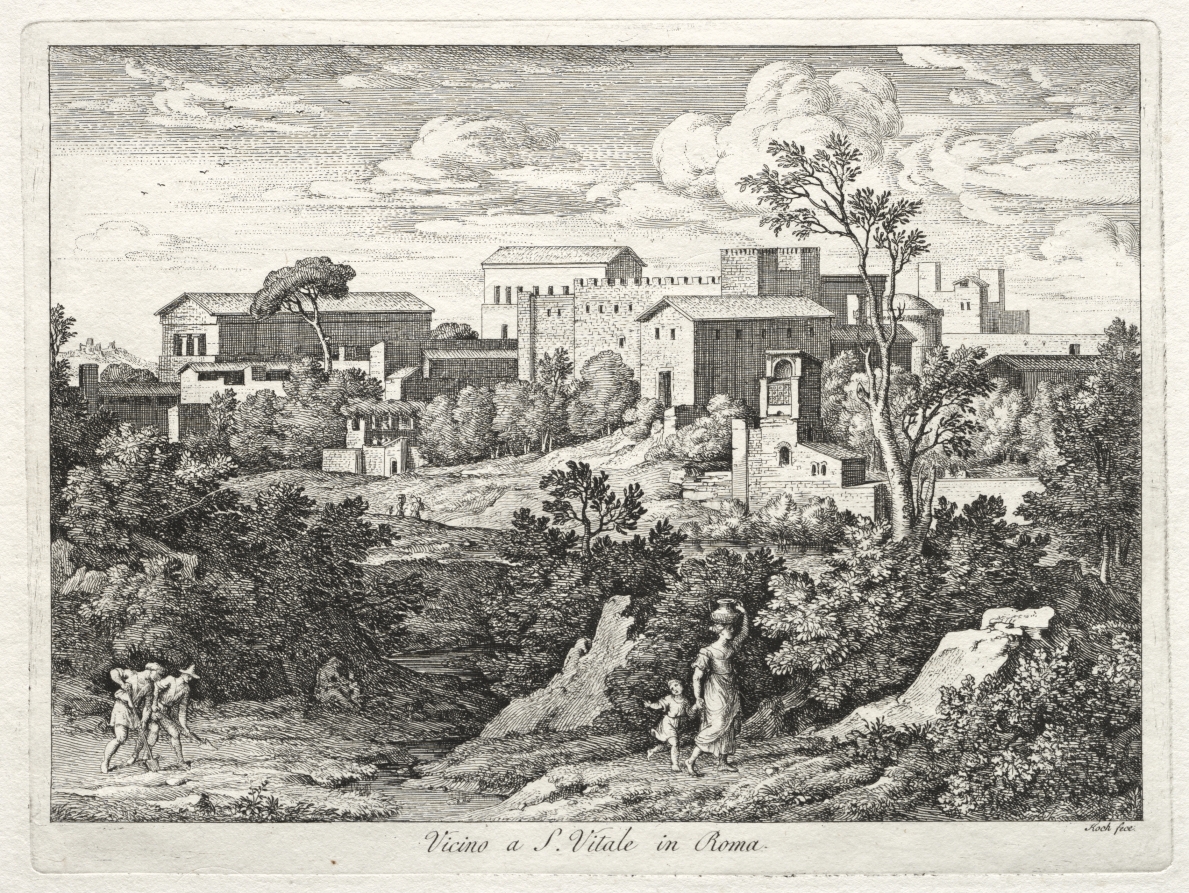
View of San Vitale, Rome, c. 1810, by Joseph Anton Koch
Joseph Anton Koch · The Cleveland Museum of Art · Gift of Margery Irish and Thomas Irish in memory of V. Browne Irish
Life and career
Dated record
Life and career
The full dated record · 2 entries
1768
Joseph Anton Koch born at Elbigenalp.
1839
Joseph Anton Koch died at Rome.
Notes from the source article
Cited by Wikipedia
Notes from the source article
These works are cited by the source article, in its own numbering. They are recorded as its citations, not as sources VALÉORINE has verified.
Bibliography printed in the source article · 2
- Strauss, Kleine Schriften (Bonn, 1877)
- Frimmel, in Dohme, Kunst und Künstler des neunzehnten Jahrhunderts (Leipzig, 1884)
References
Citations
References
Each reference names the institution holding it, so a reader may go to the document itself.
reference work
Wikidata, structured authority record Q263569: Joseph Anton KochWikimedia Foundation
Partially resolvedreference work
Partially resolved
A further 1 witness is held back from this article because the person or object named in it is not yet resolved to this record. They are kept, not discarded, and return once the identity is established.
The Encyclopedia exists whether or not anything is for sale. Corrections are recorded rather than overwritten, and every version of this record is kept. Published 14 August 2026.
Elsewhere in Illustration
5,224 published records in this field, each with its sources named.
- Josep Pascó i MensaIllustrator
- Josep SegrellesIllustrator
- Joseph A. SmithIllustrator
- Joseph Alexander AdamsIllustrator
- Joseph Archer CroweIllustrator
- Joseph Austin BenwellIllustrator
- Joseph BauIllustrator
- Joseph Bergler the YoungerIllustrator
Best supported in this field
For owners
Own a work by Joseph Anton Koch?
A specialist will read what you send and tell you what the house can establish, what it cannot, and whether the object is suited to sale. There is no charge and no obligation. The object stays with you throughout; nothing is shipped to us unless it is arranged in writing beforehand.