
John Sturt
John Sturt (6 April 1658 – August 1730) was an English engraver, apprenticed to Robert White. Becoming associated with John Ayres, he engraved the most important of his books on calligraphy. He is popularly known as an illustrator of The Pilgrim's Progress. • Illustration — John Sturt, mezzotint by William Humphrey after William Faithorne the younger
John Sturt
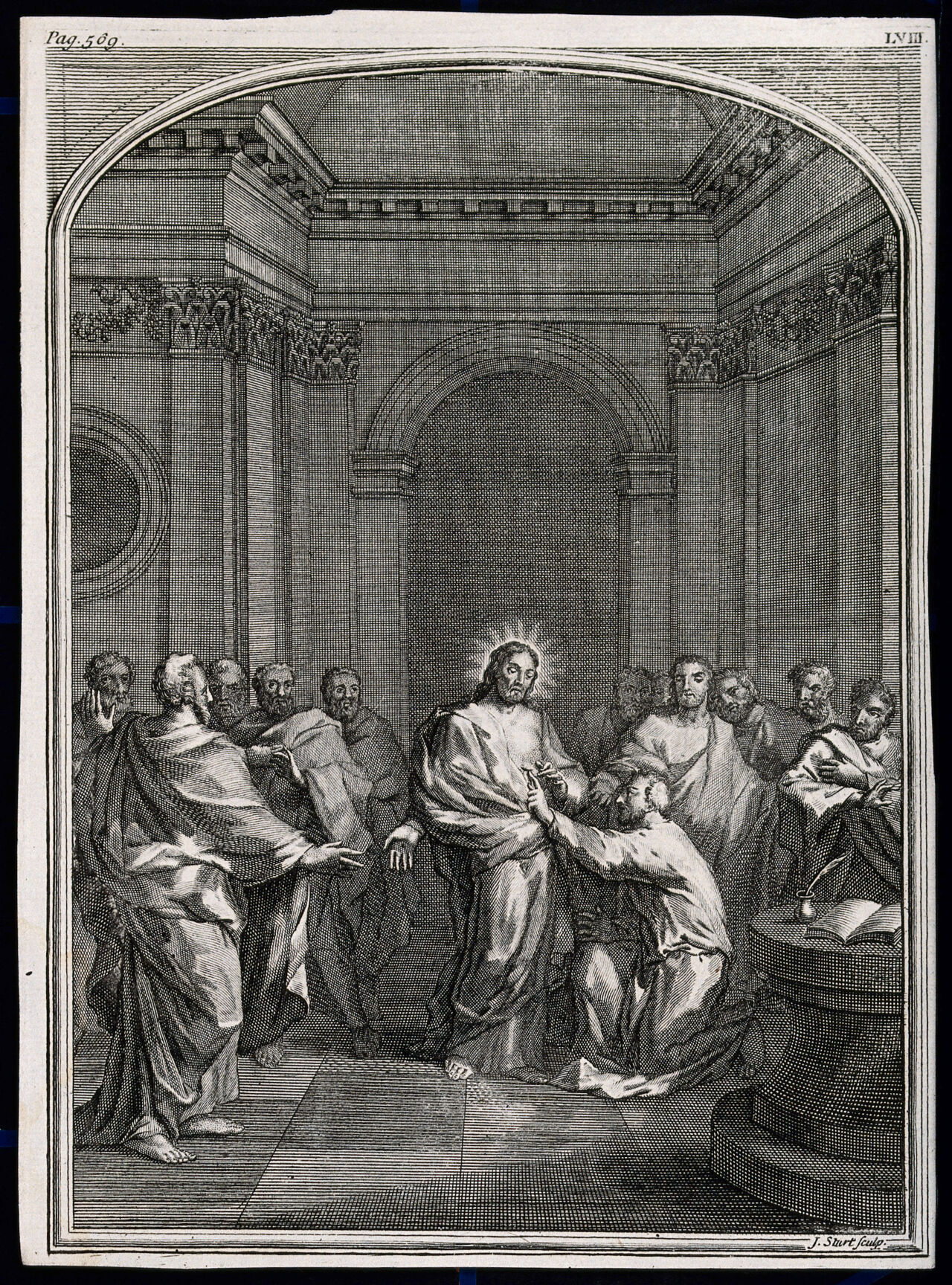
John Sturt · Wellcome Collection, London · Wellcome Collection · Public Domain Mark
- Born
- 1658 · London.
- Died
- 1730 · London.
- Nationality
- England · United Kingdom
- Occupation
- engraver · draftsperson · publisher
- Languages
- English
VALÉORINE Encyclopedia
VALÉORINE documentary reading
Documentary summary
John Sturt (6 April 1658 – August 1730) was an English engraver, apprenticed to Robert White. Becoming associated with John Ayres, he engraved the most important of his books on calligraphy. He is popularly known as an illustrator of The Pilgrim's Progress. • Illustration — John Sturt, mezzotint by William Humphrey after William Faithorne the younger
Admitted source layer · organised and presented by VALÉORINE
Reference Check
Propose documentary evidence for John Sturt. A contribution is never written directly as fact: identity, source, rights and evidence gates still decide.
Sign in to contribute
World of VALÉORINE
Documentary connections
Only confirmed graph relationships appear here. Images are shown only when their identity and reuse rights both pass the documentary gate.

Born In · outgoing
London
Place
Pencil sketch by George Henry Harlow, 1814, http://www.npg.org.uk/collections/search/largerimage.php?mkey=mw05495
Died In · outgoing
London
Place
Pencil sketch by George Henry Harlow, 1814, http://www.npg.org.uk/collections/search/largerimage.php?mkey=mw05495
Citizen Of · outgoing
United Kingdom
Place
Documentary evidence
Documentary basis
Authority files
wikidata · Q6259579 · wikipedia · John Sturt
In this article
Life
Life
He was born in London on 6 April 1658, and at the age of seventeen was apprenticed to Robert White, in whose manner he engraved a number of small portraits as frontispieces to books. Sturt at one time kept a drawing school in St. Paul's churchyard in partnership with Bernard Lens II. He died in London, poor, in August 1730.
Works
Works
Sturt executed the illustrations to many of the religious and artistic publications of the time, including: • Francis Bragge's Passion of Our Saviour, 1694; • Samuel Wesley's History of the Old and New Testament in Verse, 1704 and 1715; • the English editions of Gerard Audran's Perspective of the Human Body, Andrea Pozzo's Rules of Perspective, and Charles Perrault's Treatise on the Five Orders of Architecture; • Laurence Howell's View of the Pontificate, 1712; • J. Hammond's Historical Narrative of the Whole Bible, 1727; and • John Bunyan's Pilgrim's Progress, 1728. He also engraved the Genealogy of George I, in two sheets, 1714; Chronological Tables of Europe, 1726; and a plate of the Seven Bishops, from a calligraphic drawing by Thomas Rodway. Sturt was the inventor of the class of prints known as "medleys", the first of which he published in 1706. His last employment was upon the plates to James Anderson's Selectus Diplomatum et Numismatum Thesaurus. In association with John Ayres, Sturt engraved the writing-master's books on calligraphy. He engraved the Lord's Prayer within the space of a silver halfpenny, the Creed in that of a silver penny, and an elegy on Queen Mary so small that it could be inserted in a finger-ring. Sturt's most spectacular production of this kind was the Book of Common Prayer, executed on 188 silver plates, all adorned with borders and vignettes, the frontispiece being a portrait of George I, on which were inscribed, in characters legible only with a magnifying glass, the Creed, the Lord's Prayer, the Commandments, the prayer for the royal family, and the twenty-first psalm. This was published in 1717, and in 1721 he engraved, in a similar manner, the Orthodox Communicant.
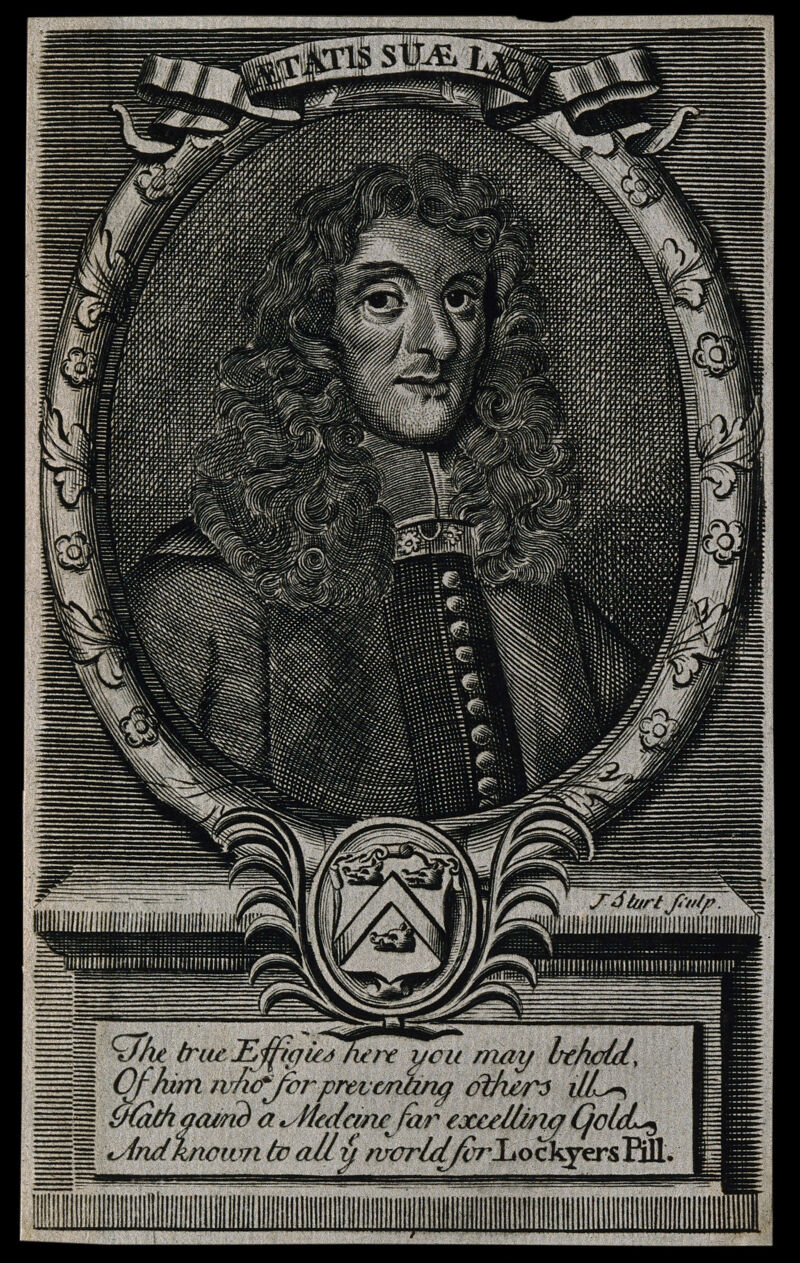
Lionel Lockyer. Line engraving by J. Sturt., by John Sturt
John Sturt · Wellcome Collection, London · Wellcome Collection
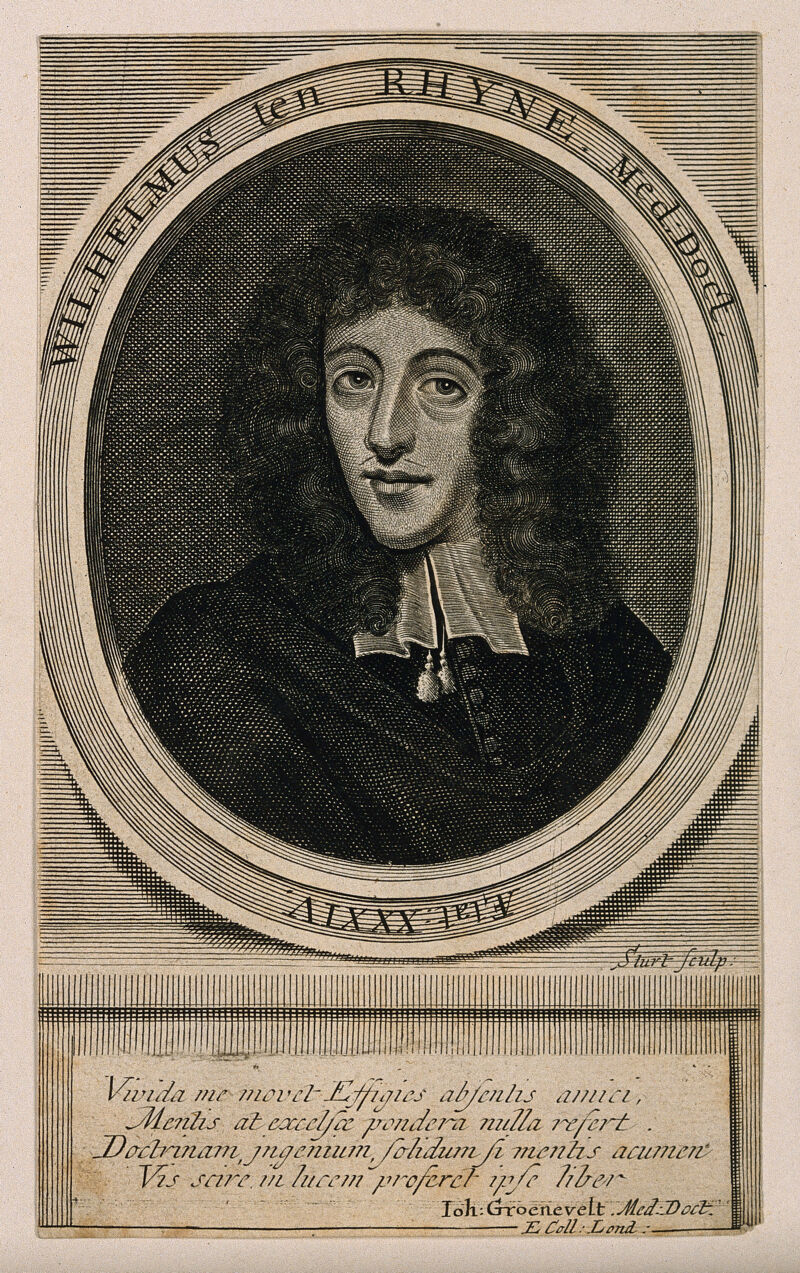
Willem Ten Rhyne. Line engraving by J. Sturt, 1683., 1683, by John Sturt
John Sturt · Wellcome Collection, London · Wellcome Collection
Life and career
Dated record
Life and career
The full dated record · 2 entries
1658
John Sturt was born in 1658 at London.
1730
John Sturt died in 1730 at London.
Primary material
Documents and archives
reference work
- “John Sturt”, English Wikipedia, consulted as further reading
Reputable secondary · Wikipedia
- Wikidata, structured authority record Q6259579: John Sturt
Reputable secondary · Wikimedia Foundation
scholarly publication
- Sturt, John (1658–1730), engraver, Oxford Dictionary of National Biography, 2004
Scholarly · Crossref registry · 2004
Citations
References
Each reference names the institution holding it, so a reader may go to the document itself.
scholarly publication
Institutional witnessreference work
Secondary witnessreference work
Wikidata, structured authority record Q6259579: John SturtWikimedia Foundation
Secondary witness
The Encyclopedia exists whether or not anything is for sale. Corrections are recorded rather than overwritten, and every version of this record is kept. Published 16 August 2026.
Elsewhere in Prints
4,138 published records in this field, each with its sources named.
- John ScottEngraver
- John Sigismund TannerEngraver
- John Singleton CopleyEngraver
- John StorrsEngraver
- John SwaineEngraver
- John T. HarrisEngraver
- John T. RiddleEngraver
- John Taylor ArmsEngraver
Best supported in this field
For owners
Own a work by John Sturt?
A specialist will read what you send and tell you what the house can establish, what it cannot, and whether the object is suited to sale. There is no charge and no obligation. The object stays with you throughout; nothing is shipped to us unless it is arranged in writing beforehand.