
John Sell Cotman
John Sell Cotman (16 May 1782 – 24 July 1842) was an English marine and landscape painter, etcher, illustrator, and a leading member of the Norwich School of painters. John Sell Cotman was born in Norwich, the son of a silk merchant and lace dealer, Cotman was educated at the Norwich Grammar School. He showed an early talent for art.
Also recorded as John Sell Cotsman · John Sell Cottman · J. S. Cotman · Cotsman
John Sell Cotman
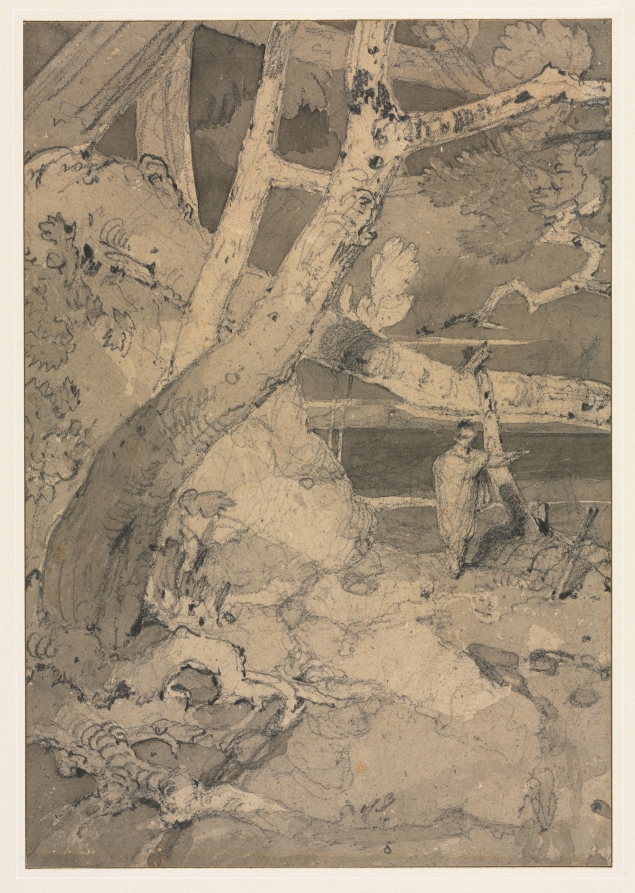
John Sell Cotman · The Cleveland Museum of Art · Delia E. Holden Fund · CC0
- Name
- John Sell Cotman
- Born
- 16 May 1782
- Birthplace
- Norwich, England
- Died
- 24 May 1842
- Place of death
- London, England
- Known for
- Landscape painting
- Movement
- Norwich School of painters
- Nationality
- Kingdom of Great Britain · United Kingdom of Great Britain and Ireland · United Kingdom
- Occupation
- painter · illustrator · etcher · print publisher · graphic artist · artist
- Fields
- marine art
VALÉORINE Encyclopedia
VALÉORINE documentary reading
Documentary summary
John Sell Cotman (16 May 1782 – 24 July 1842) was an English marine and landscape painter, etcher, illustrator, and a leading member of the Norwich School of painters. John Sell Cotman was born in Norwich, the son of a silk merchant and lace dealer, Cotman was educated at the Norwich Grammar School. He showed an early talent for art.
Admitted source layer · organised and presented by VALÉORINE
Reference Check
Propose documentary evidence for John Sell Cotman. A contribution is never written directly as fact: identity, source, rights and evidence gates still decide.
Sign in to contribute
Documentary evidence
Documentary basis
Authority files
bnf · getty · gnd · loc · wikidata · Q1288248 · wikipedia · John Sell Cotman
In this article
Biography
Biography
Cotman worked between 1782 and 1842 across painter, illustrator, etcher, print publisher and artist. The registers place that work in marine art. Every statement below returns to a source shown in the evidence panel; where the record is silent or divided, the article says so instead of resolving it.
Key facts
Key facts
• Name — John Sell Cotman • Born — 16 May 1782 • Birthplace — Norwich, England • Died — 24 May 1842 • Place of death — London, England • Known for — Landscape painting • Style — Romantic • Movement — Norwich School of painters • Children — * Miles Edmund Cotman • John Joseph Cotman
Early years
Early years
• Illustration — House at St Stephen's Road, Norwich (1794), British Museum, considered to be the earliest surviving work by Cotman John Sell Cotman was born in Norwich, on 16 May 1782, the eldest child of Edmund Cotman and his wife Ann (née Sell) living at 26 Bridge Street, in St George's parish. Edmund Cotman was a hairdresser who later became a silk merchant and a lace dealer. Their son was baptised at St. Mary Coslany, Norwich, on 7 June 1782. The family name was written as Cottman in the parish baptism record, which has survived. The young Cotman was educated at Norwich Grammar School, and is recorded as starting there as a non-paying pupil on 3 August 1793. He showed a talent for art from an early age and would often go out on drawing trips into the countryside around Norwich and the North Norfolk coast. A story survives that the boy's headmaster, Dr Samuel Forster, disliked cats. When Forster saw a large realistic-looking cardboard cat on his desk, he held the silhouette up, saying, "I know who is the only boy who could have drawn this." Edmund Cotman intended his son to follow into the family business, but the boy was instead intent on a career in art. When asked for his advice, the artist John Opie replied to Cotman's father, "Let him rather black boots than follow the profession of an artist." A drawing from this period, House at St Stephen's Road, Norwich (1794), is considered to be the earliest surviving work by Cotman, sketched when he was 12.
London and Yorkshire
London and Yorkshire
• Illustration — Devil's Elbow, Rokeby Park (c. 1806), Norfolk Museums Collections Cotman moved to London, probably in 1798. He lived at 28 Gerrard Street, Soho, initially making a living through commissions from print-sellers. His sketches at Rudulph Ackerman's print shop at 96 The Strand were studied by the Norwich artist John Thirtle when a young man. Cotman came under the patronage of Thomas Munro, physician to the Bridewell and Bethlehem Hospitals, whose house in Adelphi Terrace was a studio and a meeting place for artists that had included the young J. M. W. Turner and Thomas Girtin. Cotman was influenced by Girtin, and soon joined his sketching club. During the summer of 1799 the two artists travelled together south of London to Surrey on a drawing expedition. In 1800 (and again in 1802 with his landlord, the artist Paul Sandby Munn), Cotman travelled to Wales on a sketching trip. In 1800, Cotman exhibited at the Royal Academy for the first time. He exhibited other Welsh scenes at the Royal Academy in 1801 and 1802. In 1800, he was awarded an honorary palette by the Society of Arts. He continued to exhibit at the Academy until 1806. He was based during the early 1800s in London, but is known to have advertised in Norwich—in September 1802 he advertised his services as a drawing teacher in the Norwich Mercury. In the three summers of 18031805, Cotman stayed with the Cholmeley family at Brandsby Hall in Yorkshire. On the last of these three visits from London, he made a series of watercolours of the River Greta, after he was invited to visit Rokeby Park, the home of the English traveller John Morritt. Cotman's delicate paintings from these visits are among the finest produced by a European watercolourist.
Return to Norwich
Return to Norwich
• Illustration — John Sell Cotman, Mrs Edmund Miles and Ann Miles in the Miles family farmhouse, Felbrigg, Norfolk by John Thirtle (1807), Norfolk Museums Collections In late 1806, Cotman returned to live in Norwich. He joined the recently formed Norwich Society of Artists, and exhibited 149 works with the society between 1807 and 1810. He became the society's President in 1811. Cotman married Ann Miles at Felbrigg parish church on 6 January 1809. The pair remained devoted throughout their married lives. Their eldest child Miles Edmund Cotman was born on 5 February the year after their marriage. Their daughter Ann was born in July 1812 after the family moved to Great Yarmouth in April 1812, followed by three more sons, John Joseph Cotman, (Francis) Walter, and Alfred Henry. who were born in 1814, 1816 and 1819 respectively. A sixth child, a daughter, was born in 1822. As part of his teaching, Cotman operated his own version of a watercolour subscription library, so that his pupils could take home his drawings to copy. In 1810, Cotman began to etch, and the following year his first set of etchings (Miscellaneous Etchings) was published, strongly influenced by the work of the Italian artist Piranesi. All but one of the subjects were architectural, and were mostly of Yorkshire buildings. He later published a set of etchings of the ancient buildings of Norfolk (Architectural Antiquities of Norfolk (1818).
Move to Great Yarmouth
Move to Great Yarmouth
From 1812 to 1823, Cotman lived on the Norfolk coast at Great Yarmouth, where he studied the shipping, and mastered depicting the form of sea waves. Some of his finest marine pieces date from this time.
Normandy tours
Normandy tours
In 1817, 1818, and 1820, whilst Cotman was living in Great Yarmouth, he visited Normandy to make drawings of the landscape and buildings of the region. The three tours are well documented, as Cotman wrote letters about his travels to his wife, and to Dawson Turner, who made extensive use of them in A Tour of Normandy (1820). The idea for Cotman to tour Normandy came from his friend Dawson Turner, who had visited the region in September 1815 with the British artist Thomas Phillips to view the works of art taken to Paris by Napoleon. Cotman went first to London, where he purchased a camera lucida from Sir Henry Englefield, and viewed the newly-installed Elgin Marbles at the British Museum. The camera lucida was used for all three of Cotman's tours, but he seems to have struggled to use it to depict buildings accurately: Cotman sailed from Brighton to Dieppe on 18 July, and began exploring the area around Dieppe the following day. His first trip to Normandy lasted over five weeks. He described his accommodation during this trip as being of poor quality, and that the local population were openly hostile towards him. From the drawings he produced in Normandy he is apparent that he took sketch books and drawing equipment, but no painting materials. The second trip took place the following year, and lasted seven weeks. During this trip Cotman was joined by Dawson Turner and his daughters, which made the time abroad more pleasant for them all. The third trip to Normandy in 1820 saw Cotman travelling to the southernmost part of the region, which captivated him. It allowed him to explore more of the countryside than he had done in previous years. An injury to his leg forced him to spend time recuperating in Caen. Upon returning home to Great Yarmouth, Cotman worked tirelessly to produce the etchings needed for Dawson Turner's Architectural Antiquities of Normandy, which was published in 1822. The project enhanced the artist's reputation, and he became as famous as he was ever to become during his lifetime. Two years later Dawson Turner published Cotman's 100 etchings based on his sketches, with notes produced from Cotman's letters. • Illustration — The Church of St. John, Peronne (Somme) (undated), Yale Center for British Art alt= Normandy scene by Cotman • Illustration — A Castle in Normandy (undated), Cleveland Museum of Art alt=Normandy scene by Cotman • Illustration — Abbey Church at Fecamp, Normandy (c. 1818), Yale Center for British Art alt=Normandy scene by Cotman • Illustration — Caverns Excavated in the Rock within the Castle of Chateau Gaillard, near Andelys, Normandy (1822), Yale Center for British Art alt=Normandy scene by Cotman • Illustration — Notre Dame sur l'Eau, Domfront, Normandy (c. 1820), Yale Center for British Art alt=Normandy scene by Cotman • Illustration — Elevation of the Church of Columbiers, near Valognes, Normandy (1818), Yale Center for British Art alt=Normandy scene by Cotman
Return to Norwich
Return to Norwich
• Illustration — Cotman's house in St Martin's Plain, Norwich Cotman returned to Norwich in 1824, hoping to improve his financial position, and moved into a large house in St Martin's Plain, opposite the Bishop's Palace, where he built up a collection of prints, books, armour, and models of ships, to aid his compositions. He showed work from 1823 to 1825 at the Norwich Society of Artists' annual exhibitions. In 1825, Cotman became an Associate of the Royal Society of Painters in Watercolours and was a frequent exhibitor there until 1839. During this period in his career he was driven to despair by his constant financial struggles.
King's College, London
King's College, London
In January 1834, Cotman was appointed Master of landscape drawing at King's College School in London, partly on the recommendation of J.M.W. Turner. In 1836 Miles Edmund Cotman was appointed to assist his father. The poet and artist Dante Gabriel Rossetti was one of his pupils. In London, Cotman developed friendships with the artists James Stark, George Cattermole, Samuel Prout, and Cornelius Varley. In 1836, he became an honorary member of the Institute of British Architects. In 1838, all of his etchings were published by Henry George Bohn. In 1834, Miles Edmund remained in Norwich to work as an art teacher, when the rest of the Cotman family moved to London upon Cotman's appointment at King's College. A year after his move to London, Mile Edmund moved to London to be his father's assistant, after his brother John Joseph returned to Norwich. Miles Edmund succeeded his father as drawing master at King's College in 1843.
Final years
Final years
• Illustration — John Joseph Cotman's chalk drawing of his father, made during his last visit to Norfolk in 1841, National Portrait Gallery, London From 1839, Cotman became severely depressed, a condition that lasted into 1841. That year, he resumed his correspondence with Dawson Turner. Granted a fortnight's leave from King's College, he journeyed from London to Great Yarmouth by ship and then on to Norwich, ultimately staying in Norfolk for two months before returning to the capital. He produced some chalk drawings of church interiors, and of the Norfolk countryside, the dates of which allow his journey around the county to be traced: his sketches included Itteringham, 12 November and Storm off Cromer. During this period he was able to visit his elderly father at Thorpe St Andrew outside Norwich, when he probably began preparatory work for a painting, entitled From my Father's House at Thorpe. His last oil painting—dated 18 January 1842 and never completed—was A View of the Norwich River. Cotman's depression returned, and by June 1842 he had become seriously ill, dying "of natural decay" on 24 July 1842. He was interred in the cemetery of St John's Wood Chapel, London. In his will he left everything to his wife Ann, and enabled her to receive a pension. His paintings and drawings were sold off from May 1843, fetching lower and lower prices for his financially-troubled family as the sales continued.
Watercolours
Watercolours
• Illustration — Ruins of Rievaulx Abbey, Yorkshire (1803), Victoria and Albert Museum • Illustration — Greta Bridge (1805), British Museum • Illustration — Mousehold Heath (1810), British Museum • Illustration — Abbatial House of the Abbey of St Ouen at Rouen (1825), Norfolk Museums Collections • Illustration — Windmill, Norfolk. Watercolour (10 cm x 15 cm), private collection. • Illustration — Etretat, Normandy. Sketched about 28 July 1820, private collection.
Life and work
Life and work
John Sell Cotman was born on 16 May 1782 in Norwich. Cotman held the nationality of Kingdom of Great Britain, United Kingdom of Great Britain and Ireland and United Kingdom. Cotman was educated at Norwich School. Recorded child: John Joseph Cotman and Miles Edmund Cotman. Cotman worked as painter, illustrator, etcher and print publisher, and the authority record catalogues a further 1 occupations under the same name, among them artist. Cotman worked in Norwich and London. The fields Cotman worked in include marine art. Cotman worked in English.
Life and career
Dated record
Life and career
Explore 1782–1842
The full dated record · 3 entries
1782
John Sell Cotman was born in 1782.
1842
Dies at London.
1842
John Sell Cotman died at London.
Artistic output
Artistic output
* • Works by Cotman in the Norfolk Museums Collections • The Cotman Collection at Leeds Art Gallery • Works by Cotman at the British Museum • Works by Cotman and plates from Cotman's Liber Studiorum (1838) at the Cleveland Museum of Art • Works by (or associated with) John Sell Cotman held by the National Trust • Works by John Sell Cotman at the Metropolitan Museum of Art, New York
Works documented in more than one form
Catalogued output
Works documented in more than one form
14 titles are catalogued under more than one form, which is to say the registers hold them both as a work and as a distinct object, score, recording or edition. Where a title is documented in several forms the evidence behind it is correspondingly wider, and the article treats those forms as separate records of the same work rather than as separate works. A Bridge — catalogued as print and etching print.
Etchings by John Sell Cotman, Volume II
1811 — catalogued as print and etching print
Lakenham, near Norwich
1808 — catalogued as print and etching print
Castle at Tancarville
1821 — catalogued as print and etching print
Church of L'Ery, near Pont-de-l'Arche
1820 — catalogued as print and etching print
Published works
Published works
• 1811 Etchings by John Sell Cotman (London) • 1817: Specimens of Norman and Gothic Architecture in the County of Norfolk (Great Yarmouth) • 1818: Excursions in the County of Norfolk - volume 1 (London) • 1819: Excursions in the County of Norfolk - volume 2 (London) • 1819: Sepulchral brasses in Norfolk and Suffolk, volumes 1 - Norfolk and 2 - Suffolk (London) • 1820: A Tour of Normandy (London, 2 volumes by Dawson Turner with illustrations by Cotman). Turner made use of letters written to him by Cotman during his sketching tours of Normandy. • 1822: Architectural Antiquities of Normandy (London) • 1838: Liber Studiorum (produced between 1805 and 1814)
Writings and published texts
Catalogued output
Writings and published texts
These are catalogued publications carrying the name — editions and printings, distinct from the works they contain and from writing about the subject.
13 editions carry dates between 1811 and 1982
The run opens with Etchings and closes with John Sell Cotman, 1782-1842
The entries follow Open Library
Etchings
1811
Engravings of sepulchral brasses in Norfolk
1838
Engravings of sepulchral brasses in Suffolk
1838
Liber studiorum
1838
Engravings of sepulchral brasses in Norfolk and Suffolk
1838
Specimens of architectural remains in various counties in England, but principally inNorfolk
1838
Les antiquités monumentales de la Normandie
1881
The water-colour drawings of John Sell Cotman
1923
Architectural drawings and watercolours
1939
Paintings, drawings, and etchings
Paintings, drawings, and etchings
Over 600 of Cotman's watercolours and drawings were bought by the Norwich curator James Reeve, who sold more than half of them to the British Museum in 1902. The remainder of Reeve's collection was acquired by the Norwich Castle from the collection of the Norfolk industrialist Russell Colman. Some of Cotman's paintings, etchings, and drawings are on public display in Norwich, where well over 2,000 works are held. Other works are at the Leeds Art Gallery, the Tate Gallery, the British Museum and the Victoria and Albert Museum, the Fitzwilliam Museum in Cambridge, and other regional centres. In the United States, there are works by Cotman at the Yale Center for British Art in New Haven, Connecticut, and in other galleries around the country. Cotman was not thought to be important during his lifetime, and he made little money from sales of his paintings and drawings. The sale of his works and library took place over five days at Christie's. His drawings and pictures fetched £260, his collection of books and art was sold off for £300 and the sum total for his prints was £30. Cotman's architectural etchings have long been considered as a valuable record for historians.
Oils, drawings, and etchings
Oils, drawings, and etchings
• Illustration — Drainage Mills in the Fens, Croyland, Lincolnshire (c. 1835), Yale Center for British Art • Illustration — The Mouth of the Yare • Illustration — Portrait of Mrs John Sell Cotman (c. 1808), Norfolk Museums Collections • Illustration — Tower of the Village Church of Saint Maclou, Normandy (1818), Yale Center for British Art
Paintings, drawings and prints, 1799–1828
Catalogued output
Paintings, drawings and prints, 1799–1828
These are objects catalogued as visual works, each held or recorded by the institution named against it. 64 works carry dates between 1799 and 1828. The 1800s are the densest part of the run, with 27 titles, and that concentration is a fact about what the registers have catalogued rather than a judgement on the work itself. They belong to a run of 124 titles in all, from 1799 to 1900. A selection is set out below and the complete run may be opened beneath it.
Ruins of Rievaulx Abbey, Yorkshire
1803
Caricature of a Sailor (One of a Set of Three)
1799
The Rise of the Stocks (One of a Set of Three)
1799
A Cottage at Dorking in Surrey
1800
A Dry Dock
1801
Landscape with Church
1801
The Devil's Bridge, North Wales
1801
Bolton Abbey, Yorkshire
1803
Crambe Beck Bridge, near Kirkham, Yorkshire
1804
Greta Bridge
1805
Consett Iron Works, Durham
1805
An Old House at St Albans
1806
The Waterfall
1807
The complete catalogue · 58
Caricature of a Sailor (One of a Set of Three)
1799
The Rise of the Stocks (One of a Set of Three)
1799
A Cottage at Dorking in Surrey
1800
A Dry Dock
1801
Landscape with Church
1801
The Devil's Bridge, North Wales
1801
Ruins of Rievaulx Abbey, Yorkshire
1803
Bolton Abbey, Yorkshire
1803
Crambe Beck Bridge, near Kirkham, Yorkshire
1804
Greta Bridge
1805
Consett Iron Works, Durham
1805
An Old House at St Albans
1806
The Waterfall
1807
Moreton Hall, Cheshire
1807
Boat House and Trees
1807
Ruined House
1808
Buildings on a River
1808
Seashore with Boats
1808
St Mary's Abbey, York
1808
A dismasted brig
1808
Portrait of a Young Man
1808
The Judgement of Midas
1808
The Beggar Boy
1808
Saint James of Compostela
1808
Boats on Cromer Beach, Norfolk
1809
On the River Yare
1809
Vale Crucis Abbey, N. Wales
1810
Wherries at Anchor on Breydon Water
1810
Tan y Bwlch, North Wales
1810
The old pigeon house, Downham Market
1810
The Old College House Conway
1811
Pastoral Landscape
1812
Tan-y-Bwlch, Merionethshire, North Wales
1813
Column at Yarmouth to the Memory of Lord Nelson
1817
Gate-way, Saint Mary's Wiggenhall, Norfolk
1818
Porch of the Free School, Thetford, Suffolk
1818
The Church of St Pierre, Caen
1818
Quidenham Hall, Norfolk
1818
Caister Castle
1818
Village in Normandy, France, Noon
1818
Old Houses at Gorleston
1819
Monnow Bridge, Monmouth
1820
Parsons Bridge, Cardiganshire
1820
Town Hall, King's Lynn, Norfolk
1820
Sea View (Fishing Boats)
1820
Interior of the Knights Hall
1821
Dutch Boats off Yarmouth, Prizes during the War
1823
View from Yarmouth Bridge, Norfolk, Looking towards Breydon, Just after Sunset
1824
In the Bishop's Garden
1824
The Drop Gate
1826
The Silent Stream, Normandy, France
1826
Silver Birches
1826
The Baggage Wagon
1826
The Mishap
1826
Cader Idris
1827
Street Scene at Alencon, Normandy
1828
Palace of Prince Beauharnais
1828
Southend, Pier Hill
1828
Paintings, drawings and prints, 1830–1900
Catalogued output
Paintings, drawings and prints, 1830–1900
32 works carry dates between 1830 and 1900. The 1830s are the densest part of the run, with 24 titles, and that concentration is a fact about what the registers have catalogued rather than a judgement on the work itself.
The run opens with Blasting St
Vincent's Rock, Clifton and closes with Valle Crucis Abbey
Vincent's Rock, Clifton
1830
Kilgarren Castle, N.Wales
1830
Planthony Abbey
1830
Bridge in a Continental Town
1830
Castle Above a Waterfall
1830
Spanish Student
1830
St Benet's Abbey, 1831
1831
The Devil's Tower
1833
Drainage Mills in the Fens, Croyland, Lincolnshire
1835
Harlech Castle
1835
The complete catalogue · 35
The run opens with Blasting St
Vincent's Rock, Clifton and closes with Valle Crucis Abbey
Vincent's Rock, Clifton
1830
Kilgarren Castle, N.Wales
1830
Planthony Abbey
1830
Bridge in a Continental Town
1830
Castle Above a Waterfall
1830
Spanish Student
1830
St Benet's Abbey, 1831
1831
The Devil's Tower
1833
Drainage Mills in the Fens, Croyland, Lincolnshire
1835
Harlech Castle
1835
An Ecclesiastic
1836
The Monk
1836
Conway Castle N. Wales
1838
Cader Iris, N. Wales
1838
Ragland Castle, Monmouthshire
1838
Harlech Castle, N. Wales
1838
Caernarvon Castle N. Wales
1838
North Wales
1838
Devil's Bridge, Cardiganshire
1838
Caernarvon Castle
1838
Tan y Beolch, n
Wales
1838
Caernarvon Castle, North Wales
1838
Brandsby Tower, Yorkshire
1838
Henley-on-Thames, Oxfordshire, Boys Fishing
1838
The Meadow
1840
Alder Carr, Norwich
1840
A Man fishing in a Stream by a Ruined Castle
1841
Wooded Landscape
1841
From My Father's House at Thorpe, Norfolk
1842
Sketch of a Church Interior
1842
Classic scene
1842
Valle Crucis Abbey
1900
Paintings, drawings and prints without a settled date
Catalogued output
Paintings, drawings and prints without a settled date
28 further works are catalogued under Cotman's name without a date the collections agree on, which is why they are set apart from the dated run rather than placed in it.
Old House with Pillars
Capel Carrig, Caernarvonshire
A Castle Tower (Caernarvon Castle)
Waterfall in a Desolate Landscape
Gorge with Tree Stumps
Landscape Sketch with Bridge and Castle
Sketch of Buildings with Cart and Horses in Foreground
Sketch of Ruined Church Interior with Chair
Castle Above a Rocky Gorge
Gable End of Old Houses, St Albans (after Francis Stevens)
Stangate Creek on the Medway
Ecclesiastics in a Vestry (Interior of Church in Normandy, France)
The complete catalogue · 21
Old House with Pillars
Capel Carrig, Caernarvonshire
A Castle Tower (Caernarvon Castle)
Waterfall in a Desolate Landscape
Gorge with Tree Stumps
Landscape Sketch with Bridge and Castle
Sketch of Buildings with Cart and Horses in Foreground
Sketch of Ruined Church Interior with Chair
Castle Above a Rocky Gorge
Gable End of Old Houses, St Albans (after Francis Stevens)
Stangate Creek on the Medway
Ecclesiastics in a Vestry (Interior of Church in Normandy, France)
Woodland Scene with a Stream, a Man and a Dog
St Benet's Abbey, Norfolk
Lincolnshire Draining Mill
River Scene (A Norfolk Wherry)
Shipping off the Isle of Wight
Landscape in Normandy
Landscape, Boat on a River
The Mill (after Rembrandt)
After a Storm
Reputation and legacy
Cotman and Crome were the two finest of the Norwich School of painters, who were both recognised by the public during their lives, with Cotman's Architectural Antiquities of Normandy bringing him wider praise. The architect Augustus Pugin, in his Specimens of Gothic Architecture (1823), mixed praise and criticism [the plates] are drawn and etched in a masterly style, but with a good deal of management, by which the subjects appear, in several instances, of grander character than really belongs to them...In some Plates also, the human figures are evidently below the size of life, and so exaggerate the size of the buildings they are placed against. The art historian Andrew Moore, describes the artists as "two of the most original talents in the history of early nineteenth century British art", and that they were rivalled only by Turner, Girtin, and the English artist John Constable. The 1887 edition of the Dictionary of National Biography noted that Cotman's reputation had improved over time, and described him as "one of the most original and versatile of English artists of the first half of this century, a draughtsman and colourist of exceptional gifts, a water-colourist worthy to be ranked among the greater men, and excellent whether as a painter of land or sea". In 1888 the Norwich Art Circle showed 100 of Cotman's works at Norwich, the first time his collected works had been exhibited. This event led to a critical appraisal of his output and secured a second exhibition that year at the Burlington Fine Arts Club. The art historians Lawrence Binyon and William Dickes both wrote extensively about Cotman's oil paintings and watercolours. Cotman's oils were first exhibited when they were shown at the Tate Gallery, London in 1922. According to his biographer Sydney Decimus Kitson, Cotman's reputation was enhanced by The Water-Colour Drawings of John Sell Cotman by Paul Oppé, which appeared in a special edition of The Studio in 1923. Cotman's reputation has been hidden by misinformation, and by works that were misattributed. Among his pupils, the most notable were Thirtle and his own sons.
Primary material
Documents and archives
institutional register
- Bibliothèque nationale de France authority file 13602356j
General reference · Bibliothèque nationale de France
- Discogs authority file 2244878
General reference · Discogs
- FAST authority file 5771
General reference · FAST
- GND (German National Library) authority file 120136201
General reference · GND (German National Library)
- IdRef (French universities) authority file 027592456
General reference · IdRef (French universities)
- ISNI authority file 0000000107989745
General reference · ISNI
scholarly publication
- Cotman, John Sell, Benezit Dictionary of Artists, 2011
Scholarly · Crossref registry · 2011
reference work
- “John Sell Cotman”, English Wikipedia, consulted as further reading
Reputable secondary · Wikipedia
Literature
Further cited scholarship
3 scholarly and reference publications are cited here, each one identified by title and by the publication, publisher or institution that carried it, with its year where the register states one. The cited literature runs from 1975 to 2007, which is a measure of how long Cotman has been a subject of scholarship rather than of how much has been written. The Encyclopedia cites this literature and does not summarise the arguments of works it has not read in full.
John Sell Cotman (1782–1842) Cat. Nos
57–58, Great British Watercolors: From the Paul Mellon Collection at the Yale Center for British Art, 2007
John Walton Cotman, The Gorrión Tree: Cuba and the Grenada Revolution (New York and Frankfurt: Peter Lang, 1993), pp. Xvi + 272, $33.00, Journal of Latin American Studies, 1994
John Sell Cotman's "Dismasted Brig" and the Motif of the Drifting Boat, Studies in Romanticism, 1975
Authority records
Notes from the source article
Cited by Wikipedia
Notes from the source article
These works are cited by the source article, in its own numbering. They are recorded as its citations, not as sources VALÉORINE has verified.
- 1.British Museum. Drawing (House at St Stephen's Road, Norwich).
- 2.British Museum. 'Etchings by John Sell Cotman' (London: Cotman), 1811.
- 3.Yale Center for British Art. Cotman, John Sell, 1782-1842, Specimens of Norman and Gothic architecture in the county of Norfolk, 1816-1818].
- 4.Vol. 2, p. xv
Bibliography printed in the source article · 22
- Binyon, Laurence. John Crome and John Sell Cotman. Seeley & Co. 1897.
- Cotman, John Sell.
- Clifford, Derek Plint. Watercolours of the Norwich School. Cory, Adams & Mackay. 1965. 978-0-239-00015-6.
- Cundall, Herbert Minton. The Norwich School. The Studio Ltd. 1920. 472125860.
- Dickes, William Frederick. The Norwich school of painting: being a full account of the Norwich exhibitions, the lives of the painters, the lists of their respective exhibits and descriptions of the pictures. Jarrold & Sons Ltd. 1905. 558218061.
- Hemingway, Andrew. The English Piranesi: Cotman's Architectural Prints. The Volume of the Walpole Society. 48. 210–244. 1980. 41827699.
- Hill, David. Cotman in the North: Watercolours of Durham and Yorkshire. Yale University Press. 2005. 978-0-300-10704-3.
- Holcomb, Adele M. John Sell Cotman. British Museum. 1978. 978-07141-8-005-2.
- Kitson, Sydney D. The Life of John Sell Cotman. Faber & Faber. 1937. 1017287302.
- Lyles, Anne. British Watercolours from the Oppé Collection. Tate Gallery. 1997. 39887257.
- Moore, Andrew W. John Sell Cotman: 1782-1842. Norwich Museums Service. 1982. 0903101424.
- Moore, Andrew W. The Norwich School of Artists. His Majesty's Stationery Office/Norwich Museums Service. 1985. 978-0-903101-48-6.
- Moore, Andrew W. Cotman, John Sell (1782–1842). 2008.
- Rajnai, Miklós. John Sell Cotman, 1782-1842. Cornell University Press. 1982. 978-0-8014-1520-3.
- 12. 285 287.
- Walpole, Josephine. Art and Artists of the Norwich School. Antique Collectors' Club. 1997. 978-0-9559320-4-5.
- Holcomb, Adele M. John Sell Cotman in the Cholmeley Archive. North Yorkshire County Council. 1980. 978-0-906035-12-2.
- Moore, Andrew. John Sell Cotman: Master of Watercolour. Norfolk Museums Service. 2005. 978-0-903101-78-3.
- Moulden, Sarah Elizabeth. Survival in the British art world: the art and career of John Sell Cotman 1800-1840. University of East Anglia. 2016.
- Popham, A.E. The Etchings of John Sell Cotman. Print Collector's Quarterly. J. Dent & Sons. 9. 3. 236 273. 1922.
- Rajnai, Miklos. The Norwich Society of Artists, 1805–1833: A Dictionary of Contributors and their Work. Norfolk Museums Service for the Paul Mellon Centre for Studies in British Art. 1976.
- Rajnai, Miklós. John Sell Cotman, 1782–1842: Early Drawings (1798–1812). Norfolk Museums Service. 1979.
References
Citations
References
Each reference names the institution holding it, so a reader may go to the document itself.
scholarly publication
Cotman, John Sell, Benezit Dictionary of Artists, 2011Crossref registry
Institutional witnessinstitutional register
Bibliothèque nationale de France authority file 13602356jBibliothèque nationale de France
Secondary witnessinstitutional register
Secondary witnessinstitutional register
Secondary witnessinstitutional register
GND (German National Library) authority file 120136201GND (German National Library)
Secondary witnessinstitutional register
IdRef (French universities) authority file 027592456IdRef (French universities)
Secondary witnessinstitutional register
Secondary witnessinstitutional register
Library of Congress authority file n50018169Library of Congress
Secondary witness
Every cited source · 15
- 01
Cotman, John Sell, Benezit Dictionary of Artists, 2011
scholarly publication · Scholarly
Consult the source - 02
Bibliothèque nationale de France authority file 13602356j
institutional register · General reference · Bibliothèque nationale de France
Consult the source - 03
Discogs authority file 2244878
institutional register · General reference · Discogs
Consult the source - 04
- 05
GND (German National Library) authority file 120136201
institutional register · General reference · GND (German National Library)
Consult the source - 06
IdRef (French universities) authority file 027592456
institutional register · General reference · IdRef (French universities)
Consult the source - 07
ISNI authority file 0000000107989745
institutional register · General reference · ISNI
Consult the source - 08
Library of Congress authority file n50018169
institutional register · General reference · Library of Congress
Consult the source - 09
MusicBrainz authority file
institutional register · General reference · MusicBrainz
Consult the source - 10
National Library of Australia authority file 35805836
institutional register · General reference · National Library of Australia
Consult the source - 11
RKDartists authority file 18667
institutional register · General reference · RKDartists
Consult the source - 12
Union List of Artist Names authority file 500014103
institutional register · General reference · Union List of Artist Names
Consult the source - 13
- 14
Wikidata, structured authority record Q1288248: John Sell Cotman
institutional register · General reference · Wikimedia Foundation
Consult the source - 15
“John Sell Cotman”, English Wikipedia, consulted as further reading
reference work · Reputable secondary · Wikipedia
Consult the source
Further particulars
Held on the record
Further particulars
Open the remaining particulars
The authorities additionally record the headings John Sell Cotsman, John Sell Cottman, J. Cotman, Cotsman and J. tell Cotman. His recorded language was English. 2 children are recorded: John Joseph Cotman and Miles Edmund Cotman. Recorded as Kingdom of Great Britain, United Kingdom of Great Britain and Ireland and United Kingdom.
Identity and origins
Recognition and collections
Work by John Sell Cotman is
Minneapolis Institute of Art, Auckland Art Gallery, Tate and National Gallery of Victoria
The Encyclopedia exists whether or not anything is for sale. Corrections are recorded rather than overwritten, and every version of this record is kept. Published 14 August 2026.
Elsewhere in Illustration
5,224 published records in this field, each with its sources named.
- John R. NeillIllustrator
- John RoccoIllustrator
- John S. GoodallIllustrator
- John SchoenherrIllustrator
- John SeverinIllustrator
- John ShelleyIllustrator
- John SimmonsIllustrator
- John Stanislaw KubaryIllustrator
Best supported in this field
For owners
Own a work by John Sell Cotman?
A specialist will read what you send and tell you what the house can establish, what it cannot, and whether the object is suited to sale. There is no charge and no obligation. The object stays with you throughout; nothing is shipped to us unless it is arranged in writing beforehand.