
John Opie
John Opie (16 May 1761 – 9 April 1807) was a British painter whose subjects included many prominent men and women of his day, members of the British royal family and others who were notable in the artistic and literary careers.
Also recorded as Esq. John Opie · R. A. John Opie · opie john · J. Opie
John Opie
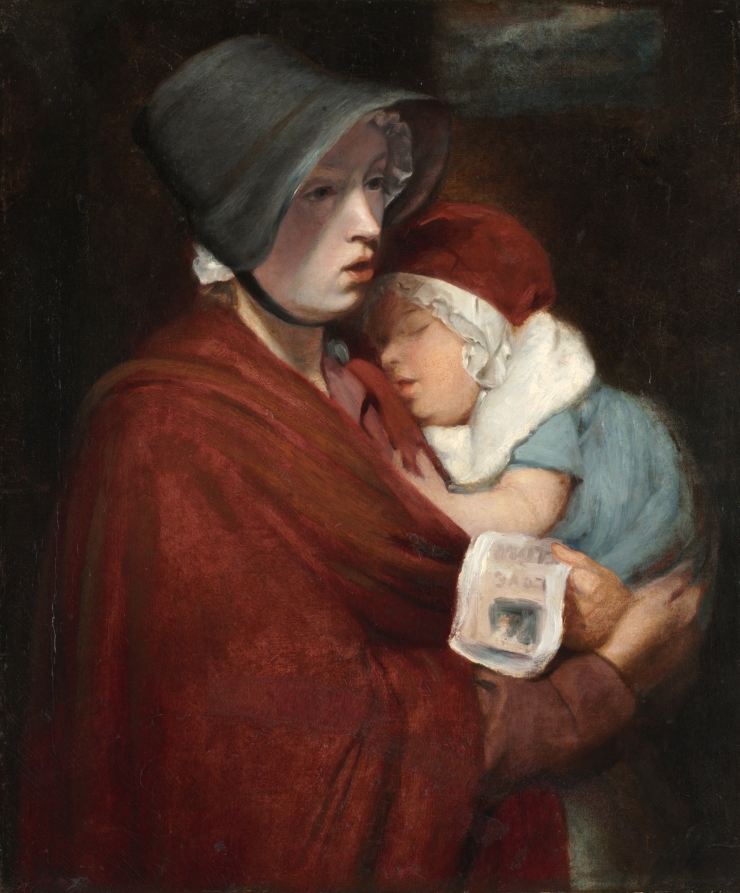
John Opie · The Cleveland Museum of Art · Gift of Mr. and Mrs. J. H. Wade · CC0
- Name
- John Opie
- Born
- 16 May 1761
- Birthplace
- Trevellas, Cornwall
- Died
- 9 April 1807
- Place of death
- Westminster, London
- Spouse
- Amelia Alderson
- Field
- Historical painting, portraits
- Awards
- Royal Academician
- Nationality
- Kingdom of Great Britain
- Occupation
- painter · portraitist · illustrator · biographer
- Fields
- history
- Languages
- English
VALÉORINE Encyclopedia
VALÉORINE documentary reading
Documentary summary
John Opie (16 May 1761 – 9 April 1807) was a British painter whose subjects included many prominent men and women of his day, members of the British royal family and others who were notable in the artistic and literary careers.
Admitted source layer · organised and presented by VALÉORINE
Note VALÉORINE
John Opie (1761–1807) was a British biographer, painter and portraitist. Born in Trevellas, the biographer died in London.
John Opie was a member of Royal Academy of Arts and worked in London. The biographer was active in history.
Genres include history painting, landscape painting and portrait. Languages used include English.
Composed from admitted, traceable facts · 01 October 2026
VALÉORINE
Reference Check
Propose documentary evidence for John Opie. A contribution is never written directly as fact: identity, source, rights and evidence gates still decide.
Sign in to contribute
World of VALÉORINE
Documentary connections
Only confirmed graph relationships appear here. Images are shown only when their identity and reuse rights both pass the documentary gate.

Documentary evidence
Documentary basis
Authority files
wikidata · Q2481088 · wikipedia · John Opie
In this article
Biography
Biography
The recorded working language is English. The field of work recorded is history. Subjects and genres recorded for the work are history, landscape and portrait. Places of work recorded in the authority are London. Work by John Opie is recorded in the collections of National Gallery of Victoria, Minneapolis Institute of Art, Museo del Prado, The Nelson-Atkins Museum of Art and Auckland Art Gallery.
Key facts
Key facts
• Name — John Opie • Born — 16 May 1761 • Birthplace — Trevellas, Cornwall • Died — 9 April 1807 • Place of death — Westminster, London • Spouse — Amelia Alderson • Field — Historical painting, portraits • Patrons — John Wolcot • Awards — Royal Academician
Early career
Early career
• Illustration — Self Portrait, John Opie (n.d.) Opie was born in Harmony Cottage, Trevellas, between St Agnes and Perranporth in Cornwall, UK. He was the youngest of the five children of Edward Opie, a master carpenter, and his wife Mary (née Tonkin). He showed a precocious talent for drawing and mathematics, and by the age of twelve, he had mastered Euclid and opened an evening school for poor children where he taught reading, writing, and arithmetic. His father, however, did not encourage his abilities, and apprenticed him to his own trade of carpentry. Opie's artistic abilities eventually came to the attention of local physician and satirist, Dr John Wolcot (Peter Pindar), who visited him at the sawmill where he was working in 1775. Recognising a great talent, Wolcot became Opie's mentor, buying him out of his apprenticeship and insisting that he come to live at his home in Truro. Wolcot provided invaluable encouragement, advice, tuition and practical help in the advancement of his early career, including obtaining many commissions for work.
London
London
In 1781, having gained considerable experience as a portraitist travelling around Cornwall, Opie moved to London with Wolcot. There they lived together, having entered into a formal profit-sharing agreement. Although Opie had received a considerable artistic education from Wolcot, the Doctor chose to present him as a self-taught prodigy; a portrait of a boy shown at the Society of Artists the previous year, had been described in the catalogue as "an instance of Genius, not having ever seen a picture." Wolcot introduced the "Cornish wonder" to leading artists, including Sir Joshua Reynolds, who was to compare him to Caravaggio and Velazquez, and to prospective patrons. The business arrangement with Wolcot lasted for a year, after which Opie informed the doctor that he now wished to go it alone, leading to the estrangement of the two former partners. Through the influence of "a Mrs Boscawen", Wolcot managed to have Opie introduced at the court of King George III. The King purchased one of his pictures and commissioned him to produce a portrait of Mary Delany. He also received commissions to paint Prince William Frederick, Duke of Gloucester and Edinburgh, both the nephew and son-in-law of the King. Opie also painted the portraits of Lady Salisbury, Lady Charlotte Talbot, Lady Harcourt and other ladies of the court. Opie's residence at "Orange Court", Castle Street, Leicester Fields, was said to be "crowded with rank and fashion every day" and he was the talk of the town. In 1782 he first exhibited at the Royal Academy and in December of that year was married to Mary Bunn. The match, however, proved to be an unhappy one and they were eventually divorced in 1796 after her elopement. • Illustration — The Murder of Rizzio (1787) In 1784 Opie exhibited A School, sometimes also known as The Schoolmistress at the Royal Academy (No 162). In 1786 he exhibited his first important historical subject, the Assassination of James I, and in the following year The Death of Rizzio, a work whose merit was recognized by his immediate election as associate of the Royal Academy, of which he became a full member in 1788. He painted five subjects for John Boydell's Shakespeare Gallery; and until his death, his practice alternated between portraiture and historical work. In May 1798 he married Amelia Alderson whom he had met at parties in Norwich, including one at Holkham Hall where he had gone to carry out some commissions for Holkham's owner, Thomas Coke. The commission included doing portraits of Coke's Whig friends. John and Amelia lived at 8 Berners Street, London where Opie had moved in 1791. This proved a happy marriage, lasting for Opie's last nine years of life.
Death
Death
Opie died in April 1807, aged 45, at his home in Berners Street, and was buried at St Paul's Cathedral, in the crypt next to Joshua Reynolds, as he had wished. Royal etiquete allowed for Prince William Frederick, Duke of Gloucester to follow the Opie funeral procession in his carriages to St Paul's Cathedral. Opie's last portrait was of the Prince with whom Opie's wife, Amelia, shared a great interest in Abolitionism. Amongst the mourners at Opie's funeral were Sir Thomas Lawrence, J.M.W. Turner, Peter Finch Martineau and Henry Bone. Opie had no children.
Gallery
Gallery
• Illustration — Boadicea Haranguing the Britons, 1793 • Illustration — Henry Fuseli, 1794 • Illustration — The Death of Archbishop Sharpe, 1797 • Illustration — Portrait of Amelia Opie, 1798 • Illustration — Thomas Girtin, 1800 • Illustration — Portrait of a Lady in the Character of Cressida, 1800 • Illustration — The Angry Father, 1802 • Illustration — Master Betty as Young Norval, 1804 • Illustration — Philip Beaver, c.1805 • Illustration — Portrait of Robert Southey, 1806
Identity and origins
Identity and origins
John Opie, R. John Opie, opie john, J. Opie and jone opie.
Life and career
Dated record
Life and career
The full dated record · 2 entries
1761
John Opie born at Trevellas.
1807
John Opie died at London.
Places
Named by the record
Places
Only places the record itself states, plotted where the house gazetteer settles their coordinates. Nothing is inferred from a name or a nationality.
Trevellas.
Birth place
London.
Death place
Teaching and writing
In 1805, Opie was appointed a professor at the Royal Academy and from May 1806 gave a series of four lectures which were published as a book after his death, with a memoir by his widow Amelia Opie, in 1809. His students at the academy included Henry Thomson. Opie was also known as a writer on art by his Life of Reynolds in Wolcot's edition of Matthew Pilkington's Dictionary of Painters and his Letter on the Cultivation of the Fine Arts in England, in which he advocated the formation of a national gallery.
Reception and society
After an initial burst of popularity, Opie's style rapidly fell out of fashion. In response to this he began to work on improving his technique, while at the same time seeking to supplement his early education by the study of Latin, French and English literature, and to polish his provincial manners by mixing in cultivated and learned circles. Although socially reticent, Opie was part of the "Strawberry Hill Set", the Gothick villa owned by Horace Walpole who would play host to the Blue Stockings Society. Opie painted many of the society's members including Mary Delany, Henry Fuseli, Hannah More, Samuel Johnson, Mary Wollstonecraft and, later on in his career, his own wife Amelia who was associated with the society. • Illustration — The Winter's Tale, Act II, scene III, (engraving after Opie for the Boydell Shakespeare Gallery) Opie painted many notable men and women including Mary Wollstonecraft, Samuel Johnson, Francesco Bartolozzi, John Bannister, Joseph Munden, Charles James Fox, William Betty, Edmund Burke, John Crome, James Northcote, Henry Fuseli, Thomas Girtin, Robert Southey, Samuel Parr, Elizabeth Inchbald and Mary Shelley; 508 portraits in all, mostly in oil, and 252 other pictures. Opie painted the portrait of Captain Mark Oates whom he had seen paint a butterfly when both men were young. Opie painted the portrait of George Townshend, 1st Marquess Townshend who, in February 1792 became Lord Lieutenant of Norfolk - the county from which Opie's wife hailed. In 1799, Opie painted (oils) a portrait of Charlotte, Princess Royal, daughter of George III. Jane Beetham Read was the only female student that Opie ever taught. He painted her portrait between 1790 and 1800, and asked for her hand in marriage around 1796, but her father rejected the marriage.
Literature
Scholarly footprint
A count of publications is evidence of attention, not of standing, and is given here only as a measure.
Notes from the source article
Cited by Wikipedia
Notes from the source article
These works are cited by the source article, in its own numbering. They are recorded as its citations, not as sources VALÉORINE has verified.
- 1.Hendra, Viv. The Cornish Wonder, A Portrait of John Opie. Truran. 3, 165. 2007. 978-1-85022-216-3.
- 2.St Agnes. The Cornishman. 105. 5. 15 July 1880.
- 3.Earland 1911, pp. 1–8.
- 4.Rogers, 1878, pp. 10-14
- 5.20. 129.
- 6.Earland 1911, p.26
- 7.Earland 1911, pp.20-1
- 8.Earland 1911, p.12
- 9.Earland 1911, p.26; the artist's name is given as "Master Oppy".
- 10.Opie, John. 230-233.
- 11.Earland 1911, pp. 31–2
- 12.Art UK® is a registered trade mark of the Public Catalogue Foundation. William Frederick (1776–1834), 2nd Duke of Gloucester - by John Opie [held] at Trinity College, Cambridge.
- 13.A School, 1784, John Opie at Tate Britain
- 14.Earland, 1911, p. 124.
- 15.Straight Enterprises. The Magazine Antiques. 1390. 1984.
- 16.Earland 1911, p.50
- 17.Eraland, A. John Opie and His Circle. Hutichinson and Company. 147. 1911.
- 18.Eger, E. Bluestockings Displayed: Portraiture, Performance and. Cambridge University Press. 62. 2013. 9781316154250.
- 19.Tait, D. Cornwall: Romans to Victorians. Pen and Sword Books. 2018. 9781526721716.
- 20.Dr. Samuel Johnson (Philip Mould Fine Paintings).
- 21.Portrait of F. Bartolozzi (National Portrait Gallery, London).
- 22.Portrait of J S Munden (National Portrait Gallery).
- 23.Charles james Fox (Philip Mould Fine Paintings).
- 24.William Betty as "The Young Roscius" (National Portrait Gallery, London).
- 25.Earland, A. John Opie and His Circle. Hutchinson & Company. 296. 1911.
- 26.Blackwood, James. Men who have made themselves. J. Blackwood, Paternoster Row. 311.
- 27.Artnet Worldwide Corporation. John Opie. 2024.
- 28.13389. 14 February 1792. 109.
- 29.© 2023 National Portrait Gallery. National Portrait Gallery London. 2023.
- 30.Opie, John Lectures on painting, delivered at the Royal Academy of Arts (London, Longman, Hurst, Rees and Orme, 1809).
- 31."Memorials of St Paul's Cathedral" Sinclair, W. p. 465: London; Chapman & Hall, Ltd; 1909.
- 32.Hendra, Viv. The Cornish Wonder - A Portrait of John Opie. Truran. 173. 2007. 978-1-85022-216-3.
- 33.Farrant, Ann. Martineau Society - Amelia Opie. Martineau Society. 20,21,22,23. 2015.
- 34.Norfolk Chronicle Norfolk, England. Funeral of the Late J. Opie, Esq. R. A. 25 April 1807.
Bibliography printed in the source article · 5
- Edwards, B. B. & Bulfinch, S. G. Biography of self-taught men: with an introductory essay (Boston: J.E. Tilton and company, 1859) pp. 191–201.
- Tregellas, Walter Hawken. Cornish worthies: sketches of some eminent Cornish men and families, volume 2 (London: E. Stock, 1884) pp. 243–278.
- Earland, Ada. John Opie and his circle (London : Hutchinson & co., 1911).
- Rogers, John Jope. Opie and his works (London: P. and D. Colnaghi and co. etc., 1878).
- Simon, Robin. Opie, John (1761–1807).
References
Citations
References
Each reference names the institution holding it, so a reader may go to the document itself.
reference work
Wikidata, structured authority record Q2481088: John OpieWikimedia Foundation
Secondary witnessreference work
Secondary witness
The Encyclopedia exists whether or not anything is for sale. Corrections are recorded rather than overwritten, and every version of this record is kept. Published 14 August 2026.
Elsewhere in Paintings
18,717 published records in this field, each with its sources named.
- John Noble BarlowArtist
- John Nost SartoriusArtist
- John of KastavArtist
- John OlsenArtist
- John Paddy CarstairsArtist
- John PairmanArtist
- John PartridgeArtist
- John PercevalArtist
Best supported in this field
For owners
Own a work by John Opie?
A specialist will read what you send and tell you what the house can establish, what it cannot, and whether the object is suited to sale. There is no charge and no obligation. The object stays with you throughout; nothing is shipped to us unless it is arranged in writing beforehand.