
John Jabez Edwin Mayall
John Jabez Edwin Paisley Mayall (17 September 1813 – 6 March 1901) was an English photographer who in 1860 took the first carte-de-visite photographs of Queen Victoria. He also captured other famous people such as Charles Dickens and Karl Marx. His photograph of "Sergeant Dawson and his daughter" has been considered one of the most important photographs in history.
Also recorded as John Jabez Edwin Paisley Mayall · Jabez Meal · John Jabes Edwin Mayall · John J. E. Mayall
John Jabez Edwin Mayall
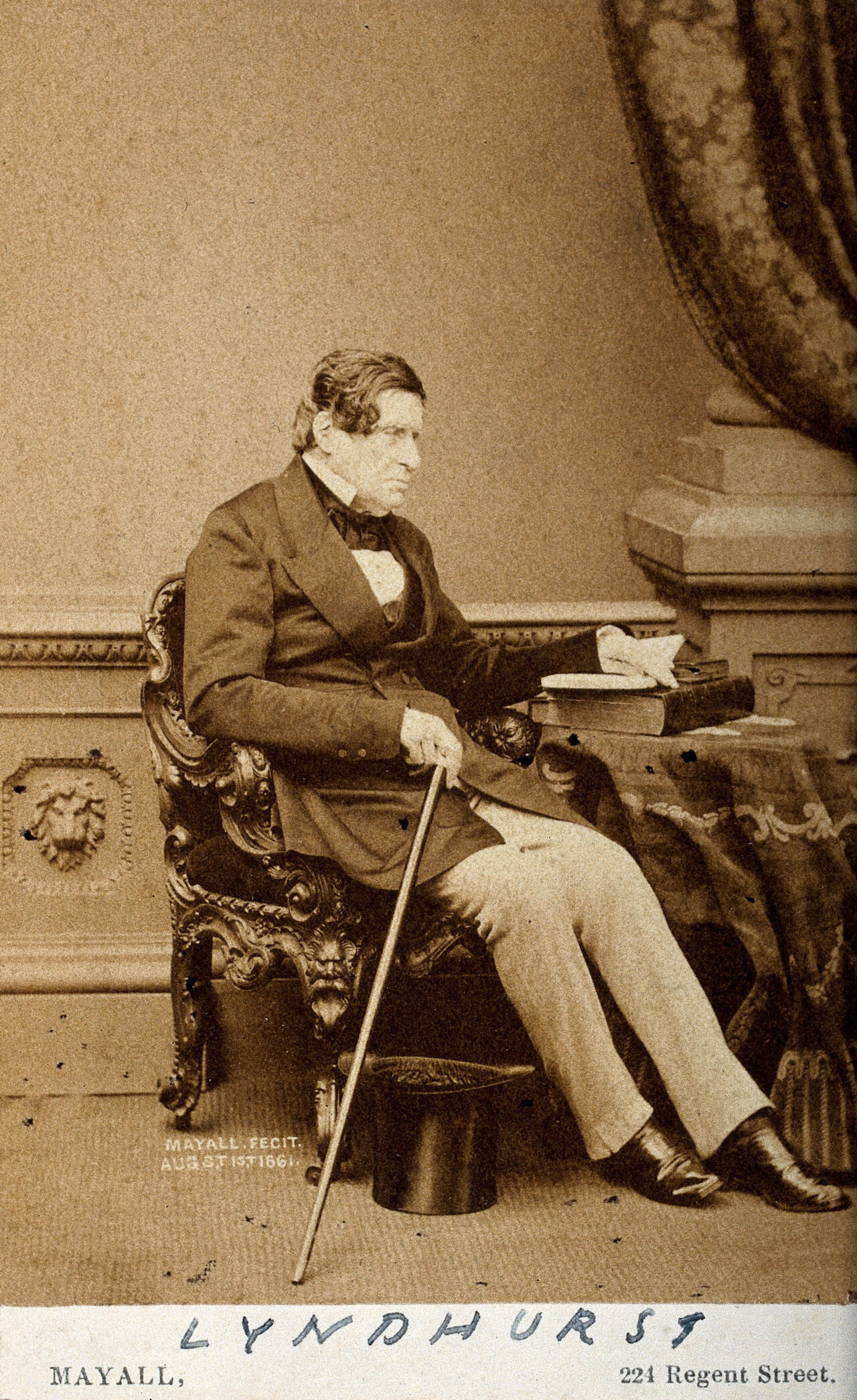
John Jabez Edwin Mayall · Wellcome Collection, London · Wellcome Collection · Public Domain Mark
- Name
- John Jabez Edwin Mayall
- Born
- 17 September 1813
- Birthplace
- Oldham, England
- Died
- 6 March 1901
- Place of death
- Southwick, England
- Occupation
- Photographer
- Nationality
- United Kingdom of Great Britain and Ireland
- Fields
- daguerreotype process · albumen print · carte de visite
- Languages
- English
VALÉORINE Encyclopedia
VALÉORINE documentary reading
Documentary summary
John Jabez Edwin Paisley Mayall (17 September 1813 – 6 March 1901) was an English photographer who in 1860 took the first carte-de-visite photographs of Queen Victoria. He also captured other famous people such as Charles Dickens and Karl Marx. His photograph of "Sergeant Dawson and his daughter" has been considered one of the most important photographs in history.
Admitted source layer · organised and presented by VALÉORINE
Note VALÉORINE
John Jabez Edwin Mayall (1813–1901) was a British photographer. Born in Oldham, the photographer died in Southwick.
John Jabez Edwin Mayall worked in Brighton, London and Philadelphia. The photographer was active in albumen print, carte de visite and daguerreotype process.
Genres include portrait. Languages used include English. Works by John Jabez Edwin Mayall are held at Art Institute of Chicago, Harry Ransom Center and Metropolitan Museum of Art, among others.
Composed from admitted, traceable facts · 26 September 2026
VALÉORINE
Reference Check
Propose documentary evidence for John Jabez Edwin Mayall. A contribution is never written directly as fact: identity, source, rights and evidence gates still decide.
Sign in to contribute
World of VALÉORINE
Documentary connections
Only confirmed graph relationships appear here. Images are shown only when their identity and reuse rights both pass the documentary gate.
Documentary evidence
Documentary basis
Authority files
wikidata · Q1700595 · wikipedia · John Jabez Edwin Mayall
In this article
Biography
Biography
The recorded working language is English. The field of work recorded is daguerreotype process, albumen print and carte de visite. Subjects and genres recorded for the work are portrait. Places of work recorded in the authority are Philadelphia, London and Brighton. Work by John Jabez Edwin Mayall is recorded in the collections of Art Institute of Chicago, Musée national des beaux-arts du Québec, Metropolitan Museum of Art, National Portrait Gallery and Harry Ransom Center.
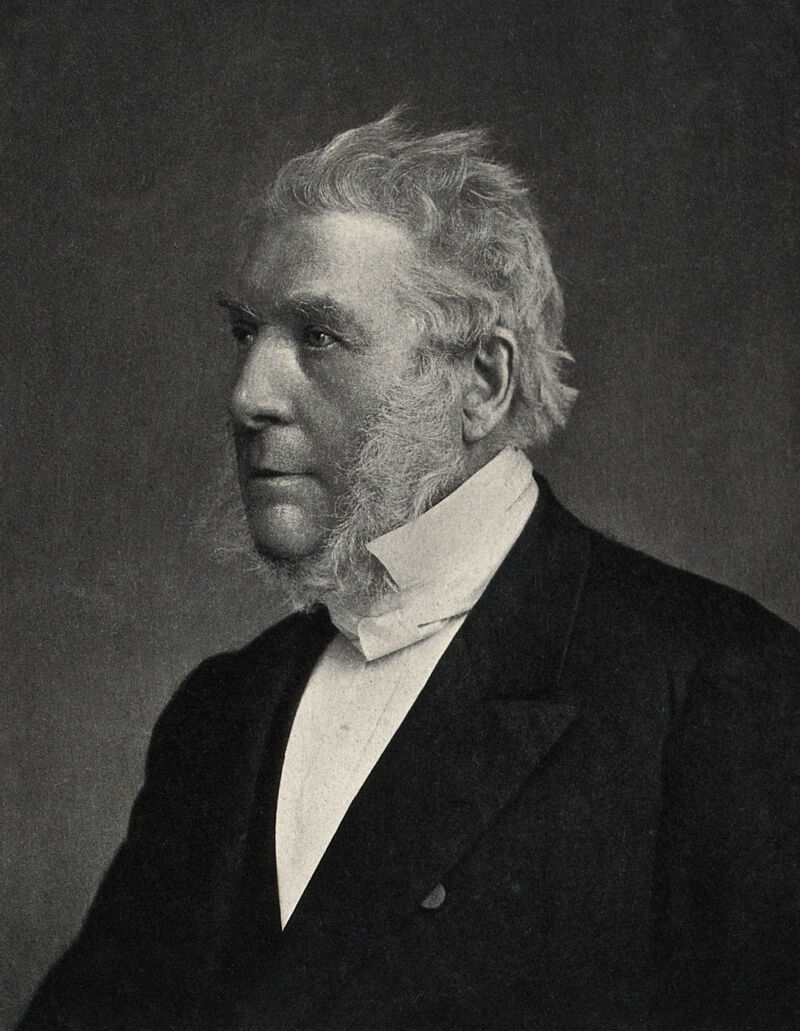
James Glaisher. Photogravure after J. Mayall., by John Jabez Edwin Mayall
John Jabez Edwin Mayall · Wellcome Collection, London · Wellcome Collection
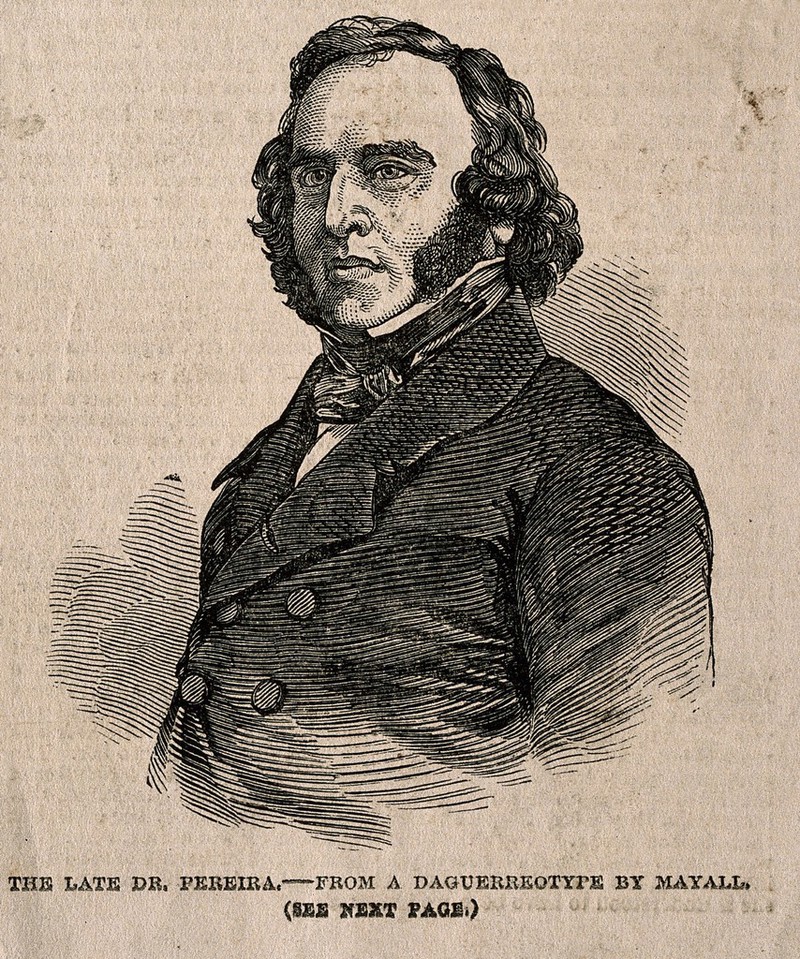
Jonathan Pereira. Wood engraving after J. Mayall., by John Jabez Edwin Mayall
John Jabez Edwin Mayall · Wellcome Collection, London · Wellcome Collection
Key facts
Key facts
• Name — John Jabez Edwin Mayall • Born — 17 September 1813 • Birthplace — Oldham, England • Died — 6 March 1901 • Place of death — Southwick, England • Occupation — Photographer • Years Active — 1841−1888
Early life
Early life
He was the son of John and Elizabeth Meal, born into a Baptist family on 17 September 1813, at Chamber Hall, near Bury in the county of Lancashire; his birth name was registered as Jabez Meal.
North America
North America
Mayall moved to Philadelphia in late 1841 or early 1842, and first practised as a photographer at 140 Chestnut Street until 1846.
Return to England
Return to England
Mayall arrived in London from America in 1846, and by August 1848 had placed advertisements describing himself as "Mr. Mayall of Philadelphia, United States." Mayall called his studio/gallery the "American Daguerreotype Institution".
Portraits of eminent people
Portraits of eminent people
Mayall's daguerreotype portrait of Charles Dickens was made between 1853 and 1855, and auctioned with a reserve of £30,000 by Christies in May 2001. In May 1860, Mayall made a number of portraits of the Royal Family. He was given permission to publish the portraits of the Royal Family as a set of cartes-de-visite. In August 1860, the cartes were released in the form of a Royal Album, consisting of 14 small portraits of Queen Victoria, Prince Albert and their children. The Royal Album was an immediate success, and hundreds of thousands were sold as Britons began collecting carte de visite portraits of famous people, a fad which Gernsheim credits to the popularity of Mayall's royal portraits. Another series of royal portraits by Mayall was published in 1861 and when Prince Albert succumbed to typhoid fever in December 1861, his death created an enormous demand for his portrait. The Photographic News later reported that within one week of his death "no less than 70,000 of his carte de visite were ordered from Marion & Co." By the end of the decade, Marion & Co, had paid Mayall £35,000 for his portraits of the Royal Family which established the carte de visite (cdv) as his most popular portrait format, of which the Mayall establishment produced over half a million cartes a year, which helped him secure an annual income of £12,000. The German philosopher Karl Marx sat for Mayall as early as 1872, and returned in 1875 for another session of photography. The photos from 1875 were widely disseminated, and his collaborator Friedrich Engels called them "the final, the best picture, showing [Marx] in all his serene, confident, Olympian calmness."
Brighton
Brighton
Mayall left his eldest son Edwin to run his London studios and moved down to Brighton with his wife and two younger sons. On 18 July 1864, he opened his new photographic portrait studio at 90-91 Kings Road, close to the recently built Grand Hotel. In an announcement placed in the pages of the Brighton Examiner, he stated that he had "spared neither pains nor expertise in preparing, for the accommodation of the nobility and gentry resident at or visiting Brighton, one of the most efficient studios ever built." Although he addressed his comments particularly to the "nobility and gentry", Mayall admitted that he was "not unmindful of the fact... that moderate charges are as necessary as general excellence to ensure extensive public patronage." Mayall charged £1.1s for a set of 12 carte de visite portraits and £5.5s for his "highly finished" coloured portrait photographs. In 1880 he transferred his business to Bond Street, London.
Personal life
Personal life
On 19 February 1869 his son, John Junior, became the first person to cycle from London to Brighton. The Times reported his sixteen-hour ride, "An Extraordinary Velocipede Feat" the following day. Mayall's wife Eliza died in Brighton in 1870. The following year, on 14 December 1871 at St George's Bloomsbury, he married Celia Victoria Hooper (1838–1922), widow of timber merchant Henry Morgan Hooper and daughter of surgeon William Gardner. This marriage produced three further children: Elsie Lena (born 1872), Oswald (born 1874) and Sibyl (born 1876). Mayall was declared bankrupt in September 1885 with liabilities of £22,916 12s. Id., to creditors in the form of mortgages on various freehold properties, which he was unable to rent or sell without a loss, and also shares in the Albert Palace Company, and in the ship Brighton, which he valued at £600. The failure of his business was attributed in part to the cost of fitting his premises in Bond street with electricity. In April 1888 his business was bought out for £34,000 by H. S. King and the Artistic Works Association Ltd. through which he became Managing Director of Mayall and Company on a 5-year contract and a fixed salary. Mayall died 13 years later, aged 88, on 6 March 1901 at Southwick, West Sussex. He was buried on 19 March 1901 at Lancing, West Sussex.
Gallery
Gallery
• Illustration — alt= Charles Dickens (c. 1853–55) • Illustration — Sergeant Dawson and His Daughter (1855) • Illustration — Queen Victoria (1860) • Illustration — Karl Marx (1875)
Places
Named by the record
Places
Only places the record itself states, plotted where the house gazetteer settles their coordinates. Nothing is inferred from a name or a nationality.
Oldham.
Birth place
Southwick.
Death place
Publications
* • Mayall J. E. 1867. Mayall's Celebrities of the London Stage: A Series of Photographic Portraits in Character. London: Messrs. A. Marion Son. * * *
Fine art photography
Gernsheim describes Mayall as "the earliest exponent of fine art photography," in advance of Oscar Rejlander and Julia-Margaret Cameron, on the basis of his production in Philadelphia of ten daguerreotype in 1845 to illustrate The Lord's Prayer and his later, larger (24" x 15"; 61 cm x 38 cm) "daguerreotype pictures to illustrate poetry and sentiment." These were shown in 1851 at the Great Exhibition; The Soldier's Dream, The Venerable Bede blessing a child, and Bacchus and Ariadne. However, he was discouraged by the judgement of The Athenaeum: "To us these pictures seem a mistake. At best, we can only hope to get a mere naturalistic rendering. Ideality is unattainable–and imagination supplanted by the presence of fact." Not even Prince Albert's encouragement could dissuade Mayall from ceasing his pursuit of photography as art. A year after exhibiting at the Crystal Palace he limited remarks to the verisimilitude, rather than the artistry, of the daguerreotype; Viewed through an ordinary magnifying-glass, the resemblance of the portrait is perfectly staggering–the features stand forth as though moulded in wax–not a blemish escapes, nor is a beauty lost [...] All hail to the fertile genius of man! Independently of the wonders of daguerreotyping, there is something very benign and gratifying in its application –the memory of the absent or the dead is faithfully treasured in the possession of one of these beautiful little specimens. Nevertheless, his royal portraits were described as "very beautiful specimens of the photographic art," and when in Brighton from 1864, Mayall advertised himself as "Artist and Photographer", and a notice in his studio read: "sitters are requested to place themselves as much as possible in the hands of the artist." His photograph of Sergeant Thomas Dawson and his daughter, the former of whom lost an arm in battle, is considered one of the most important photographs ever taken.
Primary material
Documents and archives
reference work
- “John Jabez Edwin Mayall”, English Wikipedia, consulted as further reading
Reputable secondary · Wikipedia
authority record
- Wikidata, structured authority record Q1700595: John Jabez Edwin Mayall
General reference · Wikidata
Cultural references
Cultural references
Scenes of Mayall taking painter J.M.W.Turner's daguerreotype portrait, alone and together with his companion Mrs. Booth, appear in the film Mr. Turner.
Notes from the source article
Cited by Wikipedia
Notes from the source article
These works are cited by the source article, in its own numbering. They are recorded as its citations, not as sources VALÉORINE has verified.
- 1.John Plunkett. Queen Victoria: First Media Monarch. Oxford University Press. January 2016. 0-19-925392-7 page needed.
- 2.Plunkett, John. Encyclopedia Of Nineteenth-Century Photography. Routledge, Taylor & Francis Group. 907–9. 2008. 978-0-415-97235-2.
- 3.The Daguerreotype and its wonders. Cheltenham Chronicle. 4. 8 January 1852.
- 4.Fine Arts: Mr Mayall's Photographic Exhibition. Morning Herald. 6. 16 August 1860.
- 5.Wichard, Robin. Victorian Cartes-de-Visite. Shire Publications. 25. 1999. 9780747804338.
- 6.Oxford University Press. Oxford Companion to the Photograph. 2005. 978-0-19-866271-6.
- 7.Gernsheim, Helmut. The history of photography from the earliest use of the camera obscura in the eleventh century up to 1914. Oxford University Press. 1955. 403552.
- 8.Rare Dickens picture to fetch £30,000. Evening Standard. 23. 14 March 2001.
- 9.Mayall, J. E. The Royal album: portraits of the royal family of England. A. Marion. 1860. 40818532.
- 10.Marx, Karl Portrait photograph. - Antiquariat INLIBRIS Gilhofer … - Antiquariat INLIBRIS Gilhofer Nfg. Antiquariat Inlibris.
- 11.Advertising : J. E. Mayall. Brighton Gazette. 4. 13 November 1873.
- 12.Failures. Liverpool Mercury. 8. 21 September 1885.
- 13.Feats of Endurance. Southern Echo. 2. 18 November 1896.
- 14.Mayall and Company (Limited). The Standard. 1. 14 April 1888.
- 15.Mayall, J.E. Mayall's celebrities of the London stage : a series of photographic portraits in character. Messrs. A. Marion Son. 1867. 492535993.
- 16.Mayall, J.E. The drawing-room portrait gallery of eminent personages : principally from photographs by Mayall in Her Majesty's private collection, and from the studios of the most celebrated photographers in the Kingdom. The London Joint Stock Newspaper Co. 1859. 1250378270.
References
Citations
References
Each reference names the institution holding it, so a reader may go to the document itself.
reference work
Secondary witnessauthority record
General reference
People, houses and institutions
Knowledge graph
People, houses and institutions
Teachers, collaborators, publishers and institutions recorded against this person, each on a stated basis.
Died at
1- SouthwickPlace
Established from a fact already recorded on a verified source.
The Encyclopedia exists whether or not anything is for sale. Corrections are recorded rather than overwritten, and every version of this record is kept. Published 16 August 2026.
Elsewhere in Photography
11,392 published records in this field, each with its sources named.
- John Hope-JohnstonePhotographer
- John HryniukPhotographer
- John Hunter KerrPhotographer
- John IsaacPhotographer
- John Jesnor LindsayPhotographer
- John Karl HillersPhotographer
- John KnightPhotographer
- John KnittelPhotographer
Best supported in this field
For owners
Own a work by John Jabez Edwin Mayall?
A specialist will read what you send and tell you what the house can establish, what it cannot, and whether the object is suited to sale. There is no charge and no obligation. The object stays with you throughout; nothing is shipped to us unless it is arranged in writing beforehand.