
John Henry Foley
John Henry Foley (24 May 1818 – 27 August 1874), often referred to as J. Foley, was an Irish sculptor, working in London. He is best known for his statues of Daniel O'Connell for the O'Connell Monument in Dublin, and of Prince Albert for the Albert Memorial in London and for a number of works in India. While much contemporary Victorian sculpture was considered lacking in quality and vision, Foley's work was often regarded as exceptional for its technical excellence and life-like qualities.
John Henry Foley
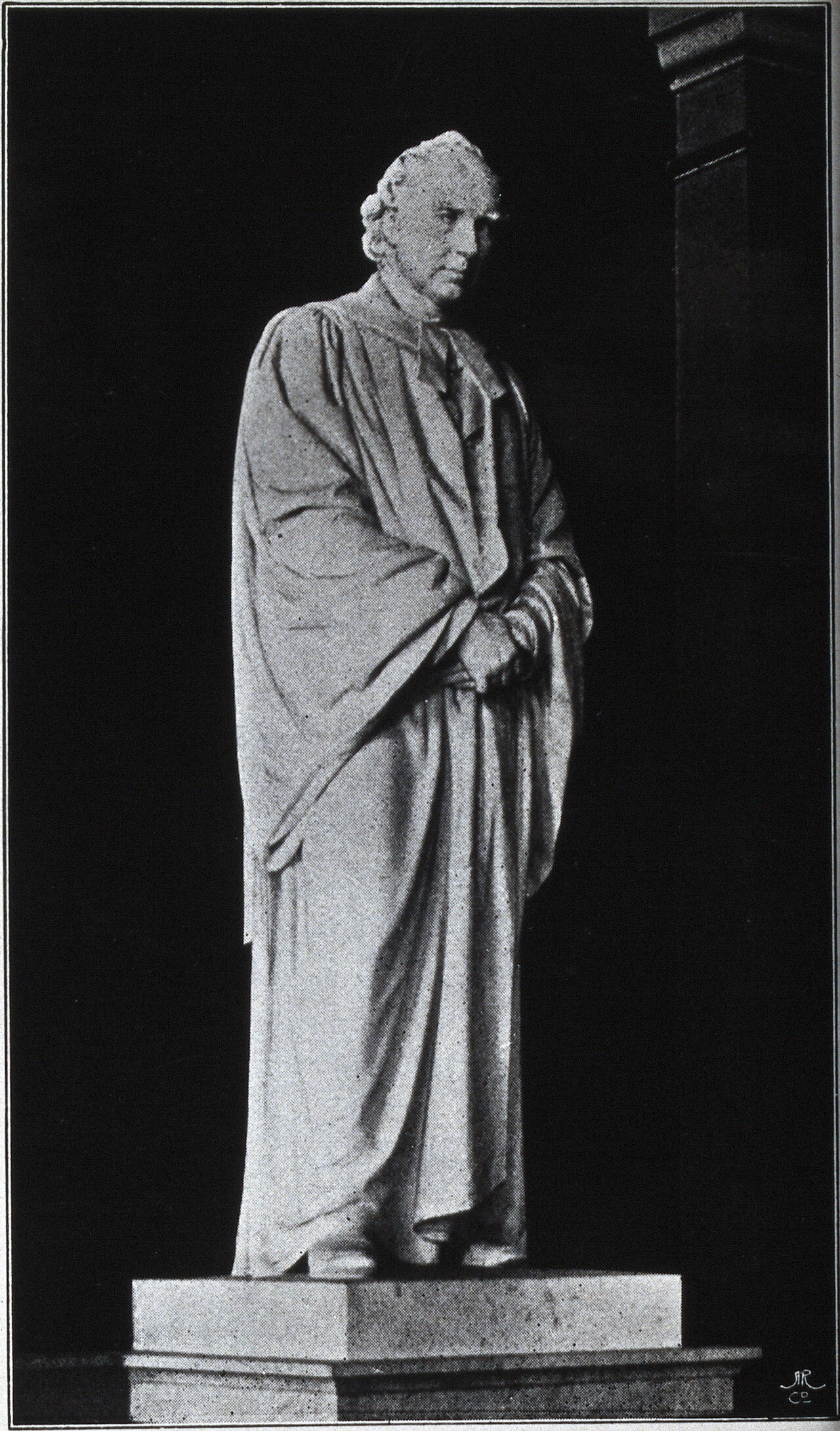
John Henry Foley · Wellcome Collection, London · Wellcome Collection · Public Domain Mark
- Name
- John Henry Foley
- Born
- 24 May 1818
- Birthplace
- Dublin, Ireland
- Died
- 27 August 1874
- Place of death
- Hampstead, London
- Education
- * Royal Dublin Society art schools, (1831-34)
- Known for
- Sculpture
- Nationality
- Ireland
- Occupation
- sculptor
- Languages
- English
VALÉORINE Encyclopedia
VALÉORINE documentary reading
Documentary summary
John Henry Foley (24 May 1818 – 27 August 1874), often referred to as J. Foley, was an Irish sculptor, working in London. He is best known for his statues of Daniel O'Connell for the O'Connell Monument in Dublin, and of Prince Albert for the Albert Memorial in London and for a number of works in India. While much contemporary Victorian sculpture was considered lacking in quality and vision, Foley's work was often regarded as exceptional for its technical excellence and life-like qualities.
Admitted source layer · organised and presented by VALÉORINE
Reference Check
Propose documentary evidence for John Henry Foley. A contribution is never written directly as fact: identity, source, rights and evidence gates still decide.
Sign in to contribute
World of VALÉORINE
Documentary connections
Only confirmed graph relationships appear here. Images are shown only when their identity and reuse rights both pass the documentary gate.

Documentary evidence
Documentary basis
Authority files
wikidata · Q1925736 · wikipedia · John Henry Foley
In this article
Biography
Biography
He was considered the finest equestrian sculptor of the Victorian era. His equestrian statue of Henry Hardinge, 1st Viscount Hardinge for Kolkata was considered, with its dynamic pose of horse and rider, to be the most important equestrian statue cast in Britain at the time. His 1874 equestrian statue of Sir James Outram, 1st Baronet for Kolkata was also widely praised and, like the Hardinge statue, was also considered an important symbol of British imperial rule in India. Foley's pupil Thomas Brock completed several of Foley's commissions after his death, including the statue of Prince Albert for the Albert Memorial.
The recorded working language is English. Places of work recorded in the authority are London. Work by John Henry Foley is recorded in the collections of Tate, Victoria Memorial, Yale Center for British Art, Sunderland Museum and Winter Gardens and Norfolk Museums Collections.
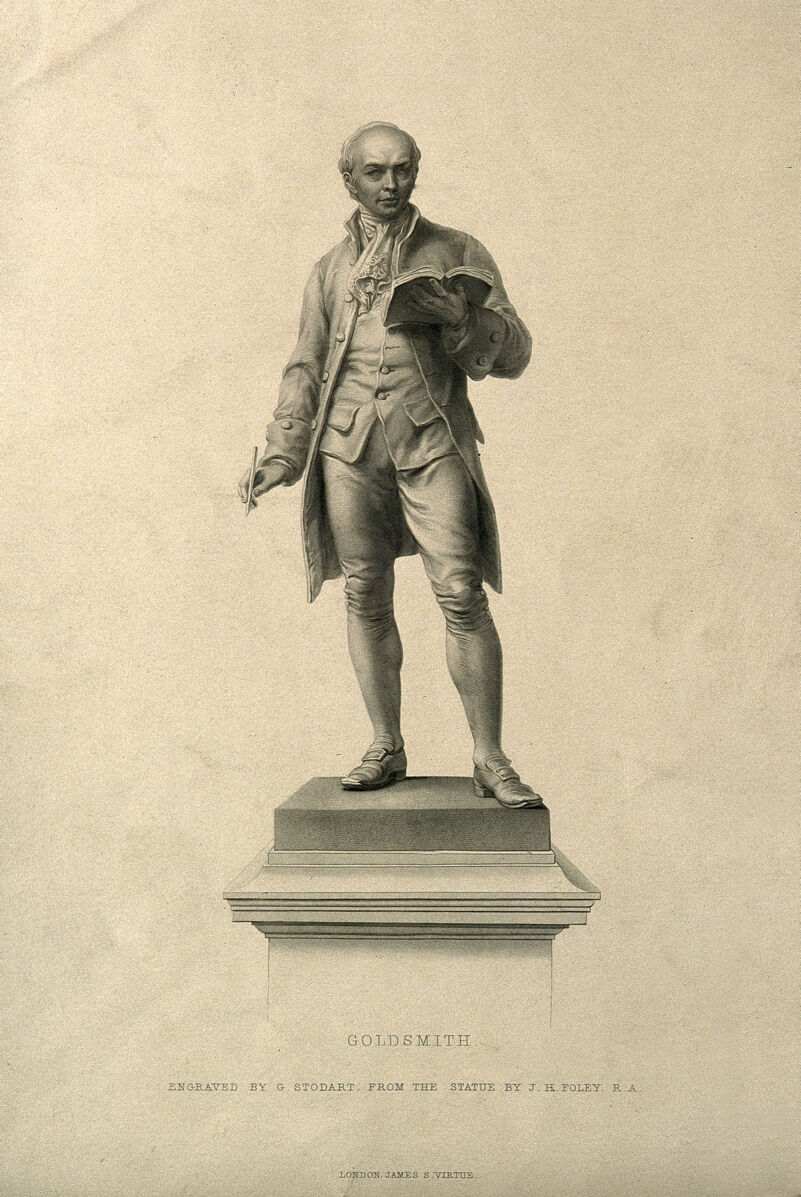
Oliver Goldsmith. Stipple engraving by G. Stodart after J. H. Foley., by John Henry Foley
John Henry Foley · Wellcome Collection, London · Wellcome Collection
Key facts
Key facts
• Name — John Henry Foley • Born — 24 May 1818 • Birthplace — Dublin, Ireland • Died — 27 August 1874 • Place of death — Hampstead, London • Resting Place — St. Paul's Cathedral, London • Education — * Royal Dublin Society art schools, (1831-34) • Royal Academy Schools, (1835-38) • Known for — Sculpture
Early life
Early life
Foley was born 24 May 1818, at 6 Montgomery Street, Dublin, in what was then the city's artists' quarter. The street has since been renamed Foley Street in his honour. His father was a grocer and his step-grandfather Benjamin Schrowder was a sculptor. At the age of thirteen, he followed his brother Edward to begin studying drawing and modelling at the Royal Dublin Society school, where he took several first-class prizes. In 1835 he was admitted to the Royal Academy Schools in London, where he won a silver medal for sculpture. Both brothers served as studio assistants to the sculptor William Behnes. Foley exhibited at the Royal Academy for the first time in 1839. Foley's first significant commission came in 1840 with a sculpture group, Ino and Bacchus for Lord Ellesmere. Youth at a Stream exhibited in 1844 brought greater recognition and the same year he received two commissions from the Palace of Westminster for statues of John Hampden and John Selden. Thereafter commissions provided a steady career for the rest of his life.
Early career and recognition
Early career and recognition
• Illustration — Foley by C. F. Foley, 1840s In 1849 Foley was made an associate, and in 1858 a full member of the Royal Academy of Art. He exhibited at the Royal Academy until 1861 and further works were shown posthumously in 1875. His address is given in the catalogues as 57 George St., Euston Square, London until 1845, and 19 Osnaburgh Street from 1847. Foley became a member of the Royal Hibernian Academy in 1861 and an associate of the Belgium Academy of Arts in 1863. A number of works by Foley featured in the Great Exhibition of 1851, including the marble Ino and Bacchus and a bronze casting of a Youth at a Stream. After the Great Exhibition closed, the Corporation of London voted a sum of £10,000 to be spent on sculpture to decorate the Egyptian Hall in the Mansion House and commissioned Foley to make sculptures of Caractacus and Egeria. In 1854, Foley submitted a design for the proposed monument to the Duke of Wellington to be sited in St Paul's Cathedral which was rejected. Foley's sculpture bronze The Norseman was exhibited at the Royal Academy in 1863 to considerable acclaim and represented a departure from the more traditional sculpture style of his contemporaries. The art critic Edmund Gosse viewed Foley as having smoothed the ground for the development of the New Sculpture movement in British art.
Equestrian works
Equestrian works
Foley received three commissions for large equestrian sculptures of individuals who played prominent roles during the period of British rule in India. • Illustration — Statue of Lord Hardinge, Governor General of India The Art Journal hailed Foley's equestrian statue of Henry Hardinge, 1st Viscount Hardinge as a "masterpiece of art" and "a triumph of British art". William Michael Rossetti declared it to be "markedly at the head of British equestrian statues of any period". Completed in 1857, the statue was the first large equestrian statue not to be conventionally cast but to be created by electroforming, building up layers of metal for each piece of the statue which were then joined together by electroplating. The statue, which showed Hardinge's horse trampling a broken Sikh artillery piece, was exhibited outside the Royal Academy in London before it was shipped to Kolkata where it was erected at Shaheed Minar near Government House in 1859. The statue was regarded as the most important equestrian statue to be created in Britain during the Victorian era and a bronzed plaster version was displayed at the London International Exhibition of 1862. When in 1962, the Kolkata local authorities began removing British imperial monuments, the statue was returned to Britain. Purchased for £35 by Baroness Helen Hardinge, the statue was erected at her home in Kent before, in 1985, it was relocated to the private garden of another Hardinge descendent near Cambridge. Foley's equestrian statue of Sir James Outram, 1st Baronet was regarded as "one of the most magnificent British sculptures in India." Commissioned in 1861, the statue was cast in London from eleven tons of gunmetal seized by the British during the Indian Rebellion of 1857. Foley depicted Outram in a dynamic pose, turning in his saddle to look backwards while pulling up his horse and he considered it his best equestrian work. The statue was unveiled in May 1874 on the Maidan in central Kolkata on a plinth of Cornish granite. For the Calcutta International Exhibition of 1883-84, the entrance to the exhibition was built around the statue. In the 1960s the statue was moved to the grounds of the Victoria Memorial. By the time he died, Foley had completed an 18-inch tall model of Charles Canning, 1st Earl Canning on horseback. Both horse and rider were depicted in rigid, motionless poses. All the subsequent work on the commission including the full-size modelling, overseeing of the casting and shipping to India and the design of the plinth were completed by Thomas Brock. The statue was originally unveiled at a central location in Barrackpore but was moved in 1969 to a more remote location, a former British military compound where it was placed on a brick base and sited overlooking the grave of Lady Canning.
Other works
Other works
• Memorial to Sir Henry Lawrence, 1858, in St. Paul's Cathedral, Kolkata consisting of a marble relief portrait in a gothic frame. • Memorial to William Ritchie, 1865, in St. Paul's Cathedral, Kolkata consisting of a marble bust portrait supported by two figures representing Justice and Truth. • Bust of Major-General William Nairn Forbes, 1858, marble version in the former Silver Mint building on Strand Road, Kolkata and painted plaster model held by the Asiatic Society, Kolkata. • Egeria (1856) and Caractacus (1857), for the Mansion House, London. Bury Art Museum also has a version of Egeria. • The Elder Brother from Comus (1860), Foley's Royal Academy diploma work. • The Muse of Painting (1866), a monument to James Ward, R.A. at Kensal Green Cemetery. • Sir Joshua Reynolds, 2m tall marble statue, Tate Gallery collection. • Marble relief portrait of William Hookham Carpenter, 51.3 cm square, in the British Museum. • Ulick de Burgh, Lord Dunkellin (1873), Eyre Square, Galway • Statue in memory of George Howard, the 7th Earl of Carlisle. Moat Hill, Brampton Cumbria 1869 (another version in Dublin was blown up by IRA 1956) • Memorial to the lawyer James Stuart (1854) for Colombo, Sri Lanka • The National Portrait Gallery, London holds two portrait busts, both in marble, of the poet Bryan Procter and of the actress Helena Faucit by Foley
Identity
Identity
John Henry Foley is recorded with the occupation sculptor. Recorded as a citizen of Ireland. Established in Library of Congress under n00030920. Established in RKDartists under 424220. Established in FAST under 447761. Recognition and collections.
Life and career
Dated record
Life and career
Explore 1818–1874
The full dated record · 4 entries
1818
John Henry Foley was born on 24 May 1818.
1867
Statue of Colin Campbell, 1st Baron Clyde is dated 1867.
1874
Dies at London.
1874
John Henry Foley died on 27 August 1874.
Places
Named by the record
Places
Only places the record itself states, plotted where the house gazetteer settles their coordinates. Nothing is inferred from a name or a nationality.
Dublin.
Birth place
London.
Death place
Catalogued output
Works and catalogued output
John Henry Foley.
Albert Memorial
Albert Memorial
In 1864, Foley was chosen to sculpt one of the four large stone groups, each representing a continent, at the corners of George Gilbert Scott's Albert Memorial in Kensington Gardens. His design for Asia was approved in December of that year. Foley's Asia, like the other three continental groups, featured a central large animal, in this case an elephant, attended by figures representing different cultures. In 1868, Foley was also asked to make the bronze statue of Prince Albert to be placed at the centre of the memorial, following the death of Carlo Marochetti, who had originally received the commission, but had struggled to produce an acceptable version. By 1870, Foley's full-sized model of Albert was complete and had been accepted. However a series of illnesses slowed Foley's progress and by 1873 only the head of the statue had been cast in bronze while hundreds of other parts were still individual plaster figures. Foley died of pleurisy in 1874, blamed by some on the extended periods he had spent working surrounded by the wet clay of the Asia model. When Foley died, his student Thomas Brock took over his studio and his first job was to complete the figure of Albert which he did within eighteen months. By then, the Albert Memorial had already been unveiled without the statue of Albert. After the statue of Albert was installed on the monument, it was, briefly, inspected by Queen Victoria in March 1876 before being boarded up for gilding. That original gilding was removed in 1915 but restored in the 2000s. Foley died at his home "The Priory" in Hampstead, north London on 27 August 1874, and was buried in the crypt of St. Paul's Cathedral on 4 September. He left his models to the Royal Dublin Society, where he had his early artistic education, and a large part of his property to the Artists' Benevolent Fund. SC Hall, the editor of The Art Journal, described Foley as being "pensive almost to melancholy.. He was not robust, either in body or in mind; all his sentiments and sensations were graceful: so in truth were his manners. His leisure was consumed by thought." A statue of Foley, on the front of the Victoria and Albert Museum, depicts him as a rather gaunt figure with a moustache, wearing a floppy cap.
Legacy
Legacy
As well as the statue of Prince Albert for the Albert Memorial, Thomas Brock completed several more of Foley's commissions. A statue of Queen Victoria for the Birmingham Council House was commissioned in 1871 from Foley and completed in 1883 by Thomas Woolner. Foley's articled pupil and later studio assistant Francis John Williamson also became a successful sculptor in his own right, reputed to have been Queen Victoria's favourite. Other pupils and assistants were Charles Bell Birch, Mary Grant and Albert Bruce Joy. Following the creation of the Irish Free State in 1922, a number of Foley's works were removed, or destroyed, as the individuals portrayed were considered hostile to Irish independence. They included those of Lord Carlisle, Lord Dunkellin (in Galway) and Field Marshal Gough in Phoenix Park. The statue of Lord Dunkellin was decapitated and dumped in the river as one of the first acts of the short-lived "Galway Soviet" of 1922.
Primary material
Documents and archives
reference work
- “John Henry Foley”, English Wikipedia, consulted as further reading
Reputable secondary · Wikipedia
institutional register
- Wikidata, structured authority record Q1925736: John Henry Foley
General reference · Wikimedia Foundation
Notes from the source article
Cited by Wikipedia
Notes from the source article
These works are cited by the source article, in its own numbering. They are recorded as its citations, not as sources VALÉORINE has verified.
- 1.10. 599.
- 2.Foley, John Henry. 23 September 2004. 10.1093/ref:odnb/9786.
- 3.Martina Droth, Jason Edwards & Michael Hatt. Sculpture Victorious: Art in the Age of Invention, 1837-1901. Yale Center for British Art, Yale University Press. 2014. 9780300208030.
- 4.A.P. Behan. Bye Bye Century!. Dublin Historical Record. Old Dublin Society. 54. 1. 82–100. Spring 2001. 30101842.
- 5.John T. Turpin. The Career and Achievement of John Henry Foley, Sculptor (1818-1874). Dublin Historical Record. 32. 2. 42–53. March 1979. 30104301.
- 6.University of Glasgow History of Art / HATII. John Henry Foley RA, RHA. Mapping the Practice and Profession of Sculpture in Britain & Ireland 1851–1951. 2011.
- 7.James Mackay. The Dictionary of Western Sculptors in Bronze. Antique Collectors' Club. 1977. 0902028553.
- 8.Algernon Graves. The Royal Academy: A Complete Dictionary of Contributors from its Foundations in 1769 to 1904. Henry Graves. 3. 130–2. 1905.
- 9.Ino and Bacchus. Yale Center for British Art.
- 10.Printed for the use of the members of the Corporation of London. Catalogue of the Sculpture, Paintings, Engravings, and Other Works of Art belonging to the Corporation, together with the Books not included in the Catalogue of the Guildhall Library. Part the First. 43–7. 1867.
- 11.Jeremy Cooper. Nineteenth-century Romantic Bronzes, French, English and American Bronzes 1830–1915. David & Charles. 1975. 0715363468.
- 12.University of Glasgow History of Art / HATII. Equestrian statue of Lord Hardinge. Mapping the Practice and Profession of Sculpture in Britain & Ireland 1851–1951. 2011.
- 13.HW Janson. Nineteenth-century Sculpture. Thames & Hudson. 1985.
- 14.Sheppard. Albert Memorial: The memorial. Survey of London: volume 38: South Kensington Museums Area. Institute of Historical Research. 1975.
- 15.John Blackwood. London's Immortals. The Complete Outdoor Commemorative Statues. Savoy Press. 1989. 0951429604.
- 16.Sinclair, W. Memorials of St Paul's Cathedral. Chapman & Hall, Ltd. 469. 1909.
- 17.Francis John Williamson (1833-1920). The Victorian Web.
- 18.Notes on destruction and removal, accessed 20 January 2009
- 19.Citation, accessed 6 July 2009
- 20.Waymark UK Image Gallery
- 21.Sworder, John. St Peter's Church. Fordcombe Village.
- 22.1331332. Equestrian statue of Viscount Hardinge in the grounds of Albion Villa (Number 6 Church End).
- 23.Potterton, Homan. Irish Church Monuments, 1570-1880. 1975.
- 24.Malcolm Hay & Jacqueline Riding. Art in Parliament - The Permanent Collection of the House of Commons. Jarrod Publishing & The Palace of Westminster. 1996. 0-7117-0898-3.
- 25.George, Charles and Stratford Canning. Westminster Abbey.
- 26.1217741. Prince Consort National Memorial.
- 27.Jo Darke. The Monument Guide to England and Wales. Macdonald Illustrated. 1991. 0-356-17609-6.
- 28.Dublin University Press, 1867. Memorial statue of Sir Henry Marsh in the King and Queen's College of Physicians in Ireland. The Internet Archive.
- 29.John Sheepshanks (bust). Victoria and Albert Museum.
- 30.Potterton, Homan. The O'Connell Monument. 1973.
- 31.George T. Noszlopy. Public Sculpture of Birmingham including Sutton Coldfield. Liverpool University Press / Public Monuments & Sculpture Association. 1998. 0-85323-692-5.
- 32.LB32694. George Square, Field Marshall Lord Clyde Statue.
- 33.1239318. Statue of Sydney Herbert.
- 34.Philip Ward-Jackson. Public Sculpture of Britain Volume 1: Public Sculpture of Historic Westminster. Liverpool University Press / Public Monuments & Sculpture Association. 2011. 978-1-84631-662-3.
- 35.1314073. The Fielden Statue.
- 36.Christine Casey. Dublin: the city within the Grand and Royal Canals and the Circular Road with the Phoenix Park. Yale University Press. 483. 2005. 9780300109238.
- 37.Turpin, John T. Catalogue of the Sculpture of J.H. Foley. Dublin Historical Record. 32. 108–18. 1979.
- 38.Mary Ann Steggles & Richard Barnes. British Sculpture in India: New Views & Old Memories. Frontier Publishing. 2011. 9781872914411.
- 39.Victoria Memorial Hall. Information on Sculptures.
- 40.Monument to Thomas 'Stonewall' Jackson in Capitol Square. Encyclopedia Virginia.
- 41.Frank AJL James. 'The Common Purposes of Life': Science and Society at the Royal Institution of Great Britain. Taylor & Francis. 73. 2017. 978-1351963176.
- 42.1073451. Statue of William Rathbone.
- 43.Statue of Lord Gough. The Times. 8. 15 October 1878.
- 44.Emily Fisher. Foley: Sir Joshua Reynolds PRA. Tate. April 2005.
- 45.Aileen Dawson. Portrait Sculpture A Catalogue of the British Museum collection c. 1675-1975. British Museum Press. 1999. 0714105988.
- 46.Relief, William Hookham Carpenter. British Museum.
- 47.John Henry Foley. National Portrait Gallery.
References
Citations
References
Each reference names the institution holding it, so a reader may go to the document itself.
reference work
Secondary witnessinstitutional register
Wikidata, structured authority record Q1925736: John Henry FoleyWikimedia Foundation
General reference
The Encyclopedia exists whether or not anything is for sale. Corrections are recorded rather than overwritten, and every version of this record is kept. Published 16 August 2026.
Elsewhere in Sculpture
6,174 published records in this field, each with its sources named.
- John GregoryArtist
- John GurcheArtist
- John HenningArtist
- John Henri Isaac BrowereArtist
- John HoganArtist
- John Karl DanielsArtist
- John Lockwood KiplingArtist
- John McCrackenArtist
Best supported in this field
For owners
Own a work by John Henry Foley?
A specialist will read what you send and tell you what the house can establish, what it cannot, and whether the object is suited to sale. There is no charge and no obligation. The object stays with you throughout; nothing is shipped to us unless it is arranged in writing beforehand.