
John George Brown
John George Brown (November 11, 1831 – February 8, 1913) was a British citizen and an American painter who specialized in genre scenes.
Also recorded as J. G. Brown · Brown · g. brown · j.g. brown
John George Brown
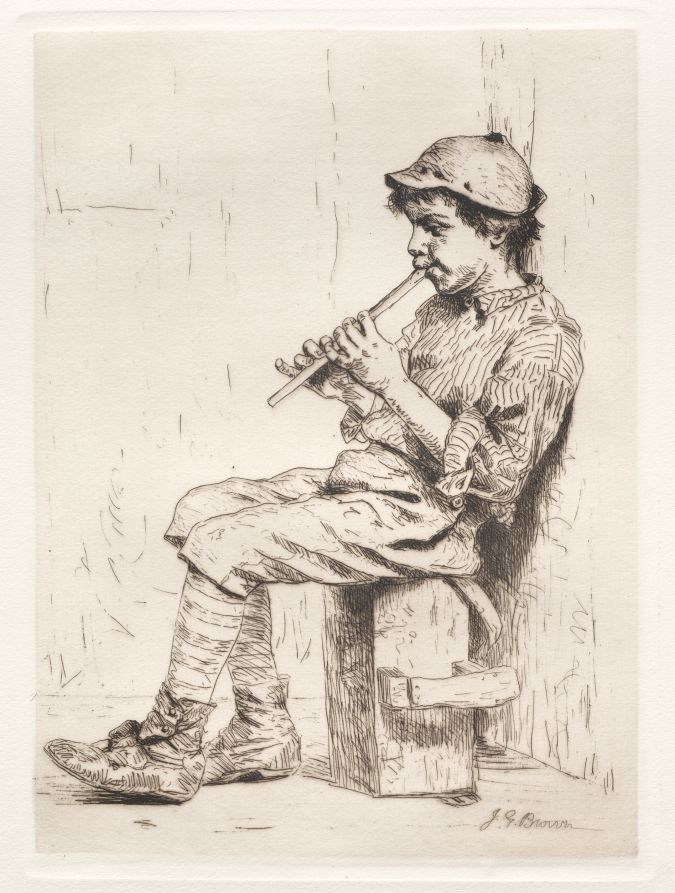
John George Brown · The Cleveland Museum of Art · Hinman B. Hurlbut Collection · CC0
- Name
- John George Brown
- Born
- November 11, 1831
- Birthplace
- Durham, England, U.K.
- Place of death
- New York City, New York, U.S.
- Died
- John George Brown died on 8 February 1913. · New York City.
- Nationality
- United States
- Occupation
- painter
- Known for
- This Corner Don’t Pay · Three For Five
VALÉORINE Encyclopedia
VALÉORINE documentary reading
Documentary summary
John George Brown (November 11, 1831 – February 8, 1913) was a British citizen and an American painter who specialized in genre scenes.
Admitted source layer · organised and presented by VALÉORINE
Note VALÉORINE
John George Brown was an American painter. Born in Durham, the painter died in New York City. John George Brown worked in Brooklyn.
Works include This Corner Don’t Pay and Three For Five. Works by the painter are held at Art Institute of Chicago, Cleveland Museum of Art and Metropolitan Museum of Art, among others.
Composed from admitted, traceable facts · 29 September 2026
VALÉORINE
Reference Check
Propose documentary evidence for John George Brown. A contribution is never written directly as fact: identity, source, rights and evidence gates still decide.
Sign in to contribute
World of VALÉORINE
Documentary connections
Only confirmed graph relationships appear here. Images are shown only when their identity and reuse rights both pass the documentary gate.
Documentary evidence
Documentary basis
Authority files
wikidata · Q2919973 · wikipedia · John George Brown
In this article
Biography
Biography
Places of work recorded in the authority are Brooklyn. Works named in the authority record are This Corner Don’t Pay and Three For Five. Work by John George Brown is recorded in the collections of Minneapolis Institute of Art, Art Institute of Chicago, Thyssen-Bornemisza Museum, Metropolitan Museum of Art and Yale University Art Gallery.
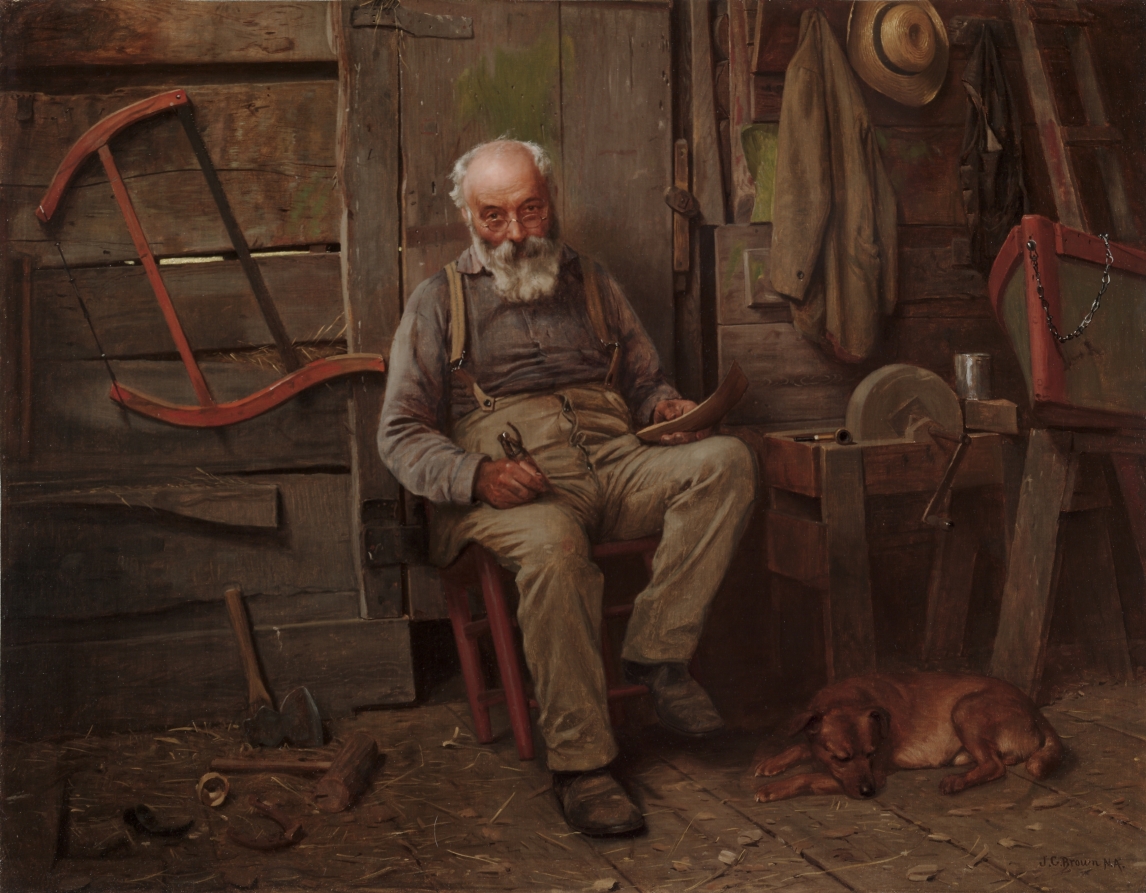
Business Neglected, by John George Brown
John George Brown · The Cleveland Museum of Art · Gift of George A. Goddard
Key facts
Key facts
• Name — John George Brown • Born — November 11, 1831 • Birthplace — Durham, England, U.K. • Place of death — New York City, New York, U.S. • Style — Genre art
Biography
Biography
John George Brown was born in Durham, England on November 11, 1831. His parents apprenticed him to the career of glass worker at the age of fourteen in an attempt to dissuade him from pursuing painting. He studied nights at the School of Design in Newcastle-on-Tyne while working as a glass cutter there between 1849 and 1852 and evenings at the Trustees Academy in Edinburgh while working at the Holyrood Glass Works between 1852 and 1853. After moving to New York City in 1853, he studied with Thomas Seir Cummings at the National Academy of Design where he was elected a National Academician in 1861. Brown was the Academy's vice-president from 1899 to 1904. Around 1855, he worked for the owner of the Brooklyn Glass Company as a glassblower, and later married the daughter of his employer. His father-in-law encouraged his artistic abilities, supporting him financially, letting Brown pursue painting full-time. He established a studio in 1860 and, in 1866, he became one of the charter members of the Water-Color Society, of which he was president from 1887 to 1904. Brown became famous for his idealized depictions of street urchins in New York (bootblacks, street musicians, posy sellers, newsboys, etc.). His Passing Show (Paris, Salon, 1877) and Street Boys at Play (Paris Exhibition, 1900) are good examples of his popular talent. Brown's art is best characterized as British genre paintings adapted to American subjects. Essentially literary, Brown's paintings are executed with precise detail, but poor in color, and more popular with the general public than with connoisseurs. His paintings were quite popular with wealthy collectors. Many of Brown's paintings were reproduced as lithographs and widely distributed with packaged teas. He also painted some landscapes, just for pleasure. He died at his home in New York City on February 8, 1913.
Quotes
Quotes
• Wishing to more faithfully capture his subjects as they appeared in real life, Brown once said, "They will change their dress, as though to show the extent of their wardrobe. Being cautioned expressly on Saturday, and told to return in the same fustian jacket your boy will appear on Monday morning, if he appears at all, in a red woolen shirt. And they are constantly having their hair trimmed--perfect dandies!" • Brown was trying to capture the spirit of the street children as people who "pull themselves up by their bootstraps." • Many years later, Brown claimed that most of the street children he painted had grown to become successful businessmen. • Brown claimed to bobbies, "I do not paint poor boys solely because the public likes such pictures and pays me for them, but because I love the boys myself, for I, too, was once a poor lad like them."
Gallery
Gallery
• Illustration — Only A Nickel, Joe, 1906. Private collection. • Illustration — The Cider Mill, 1880, Terra Foundation for American Art, Daniel J. Terra Collection • Illustration — Three for Five, 1890, Birmingham Museum of Art, Birmingham, Alabama • Illustration — Camp in Vermont, 1879 • Illustration — Meditation, 1881 • Illustration — Street Gallantry, 1880
Places
Named by the record
Places
Only places the record itself states, plotted where the house gazetteer settles their coordinates. Nothing is inferred from a name or a nationality.
John George Brown was born at Durham.
Birthplace
John George Brown died at New York City.
Deathplace
Durham.
Birth place
New York City.
Death place
Primary material
Documents and archives
reference work
- “John George Brown”, English Wikipedia, consulted as further reading
Reputable secondary · Wikipedia
authority record
- Wikidata, structured authority record Q2919973: John George Brown
General reference · Wikidata
Notes from the source article
Cited by Wikipedia
Notes from the source article
These works are cited by the source article, in its own numbering. They are recorded as its citations, not as sources VALÉORINE has verified.
- 1.Birmingham Museum of Art. Masterpieces East and West: from the Collection of the Birmingham Museum of Art. 202. 1993. 0-931394-37-6.
- 2.Maddox, Kenneth W., "Biography and Works: John George Brown," http://www.museothyssen.org/en/thyssen/ficha_artista/101
- 3.National Academy Museum and School. National Academy Museum and School of Fine Arts. National Academy. 2010.
- 4.Brown, John George. 661.
- 5.Birmingham Museum of Art. Birmingham Museum of Art: A Guide to the Collection. Giles. 129. 2010. 978-1-904832-77-5.
- 6.Famous Painter is Dead in New York. San Francisco Chronicle. 33. 1913-02-09.
References
Citations
References
Each reference names the institution holding it, so a reader may go to the document itself.
reference work
Secondary witnessauthority record
General reference
The Encyclopedia exists whether or not anything is for sale. Corrections are recorded rather than overwritten, and every version of this record is kept. Published 17 August 2026.
Elsewhere in Paintings
18,717 published records in this field, each with its sources named.
- John Francis MurphyArtist
- John Francis RigaudArtist
- John Frederick KensettArtist
- John GastArtist
- John GibbArtist
- John GibsonArtist
- John Giles EccardtArtist
- John GleichArtist
Best supported in this field
For owners
Own a work by John George Brown?
A specialist will read what you send and tell you what the house can establish, what it cannot, and whether the object is suited to sale. There is no charge and no obligation. The object stays with you throughout; nothing is shipped to us unless it is arranged in writing beforehand.