
Johannes Veit
Illustration — Johannes Veit; by Philipp Veit (1820) • Illustration — Portrait of the Pulini Family Johannes Veit, originally Jonas Veit (2 March 1790, Berlin – 18 January 1854, Rome) was a German history painter. After 1811, he lived and worked in Rome, where he was a member of the Nazarene movement.
Also recorded as Jonas Veit
Johannes Veit

Philipp Veit · Georg Jacob Wolf mit der Glaspalast-Künstlerhilfe München (Hrsg.): Verlorene Meisterwerke Deutscher Romantiker, Verlag F. Bruckmann AG, München 1931 · Public domain
- Born
- Johannes Veit was born on 2 March 1790. · Berlin.
- Died
- Johannes Veit died on 18 January 1854. · Rome.
- Nationality
- Kingdom of Prussia
- Occupation
- painter
- Languages
- German
Reference Check
Propose documentary evidence for Johannes Veit. A contribution is never written directly as fact: identity, source, rights and evidence gates still decide.
Sign in to contribute
World of VALÉORINE
Documentary connections
Only confirmed graph relationships appear here. Images are shown only when their identity and reuse rights both pass the documentary gate.
Documentary evidence
Documentary basis
Authority files
wikidata · Q1698534 · wikipedia · Johannes Veit
VALÉORINE Encyclopedia
The documentary record
Statements marked “Documentary record” are set in the article beside the passage they confirm. Each is read from the authority records of the institutions named here; select “Prove” to see the record it was read from, where in that record, and when.
Institutions cited
Deutsche Nationalbibliothek · Getty Union List of Artist Names
Complete reading chain (JSON)In this article
Life and work
Life and work
He was born to the banker, Simon Veit, and his wife Brendel; daughter of the philosopher, Moses Mendelssohn. After his parents divorced, in 1799, he stayed in Berlin with his father. In 1805, he went to Hamburg and began an apprenticeship at Mendelssohn & Co., a private banking firm owned by his uncles, Joseph and Abraham Mendelssohn. Three years later, inspired by his brother Philipp, he decided to take up art instead, and enrolled at the Dresden Academy of Fine Arts, where he studied with Friedrich Matthäi. In 1810, he and Philipp converted to Catholicism, as their mother had, two years before. It was then, at his baptism, that he took the name "Johannes". The following year, after a brief period working in Vienna, he moved to Rome, although he had originally planned to go to Paris. The occasion for his change of mind was his interest in the works of Gottlieb Schick, who was then living in Rome, and in poor health. Following Schick's return to Stuttgart, he befriended Friedrich Overbeck, and became involved in the Nazarene movement. He was a slow, painstaking worker, who made very heavy demands on himself. As a result, his output was rather small. One of his most familiar works is an early "Adoration of the Shepherds", at St. Hedwig's Cathedral in Berlin.
Documentary record
Johannes Veit (2 March 1790 – 18 January 1854) is described as a watercolourist, draughtsman and painter in the authority records of the Deutsche Nationalbibliothek and the Getty Union List of Artist Names. Johannes Veit was born in Berlin (2 March 1790) and died in Rome (18 January 1854).
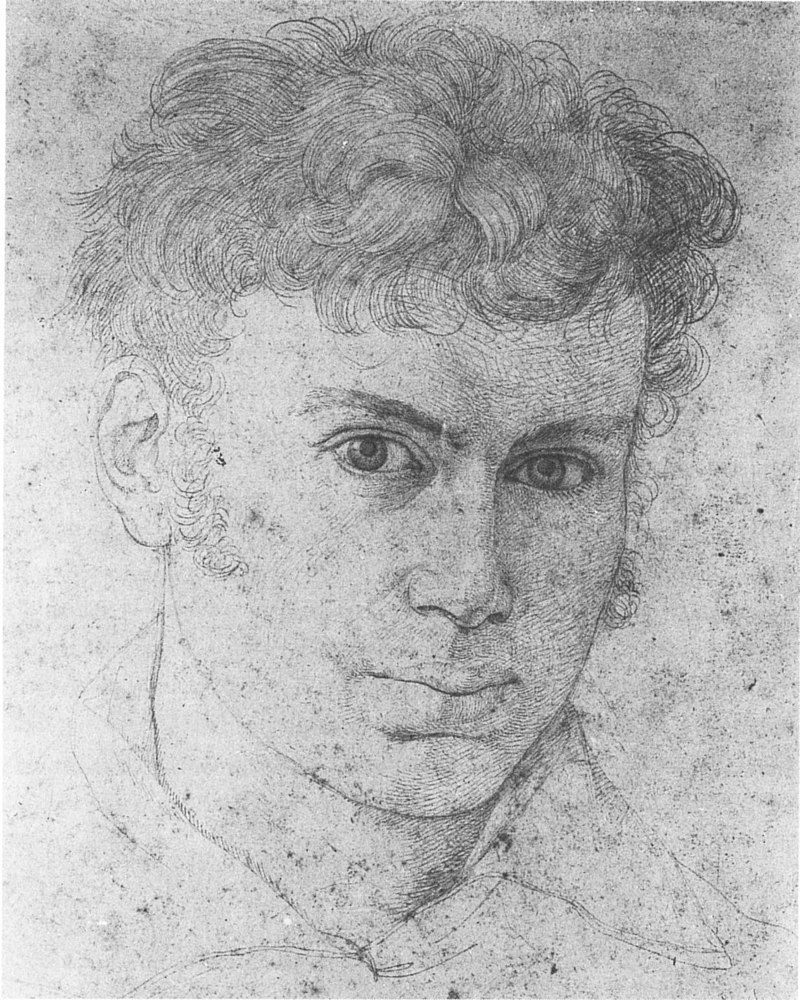
Philipp Veit - Johannes Veit
Philipp Veit · Klaus Günzel: Die deutschen Romantiker. Artemis, Zürich 1995, ISBN 3-7608-1119-1

Identificatie Titel(s): Portret van Johannes Veit
Rijksmuseum
Life and career
Dated record
Life and career
The full dated record · 2 entries
1790
Johannes Veit born at Berlin.
1854
Johannes Veit died at Rome.
Places
Named by the record
Places
Only places the record itself states, plotted where the house gazetteer settles their coordinates. Nothing is inferred from a name or a nationality.
Johannes Veit died at Rome.
Deathplace
Berlin.
Birth place
Rome.
Death place
Primary material
Documents and archives
reference work
- “Johannes Veit”, English Wikipedia, consulted as further reading
Reputable secondary · Wikipedia
authority record
- Wikidata, structured authority record Q1698534: Johannes Veit
General reference · Wikidata
Text attribution
Licensing
Text attribution
Part of the biographical narrative on this page reuses licensed material. Its origin, revision and licence are recorded here.
The biographical narrative on this page is based on the Wikipedia article Johannes Veit, revision 1363333566 (EN edition), by its contributors. VALÉORINE has edited that text and built its own documentary record around it. The reused material is available under CC BY-SA 4.0, and this page's reuse of it is offered under the same licence. Everything else on this page — the chronology, the holdings, the evidence, the plates and the connections — is VALÉORINE's own record. Sources and licences.
Notes from the source article
Cited by Wikipedia
Notes from the source article
These works are cited by the source article, in its own numbering. They are recorded as its citations, not as sources VALÉORINE has verified.
Bibliography printed in the source article · 1
- Salomon Wininger: Große Jüdische National-Biographie ("Lexicon of Jewish National Biographies"). Chernivtsi 1925–1936, Vol.VI, pg.178
References
Citations
References
Each reference names the institution holding it, so a reader may go to the document itself.
reference work
Secondary witnessauthority record
General reference
The Encyclopedia exists whether or not anything is for sale. Corrections are recorded rather than overwritten, and every version of this record is kept. Published 17 August 2026.
Elsewhere in Paintings
19,456 published records in this field, each with its sources named.
- Johannes van der BeeckArtist
- Johannes van der MeerArtist
- Johannes van DreghtArtist
- Johannes van WijckerslootArtist
- Johannes VermeerArtist
- Johannes VoorhoutArtist
- Johannes Warnardus BildersArtist
- Johannes WilhjelmArtist
Best supported in this field
For owners
Own a work by Johannes Veit?
A specialist will read what you send and tell you what the house can establish, what it cannot, and whether the object is suited to sale. There is no charge and no obligation. The object stays with you throughout; nothing is shipped to us unless it is arranged in writing beforehand.