
Johann Kaspar Lavater
Johann Kaspar (or Caspar) Lavater (Swiss Standard German: [ˈlaːvaːtər]; 15 November 1741 – 2 January 1801) was a Swiss poet, writer, philosopher, physiognomist and Reformed theologian.
Also recorded as Johann Caspar Lavater · J. C. Lavater · j. c. lavater · Johann Kaspar
Johann Kaspar Lavater
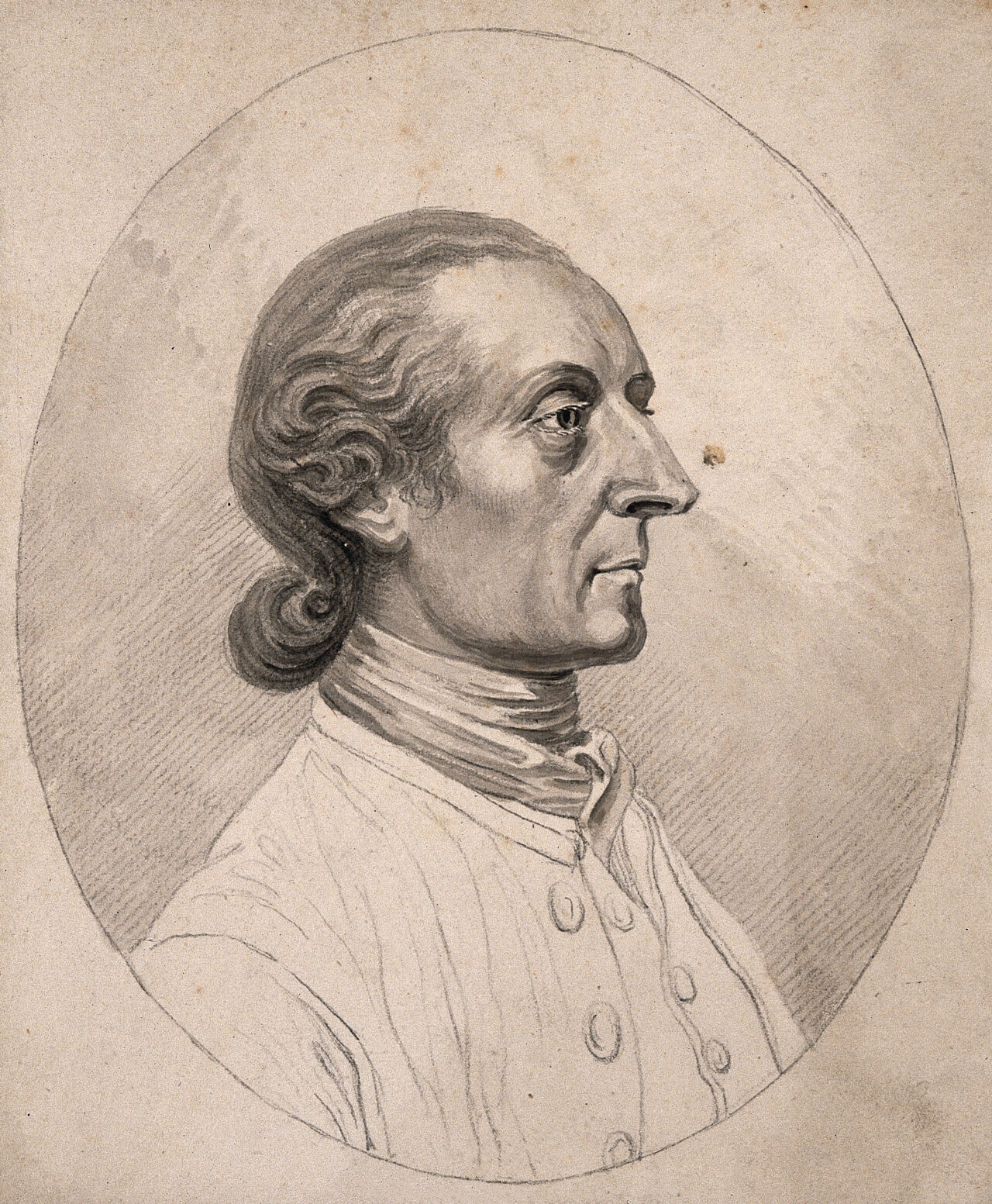
Johann Kaspar Lavater · Wellcome Collection, London · Wellcome Collection · Public Domain Mark
- Born
- Johann Kaspar Lavater was born on 15 November 1741.
- Died
- Johann Kaspar Lavater died on 2 January 1801.
- Nationality
- Switzerland.
- Occupation
- writer, philosopher, theologian, poet, criminologist, painter and illustrator.
VALÉORINE Encyclopedia
VALÉORINE documentary reading
Documentary summary
Johann Kaspar (or Caspar) Lavater (Swiss Standard German: [ˈlaːvaːtər]; 15 November 1741 – 2 January 1801) was a Swiss poet, writer, philosopher, physiognomist and Reformed theologian.
Admitted source layer · organised and presented by VALÉORINE
Note VALÉORINE
Johann Kaspar Lavater was a Swiss criminologist, illustrator and painter, among other activities. The criminologist worked in Basel, Berlin and Zurich.
Composed from admitted, traceable facts · 27 September 2026
VALÉORINE
Reference Check
Propose documentary evidence for Johann Kaspar Lavater. A contribution is never written directly as fact: identity, source, rights and evidence gates still decide.
Sign in to contribute
World of VALÉORINE
Documentary connections
Only confirmed graph relationships appear here. Images are shown only when their identity and reuse rights both pass the documentary gate.
Documentary evidence
Evidence Panel
not yet certified
- Identity
- resolved
- Independent source families
- 0
- Admitted assertions
- 0
- Open conflicts
- 0
Authority files
wikidata · Q123918 · wikipedia · Johann Kaspar Lavater
In this article
Corruption fighter
Corruption fighter
At barely twenty-one years of age, Lavater greatly distinguished himself by denouncing, in conjunction with his friend Henry Fuseli the painter, an iniquitous magistrate, who was compelled to make restitution of his ill-gotten gains.
Zwinglian
Zwinglian
In 1769 Lavater took Holy Orders in Zurich's Zwinglian Church, and officiated until his death as deacon or pastor in churches in his native city. His oratorical fervor and genuine depth of conviction gave him great personal influence; he was extensively consulted as a casuist, and was welcomed with enthusiasm on his journeys throughout Germany. His writings on mysticism were widely popular as well. In the same year (1769), Lavater tried to convert Moses Mendelssohn to Christianity, by sending him a translation of Charles Bonnet's Palingénésie philosophique, and demanding that he either publicly refute Bonnet's arguments or convert. Mendelssohn refused to do either, and many prominent intellectuals took Mendelssohn's side, including Lichtenberg and Herder.
Physiognomy
Physiognomy
Lavater is most well known for his work in the field of physiognomy, Physiognomische Fragmente zur Beförderung der Menschenkenntnis und Menschenliebe, published between 1775 and 1778. He introduced the idea that physiognomy related to the specific character traits of individuals, rather than general types. Lavater is attributed with catalysing a golden age for silhouettes through this work in physiognomy. According to him, the character of a person could be elucidated through examining their “lines of countenance”. The most accurate of readings were facilitated by the tracing of a profile outline portrait. This contour line could be filled with black or cut from the white paper and placed over a black backing. More often, the silhouette was simply cut from black paper. In the chapter “On Shades”, Lavater wrote, “What can less the image of a living man be than a shade? Yet how full of speech! Little gold, but the purest." The fame of this book, which found admirers in France and England as well as Germany, rested largely upon the handsome style of publication and the accompanying illustrations. The two principal sources from which Lavater developed his physiognomical studies were the writings of the Italian polymath Giambattista della Porta, and the observations made by Sir Thomas Browne in his Religio Medici (translated into German in 1748 and praised by Lavater). Lavater's studies have also been related to Franz Xaver Messerschmidt's work as a sculptor. His work being mentioned by Ernst Gombrich described as a physiognomical fallacy.
Poet
Poet
As a poet, Lavater published Christliche Lieder (1776–1780) and two epics, Jesus Messias (1780) and Joseph von Arimathia (1794), in the style of Klopstock. More relevant to the religious temperament of Lavater's times are his introspective Aussichten in die Ewigkeit (4 volumes 1768-1778), Geheimes Tagebuch von einem Beobachter seiner selbst (2 volumes, 1772–1773), and Pontius Pilatus, oder der Mensch in allen Gestalten (4 volumes, 1782–1785).
Blake
Blake
In 1788 William Blake annotated Lavater's Aphorisms on Man. Lavater published 632 aphorisms in all. Blake considered the following aphorism to be an excellent example of an aphorism. "40. Who, under pressing temptations to lie, adheres to truth, nor to the profane betrays aught of a sacred trust, is near the summit of wisdom and virtue."
Last days
Last days
During his later years, Lavater's influence waned, and he incurred considerable ridicule due to his vanity. His conduct during the French occupation of Switzerland brought about his death. On the taking of Zürich by the French in 1799, Lavater, while trying to appease the aggressors, was shot by an infuriated grenadier; he died over a year later in Zürich. The Swiss artist and illustrator, Warja Honegger-Lavater, was a direct descendant of Johann Kaspar Lavater.
Life and career
Dated record
Life and career
Explore 1741–1801
The full dated record · 3 entries
1741
Johann Kaspar Lavater was born on 15 November 1741.
1801
Johann Kaspar Lavater died on 2 January 1801.
1801
Lavater als Menschenfreund: ein Nachtrag zum Denkmal der Wahrheit auf Johann Kaspar Lavater / von Karl Ludwig v. Haller., dated 1801, held by Wellcome Collection.
Places
Named by the record
Places
Only places the record itself states, plotted where the house gazetteer settles their coordinates. Nothing is inferred from a name or a nationality.
Johann Kaspar Lavater was born at Zurich.
Birthplace
Johann Kaspar Lavater died at Zurich.
Deathplace
Notes from the source article
Cited by Wikipedia
Notes from the source article
These works are cited by the source article, in its own numbering. They are recorded as its citations, not as sources VALÉORINE has verified.
- 1."Lavater, Johann Caspar". Duden Online. Cornelsen Verlag GmbH, 2025.
- 2.EB1911 y Lavater, Johann Kaspar 16 291
- 3.Lavater, Johann Caspar. Physiognomische Fragmente zur Beforderung der Menschenkenntnis und Menschenliebe 4. 4. Weidmann. 2002. 978-3-615-00262-1.
- 4.BRILL. Controlling Time and Shaping the Self: Developments in Autobiographical Writing Since the Sixteenth Century. 250–. 22 June 2011. 978-90-04-19500-4.
- 5.Cite web https://www.stoppingtimeart.com/pages S
- 6.Aphorisms of Man
- 7.Annotations to Lavater's Aphorisms on Man
Bibliography printed in the source article · 1
- The Faces of physiognomy : interdisciplinary approaches to Johann Caspar Lavater. Edited by Ellis Shookman. Columbia, SC : Camden House, 1993. ( )
References
Citations
References
Each reference names the institution holding it, so a reader may go to the document itself.
reference work
Wikidata, structured authority record Q123918: Johann Kaspar LavaterWikimedia Foundation
Partially resolvedreference work
Partially resolved
The Encyclopedia exists whether or not anything is for sale. Corrections are recorded rather than overwritten, and every version of this record is kept. Published 14 August 2026.
Elsewhere in Illustration
5,224 published records in this field, each with its sources named.
- Johann Eusebius VoetIllustrator
- Johann Friedrich OverbeckIllustrator
- Johann Heinrich LipsIllustrator
- Johann Jacob DilleniusIllustrator
- Johann Michael Siegfried LöweIllustrator
- Johann Nepomuk SchönbergIllustrator
- Johann Robert SchürchIllustrator
- Johann Stephan CapieuxIllustrator
Best supported in this field
For owners
Own a work by Johann Kaspar Lavater?
A specialist will read what you send and tell you what the house can establish, what it cannot, and whether the object is suited to sale. There is no charge and no obligation. The object stays with you throughout; nothing is shipped to us unless it is arranged in writing beforehand.