
Jean Petitot
Jean Petitot (July 12, 1607 – April 3, 1691) was an enamel painter from the Republic of Geneva,[1] who spent most of his career working for the courts of France and England.
Also recorded as Jean (le vieux) Petitot · Jean Petitot I · Jean I Petitot · Jean, I Petitot
Jean Petitot
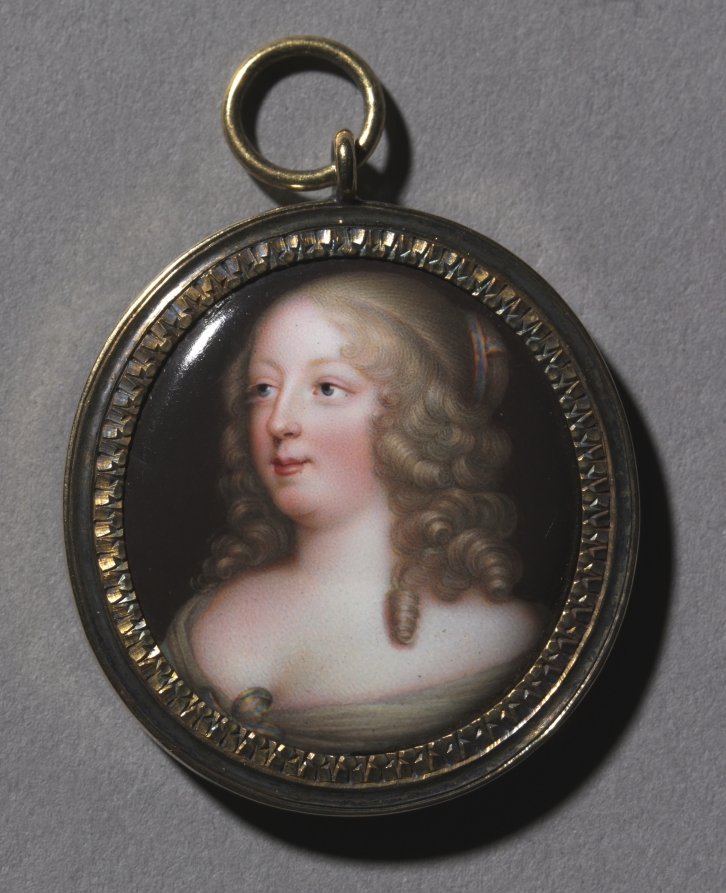
Jean Petitot · The Cleveland Museum of Art · The Edward B. Greene Collection · CC0
- Born
- 12 July 1607
- Birthplace
- Geneva, Republic of Geneva
- Died
- 3 April 1691
- Place of death
- Vevey, Switzerland
- Known for
- Enamel portrait miniatures
- Nationality
- Republic of Geneva · France
- Occupation
- painter
- Fields
- painting
- Languages
- French · German
VALÉORINE Encyclopedia
VALÉORINE documentary reading
Documentary summary
Jean Petitot (July 12, 1607 – April 3, 1691) was an enamel painter from the Republic of Geneva,[1] who spent most of his career working for the courts of France and England.
Admitted source layer · organised and presented by VALÉORINE
Note VALÉORINE
Jean Petitot (1607–1691) was a painter, a national of France and the Republic of Geneva. The painter was born in Geneva and died in Vevey.
Jean Petitot worked in England and Paris. Activity centred on painting.
The work spans portrait. Languages used include French and German. Works are held at Finnish National Gallery, Metropolitan Museum of Art and National Museum Paleis het Loo, among others.
Composed from admitted, traceable facts · 26 September 2026
VALÉORINE
Reference Check
Propose documentary evidence for Jean Petitot. A contribution is never written directly as fact: identity, source, rights and evidence gates still decide.
Sign in to contribute
World of VALÉORINE
Documentary connections
Only confirmed graph relationships appear here. Images are shown only when their identity and reuse rights both pass the documentary gate.
Documentary evidence
Documentary basis
Authority files
wikidata · Q556676 · wikipedia · Jean Petitot
In this article
Biography
Biography
The recorded working language is French and German. The field of work recorded is painting. Subjects and genres recorded for the work are portrait. Places of work recorded in the authority are England and Paris. Work by Jean Petitot is recorded in the collections of The Nelson-Atkins Museum of Art, Finnish National Gallery, Nationalmuseum, Rijksmuseum and Metropolitan Museum of Art.
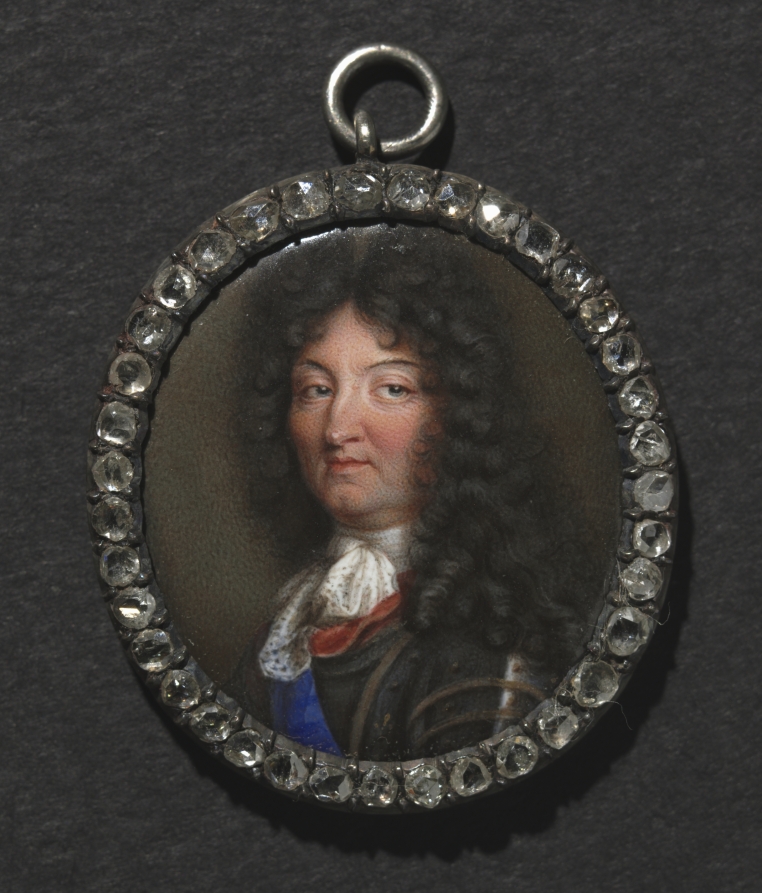
Portrait of King Louis XIV, 1600s, by Jean Petitot
Jean Petitot · The Cleveland Museum of Art · The Edward B. Greene Collection
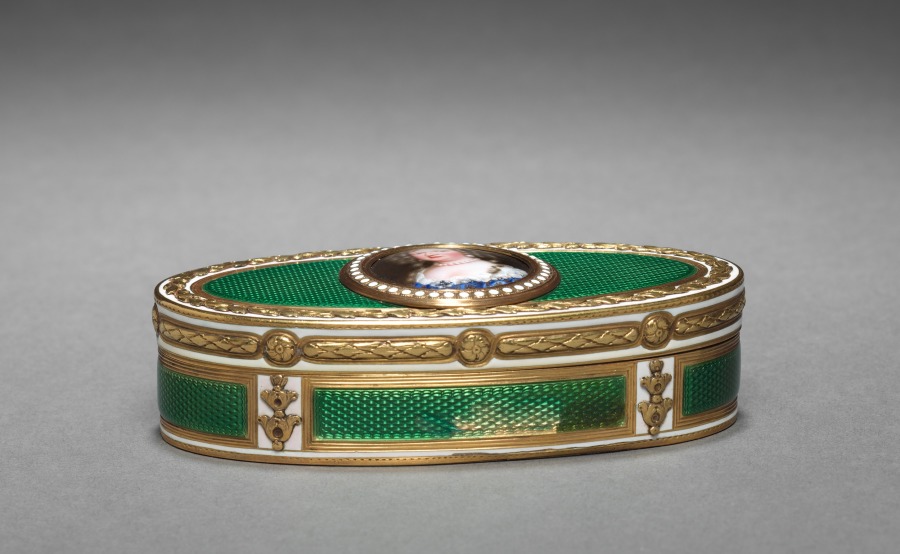
Snuff Box (Tabatière) with Portrait of Marie-Thérèse of Austria, miniature, c. 1676; box, 1775–76, by Jean Petitot
Jean Petitot · The Cleveland Museum of Art · Gift of Mrs. Edward B. Greene
Key facts
Key facts
• Born — 12 July 1607 • Birthplace — Geneva, Republic of Geneva • Died — 3 April 1691 • Place of death — Vevey, Switzerland • Known for — Enamel portrait miniatures • Illustration — Henrietta of England (1660)
Life
Life
He was born at Geneva, a member of a Burgundian family which had fled from France on account of religious difficulties. His father, Faule, was a wood carver and architect, who obtained citizenship of the Republic of Geneva in 1615.[2] Jean was the fourth son, and was apprenticed to a jeweller goldsmith named Pierre Bordier, with whom he struck up a close friendship. The two friends, dissatisfied with the progress they made in Geneva, went into France, and after working for a while with Toutin went to England with letters of introduction to Turquet de Mayerne, physician to Charles I, who presented them to the king, for whom they made a St George for the badge of the order and carried out many commissions for portraits; amongst others preparing two large ones representing Rachel de Ruvigny, countess of Southampton, now at Chatsworth, and Mary Villiers, duchess of Richmond and Lennox, dated 1643, at one time in the possession of the Crown and now in the Pierpont Morgan collection. On the execution of the king, Petitot left England for Paris with the royal household, Bordier remaining in England and carrying out certain important commissions for Cromwell and the parliament. On reaching Paris, Petitot entered into partnership with a goldsmith, Jacques Bordier, a cousin of Pierre, and it seems probable from recent research in contemporary documents that the enamel portraits attributed to Petitot were really the work of the two partners collaborating, the actual drawing being the work of Petitot, while for the enamel process Bordier was mainly responsible. The two painters were given apartments in the Louvre, received numerous commissions from Louis XIV, and painted portraits of almost every person of importance in his brilliant court. The friendship between the two lasted for thirty-five years, and was only put an end to by Bordier's death. The enamellers rendered special political services in France for the republic of Geneva, and were practically regarded as the official representatives of the republic, receiving warm thanks from the Syndics for their diplomatic work. On the revocation of the Edict of Nantes, 1685, pressure was brought to bear upon Petitot that he should change his religion. The king protected him as long as possible, and when he was arrested, with his niece, Anne Bordier, sent Bossuet, who was bishop of Meaux, to convince the old man of the error of his ways. Eventually, in poor health and great despair, Petitot placed his signature to an act of abjuration, and Louis XIV, unwilling to acknowledge the true reason for the imprisonment of Petitot and for his liberation, informed one of his sons, who came to thank him for the pardon given to his father, that he was willing to fall in for once with the whim of an old man who desired to be buried with his ancestors. In 1687 therefore Petitot left Paris to return to Geneva, and, after a long and tedious inquiry, was absolved by the consistory of the church of Geneva from the crime of which they considered he had been guilty, and received back to the Huguenot communion in the church of St Gervais. In Geneva he received a very important commission from John Sobieski, king of Poland, who required portraits of himself and his queen. This was followed by numberless other commissions which the painter carried out. He died of paralysis on April 3, 1691 at Vevey, while in the very act of painting on the enamel a portrait of his faithful wife.
Works
Works
Of the works of Petitot the major collection is in the Jones Bequest at the Victoria and Albert Museum. There are many in the Louvre, sixteen at Chantilly, and seventeen at Windsor. Petitot was collected by Earl Beauchamp, the Duke of Rutland, the Duke of Richmond, the Earl of Dartrey, Alfred de Rothschild, the Portland Collection and Baroness Burdett-Coutts. Amongst Lord Dartrey's examples were portraits of Petitot and of his son, and two of the wife of Jean Petitot the younger. A second portrait of the artist belonged to the Queen of Holland, and another was in the collection of Stroehlin of Geneva. In J. P. Morgan's collection there were many fine examples, including three drawings on paper, the only three which appear to have survived, and the large signed miniature of the duchess of Richmond already mentioned, the largest work Petitot ever did other than one Chatsworth House.
Family
Family
Petitot married Marguerite Cuper in 1651. He had seventeen children, among them Jean Louis Petitot, and for their benefit wrote out a little octavo volume containing some genealogical information, portraits of himself and his wife, with prayers, meditations and religious advice. He also prepared a second manuscript volume of prayers and meditations for the use of his family.
Identity and origins
Identity and origins
The authorities additionally record the headings Jean (le vieux) Petitot, Jean Petitot I, Jean I Petitot, Jean, I Petitot and Jean, le vieux Petitot. His recorded languages were French and German. His recorded confession was Protestantism. He was the child of Faule Petitot. One child is recorded: Jean Louis Petitot.
Identity
Identity
Recognition and collections.
Life and career
Dated record
Life and career
The full dated record · 2 entries
1607
Jean Petitot born at Geneva.
1691
Jean Petitot died at Vevey.
Places
Named by the record
Places
Only places the record itself states, plotted where the house gazetteer settles their coordinates. Nothing is inferred from a name or a nationality.
Geneva.
Birth place
Vevey.
Death place
Notes from the source article
Cited by Wikipedia
Notes from the source article
These works are cited by the source article, in its own numbering. They are recorded as its citations, not as sources VALÉORINE has verified.
- 1.According to the Historical Dictionary of Switzerland and to his biography, Jean Petitot was a citizen of the Republic of Geneva and served (1669-1684) as chargé d'affaires of his government in Paris. In sources from outside of Switzerland his country of origin is sometimes (for instance in ULAN ) referred to as being Switzerland.
- 2.Faule Petitot, in the Historical Dictionary of Switzerland
References
Citations
References
Each reference names the institution holding it, so a reader may go to the document itself.
reference work
Wikidata, structured authority record Q556676: Jean PetitotWikimedia Foundation
Secondary witnessreference work
Secondary witness
The Encyclopedia exists whether or not anything is for sale. Corrections are recorded rather than overwritten, and every version of this record is kept. Published 16 August 2026.
Elsewhere in Paintings
18,792 published records in this field, each with its sources named.
- Jean NocretArtist
- Jean OberléArtist
- Jean Paul LemieuxArtist
- Jean Paul LeonArtist
- Jean Pierre CapronArtist
- Jean PreudhommeArtist
- Jean PuyArtist
- Jean RancArtist
Best supported in this field
For owners
Own a work by Jean Petitot?
A specialist will read what you send and tell you what the house can establish, what it cannot, and whether the object is suited to sale. There is no charge and no obligation. The object stays with you throughout; nothing is shipped to us unless it is arranged in writing beforehand.