
Jean-Marc Nattier
Jean-Marc Nattier (ʒɑ̃ maʁk natje; 17 March 1685 – 7 November 1766) was a French painter. He was born in Paris, the second son of Marc Nattier (1642–1705), a portrait painter, and of Marie Courtois (1655–1703), a miniaturist. He is noted for his portraits of the ladies of Louis XV's court in classical mythological attire.
Also recorded as Jean Marc Nattier · Jean-Marc Nattier le Jeune · J.-M. Nattier · Nattier Le Jeune Nattier
Jean-Marc Nattier
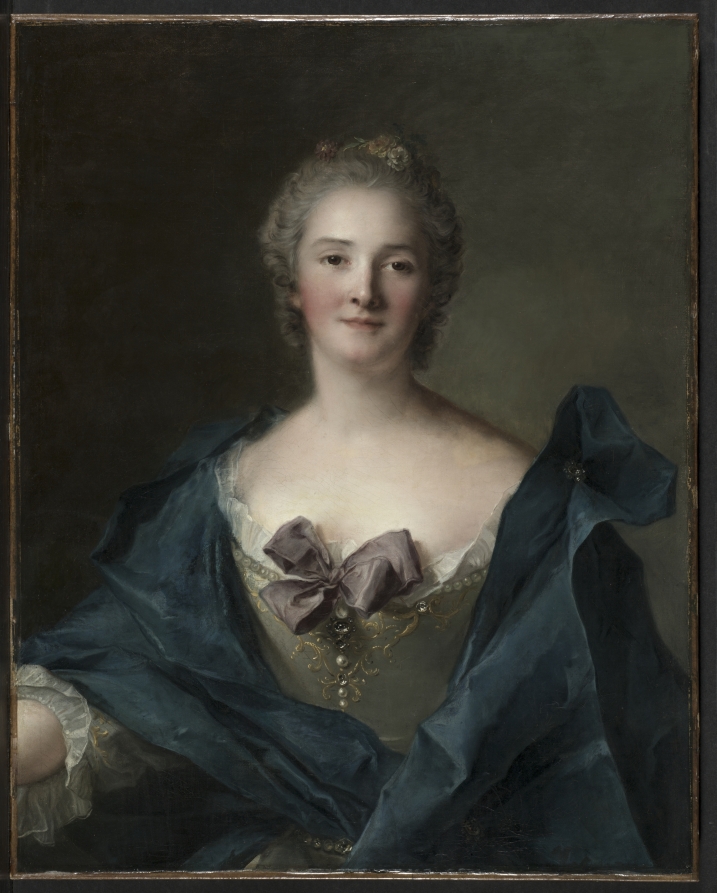
Jean-Marc Nattier · The Cleveland Museum of Art · Gift of the Louis Dudley Beaumont Foundation · CC0
- Name
- Jean-Marc Nattier
- Born
- 17 March 1685
- Birthplace
- Paris, France
- Died
- 7 November 1766
- Field
- Painting
- Movement
- Rococo
- Nationality
- France
- Occupation
- painter · portraitist
- Known for
- Louis-Jean Marie de Bourbon and Duke of Penthièvre · Perseus with Minerva Showing the Head of Medusa
- Languages
- French
VALÉORINE Encyclopedia
VALÉORINE documentary reading
Documentary summary
Jean-Marc Nattier (ʒɑ̃ maʁk natje; 17 March 1685 – 7 November 1766) was a French painter. He was born in Paris, the second son of Marc Nattier (1642–1705), a portrait painter, and of Marie Courtois (1655–1703), a miniaturist. He is noted for his portraits of the ladies of Louis XV's court in classical mythological attire.
Admitted source layer · organised and presented by VALÉORINE
Reference Check
Propose documentary evidence for Jean-Marc Nattier. A contribution is never written directly as fact: identity, source, rights and evidence gates still decide.
Sign in to contribute
World of VALÉORINE
Documentary connections
Only confirmed graph relationships appear here. Images are shown only when their identity and reuse rights both pass the documentary gate.

Documentary evidence
Documentary basis
Authority files
wikidata · Q277738 · wikipedia · Jean-Marc Nattier
In this article
Biography
Biography
Louis Tocqué is recorded as having studied under Jean-Marc Nattier. The recorded working language is French. The field of work recorded is painting. Subjects and genres recorded for the work are history and portrait. Places of work recorded in the authority are Paris, Amsterdam and The Hague. Positions recorded include court painter. Works named in the authority record are Louis-Jean Marie de Bourbon, Duke of Penthièvre and Perseus with Minerva Showing the Head of Medusa. Work by Jean-Marc Nattier is recorded in the collections of Städel Museum, Museo del Prado, The Nelson-Atkins Museum of Art, Thyssen-Bornemisza Museum and Musée des Beaux-Arts de Tours.
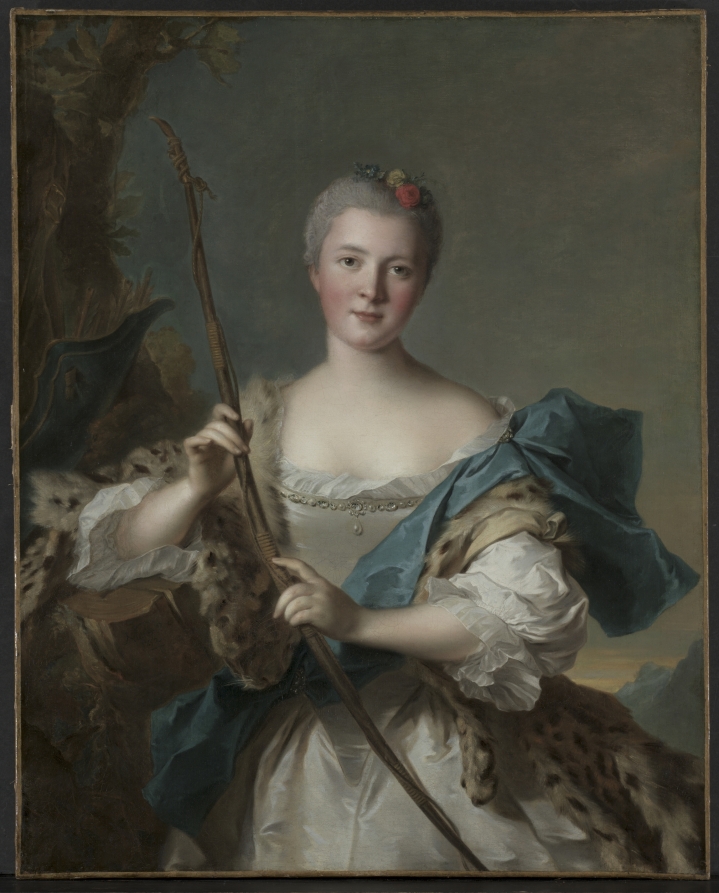
Portrait of a Woman as Diana, 1752, by Jean-Marc Nattier
Jean-Marc Nattier · The Cleveland Museum of Art · Bequest of John L. Severance
Key facts
Key facts
• Name — Jean-Marc Nattier • Birth Name — Jean-Marc Nattier • Born — 17 March 1685 • Birthplace — Paris, France • Died — 7 November 1766 • Place of death — Paris, France • Field — Painting • Movement — Rococo
Life
Life
He received his first instruction from his father, and from his uncle, the history painter Jean Jouvenet (1644–1717). He enrolled in the Académie de peinture et de sculpture in 1703 and applied himself to copying pictures in the Luxembourg Palace, making a series of drawings of the Marie de' Medici cycle by Peter Paul Rubens. The publication (1710) of engravings based on these drawings made Nattier famous, but he declined to proceed to the French Academy in Rome, though he had taken the first prize at the Paris Academy at the age of fifteen. In 1715 he went to Amsterdam, where Peter the Great was then staying, and painted portraits of the Tsar and the Tsarina Catherine, but declined an offer to go to Russia. Nattier aspired to be a history painter. Between 1715 and 1720 he devoted himself to compositions like the Battle of Lesnaya,[1] which he painted for Peter the Great, and the Petrification of Phineus and of his Companions, which led to his election to the Academy. He died in Paris in 1766.
Portraits
Portraits
• Illustration — Portrait of Madame Marie-Henriette Berthelot de Pléneuf The financial collapse of 1720 caused by the schemes of Law all but ruined Nattier, who found himself forced to devote his whole energy to portraiture, which was more lucrative. He became the painter of the artificial ladies of Louis XV's court. He subsequently revived the genre of the allegorical portrait, in which a living person is depicted as a Greco-Roman goddess or other mythological figure. Nattier's graceful and charming portraits of court ladies in this mode were very fashionable, partly because he could beautify a sitter while also retaining her likeness. The most notable examples of his straightforward portraiture are the Marie Leszczyńska at the Musée des Beaux-Arts de Dijon, and the group portrait The Artist Surrounded by His Family, dated 1730. Another excellent example of Nattier's work and sense of composition is his 1738 portrait of Mathilde de Carbonnel-Canisy, marquise d'Antin. The portrait is permanently exhibited at the musée Jacquemart-André in Paris and remains one of the most popular works in the Jacquemart-André Collection.[2] Many of his notable paintings are on permanent exhibit at major museums. Thus at the Louvre is his Magdalen; in the Musee Jacquemart-Andre his Portrait of Mathilde de Canisy, marquise d'Antin; at Nantes the portrait of La Camargo and A Lady of the Court of Louis XV. At Orléans a Head of a Young Girl, at Marseilles a portrait of Madame de Pompadour, at Perpignan a portrait of Louis XV, and at Valenciennes a portrait of Le Duc de Boufflers. The Versailles Museum owns an important group of two ladies, and the Gemäldegalerie Alte Meister a portrait of the Maréchal de Saxe. At the Wallace Collection Nattier is represented by The comtesse de Tillières (formerly known as Portrait of a Lady in Blue), Mademoiselle de Clermont en sultane, and The marquise de Belestat. In the early part of the 20th century in the collection of Mr Lionel Phillips were the duchess of Flavacourt as Le Silence, and the duchess of Châteauroux as Le Point du jour (now at Marseilles). A portrait of the Comtesse de Neubourg and her Daughter formed part of the Vaile Collection, and realized 4500 guineas at the sale of this collection in 1903. Nattier's works have been engraved by Alphonse Leroy, Tardieu, Jean Audran (1667–1756), Dupin and many other noted craftsmen. • Illustration — Duchesse de Chartres as Hebe The 1753 Marquis de Marigny is in the collection of the Staatliche Kunsthalle Karlsruhe.[3] The Getty Museum has Madame Bonier de la Mosson as Diana, 1742. The Metropolitan Museum of Art has Madame de Maison-Rouge as Diana, 1756. The 1744 Duchesse de Chartres as Hebe Nationalmuseum is in the collection of the Nationalmuseum.
Select gallery
Select gallery
• Illustration — Tsar Peter I (1717) Saint Petersburg, Hermitage Museum • Illustration — Justice punishing Injustice (1737) Justice is represented by Madame Adélaïde de France Private collection, Paris • Illustration — Adam Tarło (1740) Warsaw, Royal Castle • Illustration — Madame de Pompadour as Diana the Huntress (1746) Versailles, Musée national du Château et des Trianons • Illustration — Marie Leszczyńska, Queen of France, Reading the Bible (1748) Versailles, Musée national du Château et des Trianons • Illustration — The Comtesse de Tillières (1750) London, Wallace Collection • Illustration — Madame Adélaïde de France Tying Knots (1756) Versailles, Musée national du Château et des Trianons • Illustration — Éléonore Louise Le Gendre de Berville (1740-1761) Marquise du Hallay-Coëtquen (1751) Private collection, Paris • Illustration — Pierre Victor, Baron de Besenval de Brunstatt (1766) Saint Petersburg, Hermitage Museum (formerly in the Hôtel de Besenval)
Identity and origins
Identity and origins
The authorities additionally record the headings Jean Marc Nattier, Jean-Marc Nattier le Jeune, J.-M. Nattier, Nattier Le Jeune Nattier and Jean-Marc Natier. His recorded language was French. He was the child of Marc Nattier and Marie Courtois. One child is recorded: Sophie Challes. Other recorded relations include Jean Jouvenet.
Identity
Identity
Indexed under Historical Studies and Socio-cultural Analysis, Historical and Literary Studies, Plant Surface Properties and Treatments, Legal and Regulatory Analysis, Historical Art and Culture Studies. Recorded as painter and portraitist.
Life and career
Dated record
Life and career
The full dated record · 2 entries
1685
Jean-Marc Nattier born at Paris.
1766
Jean-Marc Nattier died at Paris.
Primary material
Documents and archives
reference work
- “Jean-Marc Nattier”, English Wikipedia, consulted as further reading
Reputable secondary · Wikipedia
- Wikidata, structured authority record Q277738: Jean-Marc Nattier
Reputable secondary · Wikimedia Foundation
scholarly index
- OpenAlex author record A5089655331 for Jean-Marc Nattier.
General reference · OpenAlex
authority file
- VIAF cluster 61708615 for Jean-Marc Nattier, aggregating national library name authorities.
General reference · OCLC
Notes from the source article
Cited by Wikipedia
Notes from the source article
These works are cited by the source article, in its own numbering. They are recorded as its citations, not as sources VALÉORINE has verified.
- 1.Once believed to depict the later Battle of Poltava.
- 2.Portrait of Mathilde de Canisy, marquise d'Antin.
- 3.Acquisitions of the month: November 2018. Apollo Magazine. 7 December 2018.
Bibliography printed in the source article · 1
References
Citations
References
Each reference names the institution holding it, so a reader may go to the document itself.
reference work
Secondary witnessscholarly index
Secondary witnessauthority file
Secondary witnessreference work
Wikidata, structured authority record Q277738: Jean-Marc NattierWikimedia Foundation
Secondary witness
People, houses and institutions
Knowledge graph
People, houses and institutions
Teachers, collaborators, publishers and institutions recorded against this person, each on a stated basis.
Further particulars
Held on the record
Further particulars
Open the remaining particulars
Formation and teaching. Each of those relationships is stated by the authority record rather than inferred from style. Nattier worked in painting. His work is associated with Rococo. Recorded position is court painter. He worked at Paris, Amsterdam and The Hague. Work and production. Works recorded as notable number 2: Louis-Jean Marie de Bourbon, Duke of Penthièvre and Perseus with Minerva Showing the Head of Medusa. His recorded genres are history and portrait. Connected to 2 other published records in the VALÉORINE Encyclopedia.
Career and activity
Recognition and collections
Work by Jean-Marc Nattier is
Städel Museum, Museo del Prado, The Nelson-Atkins Museum of Art and Thyssen-Bornemisza Museum
Within the Encyclopedia
(OpenAlex author record A5089655331 for Jean-Marc Nattier.) • Fields Of Work: Indexed under Historical Studies and Socio-cultural Analysis, Historical and Literary Studies, Plant Surface Properties and Treatments, Legal and Regulatory Analysis, Historical Art and Culture Studies (OpenAlex author record A5089655331 for Jean-Marc Nattier.) • Born: Jean-Marc Nattier was born in 1685 at Paris.
The Encyclopedia exists whether or not anything is for sale. Corrections are recorded rather than overwritten, and every version of this record is kept. Published 14 August 2026.
Elsewhere in Paintings
19,065 published records in this field, each with its sources named.
- Jean-Louis de MarneArtist
- Jean-Louis FaureArtist
- Jean-Louis GintracArtist
- Jean-Louis HamonArtist
- Jean-Marie JacominArtist
- Jean-Marie QueneauArtist
- Jean-Marie VillardArtist
- Jean-Maurice MouratArtist
Best supported in this field
For owners
Own a work by Jean-Marc Nattier?
A specialist will read what you send and tell you what the house can establish, what it cannot, and whether the object is suited to sale. There is no charge and no obligation. The object stays with you throughout; nothing is shipped to us unless it is arranged in writing beforehand.