
James Parmentier
Illustration — Allegory of Charles II, c. 1685, oil on copper James Parmentier (1658 – 2 December 1730), also known as Jacques Parmentier, was a French painter who spent much of his career in England, partly in London and partly in Yorkshire.
Also recorded as Jacques Parmentier · Parmentier
James Parmentier
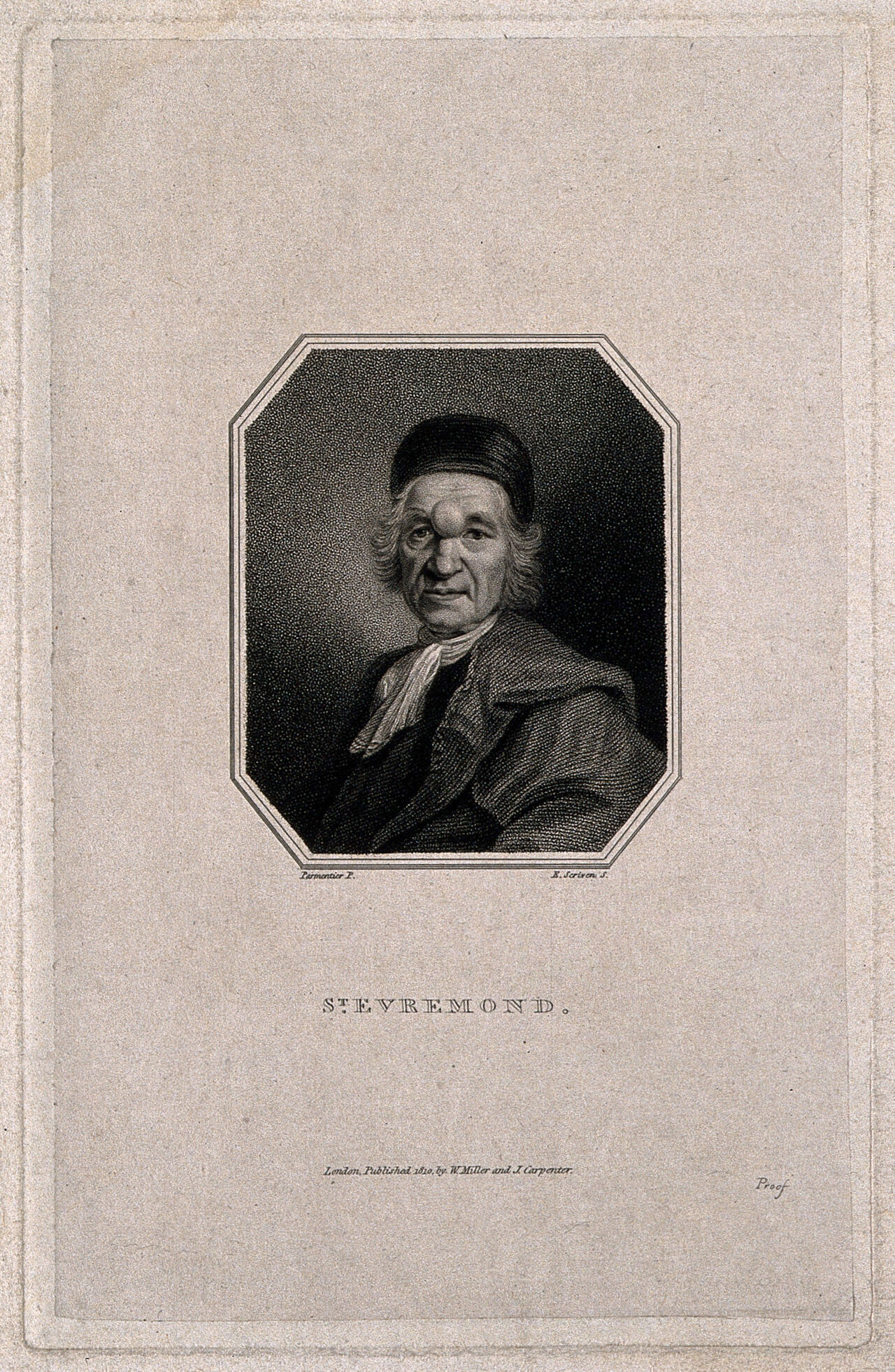
James Parmentier · Wellcome Collection, London · Wellcome Collection · Public Domain Mark
- Born
- 1658 · Paris.
- Nationality
- France
- Occupation
- painter
- Fields
- portrait
- Languages
- French
Reference Check
Propose documentary evidence for James Parmentier. A contribution is never written directly as fact: identity, source, rights and evidence gates still decide.
Sign in to contribute
World of VALÉORINE
Documentary connections
Only confirmed graph relationships appear here. Images are shown only when their identity and reuse rights both pass the documentary gate.
Documentary evidence
Documentary basis
Authority files
wikidata · Q18209623 · wikipedia · James Parmentier
VALÉORINE Encyclopedia
The documentary record
Statements marked “Documentary record” are set in the article beside the passage they confirm. Each is read from the authority records of the institutions named here; select “Prove” to see the record it was read from, where in that record, and when.
Institutions cited
Bibliothèque nationale de France · Getty Union List of Artist Names
Complete reading chain (JSON)In this article
Life
Life
The recorded working language is French. Subjects and genres recorded for the work are portrait. Places of work recorded in the authority are Paris, London and The Hague. Work by James Parmentier is recorded in the collections of National Portrait Gallery and Royal Academy of Arts.
Parmentier was born in France in 1658. He initially studied art under his uncle, Sébastien Bourdon, who died in 1671. After some further instruction from another relation, Parmentier went to England in September 1676, to work under the decorative painter Charles de La Fosse, who was then painting the ceilings at Montagu House in Bloomsbury. He came to the attention of William III, who sent him to work at his palace of Het Loo in Holland, but his employment there came to a premature end following a dispute with Daniel Marot, then surveyor of the royal palaces in Holland. While in the Netherlands Parmentier painted the ceiling and two chimney-pieces in the chief room of the royal palace at Binnenhof. He was a member of the guild of St Luke at The Hague, becoming a master on 1 December 1698. • Illustration — Charles de Saint-Evremond, another Frenchman in England, painted in 1701. Parmentier returned to London, but unable to find sufficient patronage there, he accepted an invitation to go to Yorkshire, where he painted many portraits. In 1711 he was paid £50 to paint an altarpiece showing the Last Supper for the church of the Holy Trinity Church at Hull. It survives, although in a mutilated condition. He also executed a ceiling painting on the theme of Moses receiving the law for St. Peter's Church at Leeds, and decorated staircases at Worksop Manor for the Duke of Norfolk, and at the house of John Atkinson, a former mayor of Leeds. Following the death of Louis Laguerre in 1721 Parmentier returned to London, hoping to succeed to his practice as a decorative painter. During this London sojourn he became a member of a masonic music club called the Philo-musicae et -architecturae societas Apollini, which met at the Queen's Head tavern on Fleet Street near Temple Bar. Parmentier may have been hoping that freemasonry might provide a viable source of patronage for him, and it is known that he did get some work through the club, as its minute-book records that when the tavern changed its name to the Apollo tavern in recognition of its musical clientele, Parmentier painted the new sign. He did not, however, achieve his hoped-for success in London, and was on the point of returning to the Netherlands, where he had been invited to spend the rest of his life with relatives at Amsterdam, when he died on 2 December 1730. He was buried in St Paul's, Covent Garden. His paintings of Charles II and of Charles de Marquetel de Saint-Evremond are in the collection of the National Portrait Gallery, London; another of St Evremond (1701) is at Knole.
Documentary record
James Parmentier (1658 – 1730) was a miniature painter, decorative painter and draughtsman. James Parmentier was born in 1658 in Paris. James Parmentier died in 1730 in London.
Places
Named by the record
Places
Only places the record itself states, plotted where the house gazetteer settles their coordinates. Nothing is inferred from a name or a nationality.
Paris.
Birth place
London.
Death place
Text attribution
Licensing
Text attribution
Part of the biographical narrative on this page reuses licensed material. Its origin, revision and licence are recorded here.
The biographical narrative on this page is based on the Wikipedia article James Parmentier, revision 1370176253 (EN edition), by its contributors. VALÉORINE has edited that text and built its own documentary record around it. The reused material is available under CC BY-SA 4.0, and this page's reuse of it is offered under the same licence. Everything else on this page — the chronology, the holdings, the evidence, the plates and the connections — is VALÉORINE's own record. Sources and licences.
References
Citations
References
Each reference names the institution holding it, so a reader may go to the document itself.
reference work
Secondary witnessreference work
Secondary witness
The Encyclopedia exists whether or not anything is for sale. Corrections are recorded rather than overwritten, and every version of this record is kept. Published 20 August 2026.
Elsewhere in Paintings
19,456 published records in this field, each with its sources named.
- James NairnArtist
- James NorthcoteArtist
- James OrrockArtist
- James Otto LewisArtist
- James PatersonArtist
- James PealeArtist
- James Peter QuinnArtist
- James PriorArtist
Best supported in this field
For owners
Own a work by James Parmentier?
A specialist will read what you send and tell you what the house can establish, what it cannot, and whether the object is suited to sale. There is no charge and no obligation. The object stays with you throughout; nothing is shipped to us unless it is arranged in writing beforehand.