
James Cox
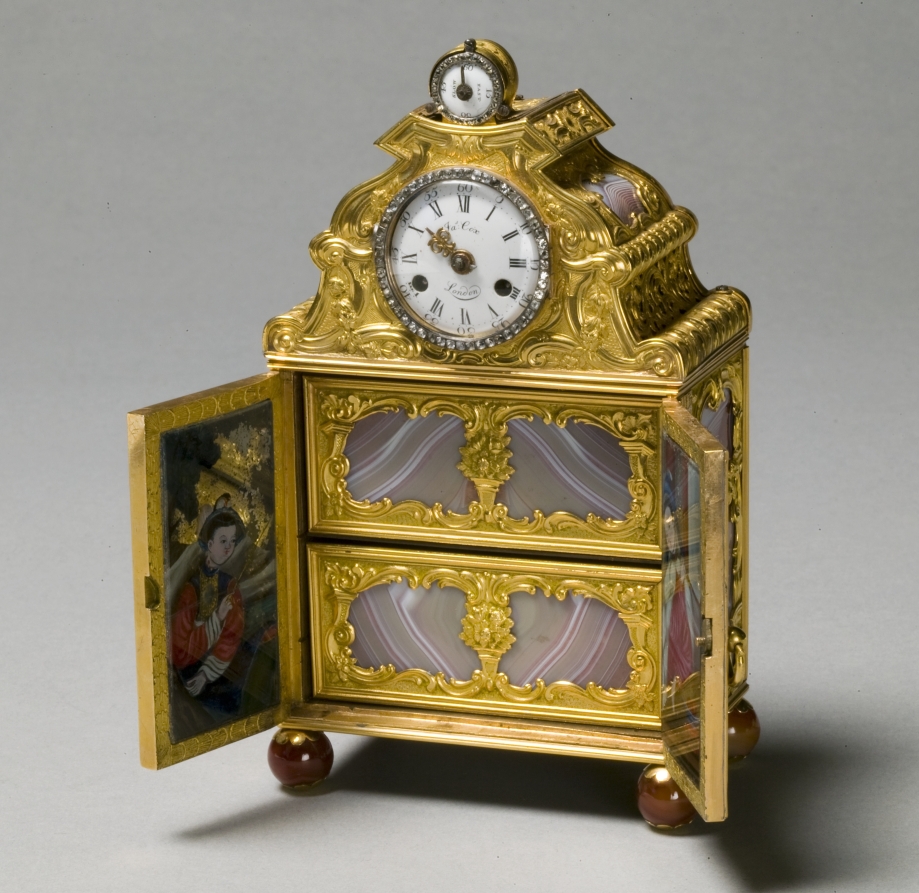
Illustration — A typical "toy": a necessaire and watch by Cox (Walters Art Museum) James Cox (c. 1723–1800) was a British jeweller, goldsmith and entrepreneur and the proprietor of Cox's Museum. He is now best known for creating ingenious automata and mechanical clocks, including Cox's timepiece, powered by atmospheric pressure, the Peacock Clock and the Silver Swan.
James Cox
James Cox · The Cleveland Museum of Art · Gift of Howard F. Stirn · CC0
- Born
- 1723 · London.
- Died
- 1800 · London.
- Nationality
- Kingdom of Great Britain
- Occupation
- goldsmith · inventor
- Languages
- English
VALÉORINE Encyclopedia
VALÉORINE documentary reading
Documentary summary
Illustration — A typical "toy": a necessaire and watch by Cox (Walters Art Museum) James Cox (c. 1723–1800) was a British jeweller, goldsmith and entrepreneur and the proprietor of Cox's Museum. He is now best known for creating ingenious automata and mechanical clocks, including Cox's timepiece, powered by atmospheric pressure, the Peacock Clock and the Silver Swan.
Admitted source layer · organised and presented by VALÉORINE
Reference Check
Propose documentary evidence for James Cox. A contribution is never written directly as fact: identity, source, rights and evidence gates still decide.
Sign in to contribute
World of VALÉORINE
Documentary connections
Only confirmed graph relationships appear here. Images are shown only when their identity and reuse rights both pass the documentary gate.
Citizen Of · outgoing
Kingdom of Great Britain
Place

Born In · outgoing
London
Place
Pencil sketch by George Henry Harlow, 1814, http://www.npg.org.uk/collections/search/largerimage.php?mkey=mw05495
Died In · outgoing
London
Place
Pencil sketch by George Henry Harlow, 1814, http://www.npg.org.uk/collections/search/largerimage.php?mkey=mw05495
Documentary evidence
Documentary basis
Authority files
wikidata · Q525447
In this article
Early career
Early career
Cox's career as a jeweler began as early as 1751, and his automatons were designed by artists like Joseph Nollekens and Johann Zoffany. In the 1760s John Joseph Merlin became his apprentice. Though he proclaimed himself a goldsmith, he employed a number of jewellers and manufacturers who may have done much of the work; that he was never a member of the goldsmith's guild further substantiates the claim that he subcontracted his work. Cox specialised in intricate clockwork curios encrusted with gold, silver, and jewels, referred to as "sing-songs." His primary market was the Far East, especially India and China, and the Chinese Qianlong Emperor possessed one of his automata, in the shape of a chariot. Cox's popularity was important to British trade: the tea trade ensured that British imports far outweighed their exports to China, and Cox helped redress the imbalance. His sing-songs initially reduced British trade deficit, but in the early 1770s Cox was stuck with a large inventory and a flooded eastern market. He liquidated some of his stock at Christie's in 1772, and used the remaining inventory to start his museum.
Cox's Museum
Cox's Museum
In the 1770s Cox managed a private museum in the Great Room at Spring Gardens, London. He had been exhibiting his wares since at least 1769, though the official museum opened only in February, 1772. The site is near the Admiralty Arch, and would be among the most popular exhibition halls in London for the next half-century. Cox's Museum was so memorable that it was customary to refer to the room as "formerly Cox's Museum," and during the museum's run from 1772 to 1776 Cox's display eclipsed all other exhibits. His skill at advertising no doubt played a role in building the museum's popularity. Cox produced several catalogues and a collection of verses praising his museum, which had first been published in various London newspapers (some were probably planted by Cox). Cox's Museum was among the most expensive exhibitions in London, and the price was purportedly to limit the number of patrons for security reasons. The museum was popular among London's upper classes and literati: James Boswell visited in 1772, at the recommendation of Samuel Johnson, and Frances Burney stages a debate about the uses of art at Cox's, in her novel Evelina. Playwright Richard Brinsley Sheridan pays tribute to Cox's Museum in The Rivals. As proprietor of the museum Cox may have purchased Oliver Cromwell's head as a curiosity.
Key facts
Key facts
• Short Title — Cox's Museum Act 1772 • Type — Act • Parliament — Parliament of Great Britain • Long Title — An Act for enabling James Cox, Jeweller, to dispose of his Museum, commonly called Cox's Museum, by Way of Chance, in such Manner as may be most for the Benefit of himself and his Creditors. • Year — 1772 • Citation — 13 Geo. 3. c. 41 • Territorial Extent — Great Britain • Royal Assent — 10 May 1773 • Commencement — 26 November 1772 • Repeal Date — 30 July 1948 • Repealing Legislation — Statute Law Revision Act 1948 • Status — Repealed • Original Text — https: books.google.co.uk/books?id=WrmXQpgmfMAC&pg=PA58 • Collapsed — yes Though he hoped for royal patronage, and displayed, as was common, royal portraits in the museum, Cox never achieved his goal. In 1773 a special Act of Parliament (13 Geo. 3. c. 41) authorised Cox to break up his collection and sell pieces by lottery. The museum was removed from Spring Gardens in 1775, and after being briefly displayed at Mansion House by the Lord Mayor, was dissolved and sold by lottery in May 1775.
Later career
Later career
In 1778 Cox went bankrupt for the second time. Cox despatched his son John Henry to Canton, China in 1782 to sell off an accumulated stock. In Canton, both James and John Henry became partners with Daniel Beale and his brother Thomas in the firm of Cox & Beale. Cox remained in business as a retailer, if no longer as an artist or manufacturer, until his death.
Works
Works
• Illustration — The Peacock Clock at the State Hermitage Museum Among Cox's best known works are the Peacock Clock, now in the State Hermitage Museum in Saint Petersburg, and the Silver Swan, built by Cox in 1773 in conjunction with John Joseph Merlin, which is now exhibited at the Bowes Museum, Barnard Castle, Teesdale, County Durham. The swan, which can raise its neck, turn its head and (seemingly) pick up small fish, still functions, as is demonstrated daily. At the time of the May 1775 lottery, a pair of diamond earrings garnered much attention, with Cox offering to buy them back from the winner for £5000. A musical clock designed by Cox, and previously owned by King Farouk of Egypt, sold on 12 December 2012 at a Bonhams London sale for £385,250 ($577,547).
Identity
Identity
James Cox is recorded as goldsmith and inventor.
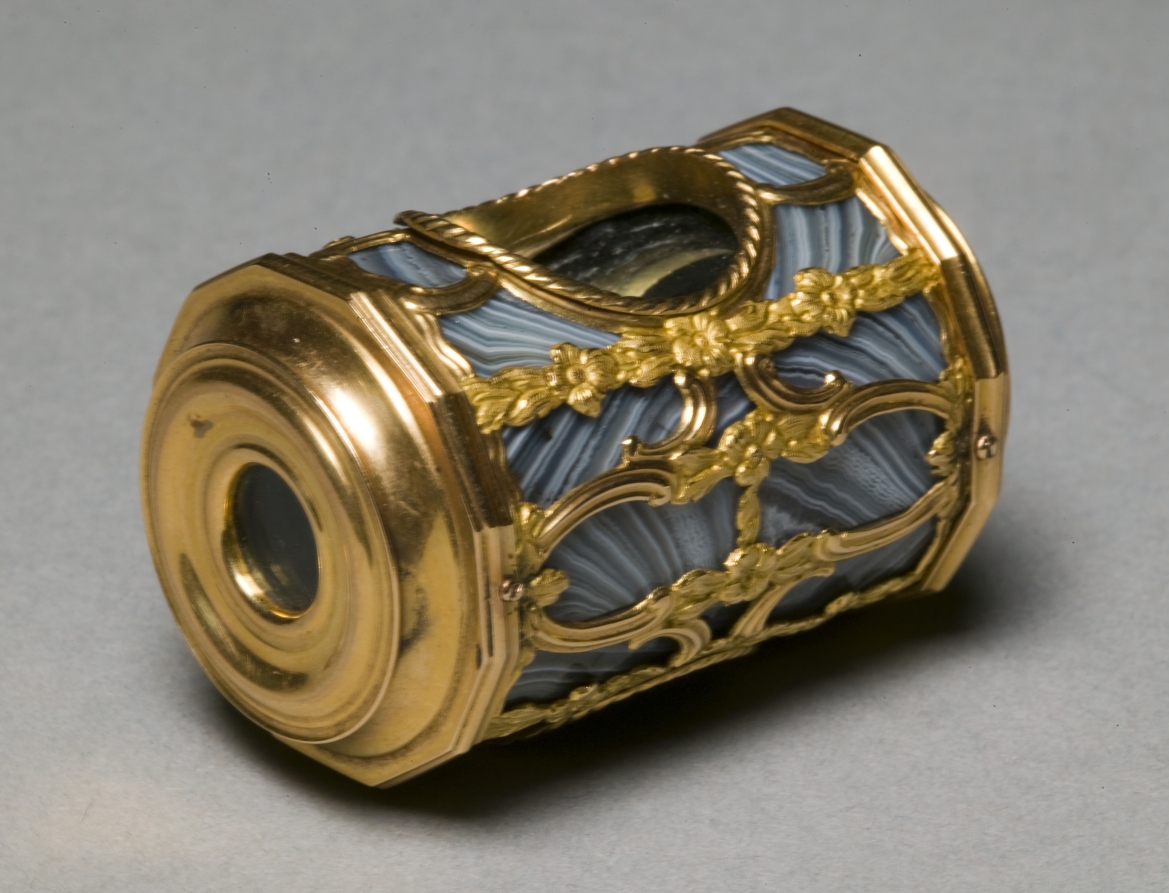
Spyglass, c. 1750–60, by James Cox
James Cox · The Cleveland Museum of Art · Gift of Howard F. Stirn
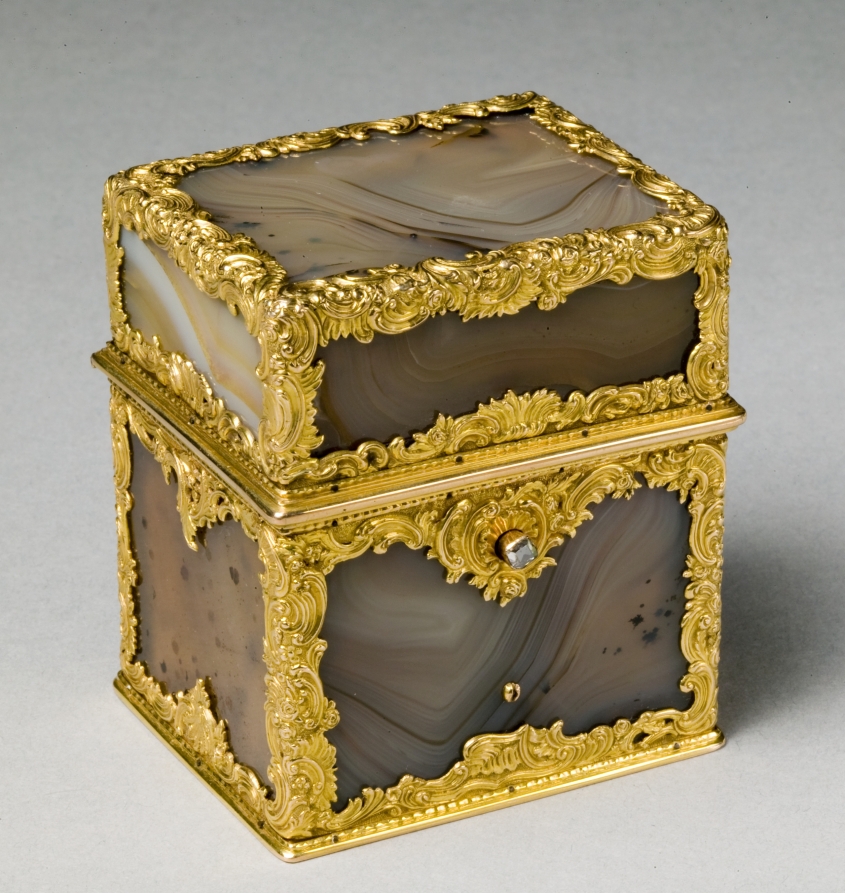
Writing Case (Nécessaire), c. 1760, by James Cox
James Cox · The Cleveland Museum of Art · Gift of Howard F. Stirn
Life and career
Dated record
Life and career
The full dated record · 2 entries
1723
James Cox was born in 1723 at London.
1800
James Cox died in 1800 at London.
Primary material
Documents and archives
authority file
- VIAF cluster 52779918 for James Cox, aggregating national library name authorities.
General reference · OCLC
reference work
- Wikidata, structured authority record Q525447: James Cox
Reputable secondary · Wikimedia Foundation
Literature
Literature
Literature
Cox, James, Benezit Dictionary of Artists, 2011
Cox, James, Oxford Art Online, 2008
James Cox, Public Persons, 2017
Scholarly footprint
Literature
Scholarly footprint
A count of publications is evidence of attention, not of standing, and is given here only as a measure.
Notes from the source article
Cited by Wikipedia
Notes from the source article
These works are cited by the source article, in its own numbering. They are recorded as its citations, not as sources VALÉORINE has verified.
- 1.James Cox (ca. 1723–1800): Goldsmith and Entrepreneur Heilbrunn Timeline of Art History; Roger Smith "James Cox (c. 1723-1800): A Revised Biography" The Burlington Magazine, Vol. 142, No. 1167 (Jun., 2000), pp. 353-361
- 2.The State Hermitage Museum: Exhibitions
- 3.Pointon, Marcia. Dealer in Magic: James Cox's Jewelry Museum and the Economics of Luxurious Spectacle in Late-Eighteenth-Century London. History of Political Economy. 31. 423–451. 199. 10.1215/00182702-31-supplement-423.
- 4.Altick, Richard. The Shows of London. The Belknap Press of Harvard University Press. 69–70. 1978.
- 5.13 Geo III cap XLI
- 6.Vincent, Clare. James Cox (ca. 1723–1800): Goldsmith and Entrepreneur. metmuseum.org. Heilbrunn Timeline of Art History, The Metropolitan Museum of Art.
- 7.Ride, Lindsay. An East India company cemetery: Protestant burials in Macao. Hong Kong Univ Press. 1996. 978-962-209-384-3.
- 8.Holledge, Richard. Magic Wrought by a Merlin. Wall Street Journal. 21 December 2012.
- 9.MUSICAL CLOCK ONCE OWNED BY EGYPT'S KING FAROUK SELLS FOR £385,250 AT BONHAMS £1.5M FINE CLOCK SALE IN LONDOn. Bonhams' Press Release, 2012-12-12
References
Citations
References
Each reference names the institution holding it, so a reader may go to the document itself.
authority file
Secondary witnessreference work
Wikidata, structured authority record Q525447: James CoxWikimedia Foundation
Secondary witness
The Encyclopedia exists whether or not anything is for sale. Corrections are recorded rather than overwritten, and every version of this record is kept. Published 16 August 2026.
Elsewhere in Silver
384 published records in this field, each with its sources named.
- Jakob KarweyseArtist
- Jakob StampferArtist
- James BensonArtist
- James CockieArtist
- James GrayArtist
- Jan KriegeArtist
- Jan VerheulArtist
- Jan VermeyenArtist
Best supported in this field
For owners
Own a work by James Cox?
A specialist will read what you send and tell you what the house can establish, what it cannot, and whether the object is suited to sale. There is no charge and no obligation. The object stays with you throughout; nothing is shipped to us unless it is arranged in writing beforehand.