
James Barry
James Barry (11 October 1741 – 22 February 1806) was an Irish painter, best remembered for his six-part series of paintings entitled The Progress of Human Culture in the Great Room of the Royal Society of Arts in London. Because of his determination to create art according to his own principles rather than those of his patrons, he is also noted for being one of the earliest romantic painters working in Britain, though as an artist few rated him highly until the fully comprehensive 1983 exhibition at the Tate Gallery led to a reassessment of this "notoriously belligerent personality",[1] who emerged as one of the most important Irish artists. He was also notable as a profound influence on William Blake.
Also recorded as James I Barry · James Barry (I) · R.A. James Barry · Barry
James Barry
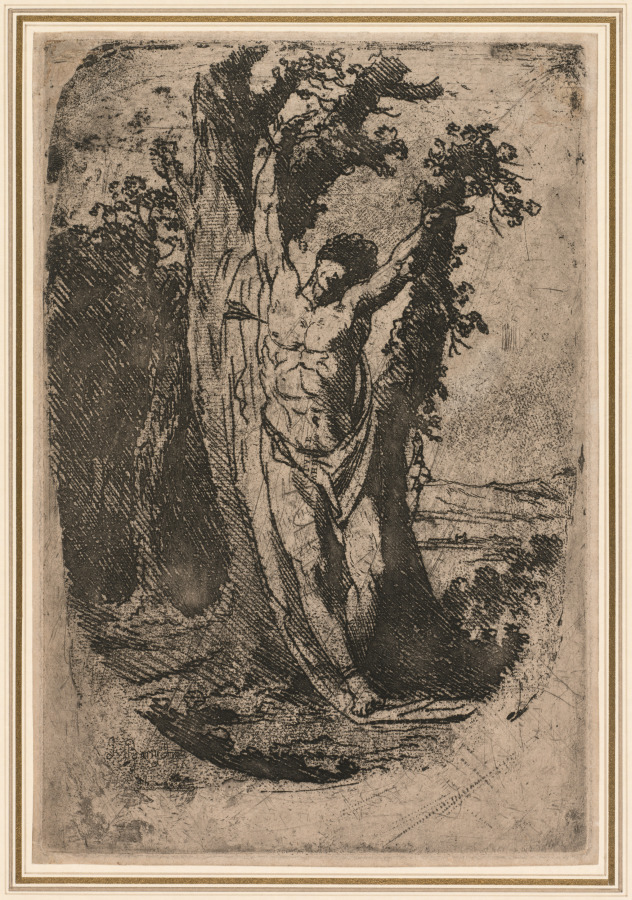
James Barry · The Cleveland Museum of Art · Norman O. Stone and Ella A. Stone Memorial Fund · CC0
- Name
- James Barry
- Born
- 11 October 1741
- Birthplace
- Cork, Ireland
- Died
- 22 February 1806
- Place of death
- London, England
- Movement
- Neoclassicism, Romanticism
- Training
- John Butts
- Field
- Painting, drawing, portraits and landscapes and for being a patron of Edmund Burke
- Nationality
- Kingdom of Ireland · United Kingdom of Great Britain and Ireland
- Occupation
- painter · printmaker
- Known for
- Jupiter Beguiled by Juno on Mount Ida · King Lear Weeping over the Dead Body of Cordelia
- Languages
- English
VALÉORINE Encyclopedia
VALÉORINE documentary reading
Documentary summary
James Barry (11 October 1741 – 22 February 1806) was an Irish painter, best remembered for his six-part series of paintings entitled The Progress of Human Culture in the Great Room of the Royal Society of Arts in London. Because of his determination to create art according to his own principles rather than those of his patrons, he is also noted for being one of the earliest romantic painters working in Britain, though as an artist few rated him highly until the fully comprehensive 1983 exhibition at the Tate Gallery led to a reassessment of this "notoriously belligerent personality",[1] who emerged as one of the most important Irish artists. He was also notable as a profound influence on William Blake.
Admitted source layer · organised and presented by VALÉORINE
Reference Check
Propose documentary evidence for James Barry. A contribution is never written directly as fact: identity, source, rights and evidence gates still decide.
Sign in to contribute
World of VALÉORINE
Documentary connections
Only confirmed graph relationships appear here. Images are shown only when their identity and reuse rights both pass the documentary gate.

Documentary evidence
Documentary basis
Authority files
gnd · 134749839 · wikidata · Q1042892
In this article
Biography
Biography
Barry was elected to the Royal Academy of Arts; and in 1782 he was appointed professor of painting at the Royal Academy schools (1782-99).[2][9]
William Blake is recorded as having studied under James Barry. The recorded working language is English. Places of work recorded in the authority are London. Works named in the authority record are Jupiter Beguiled by Juno on Mount Ida and King Lear Weeping over the Dead Body of Cordelia. Work by James Barry is recorded in the collections of Minneapolis Institute of Art, Art Institute of Chicago, The Nelson-Atkins Museum of Art, Tate and Nationalmuseum.
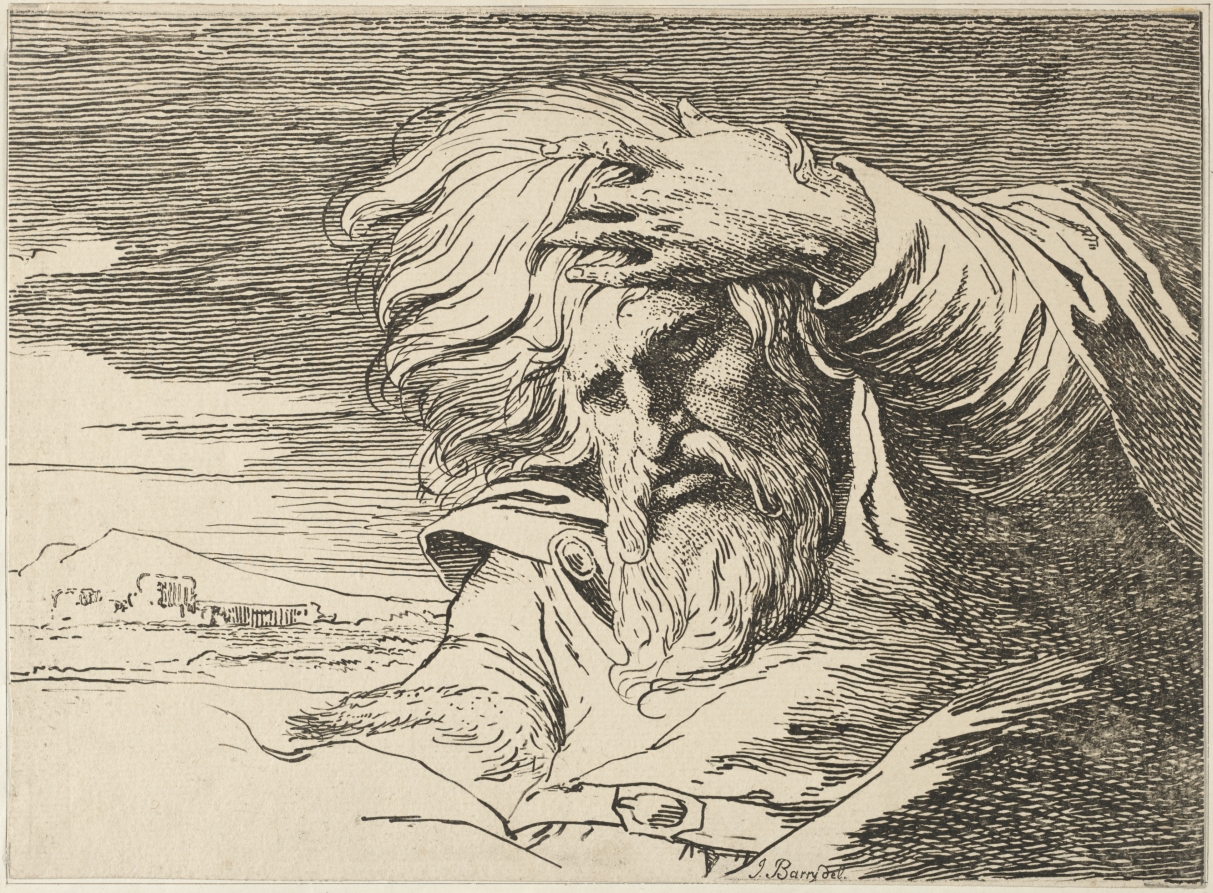
Eastern Patriarch, 1803, by James Barry
James Barry · The Cleveland Museum of Art · John L. Severance Fund
Key facts
Key facts
• Name — James Barry • Born — 11 October 1741 • Birthplace — Cork, Ireland • Died — 22 February 1806 • Place of death — London, England • Resting Place — St Paul's Cathedral, London[12] • Movement — Neoclassicism, Romanticism • Training — John Butts • Field — Painting, drawing, portraits and landscapes and for being a patron of Edmund Burke • Works — The Progress of Human Culture (1783) Baptism of the King of Cashel (1762) Jupiter and Juno on Mount Ida (1773) Ulysses and his companions escaping from Polyphemus (1776) King Lear Weeping over the Dead Body of Cordelia (1788) • Family — James Barry (surgeon)
Early life
Early life
James Barry was born in Water Lane (now Seminary Road) on the north side of Cork, Ireland on 11 October 1741. His father had been a builder, and, at one time of his life, a coasting trader between England and Ireland. Barry actually made several voyages as a boy but convinced his father to let him study drawing and art. He first studied painting under local artist John Butts.[3] At the schools in Cork to which he was sent he was regarded as a prodigy. At about the age of seventeen, he first attempted oil painting, and between that and the age of twenty-two, when he first went to Dublin, he produced several large pictures, which decorated his father's house, such as Aeneas escaping with his Family from the Flames of Troy, Susanna and the Elders and Daniel in the Lions' Den".
Career
Career
• Illustration — Barry, Self-portrait, 1803, oil on canvas. National Gallery of Ireland, Dublin. The painting that first brought him into public notice, and gained him the acquaintance and patronage of Edmund Burke, was the Baptism of the King of Cashel, exhibited at the Royal Dublin Society in 1763. This work was purchased by a group of members of the Parliament of Ireland to be hung in the Commons Chamber of the Parliament House, Dublin.[4] The painting was believed lost (even by Barry himself) in the fire which occurred there on 27 February 1792, but is almost certainly the painting rediscovered by William L. Pressly at Terenure College in 1976, in unexhibitable condition.[5] By the liberality of Burke and his other friends, Barry in the latter part of 1765 was enabled to go abroad.[6] He went first to Paris, then to Rome, where he remained upwards of three years, from Rome to Florence and Bologna, and thence home through Venice. While in Italy, he became friendly with the Scottish painter Alexander Runciman and the Swedish sculptor Tobias Sergel.[7] His letters to the Burkes, giving an account of Raphael, Michelangelo, Titian and Leonardo da Vinci, show remarkable insight. Barry painted two pictures while abroad, an Adam and Eve and a Philoctetes. Barry had also mastered the art of aquatint. Soon after his return to England in 1771, he produced his picture of Venus, which was compared to the Galatea of Raphael, the Venus of Titian and the Venus de Medici. In 1773 he submitted his Jupiter and Juno on Mount Ida at the Royal Academy Exhibition of 1773. His Death of General Wolfe, in which the British and French soldiers are represented in very primitive costumes, was considered a falling-off from his great style of art. His fondness for Greek costume was assigned by his admirers as the cause of his reluctance to paint portraits. His failure to go on with a portrait of Burke which he had begun caused a misunderstanding with his early patron. The difference between them is said to have been widened by Burke's growing intimacy with Sir Joshua Reynolds, and by Barry's jealousy of the fame and fortune of his rival "in a humbler walk of the art". About the same time he painted a pair of classical subjects, Mercury inventing the lyre, and Narcissus, the last suggested to him by Burke. He also painted a historical picture of Chiron and Achilles, and another of the story of Stratonice, for which last the duke of Richmond gave him a hundred guineas. In 1773, it was proposed to decorate the interior of St. Paul's with historical and sacred subjects; but the plan fell to the ground, from not meeting with the agreement of the bishop of London and the Archbishop of Canterbury. Barry was upset by the failure, for he had in anticipation fixed the subject he intended to paint – the rejection of Christ by the Jews when Pilate proposes his release. In 1773, he published An Inquiry into the real and imaginary Obstructions to the Acquisition of the Arts in England, vindicating the capacity of the English for the fine arts and tracing their slow progress to the Reformation, to political and civil dissensions, and lastly to the general direction of the public mind to mechanics, manufactures and commerce. In 1774, a proposal was made through Valentine Green to Sir Joshua Reynolds, Benjamin West, Cipriani, Barry, and other artists to ornament the Great Room of the 'Society for the encouragement of Arts, Manufactures and Commerce' (now the Royal Society of Arts), in London's Adelphi, with historical and allegorical paintings. This proposal was at the time rejected by the artists; but in 1777, Barry made an offer to paint the whole on condition that he was allowed the choice of his subjects, and that he would be paid by the society the costs of canvas, paints and models. His offer was accepted. He finished the series of pictures[8] after seven years to the satisfaction of the members of the society, who granted him two exhibitions, and at subsequent periods voted him 50 guineas, a gold medal, and a further 200 guineas. Barry regularly returned to the series for more than a decade, making changes and inserting new features. The series of six paintings—The Progress of Human Culture—has been described by critic Andrew Graham-Dixon as "Britain's late, great answer to the Sistine Chapel". Soon after his return from the continent, Barry was chosen as a member of the Royal Academy of Arts; and in 1782 he was appointed professor of painting (1782-99). Working in the room of Edward Penny his salary was £30 a year. During his time at the Royal Academy of Arts, Barry painted The Thames (or Triumph of Navigation) in 1791, which featured the English music historian Charles Burney.[10] Among other things, he insisted on the necessity of purchasing a collection of pictures by the best masters as models for the students and proposed several of those in the Orleans collection. This recommendation was not relished, and in 1799 Barry was expelled from the academy soon after the appearance of his Letter to the Dilettanti Society, an eccentric publication, full of enthusiasm for his art and at the same time of contempt for the living professors of it. Barry remained the only academician ever to be expelled by the academy until Brendan Neiland in July 2004.
Final days and death
Final days and death
After the loss of his salary, a subscription was set on foot by the Earl of Buchan to relieve him from his difficulties, and to settle him in a larger house to finish his picture of Pandora.[11] The subscription amounted to £1000, with which an annuity was bought, but on 6 February 1806 he was seized with illness and died on the 22nd of the same month. On 4 March his remains were interred in St Paul's Cathedral, London.
Selected works
Selected works
• Illustration — King Lear mourns Cordelia's death, 1786–88 • Illustration — The Temptation of Adam, 1767–70 • Illustration — Jupiter and Juno on Mount Ida, City Art Galleries, Sheffield • Illustration — The Thames or Triumph of Navigation
Life and career
Dated record
Life and career
The full dated record · 2 entries
1741
James Barry born at Cork.
1806
James Barry died at London.
Places
Named by the record
Places
Only places the record itself states, plotted where the house gazetteer settles their coordinates. Nothing is inferred from a name or a nationality.
Cork.
Birth place
London.
Death place
Legacy
The 1911 Encyclopædia Britannica has this to say: As an artist, Barry was more distinguished for the strength of his conceptions, and for his resolute and persistent determination to apply himself only to great subjects, than for his skill in designing or for beauty in his colouring. His drawing is not especially good, his colouring ordinary. He was impulsive; sometimes morose, sometimes sociable and urbane; jealous of his contemporaries, and yet capable of pronouncing a splendid eulogy on Reynolds.
Primary material
Documents and archives
authority file
- Gemeinsame Normdatei 134749839, James, Barry.
General reference · Deutsche Nationalbibliothek
reference work
- Wikidata, structured authority record Q1042892: James Barry
Reputable secondary · Wikimedia Foundation
Notes from the source article
Cited by Wikipedia
Notes from the source article
These works are cited by the source article, in its own numbering. They are recorded as its citations, not as sources VALÉORINE has verified.
- 1.David Bindman, 'Barry at the Tate' [review], The Burlington Magazine, vol.125, no.961, April 1983, pp. 240–42 (240).
- 2.De Breffny, pg. 40
- 3.James Barry RA. Crawford Art Gallery, Cork.
- 4.Pressly, William (1981). The Life and Art of James Barry. New Haven and London: Yale University Press. pp. 2-3.
- 5.Pressly 1981:3.
- 6.De Breffny, Brian. Ireland: A Cultural Encyclopedia. Thames and Hudson. 40. 1983.
- 7.Macmillan, Duncan (2023), Scotland and the Origins of Modern Art, Lund Humphries, London, pp. 65 -84,
- 8.Unknown. A Description of the series of pictures painted by James Barry, Esq. And preserved in the great room of the society instituted at London, for the Encouragement of Arts, Manufactures, and Commerce. W & C Spilsbury. 30. 1800.
- 9.De Breffny, pg. 40
- 10.The Thames or the Triumph of Navigation, by James Barry (1741-1806). – Port communities – Port Cities.
- 11.Now at Manchester.
- 12."Memorials of St Paul's Cathedral" Sinclair, W. p. 465: London; Chapman & Hall, Ltd; 1909.
Bibliography printed in the source article · 3
- Barry, James.
- Pressly, William L. (1983). James Barry: The Artist as Hero. London: The Tate Gallery. (Catalogue of the 1983 exhibition)
- Pressly, William, L. Portrait of a Cork Family: The Two James Barrys. Cork Historical and Archaeological Society. 90. 127–149. 1985.
References
Citations
References
Each reference names the institution holding it, so a reader may go to the document itself.
authority file
Gemeinsame Normdatei 134749839, James, Barry.Deutsche Nationalbibliothek
Secondary witnessreference work
Wikidata, structured authority record Q1042892: James BarryWikimedia Foundation
Secondary witness
Further particulars
Held on the record
Further particulars
Open the remaining particulars
Formation and teaching. Each of those relationships is stated by the authority record rather than inferred from style. Work and production. Works recorded as notable number 2: Jupiter Beguiled by Juno on Mount Ida and King Lear Weeping over the Dead Body of Cordelia.
The Encyclopedia exists whether or not anything is for sale. Corrections are recorded rather than overwritten, and every version of this record is kept. Published 14 August 2026.
Elsewhere in Paintings
18,717 published records in this field, each with its sources named.
- James Astbury HammersleyArtist
- James Baillie FraserArtist
- James BarbutArtist
- James BardArtist
- James BaynesArtist
- James BishopArtist
- James Bolivar MansonArtist
- James BowmanArtist
Best supported in this field
For owners
Own a work by James Barry?
A specialist will read what you send and tell you what the house can establish, what it cannot, and whether the object is suited to sale. There is no charge and no obligation. The object stays with you throughout; nothing is shipped to us unless it is arranged in writing beforehand.