
Hermann August Seger
Hermann Seger (1832–1893) was a German ceramicist who is widely credited with pioneering the development of the pyrometric cone, which enabled the rapid growth of the ceramic industry around the turn of the century.
Also recorded as Hermann Seger
Hermann August Seger
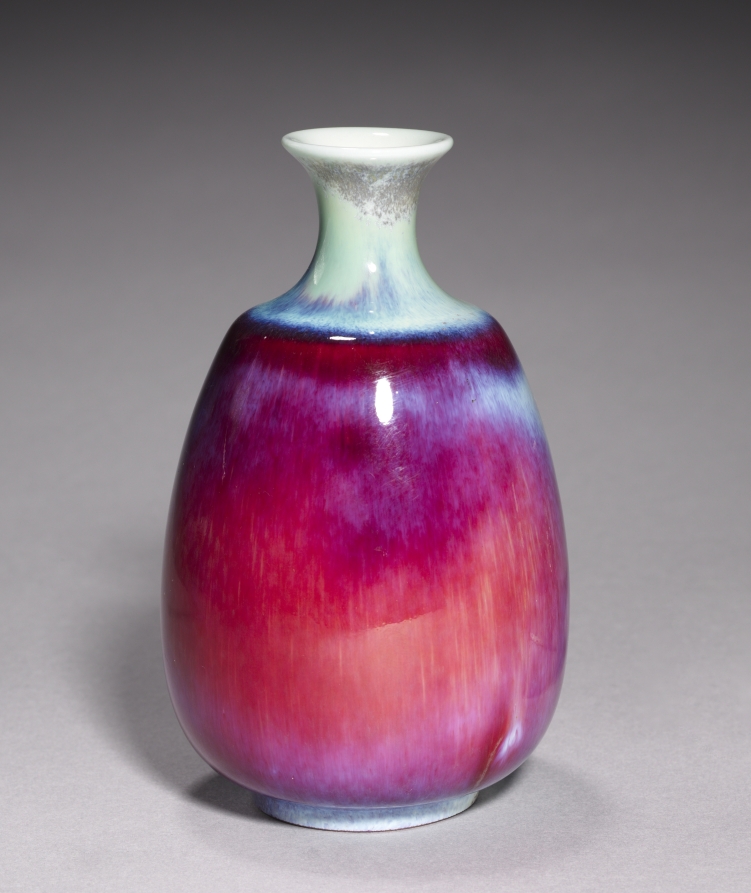
Hermann August Seger · The Cleveland Museum of Art · Gift of Henry H. Hawley · CC0
- Name
- Hermann August Seger
- Born
- 26 December 1839
- Died
- 30 October 1893
- Education
- University of Rostock
- Occupation
- Ceramicist
- Known for
- Pyrometric cones
- Nationality
- Germany
- Languages
- German
VALÉORINE Encyclopedia
VALÉORINE documentary reading
Documentary summary
Hermann Seger (1832–1893) was a German ceramicist who is widely credited with pioneering the development of the pyrometric cone, which enabled the rapid growth of the ceramic industry around the turn of the century.
Admitted source layer · organised and presented by VALÉORINE
Reference Check
Propose documentary evidence for Hermann August Seger. A contribution is never written directly as fact: identity, source, rights and evidence gates still decide.
Sign in to contribute
World of VALÉORINE
Documentary connections
Only confirmed graph relationships appear here. Images are shown only when their identity and reuse rights both pass the documentary gate.
Documentary evidence
Documentary basis
Authority files
wikidata · Q97102
In this article
Key facts
Key facts
• Name — Hermann August Seger • Born — 26 December 1839 • Died — 30 October 1893 • Education — University of Rostock • Occupation — Ceramicist • Known for — Pyrometric cones
Biography
Biography
Seger was born in the German Province of Posen in 1839 to wealthy parents and studied under various ceramic scientists at the Königliche Bauakademie in Berlin (now Technische Universität Berlin). After graduating he managed an alum and vitriol processing plant at Kreuzkirche at Neuwied on the Rhine. In 1868 he graduated from the University of Rostock and briefly managed a chemical factory in Sweden. Seger was inspired by the significant advances being made in most fields of science and technology at the time and became interested in advancing the field of ceramic science in a similar manner. He became editor of a ceramic trade journal in 1872 and used his new position to draw attention to various advances being made abroad, such as the continuous kiln and new machinery. Seger's 1876 essay The Constitution of Plastic Clays and the Kaolins helped promote the understanding that most clay behavior is a result of its chemical composition, paving the way for further development of ceramic studies. In 1878 he was appointed first director of the Chemical-Technical Experiment Station at the Royal Porcelain Factory, Berlin (KPM). Soon after his arrival he was given two samples of Japanese porcelain bodies and was inspired to develop a porcelain consisting only of quartz, feldspar, and clay substance, which has since led to a variety of porcelains known as Seger porcelain. He worked with Georg Wilhelm Timm to develop new methods of applying glazes and engobes to whiteware ceramics. Seger also experimented with glaze formulations, developing new color effects and lead-free glazes. One of Seger's most impactful works was his 1886 essay Standard Cones for the Measurement of Temperatures in the Kilns of the Ceramic Industries, which was the first to specify formulas for pyrometric cones. These cones enabled ceramicists to gauge the heatwork experienced by ceramics through monitoring the cones' slumping during firing. In 1890 Seger left the KPM due to declining health and spent the remainder of his life focused on editing his trade journal Thonindustrie-Zeitung. He died on 30 October 1893.
Personal life
Personal life
Seger married Emma Schur on 11 September 1875.
Life and career
Dated record
Life and career
The full dated record · 2 entries
1839
Hermann August Seger born at Poznań.
1893
Hermann August Seger died at Berlin.
Places
Named by the record
Places
Only places the record itself states, plotted where the house gazetteer settles their coordinates. Nothing is inferred from a name or a nationality.
Poznań.
Birth place
Berlin.
Death place
Legacy
• Illustration — A set of fired and unfired Seger cones Seger had a large impact on ceramic industry and art. His work helped spur greater interest in the chemistry and molecular properties of ceramics and formed the basis of most following ceramic research. The American Ceramic Society's first action after approving their constitution was to translate the complete works of Seger, since he was considered the world's pioneering ceramicist. He created the Seger Formula method of glaze formulations, which is sometimes referred to as the Unity Molecular Formula. It functions on the basis of viewing glazes not by their raw ingredient composition, but instead by their elemental composition by mole per cent.
Primary material
Documents and archives
authority file
- VIAF cluster 53336041 for Hermann August Seger, aggregating national library name authorities.
General reference · OCLC
reference work
- Wikidata, structured authority record Q97102: Hermann August Seger
Reputable secondary · Wikimedia Foundation
References
Citations
References
Each reference names the institution holding it, so a reader may go to the document itself.
authority file
Secondary witnessreference work
Wikidata, structured authority record Q97102: Hermann August SegerWikimedia Foundation
Secondary witness
Further particulars
Held on the record
Further particulars
Open the remaining particulars
Hermann August Seger is recorded as chemist, engineer and ceramicist.
The Encyclopedia exists whether or not anything is for sale. Corrections are recorded rather than overwritten, and every version of this record is kept. Published 16 August 2026.
Elsewhere in Ceramics
1,104 published records in this field, each with its sources named.
- Henry Varnum PoorArtist
- Herman A. KählerArtist
- Herman Carl MuellerArtist
- Herman NiewegArtist
- Hermann KätelhönArtist
- Hermia BoydArtist
- Hideaki MiyamuraArtist
- Hikaru YamadaArtist
Best supported in this field
For owners
Own a work by Hermann August Seger?
A specialist will read what you send and tell you what the house can establish, what it cannot, and whether the object is suited to sale. There is no charge and no obligation. The object stays with you throughout; nothing is shipped to us unless it is arranged in writing beforehand.