
Henri Rousseau
Henri Julien Félix Rousseau (21 May 1844 – 2 September 1910) was a French post-Impressionist painter in the Naïve or Primitive manner. He was also known as Le Douanier (the customs officer), a humorous description of his occupation as a toll and tax collector. He started painting seriously in his early forties; by age 49, he retired from his job to work on his art full-time.
Also recorded as Henri-Julien-Félix Rousseau · le Douanier Rousseau · Henri Julien Felix Rousseau · Le Douanier
Henri Rousseau
Henri Rousseau · The Cleveland Museum of Art · Gift of the Hanna Fund · CC0
- Name
- Henri Rousseau
- Birth Name
- Henri Julien Félix Rousseau
- Born
- 21 May 1844
- Birthplace
- Laval, France
- Died
- 2 September 1910
- Place of death
- Paris, France
- Field
- Painting
- Training
- Self-taught
- Movement
- Post-Impressionism, Naïve art, Primitivism
- Nationality
- France
- Occupation
- painter · printmaker · artist
- Fields
- landscape painting · figure painting · still life
VALÉORINE Encyclopedia
VALÉORINE documentary reading
Documentary summary
Henri Julien Félix Rousseau (21 May 1844 – 2 September 1910) was a French post-Impressionist painter in the Naïve or Primitive manner. He was also known as Le Douanier (the customs officer), a humorous description of his occupation as a toll and tax collector. He started painting seriously in his early forties; by age 49, he retired from his job to work on his art full-time.
Admitted source layer · organised and presented by VALÉORINE
Note VALÉORINE
No house-authored Note is published until its assertions and sources pass the VALÉORINE evidence contract. The documentary article remains available in full while that enrichment is being consolidated.
Documentary enrichment in progress · no unsupported statement published
Reference Check
Propose documentary evidence for Henri Rousseau. A contribution is never written directly as fact: identity, source, rights and evidence gates still decide.
Sign in to contribute
World of VALÉORINE
Documentary connections
Only confirmed graph relationships appear here. Images are shown only when their identity and reuse rights both pass the documentary gate.

Documentary evidence
Evidence Panel
not yet certified
- Identity
- resolved
- Independent source families
- 0
- Admitted assertions
- 0
- Open conflicts
- 0
Authority files
wikidata · Q156386 · wikipedia · Henri Rousseau
In this article
Biography
Biography
Ridiculed during his lifetime by critics, he came to be recognised as a self-taught genius whose works are of high artistic quality. Rousseau's work exerted an extensive influence on several generations of avant-garde artists.
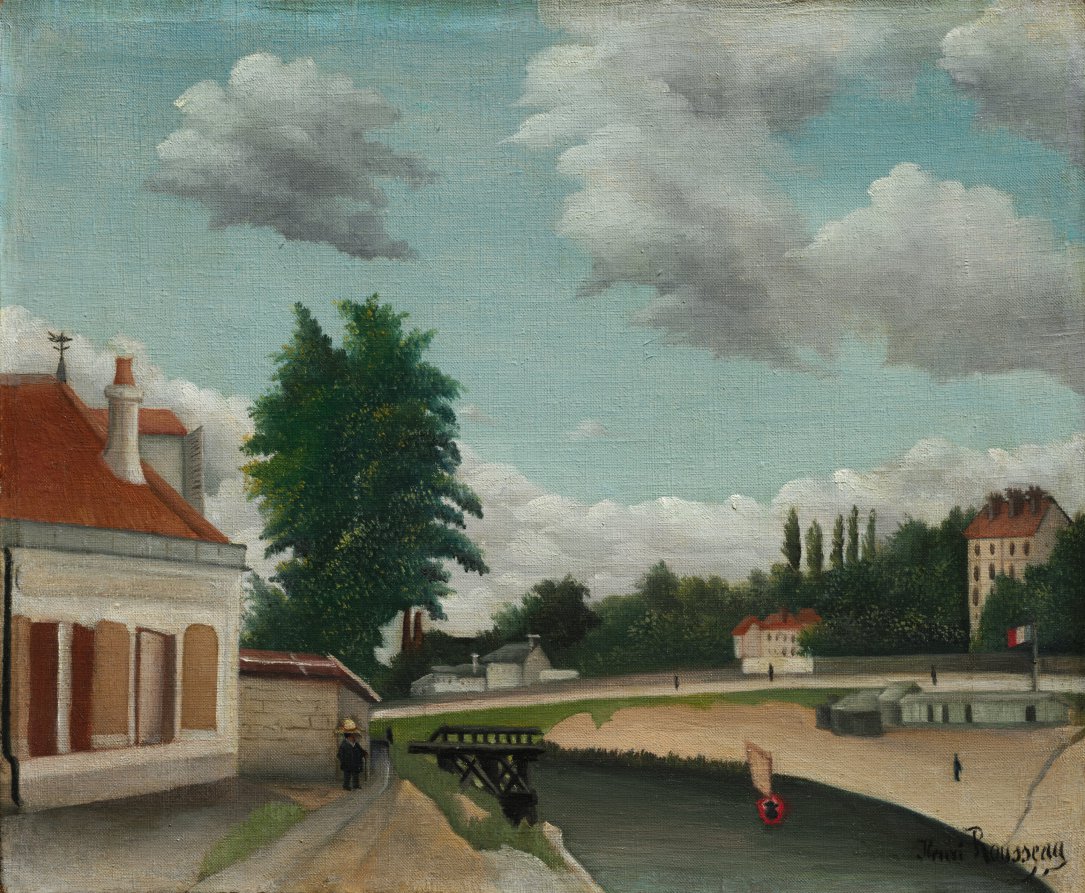
Outskirts of Paris, c. 1897–1905, by Henri Rousseau
Henri Rousseau · The Cleveland Museum of Art · Purchase from the J. H. Wade Fund
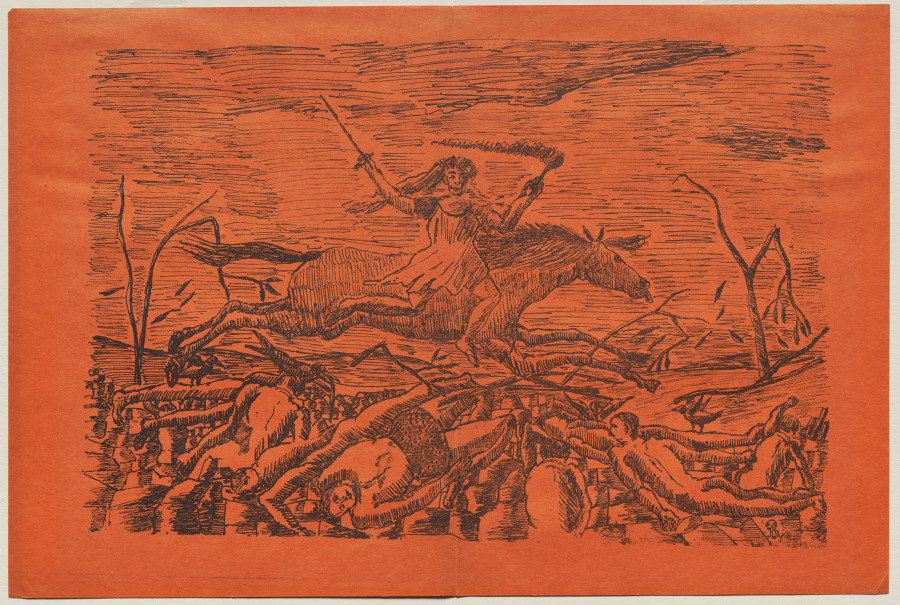
The War, 1894–1895, by Henri Rousseau
Henri Rousseau · The Cleveland Museum of Art · Dudley P. Allen Fund
Key facts
Key facts
• Name — Henri Rousseau • Birth Name — Henri Julien Félix Rousseau • Born — 21 May 1844 • Birthplace — Laval, France • Died — 2 September 1910 • Place of death — Paris, France • Field — Painting • Training — Self-taught • Movement — Post-Impressionism, Naïve art, Primitivism • Works — The Sleeping Gypsy, Tiger in a Tropical Storm, The Hungry Lion Throws Itself on the Antelope, Boy on the Rocks
Early life
Early life
Rousseau was born in Laval, Mayenne, France, in 1844 into the family of a tinsmith; he was forced to work there as a young child. He attended Laval High School as a day student, and then as a boarder after his father became a debtor and his parents had to leave the town upon the seizure of their house. Though mediocre in some of his high school subjects, Rousseau won prizes for drawing and music. After high school, he worked for a lawyer and studied law, but "attempted a small perjury and sought refuge in the army." He served four years, starting in 1863. With his father's death, Rousseau moved to Paris in 1868 to support his widowed mother as a government employee. In 1868, he married Clémence Boitard, with whom he had six children. In 1871, he was appointed as a collector of the octroi of Paris, collecting taxes on goods entering Paris. Following Boitard's death in 1888, he married his second wife, Josephine Noury, in 1899.
Career
Career
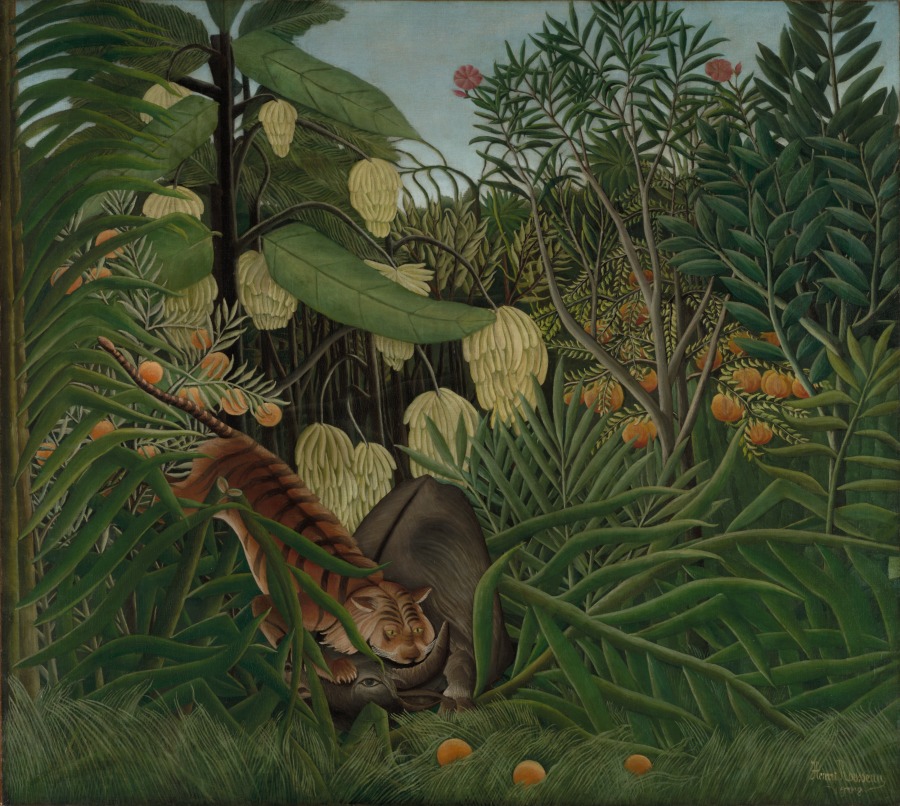
• Illustration — Tiger in a Tropical Storm (Surprised!) (1891) was the first of many jungle scenes for which Rousseau is best known. Rousseau did not travel and most of the jungles he painted were on display in the Natural History Museum and the botanical garden in Paris. From 1886, he exhibited regularly in the Salon des indépendants. Although his work was not placed prominently, it drew an increasing following over the years. Tiger in a Tropical Storm (Surprised!) was exhibited in 1891, and Rousseau received his first serious review when the young artist Félix Vallotton wrote: "His tiger surprising its prey ought not to be missed; it's the alpha and omega of painting." Yet it was more than a decade before Rousseau returned to depicting his vision of jungles. In 1893, Rousseau moved to a studio in Montparnasse where he lived and worked until his death in 1910. In 1897, he produced one of his most famous paintings, The Sleeping Gypsy, which is now on display in the Barnes Foundation. In 1905, Rousseau's large jungle scene The Hungry Lion Throws Itself on the Antelope was exhibited at the Salon des indépendants near works by younger leading avant-garde artists such as Henri Matisse, in what is now seen as the first showing of The Fauves. Rousseau's painting may even have influenced the naming of the Fauves. In 1907, he was commissioned by artist Robert Delaunay's mother, Berthe, Comtesse de Delaunay, to paint The Snake Charmer.
Le Banquet Rousseau
Le Banquet Rousseau
When Pablo Picasso happened upon a painting by Rousseau being sold on the street as a canvas to be painted over, the younger artist instantly recognised Rousseau's genius and went to meet him. In 1908, Picasso held a half serious, half burlesque banquet in his studio at Le Bateau-Lavoir in Rousseau's honour. Guests at the banquet Rousseau included: Guillaume Apollinaire, Jean Metzinger, Juan Gris, Max Jacob, Marie Laurencin, André Salmon, Maurice Raynal, Daniel-Henri Kahnweiler, Leo Stein, and Gertrude Stein. Le Banquet Rousseau, "one of the most notable social events of the twentieth century," wrote US poet and literary critic John Malcolm Brinnin, "was neither an orgiastic occasion nor even an opulent one. Its subsequent fame grew from the fact that it was a colourful happening within a revolutionary art movement at a point of that movement's earliest success, and from the fact that it was attended by individuals whose separate influences radiated like spokes of creative light across the art world for generations." Maurice Raynal, in Les Soirées de Paris, 15 January 1914, p.69, wrote about "Le Banquet Rousseau". Years later the French writer André Salmon recalled the setting of the illustrious banquet:
Retirement and death
Retirement and death
• Illustration — Tropical Forest with Monkeys (1910) • Illustration — The Dream (1910) Museum of Modern Art • Illustration — Portrait of Henri Rousseau by Robert Delaunay (1914), Musée National d'Art Moderne After Rousseau's retirement in 1893, he supplemented his small pension with part-time jobs. He also worked briefly at Le Petit Journal, where he produced a number of its covers. An equally famous work by Rousseau, included in the collection of John Hay Whitney, is Tropical Forest with Monkeys, which was painted during the last months of his life. It shows one of his signature exotic landscapes, lush, tropical, and virgin. Many of the animals in Rousseau's images have human faces or attributes. The central monkeys in this painting hold green sticks from which strings appear to dangle, suggesting fishing poles and human leisure activities, thereby emphasising the quasi-human experience of the animals. In this sense Rousseau's anthropomorphised primates can be seen not as true wild beasts, but rather as representing an escape from the "jungle" of Paris and the everyday grind of civilised life. Rousseau exhibited his final painting, The Dream, in March 1910, at the Salon des Independants. In the same month Rousseau suffered a phlegmon in his leg. In August, when he was admitted to the Necker Hospital in Paris where his son had died, he was found to have gangrene in his leg. After an operation, he died from a blood clot on 2 September 1910. At his funeral, seven friends stood at his grave: the painters Paul Signac and Manuel Ortíz de Zárate; the artist couple Robert and Sonia Delaunay; the sculptor Constantin Brâncuși; Rousseau's landlord Armand Queval, and Guillaume Apollinaire, who wrote the epitaph Brâncuși put on the tombstone: We salute you Gentle Rousseau you can hear us. Delaunay, his wife, Monsieur Queval and myself. Let our luggage pass duty free through the gates of heaven. We will bring you brushes, paints and canvas. That you may spend your sacred leisure in the light and Truth of Painting. As you once did my portrait facing the stars, lion and the gypsy.
Exhibitions
Exhibitions
Two major museum exhibitions of his work were held in 1984-1985 (Grand Palais and Museum of Modern Art) and in 2001 (Kunsthalle Tubingen). "These efforts countered the persona of the humble, oblivious naïf by detailing his assured single-mindedness and tracked the extensive influence his work exerted on several generations of vanguard artists," critic Roberta Smith wrote in a review of a later exhibition. A major exhibition of his work, "Henri Rousseau: Jungles in Paris", was shown at the Tate Modern (3 November 2005 – 5 February 2006), organised by the Tate and the Musée d'Orsay, where the show also appeared. The exhibition, encompassing 48 of his paintings, was on display at the National Gallery of Art Washington (16 July – 15 October 2006), and at the Grand Palais (15 March – 19 June 2006). In 2015 the Fondazione Musei Civici di Venezia, the Musée d'Orsay, and the Musée de l'Orangerie collaborated on an exhibition Henri Rousseau that focused Rousseau's vision and his impact on his fellow artists. In addition to works by Rousseau, the exhibit featured works by fellow artists Georges Seurat, Wassily Kandinsky, Pablo Picasso among others. The exhibit was curated by Gabriella Belli, Guy Cogeval, Beatrice Avanzi, and Claire Bernardi. It was exhibited at the Doge's Palace (6 March – 6 September 2015), the Musée d'Orsay (titled The Douanier Rousseau. Archaic Candour, 22 March – 17 July 2016) and National Gallery Prague (16 September 2016 – 15 January 2017). The Barnes Foundation and the Musée de l'Orangerie organised Henri Rousseau: A Painter's Secrets, featuring nearly 60 of Rousseaus works. The exhibit was shown at the Barnes Foundation (19 October 2025 – 22 February 2026), and the Musée de l'Orangerie (25 March – 20 July 2026).
Gallery
Gallery
• Illustration — A Carnival Evening, 1886, Philadelphia Museum of Art • Illustration — Self Portrait, 1890, National Gallery Prague • Illustration — Tiger in a Tropical Storm, 1891, National Gallery London • Illustration — The Mill, c. 1896, Musée Maillol • Illustration — Boy on the Rocks, 1895–1897, National Gallery of Art Washington • Illustration — The Sleeping Gypsy, 1897, Museum of Modern Art • Illustration — La tour Eiffel peinte par Henri Rousseau, 1898, Houston Museum of Fine Arts • Illustration — Self-portrait of the Artist with a Lamp, 1903 • Illustration — The Merry Jesters, 1906, Philadelphia Museum of Art • Illustration — The Flamingoes, 1907, Private collection • Illustration — The Snake Charmer, 1907, Musée d'Orsay • Illustration — The Repast of the Lion, c.1907, Metropolitan Museum of Art • Illustration — Exotic Landscape, 1908, Private collection • Illustration — Fight Between a Tiger and a Buffalo, 1908, Cleveland Museum of Art • Illustration — View of the Bridge in Sevres and the Hills of Clamart, Saint-Cloud and Bellevue with biplane, balloon and dirigible, 1908, Pushkin Museum • Illustration — In a Tropical Forest Combat of a Tiger and a Buffalo, 1908–1909, Hermitage Museum • Illustration — The Football Players, 1908, Solomon R. Guggenheim Museum • Illustration — Muse Inspiring the Poet (Portrait of Guillaume Apollinaire and Marie Laurencin), 1909, Kunstmuseum Basel • Illustration — Jaguar Attacking a Horse, 1910, Pushkin Museum • Illustration — Bouquet of Flowers, 1910, Tate Gallery • Illustration — Pierre Loti, 1910, Kunsthaus Zürich
Life and career
Dated record
Life and career
Explore 1844–1953
The full dated record · 3 entries
1844
Henri Rousseau was born in 1844.
1953
Douanier Rousseau, 1844-1910. With an introduction (1953) is digitised and catalogued by Internet Archive.
1910
Henri Rousseau died at Paris.
Places
Named by the record
Places
Only places the record itself states, plotted where the house gazetteer settles their coordinates. Nothing is inferred from a name or a nationality.
Henri Rousseau was born at Laval.
Birthplace
Henri Rousseau died at Paris.
Deathplace
Paintings
• Illustration — The Hungry Lion Throws Itself on the Antelope (1905) • Illustration — The Equatorial Jungle (1909), National Gallery of Art Washington Rousseau had no academic training in any art. His paintings were at first ridiculed, but his naive primitive style influenced other contemporary artists. Aged 49, he applied for early retirement and devoted himself full-time to his painting portfolio. He only received a modest pension and supplemented his income by tutoring children in art. Contemporary academic artists include Claude Monet, Camille Pissarro, and Pierre-Auguste Renoir. Nevertheless, Rousseau is today regarded as a French post-impressionist painter. Rousseau claimed he had "no teacher other than nature", although he admitted he had received "some advice" from two established Academic painters, Félix Auguste Clément, and Jean-Léon Gérôme. His best-known paintings depict jungle scenes, even though he never left France or saw a jungle. Stories spread by admirers that his army service included the French intervention in Mexico are unfounded. His inspiration came from illustrations in children's books and the botanical gardens in Paris, as well as tableaux of taxidermy wild animals. During his term of service, he had also met soldiers who had survived the French expedition to Mexico, and he listened to their stories of the subtropical country they had encountered. To the critic Arsène Alexandre, he described his frequent visits to the Jardin des Plantes: "When I go into the glass houses and I see the strange plants of exotic lands, it seems to me that I enter into a dream." Along with his exotic scenes there was a concurrent output of smaller topographical images of the city and its suburbs. He claimed to have invented a new genre of portrait landscape, which he achieved by starting a painting with a specific view, such as a favourite part of the city, and then depicting a person in the foreground, most notably his early Myself, Portrait-Landscape (1890).
Criticism and recognition
Criticism and recognition
Rousseau's flat, seemingly childish style was disparaged by many critics; people often were shocked by his work or ridiculed it. His ingenuousness was extreme, and he always aspired, in vain, to conventional acceptance. Many observers commented that he painted like a child, but the work shows sophistication with his particular technique.
Legacy
Legacy
• Illustration — Rousseau in 1907 Rousseau's work exerted an extensive influence on several generations of avant-garde artists, including Pablo Picasso, Jean Hugo, Fernand Léger, Jean Metzinger, Max Beckmann, and the Surrealists. According to Roberta Smith, an art critic writing in The New York Times, "Beckmann's amazing self-portraits, for example, descend from the brusque, concentrated forms of Rousseau's portrait of the writer Pierre Loti." In 1911, a retrospective exhibition of Rousseau's works was shown at the Salon des Indépendants. His paintings were also shown at the first exhibition of Der Blaue Reiter. Rousseau's art was exhibited as naïve art in salons and commercial art galleries alongside art by artists Rousseau did not personally know. Rousseau was posthumously promoted by the art dealer Wilhelm Uhde and a collection of naïve art is today curated by the Musée Maillol. Critics have noted the influence of Rousseau on Wallace Stevens's poetry. See, for instance, Stevens's "Floral Decorations for Bananas" in the collection Harmonium. The US poet Sylvia Plath was a great admirer of Rousseau, referencing his art, as well as drawing inspiration from his works in her poetry. The poem, "Yadwigha, on a Red Couch, Among Lilies" (1958), is based upon his painting, The Dream, whilst the poem "Snakecharmer" (1957) is based upon his painting The Snake Charmer. The song "The Jungle Line", by Joni Mitchell, is based upon a Rousseau painting. Underground comic artist Bill Griffith drew a four-page biographical sketch of Rousseau, A Couch in the Sun, which was included in issue #2 of the Arcade anthology. The visual style of Michel Ocelot's 1998 animation film, Kirikou and the Sorceress, is partly inspired by Rousseau, particularly the depiction of the jungle vegetation. A Rousseau painting was used as an inspiration for the 2005 animated film Madagascar. Rousseau's 1908 painting Fight Between a Tiger and a Buffalo was used as the inspiration for a series of 2021 advertisements concerning the rebrand of Facebook into the metaverse company Meta.
Primary material
Documents and archives
reference work
- “Henri Rousseau”, English Wikipedia, consulted as further reading
Reputable secondary · Wikipedia
authority record
- Wikidata, structured authority record Q156386: Henri Rousseau
Unverified · Wikidata
Notes from the source article
Cited by Wikipedia
Notes from the source article
These works are cited by the source article, in its own numbering. They are recorded as its citations, not as sources VALÉORINE has verified.
- 1.Archives départementales de la Mayenne. État-civil de Laval, registre des naissances 1844, vue 60/143, 4 E 159/160. https://archives.lamayenne.fr.
- 2.Archives de Paris. État-civil de Paris, registre des décès, du 1er au 19 septembre 1910, vue 4/31, 15D 228. https://archives.paris.fr.
- 3.Ce que vous ne saviez (peut-être) pas sur le Douanier Rousseau. beauxarts.com. 27-12-2021.
- 4.Le monde du Douanier Rousseau - CNRS Editions. www.cnrseditions.fr.
- 5.Il a trois sœurs ainées, Marie, Éléonore et Henriette et un frère cadet, Jules.
- 6.Elle est la fille de Jean-Baptiste Guiard (Laval, 1791-Bône, 1833), capitaine au de la légion de la Côte-d'Or
- 7.Le Douanier Rousseau. A. Skira. 1972.
- 8.L'Écho de la Mayenne, 19 novembre 1854.
- 9.Henri Rousseau, 1844-1910. éditions Le Monde. 2005.
- 10.Archives de Paris. État-civil de Paris, registre des mariages du 7e arrondissement, du 10 au 26 août 1869, V4E 849, vue 5/12. https://archives.paris.fr.
- 11.Archives de Paris. État-civil de Paris, registre des décès du 6e arrondissement, du 2 au 7 mai 1888, vue 6/15, V4E 5952. https://archives.paris.fr.
- 12.Paris, Cimetière du Montparnasse (Paris, France) - Registres journaliers d'inhumation 09/05/1888 - 19/07/1888. Geneanet.
- 13.Archives de Paris. État-civil de Paris, registre des mariages du 15e arrondissement, du 19 août au 2 septembre 1899, V4E 9930, vue 22/31. https://archives.paris.fr.
- 14.Archives de Paris. État-civil de Paris, registre des décès du 14e arrondissement, du 3 au 16 mars 1903, vue 27/31, 14D 201. https://archives.paris.fr.
- 15.Le Douanier Rousseau. Parkstone International. 2011.
- 16.Guggenheim Museum
- 17.Musée de Laval
- 18.La Guerre, Notice Orsay
- 19.Le Douanier Rousseau.
- 20.Frumence Biche, Musée Stagaya
- 21.Joséphine Bindé. L’hilarant procès du Douanier Rousseau pour fraude bancaire. Beaux Arts. 2024-07-24.
- 22.Le Douanier Rousseau.
- 23.Paris révolutionnaire.org
- 24.Les PARIS d'Alain Rustenholz
- 25.Le Douanier Rousseau. Catalogue de l'exposition du Grand Palais du 14 septembre 1984 au 7 janvier 1985. Éditions de la Réunions des musées nationaux. Paris. 106. 1984. 2-7118-0275-2.
- 26.Les PARIS d'Alain Rustenholz
- 27.Le Douanier Rousseau.
- 28.Le Douanier Rousseau.
- 29.Éric Biétry-Rivierre, Le Figaro, édition des 13 et 14 février 2010.
- 30.Henri Rousseau, le Douanier. Éditions Albert Skira. 1944.
- 31.Le Navire, Orangerie
- 32.La Fabrique, Orangerie
- 33.La Noce, Orangerie
- 34.L'Enfant à la poupée, Musée d'Orsay
- 35.http://theatreduchathuant.fr/wp-content/uploads/2011/07/dossier_presse_orpheline.pdf.
- 36.Les œuvres du douanier Rousseau exposées ici proviennent de la collection personnelle de Pablo Picasso.
- 37.article non-signé. Le Douanier Rousseau. L'innocence archaïque. Musée d'Orsay. 2016.
- 38.Visite guidée, avec Michel L'héritier. Place Minute.
Bibliography printed in the source article · 21
- A. Basler, Henri Rousseau, sa vie, son œuvre, Librairie de France, 1927.
- André Salmon, Henri Rousseau dit Le Douanier, Éd. Georges Crès, 1927.
- Pierre Courthion. Henri Rousseau, le Douanier, Éditions Albert Skira. Cette édition de 1944 comporte quelques erreurs dans la biographie du Douanier.
- Wilhelm Uhde, Cinq maîtres primitifs. Rousseau, Louis Vivin, Camille Bombois, André Bauchant, Séraphine de Senlis, traduction de l'allemand par A. Ponchont, préface de Henri-Bing-Bodmer, Librairie Palmes/Philippe Daudy, éditeur, 1949.
- Henri Rousseau dit « Le Douanier » 1844-1910. Exposition de son cinquantenaire. Galerie Charpentier, Paris, Galerie Charpentier. 1961.
- Dora Vallier, Tout l'œuvre peint de Henri Rousseau, Éditions Flammarion, coll. « Les classiques de l'Art », 128 pages. 1970.
- Henry Certigny La Vérité sur le Douanier Rousseau. Le Conseil municipal de Paris et les Artistes indépendants : 1880-1900, La Bibliothèque des Arts, Lausanne-Paris. 1971.
- Pierre Descargues, Le Douanier Rousseau, Éditions Albert Skira, Genève. 1972.
- Henry Certigny, Le Douanier Rousseau et Frumence Biche, La Bibliothèque des Arts, Lausanne-Paris. 1973.
- David Larkin, Rousseau, Éditions du Chêne. 1975.
- Le Douanier Rousseau. Catalogue de l'exposition du Grand Palais du au . Ministère de la Culture. Éditions de la Réunion des musées nationaux. Paris. 280 pages . 1984.
- Gilles Plazy, Le Douanier Rousseau, un naïf dans la jungle. Éditions Gallimard, Découvertes Gallimard. 144 pages. . 1992.
- Isabelle Cahn, Le Douanier Rousseau, naïf ou moderne ?. Éditions À Propos, 64 pages. 2006.
- Le Douanier Rousseau, Jungles à Paris. Éditions de la Réunion des musées nationaux. 231 pages. . 2006.
- Henri Rousseau, Les écrits du Douanier Rousseau , édité par Yann Le Pichon, CNRS Editions, Paris , .
- Yann Le Pichon, Le Monde du Douanier Rousseau, ses sources d'inspiration, ses influences sur l'art moderne. CNRS Éditions, Paris. Grand in-4, 320 pages. .
- Guy Cogeval, Le Douanier Rousseau. L’innocence archaïque, Hazan. 270 pages. . 2016.
- Cornelia Stabenow, Rousseau, Éditions Taschen. 96 pages. . 2018.
- Mathieu Siam (scénario) & Thibaut Lambert (dessin), Les frontières du Douanier Rousseau (bande dessinée), Michel Lafon, 2022.
- Götz Adriani, Le Livre de l'exposition de Tübingen, 2001 (en anglais).
- Angela Wenzel, Henri Rousseau, La Gitana Dormida. Loguez Ediciones. 128 pages. . 2001.
References
Citations
References
Each reference names the institution holding it, so a reader may go to the document itself.
reference work
Partially resolvedauthority record
Partially resolved
People, houses and institutions
Knowledge graph
People, houses and institutions
Teachers, collaborators, publishers and institutions recorded against this person, each on a stated basis.
Died at
1- ParisPlace
Established from a fact already recorded on a verified source.
The Encyclopedia exists whether or not anything is for sale. Corrections are recorded rather than overwritten, and every version of this record is kept. Published 14 August 2026.
Elsewhere in Prints
4,138 published records in this field, each with its sources named.
- Henri LebasqueEngraver
- Henri MatisseEngraver
- Henri MeunierEngraver
- Henri RivièreEngraver
- Henri ThiriatEngraver
- Henri van der HaertEngraver
- Henri van RaalteEngraver
- Henri-Auguste PateyEngraver
Best supported in this field
For owners
Own a work by Henri Rousseau?
A specialist will read what you send and tell you what the house can establish, what it cannot, and whether the object is suited to sale. There is no charge and no obligation. The object stays with you throughout; nothing is shipped to us unless it is arranged in writing beforehand.