
Henri Regnault
Alexandre Georges Henri Regnault (31 October 1843 – 19 January 1871) was a French painter.
Also recorded as Henri-Georges-Alexandre Regnault · Henri Alexandre Georges Regnault · Henri-Alexandre-Georges Regnault · Henri A. Regnault
Henri Regnault
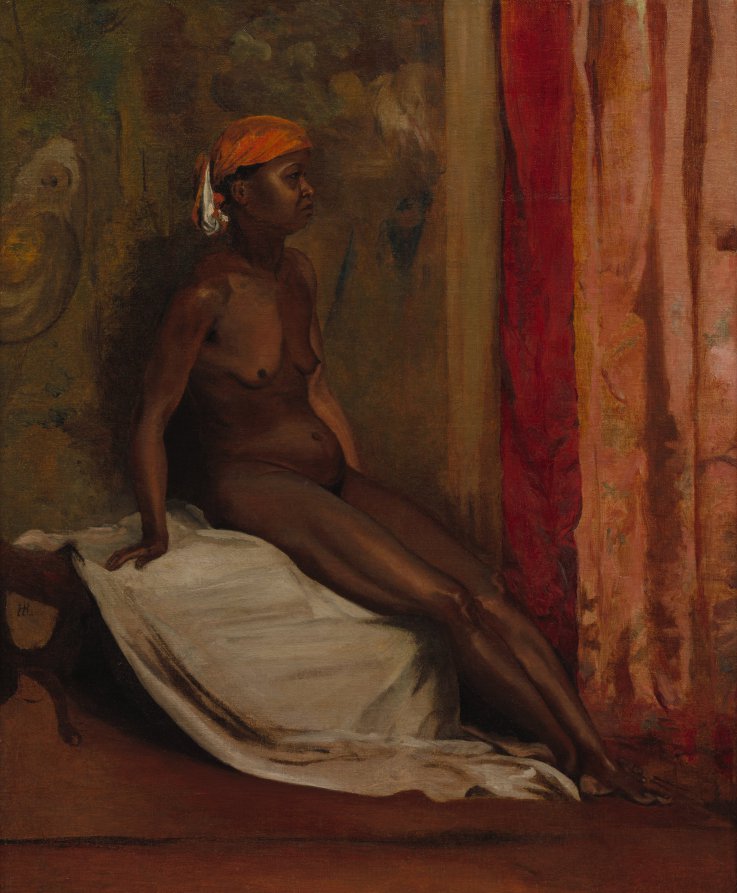
Henri Regnault · The Cleveland Museum of Art · Bequest of Noah L. Butkin · CC0
- Name
- Henri Regnault
- Birth Name
- Alexandre Georges Henri Regnault
- Born
- 31 October 1843
- Birthplace
- Paris, France
- Died
- 19 January 1871
- Place of death
- Rueil-Malmaison, France
- Education
- * École des Beaux-Arts
- Awards
- Prix de Rome (1866)
- Nationality
- France
- Occupation
- painter · visual artist
- Movements
- Orientalism
- Known for
- Spanish woman
VALÉORINE Encyclopedia
VALÉORINE documentary reading
Documentary summary
Alexandre Georges Henri Regnault (31 October 1843 – 19 January 1871) was a French painter.
Admitted source layer · organised and presented by VALÉORINE
Reference Check
Propose documentary evidence for Henri Regnault. A contribution is never written directly as fact: identity, source, rights and evidence gates still decide.
Sign in to contribute
Documentary evidence
Documentary basis
Authority files
wikidata · Q553571 · wikipedia · Henri Regnault
In this article
Key facts
Key facts
• Name — Henri Regnault • Birth Name — Alexandre Georges Henri Regnault • Born — 31 October 1843 • Birthplace — Paris, France • Died — 19 January 1871 • Place of death — Rueil-Malmaison, France • Education — * École des Beaux-Arts • French Academy in Rome • Notable Works — Salomé (1870) • Style — French Orientalism • Father — Henri Victor Regnault • Awards — Prix de Rome (1866)
Biography
Biography
Regnault was born in Paris, the son of Henri Victor Regnault. On leaving school he successively entered the studios of Antoine Montfort, Louis Lamothe and Alexandre Cabanel, was beaten for the Prix de Rome (1863) by Joseph Layraud and Xaiver Monchablon, and in 1864 exhibited two unremarkable portraits at the Paris Salon. In 1866, however, he carried off the Prix de Rome with a work of unusual force and distinction Thetis bringing the Arms forged by Vulcan to Achilles (École de Beaux-Arts). The past in Italy did not touch him, but his illustrations to Wey's Rome show how observant he was of actual life and manners; even his Automedon (School of Fine Arts), executed in obedience to Academical regulations, was but a lively recollection of a carnival horse-race. At Rome, moreover, Regnault came into contact with the modern Hispano-Italian school, a school highly materialistic and inclined to regard even the human subject only as one amongst many sources of visual amusement. The vital, if narrow, energy of this school told on Regnault with ever-increasing force during the few remaining years of his life. In 1868 he had sent to the Salon a life-size portrait of a lady in which he had made one of the first attempts to render the actual character of fashionable modern life. While making a tour in Spain, he saw General Juan Prim pass at the head of his troops, and received that lively image of a military demagogue which he afterwards put on canvas, somewhat to the displeasure of his subject. But this work made an appeal to the imagination of the public, while all the later productions of Regnault were addressed exclusively to the eye. After a further trip to North Africa, abridged by the necessities of his position as a pensioner of the school of Rome, he painted Judith, then, in 1870, Salomé, and, as a work due from the Roman school, dispatched from Tangier the large canvas, Summary Execution under the Moorish Kings of Granada. The Franco-Prussian War arose, and found Regnault at the Battle of Buzenval, where he was killed on 19 January 1871. • Illustration — Statue of Regnault on the facade of Paris' Hôtel de Ville. His friend, the composer Camille Saint-Saëns dedicated his Marche héroïque (1871) to Regnault's memory. The sculptor Henri Chapu erected a monument to him in the courtyard of the École des Beaux-Arts in 1872. Jean-Louis-Ernest Meissonier painted him in the centre of his Le siège de Paris as the soldier collapsed against the personification of Paris. Marc Gotlieb's The Deaths of Henri Regnault (University of Chicago Press, 2016) documents the vicissitudes of Regnault's legacy as artist and national symbol.
Gallery
Gallery
• Illustration — Thetis bringing the Arms forged by Vulcan to Achilles (1866), Beaux-Arts de Paris • Illustration — Automedon with the Horses of Achilles (1868), Museum of Fine Arts, Boston • Illustration — Salomé (1870), Metropolitan Museum of Art • Illustration — Summary Execution under the Moorish Kings of Granada (1870), Musée d'Orsay
Identity and origins
Identity and origins
The authorities additionally record the headings Henri-Georges-Alexandre Regnault, Henri Alexandre Georges Regnault, Henri-Alexandre-Georges Regnault, Henri A. Regnault and Alexandre-Georges-Henri Regnault. His recorded language was French. He was the child of Henri Victor Regnault.
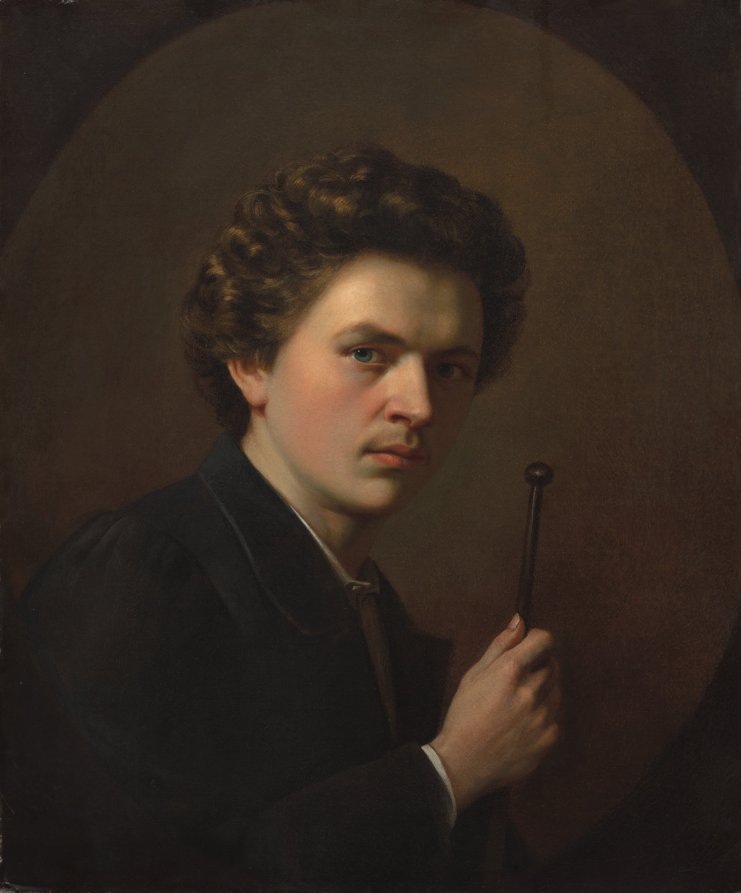
Self-Portrait with a Maulstick, c. 1863, by Henri Regnault
Henri Regnault · The Cleveland Museum of Art · Bequest of Noah L. Butkin
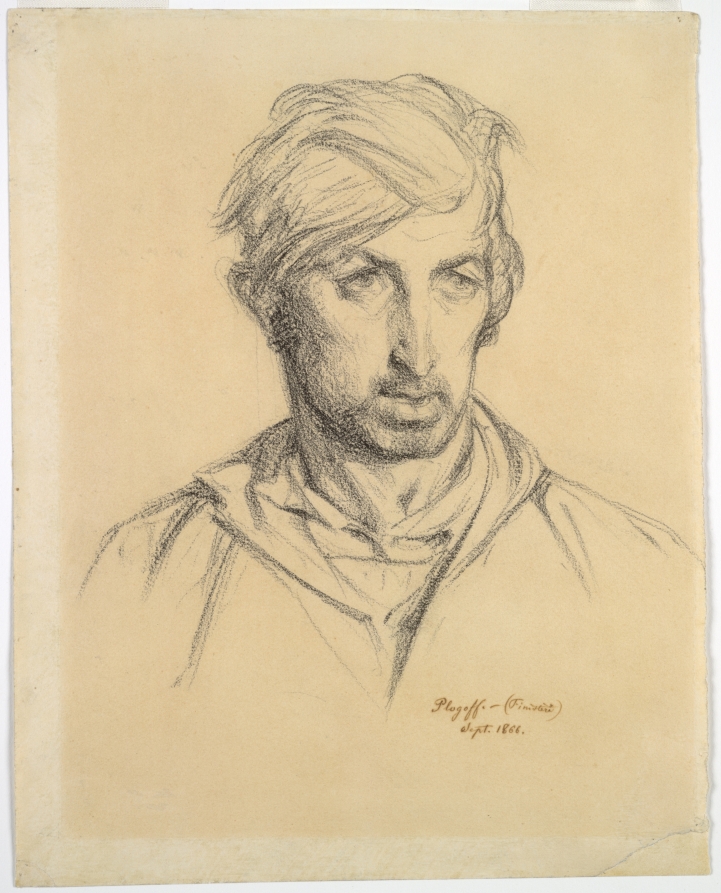
Head of a Man, 1866, by Henri Regnault
Henri Regnault · The Cleveland Museum of Art · Bequest of Muriel Butkin
Life and career
Dated record
Life and career
Explore 1843–1872
The full dated record · 6 entries
1843
Henri Regnault born at former 12th arrondissement of Paris.
1870
Henri Regnault: notice (1870) is digitised and catalogued by Internet Archive.
1870
Henri Regnault: notice digitised by Internet Archive.
1871
Henri Regnault died at Buzenval.
1872
Correspondance de Henri Regnault annotée et recueillie par Arthur Duparc (1872) is digitised and catalogued by Internet Archive.
1872
Correspondance de Henri Regnault annotée et recueillie par Arthur Duparc digitised by Internet Archive.
Where the work is held
Recognition and collections
Henri Regnault received Prix de Rome.
Literature
Literature
Literature
33072, 1872-04-05, REGNAULT (Henri), peintre †, Art Sales Catalogues Online.
Regnault, Henri Alexandre Georges, Benezit Dictionary of Artists, 2011
Regnault, (Henri-)Victor, Oxford Art Online, 2003
The Deaths of Henri Regnault, 2016
María Brey, Viaje a España del pintor Henri Regnault (1868-1870), Valencia, Ed
Scholarly footprint
Literature
Scholarly footprint
A count of publications is evidence of attention, not of standing, and is given here only as a measure.
Notes from the source article
Cited by Wikipedia
Notes from the source article
These works are cited by the source article, in its own numbering. They are recorded as its citations, not as sources VALÉORINE has verified.
- 1.Wey, Francis (1872). Rome. London: Chapman and Hall.
- 2.Collister, Peter (1992). "A 'Legendary Hue': Henri Regnault and the Fiction of Henry James and Mrs Humphry Ward," The Modern Language Review, Vol. 87, No. 4, p. 827.
- 3.Gotlieb, Marc. The Deaths of Henri Regnault. University of Chicago Press.
Bibliography printed in the source article · 2
- Regnault, Henri. 23. 46.
- Gotlieb, M. (2016). The Deaths of Henri Regnault. University of Chicago Press.
References
Citations
References
Each reference names the institution holding it, so a reader may go to the document itself.
reference work
Wikidata, structured authority record Q553571: Henri RegnaultWikimedia Foundation
Secondary witnessreference work
Secondary witness
Further particulars
Held on the record
Further particulars
Open the remaining particulars
Henri Regnault studied at Beaux-Arts de Paris, Lycée Henri-IV and French Academy in Rome. He trained under Louis Lamothe and Alexandre Cabanel.
The Encyclopedia exists whether or not anything is for sale. Corrections are recorded rather than overwritten, and every version of this record is kept. Published 14 August 2026.
Elsewhere in Paintings
19,261 published records in this field, each with its sources named.
- Henri MauperchéArtist
- Henri Michel-LévyArtist
- Henri PintaArtist
- Henri RapinArtist
- Henri RitzenArtist
- Henri RouartArtist
- Henri RoyerArtist
- Henri TestelinArtist
Best supported in this field
For owners
Own a work by Henri Regnault?
A specialist will read what you send and tell you what the house can establish, what it cannot, and whether the object is suited to sale. There is no charge and no obligation. The object stays with you throughout; nothing is shipped to us unless it is arranged in writing beforehand.