
Giulio Clovio
Juraj Julije Klović or Giorgio Giulio Clovio (1498 – 5 January 1578) was a Croatian–Italian illuminator, miniaturist, and painter born in the Kingdom of Croatia, who was mostly active in Renaissance Italy. He is considered the greatest illuminator of the Italian High Renaissance, and arguably the last very notable artist in the long tradition of the illuminated manuscript, before some modern revivals.
Also recorded as Juraj Julio Klovio · Macedone · Juraj Klović · Juraj Klovic
Giulio Clovio
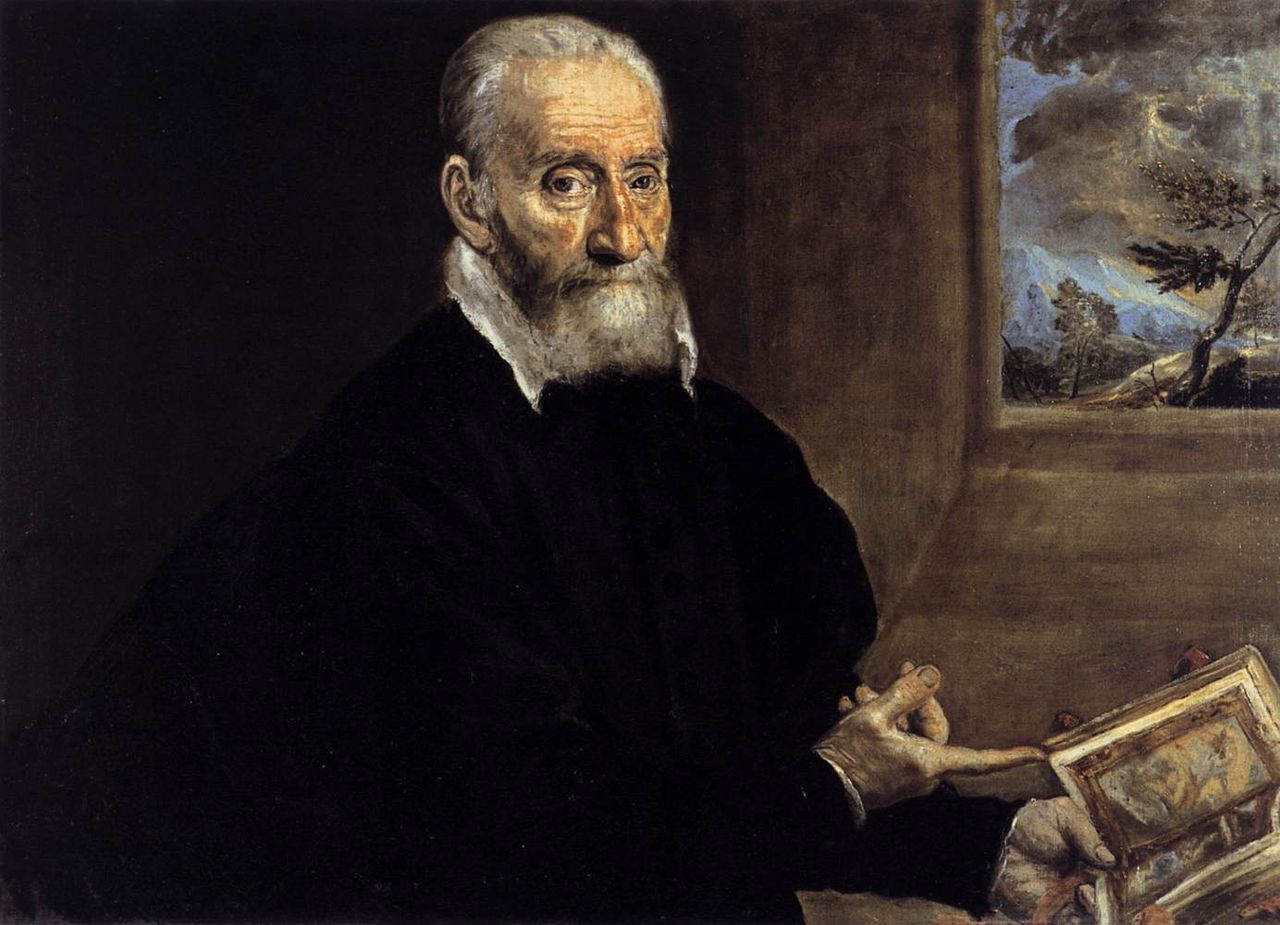
El Greco · Web Gallery of Art: Image Info about artwork wga QS:P11807,"g/greco_el/03/0302grec" · Public domain
- Name
- Giulio Clovio
- Birth Name
- Juraj Julije Klović
- Born
- 1498
- Birthplace
- Grižane, Kingdom of Croatia
- Died
- 5 January 1578 1498
- Place of death
- Rome, Papal States
- Field
- Illuminator, miniaturist, and painter
- Movement
- High Renaissance
- Nationality
- Croatia
- Occupation
- painter · illuminator
- Fields
- visual arts · manuscript illumination
- Known for
- Farnese Hours
VALÉORINE Encyclopedia
VALÉORINE documentary reading
Documentary summary
Juraj Julije Klović or Giorgio Giulio Clovio (1498 – 5 January 1578) was a Croatian–Italian illuminator, miniaturist, and painter born in the Kingdom of Croatia, who was mostly active in Renaissance Italy. He is considered the greatest illuminator of the Italian High Renaissance, and arguably the last very notable artist in the long tradition of the illuminated manuscript, before some modern revivals.
Admitted source layer · organised and presented by VALÉORINE
Note VALÉORINE
Giulio Clovio (1498–1578) was an illuminator and painter, of Croatian nationality. The illuminator was born in Grižane-Belgrad and died in Rome.
Giulio Clovio worked in Buda, Florence and Mantua, among others. Activity centred on manuscript illumination and visual arts. Giulio Clovio was associated with High Renaissance.
Among the works is Farnese Hours. Languages used include Croatian. Works are held at Art Institute of Chicago, Auckland Art Gallery and Lázaro Galdiano Museum, among others.
Composed from admitted, traceable facts · 27 September 2026
VALÉORINE
Reference Check
Propose documentary evidence for Giulio Clovio. A contribution is never written directly as fact: identity, source, rights and evidence gates still decide.
Sign in to contribute
World of VALÉORINE
Documentary connections
Only confirmed graph relationships appear here. Images are shown only when their identity and reuse rights both pass the documentary gate.
Documentary evidence
Evidence Panel
not yet certified
- Identity
- resolved
- Independent source families
- 0
- Admitted assertions
- 0
- Open conflicts
- 0
Authority files
gnd · 5509088-6 · wikidata · Q281219 · wikipedia · Giulio Clovio
In this article
Biography
Biography
The recorded working language is Croatian. The field of work recorded is visual arts and manuscript illumination. Places of work recorded in the authority are Rome, Buda and Mantua. Works named in the authority record are Farnese Hours. Work by Giulio Clovio is recorded in the collections of Museum Boijmans Van Beuningen, Städel Museum, Art Institute of Chicago, Auckland Art Gallery and The Morgan Library & Museum.

Musée de Capodimonte - Le Gréco, portrait de Giulio Clavio, en 1571-572 - Détail
MOSSOT
Key facts
Key facts
• Name — Giulio Clovio • Native Name — Juraj Julije Klović • Birth Name — Juraj Julije Klović • Born — 1498 • Other Names — * Giorgio Giulio Clovio • Clovio Croata • Birthplace — Grižane, Kingdom of Croatia • Died — 5 January 1578 1498 • Place of death — Rome, Papal States • Field — Illuminator, miniaturist, and painter • Movement — High Renaissance • Works — Farnese Hours (1546) • Illustration — Engraving of the Cabinet des Estampes Enea Vico after Giulio Clovio (1522).
Biography
Biography
Giulio Clovio was born in Grižane, a village in Kingdom of Croatia (today's Croatia). He came from a Croatian family, and he is known as Clovio Croata. It is not known where he had his early training, but he may have studied art with monks at Rijeka of Novi Bazar when he was young. • Illustration — Clovio's patron, Cardinal Alessandro Farnese, from the Farnese Hours He moved to Italy at age 18 and entered the household of Cardinal Marino Grimani where he was trained as a painter. Between 1516 and ca 1523 Clovio may have lived with Marino in the residence of the latter's uncle Cardinal Domenico Grimani in Rome. Clovio studied under Giulio Romano during this early period. He also studied under Girolamo dai Libri. While a protégé of Cardinal Domenico Grimani, Clovio engraved medals and seals for him, as well as the Grimani Commentary Ms., an important early illuminated book (now Sir John Soane's Museum, London). By 1524 Clovio was at Buda, at the Hungarian court of King Louis II, for whom he painted the "Judgment of Paris" and "Lucretia". After Louis' death in the Battle of Mohács, Clovio travelled to Rome where he continued his career. • Illustration — 1528 autoportrait in the Strossmayer Gallery donated by Ivan Kukuljević in 1891 After 1527 he visited several monasteries of the Canons Regular of St. Augustine. In 1534 Clovio returned to the household of Cardinal Marino Grimani. A year later Clovio may have followed Marino when the latter was appointed as a papal legate to Perugia, where Clovio is thought to have worked on illustrations for the Soane Manuscript written by Marino Grimani around that time. Clovio likely returned to Rome by the end of 1538 when he is known to have met with the writer Francisco de Hollanda. • Illustration — Attributed to Giulio Clovio (Italian, 1498–1578). Crucifixion, ca. 1572. Tempera on parchment, 9 1/8 x 5 5/8 in. (23.2 x 14.3 cm). Brooklyn Museum, Gift of A. Augustus Healy Clovio later became a member of the household of Alessandro Farnese with whom he would be associated until his death. It was during his time with Farnese that Clovio created one of his masterpieces, the Farnese Hours. Other well-known works from this period include the illustrations for the Towneley Lectionary. From 1551 to 1553 Clovio is known to have worked in Florence. During this time he painted a miniature of Eleanor of Toledo (England, Welbeck Abbey, Private Collection).
Contact with other artists
Contact with other artists
Clovio was a friend of the much younger El Greco, the celebrated Greek artist from Heraklion on Crete, who later worked in Spain, during El Greco's early years in Rome. Greco painted two portraits of Clovio; one shows the four painters whom he considered his masters; in this, Clovio is side by side with Michelangelo, Titian, and Raphael. Clovio was also known as Michelangelo of the miniature. Books with his miniatures became famous primarily due to his skilled illustrations. He was persuasive in transferring the style of Italian high Renaissance painting into the miniature format. Pieter Bruegel the Elder was a personal friend of Giulio Clovio, and stayed with Clovio in Rome during his Italian trip of 1553. Breugel executed a small medallion depicting ships in a storm on a Clovio miniature of the Last Judgment (New York Public Library), but the six Bruegels mentioned in Clovio's will have all disappeared.
Soane Manuscript
Soane Manuscript
Clovio illuminated the Commentary of Marino Grimani on St Paul's Epistle to the Romans. This work is now in the Sir John Soane Museum in London. The commentary consists of 130 vellums. Two large miniatures are included, as well as richly decorated borders. The miniatures depict the conversion of St Paul.
Farnese Hours
Farnese Hours
• Illustration — Farnese Hours (1546), Morgan Library & Museum, New York His most famous work is the Farnese Hours, completed in 1546 for Cardinal Alessandro Farnese, which was nine years in the making (now Morgan Library, New York). He is pointing to this work in the El Greco portrait (above). This contains twenty-eight miniatures depicting Adoration of the Magi and Solomon Adored by the Queen of Sheba, from Old and New Testament scenes, but with a famous double-page picture representing the Corpus Christi procession in Rome. It has splendid silver-gilt covers, although they are not by Benvenuto Cellini, as Vasari claimed.
Towneley Lectionary
Towneley Lectionary
The Towneley Lectionary is now in the New York Public Library and probably belonged to Cardinal Alessandro Farnese. Used during services, the book contained six majestic, full-page miniatures opposite miniature depictions of the Evangelists. The illustrations introduced the relevant readings from the Scripture. They include the Nativity, the Resurrection and the Last Judgment.
Colonna Missal
Colonna Missal
• Illustration — An illuminated page from his Colonna missal, 1530s, John Rylands Library, Manchester This work is now in the John Rylands Library in Manchester. The Colonna Missal was made for Cardinal Pompeo Colonna. There had been some debate about the identity of the artist. Some had attributed the missal to Raphael (about 1517). It has also been suggested that the work may belong to Vinzenzio Raimondi. It is now generally attributed to Clovio. • Illustration — Judith Beheading Holofernes, drawing, silwerpoint or charcoal, 322*238 mm, 1550–1560., Zagreb, Croatian Academy of Sciences and Arts - Department of Prints and Drawings
Other
Other
The British Library has his twelve full-page miniatures of the victories of the Emperor Charles V, and the Stuart de Rothesay Book of Hours, which was originally commissioned by Cardinal Marino Grimani and includes 4 miniatures by Giulio Clovio. The Vatican Library has a manuscript life of Federigo III di Montefeltro, Duke of Urbino, superbly illustrated by Clovio. Other illustrations by him are kept in libraries in Vienna, New York City, Munich, and Paris, and in many private collections. A large exhibition of his works was held in 2012 in Klovićevi Dvori ("Palace of Klović"), the art gallery dedicated to him in Zagreb. According to a description written for publication by Antonfrancesco Cirni, he also designed many of the costumes for the famously elaborate wedding festivities of Ortensia Borromeo in March 1565, which were held in the Vatican and included a tournament in the Belvedere courtyard. Such duties were often expected of a Renaissance court painter. The costumes are carefully recorded in a series of anonymous etchings, some probably based on Clovio's design drawings.
Death and burial
Death and burial
Giulio Clovio died in Rome on 5 January 1578. His tomb is in the Basilica of San Pietro in Vincoli, the church containing Michelangelo's celebrated Moses.
500th anniversary
500th anniversary
Croatia celebrated the 1998 500th anniversary of his birth. The Croatian National Bank issued a special 200 kuna silver coin in commemoration. A monument to Clovio was also raised in Drivenik. The Croatian government recently made news by purchasing Clovio's The Last Judgement, a painting Clovio gave as a gift to Pope Clement VII. Bernardin Modrić released his film The Gospel According to Klović in 2006. The Vatican celebrated this anniversary with postal stamps.
International
International
* • Italian Renaissance Artist List • Rijksbureau voor Kunsthistorische Documentatie - Clovio, Giorgio Il Macedo • Clovio Giorgio Giulio Artcyclopedia * • Clovio Giulio Bartleby • Giorgio Clovio Newadvent • Giulio Clovio • Vatican City postage stamp: Christmas 1998 – 500th anniversary of the birth of Giulio Clovio (named Julius Clovius Croatus in the stamp)
Italian
Italian
• Motivi disponibili Giorgio-Giulio Clovio • Le Vite - Edizioni Giuntina e Torrentiniana • Gli artisti principali citati dal Vasari nelle "Vite" (elenco) • Ultimo giudizio del Clovio
Croatian
Croatian
• Juraj Julije Klović Commemorative Coins-in English • Croatian post stamp: Christmas 1998 – 500th anniversary of the birth of Juraj Julije Klović
Identity
Identity
Giulio Clovio is recorded with the occupation illuminator. Recorded as painter and illuminator. Associated with High Renaissance.
Life and career
Dated record
Life and career
The full dated record · 2 entries
1498
Giulio Clovio was born on 1 January 1498.
1578
Giulio Clovio died on 3 January 1578.
Places
Named by the record
Places
Only places the record itself states, plotted where the house gazetteer settles their coordinates. Nothing is inferred from a name or a nationality.
Grižane-Belgrad.
Birth place
Rome.
Death place
Sculptures
• Illustration — Statue in Drivenik • Illustration — Bust in Zrinjevac park, Zagreb • Illustration — Monument in Grižane • Illustration — Statue in front of Klovićevi Dvori Gallery, Zagreb
Legacy
Today, Giulio Clovio is celebrated in Italy and Croatia. He was born in the Kingdom of Croatia and stated his Croatian identity. But, for most of his life he worked in Italy, and is therefore often referred to as an Italian painter.
Primary material
Documents and archives
reference work
- Wikidata, structured authority record Q281219: Giulio Clovio
Reputable secondary · Wikimedia Foundation
- “Giulio Clovio”, English Wikipedia, consulted as further reading
Reputable secondary · Wikipedia
authority file
- Gemeinsame Normdatei 5509088-6, Exhibition Prints After Giulio Clovio (1998 : Zagreb).
Unverified · Deutsche Nationalbibliothek
Notes from the source article
Cited by Wikipedia
Notes from the source article
These works are cited by the source article, in its own numbering. They are recorded as its citations, not as sources VALÉORINE has verified.
- 1.John Van Antwerp Fine, When ethnicity did not matter in the Balkans: a study of identity in pre-nationalist Croatia, Dalmatia, and Slavonia in the medieval and early-modern periods, University of Michigan Press, 2006, p 195 Google Books
- 2.The Life and Works of Giorgio Giulio Clovio, Miniaturist: with notices of his contemporaries, and of the art of decoration in the Sixteenth Century - by John William Bradley – 1891
- 3.Bradley, 2004 (reprint), pp. 368–369
- 4.Visani, Maria. Giorgio Clovio. Laurana. 8. 1993.
- 5.Igor Fisković; (1989) Renaissance Art in Dalmatia and Hungary p. 100; Balcánica XX, Belgrade http://www.balcanica.rs/balcanica/uploaded/balcanica/balcanica20/05%20Balcanica%20XX%20(1989)%20Igor%20Fiskovi%C4%87,%20Renaissance%20Art%20in%20Dalmatia%20and%20Hungary.pdf
- 6.Ralph N James, Painters and Their Works: A Dictionary of Great Artists who are Not Now Alive - 1896 - p. 201-3
- 7.Elena Calvillo, Romanità and Grazia: Giulio Clovio's Pauline Frontispieces for Marino Grimani, The Art Bulletin, Vol. 82, No. 2 (Jun., 2000), pp. 280-297,
- 8.Julius Schlosser, Two Portrait Miniatures from Castle Ambras, The Burlington Magazine for Connoisseurs, Vol. 41, No. 235 (Oct., 1922), pp. 194-195+197-198,
- 9.Renaissance and Reformation, 1500-1620: A Biographical Dictionary (The Great Cultural Eras of the Western World) by Jo Eldridge Carney (editor) Greenwood Press 2001. Clovio Giulio p. 88-89
- 10.Lilian Armstrong, Review of The Towneley Lectionary Illuminated for Cardinal Alessandro Farnese by Giulio Clovio: The New York Public Library Astor, Lenox and Tilden Foundations Manuscript 91. Described by Jonathan J.G. Alexander. The Burlington Magazine, Vol. 140, No. 1146 (Sep., 1998), p. 626,
- 11.Janet Cox-Rearick and Mary Westerman Bulgarella, Public and Private Portraits of Cosimo de' Medici and Eleonora di Toledo: Bronzino's Paintings of His Ducal Patrons in Ottawa and Turin, Artibus et Historiae, Vol. 25, No. 49 (2004), pp. 101-159,
- 12.Charles de Tolnay, Newly Discovered Miniatures by Pieter Bruegel the Elder, The Burlington Magazine, Vol. 107, No. 744 (Mar., 1965), pp. 110-115
- 13.Claude Henri Rocquet, Bruegel, or, The workshop of dreams, University of Chicago Press, 1991, p 51
- 14.Bradley, 2004 (reprint), pp. 245-253
- 15.Sir John Soane's Museum catalogue
- 16.Bradley, 2004 (reprint), pp. 254-260
- 17.Donato Mansueto, The Italian emblem: a collection of essays, Librairie Droz, 2007, p 182, n. 56
- 18.The John Rylands library, Manchester: a brief record of twenty-one years' work (MCM January MCMXII), The University press, 1921, pg xiv Internet Archive
- 19.Baltrusaitis, J., En busca de Isis, Siruela, 2006, 9788478444601, URL
- 20.John Rylands Library and Guppy, H., Bulletin of the John Rylands Library, v. 6, Manchester University Press, 1922, URL
- 21.6. 563.
- 22.British Library Catalogue.
- 23.Poklečki-Stošić, Jasminka. Julije Klović – najveći minijaturist renesanse.
- 24."Giulio Clovio." Encyclopædia Britannica. Encyclopædia Britannica Online. Encyclopædia Britannica, 2011. Web. 27 Apr. 2011.
- 25."Clovio, Giorgio Giulio." Treccani, il portale del sapere. Web. 27 Apr. 2011.
Bibliography printed in the source article · 1
- Bradley, John W. The Life and Works of Giorgio Giulio Clovio Miniaturist with Notices of His Contemporaries and of the Art of Book Decoration in the Sixteenth Century. Kessinger Publishing. 2004. 978-1-4179-4605-1.
References
Citations
References
Each reference names the institution holding it, so a reader may go to the document itself.
authority file
Gemeinsame Normdatei 5509088-6, Exhibition Prints After Giulio Clovio (1998 : Zagreb).Deutsche Nationalbibliothek
Partially resolvedreference work
Wikidata, structured authority record Q281219: Giulio ClovioWikimedia Foundation
Partially resolvedreference work
Partially resolved
Further particulars
Held on the record
Further particulars
Open the remaining particulars
His recorded language was Croatian. Clovio worked in visual arts and manuscript illumination. His work is associated with High Renaissance. He worked at Rome, Buda, Mantua and Florence.
Identity and origins
Career and activity
Recognition and collections
Work by Giulio Clovio is
Museum Boijmans Van Beuningen, Städel Museum, Art Institute of Chicago and Auckland Art Gallery
The Encyclopedia exists whether or not anything is for sale. Corrections are recorded rather than overwritten, and every version of this record is kept. Published 14 August 2026.
Elsewhere in Paintings
18,717 published records in this field, each with its sources named.
- Giulio Cesare AmidanoArtist
- Giulio Cesare AngeliArtist
- Giulio Cesare BegniArtist
- Giulio CirelloArtist
- Giulio CromerArtist
- Giulio LicinioArtist
- Giulio PittarelliArtist
- Giulio Quaglio the YoungerArtist
Best supported in this field
For owners
Own a work by Giulio Clovio?
A specialist will read what you send and tell you what the house can establish, what it cannot, and whether the object is suited to sale. There is no charge and no obligation. The object stays with you throughout; nothing is shipped to us unless it is arranged in writing beforehand.