
Girolamo della Robbia
Illustration — Putto da fontana (1515–20), Berlino, Museo Bode Girolamo della Robbia (1488 – 4 August 1566) was an Italian Renaissance sculptor, mostly in the family style of glazed terracotta, the youngest son of Andrea della Robbia, together with his brother Giovanni della Robbia were among the most active collaborators in the family workshop.
Also recorded as Girolamo Domenico della Robbia Robbia
Girolamo della Robbia
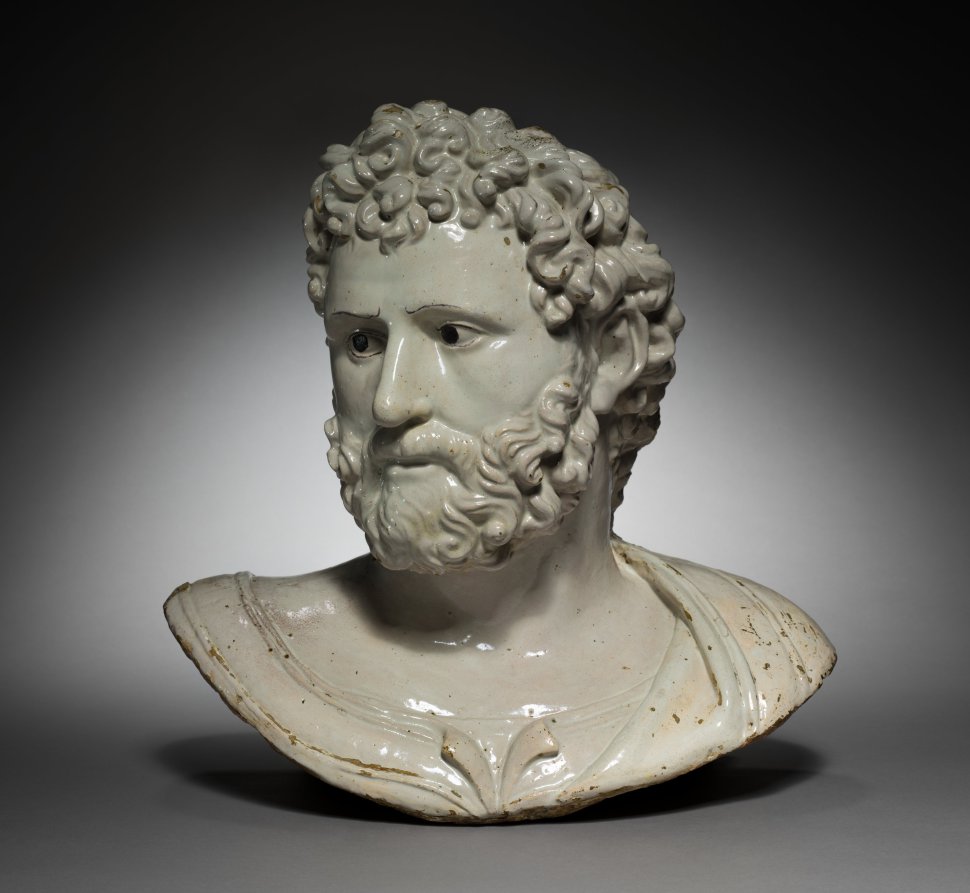
Girolamo della Robbia · The Cleveland Museum of Art · John L. Severance Fund · CC0
- Born
- 1488 · Florence.
- Died
- 1566 · Paris.
- Occupation
- ceramicist · sculptor · architect
Reference Check
Propose documentary evidence for Girolamo della Robbia. A contribution is never written directly as fact: identity, source, rights and evidence gates still decide.
Sign in to contribute
World of VALÉORINE
Documentary connections
Only confirmed graph relationships appear here. Images are shown only when their identity and reuse rights both pass the documentary gate.

Documentary evidence
Documentary basis
Authority files
wikidata · Q1367965 · wikipedia · Girolamo della Robbia
VALÉORINE Encyclopedia
The documentary record
Statements marked “Documentary record” are set in the article beside the passage they confirm. Each is read from the authority records of the institutions named here; select “Prove” to see the record it was read from, where in that record, and when.
Institutions cited
Deutsche Nationalbibliothek · Getty Union List of Artist Names
Complete reading chain (JSON)In this article
Biography
Biography
Places of work recorded in the authority are Florence and Paris. Work by Girolamo della Robbia is recorded in the collections of Cleveland Museum of Art, National Museum of Ceramics, Skulpturensammlung und Museum für Byzantinische Kunst and J. Paul Getty Museum.
Della Robbia was born in Florence. In 1517, he moved to France where he worked in the court of King Francis I of France, and in 1529, he joined his brother Luca "the young". In 1525, he returned to Florence following the imprisonment of Francis I (1525–26) or because of the death of his father, which both happened in the same year. During his stay in Florence (1525–28) he probably made a monumental Crucifix out of terracotta, which is preserved in the Church of St. Peter Vinculis in San Piero in Bagno (Forlì). Also during these years, another work testifies to the presence and activities of Girolamo della Robbia's workshop, the Altoviti Emblem (1525) of Palazzo Pretorio (Certaldo). Among his most challenging and famous pieces are the Tabernacle of Fonticine in Florence and Madonna and Child with St. John now at the BNCF (Biblioteca Nazionale Centrale Firenze) inspired by Raphael’s Madonna of the Louvre, which was on display during the exhibition that presented the Madonna del cardellino, also by Raphael, restored 2008-2009. He died in Paris on 4 August 1566.
Documentary record
Girolamo della Robbia was a ceramicist and court sculptor, born in 1488 in Florence and died in 1566 in Nesle. Both events are recorded by the Deutsche Nationalbibliothek and the Getty Union List of Artist Names.
Identity
Identity
Girolamo della Robbia is recorded as ceramicist, sculptor and architect.
Life and career
Dated record
Life and career
The full dated record · 2 entries
1488
Girolamo della Robbia was born in 1488 at Florence.
1566
Girolamo della Robbia died in 1566 at Paris.
Places
Named by the record
Places
Only places the record itself states, plotted where the house gazetteer settles their coordinates. Nothing is inferred from a name or a nationality.
Florence.
Birth place
Paris.
Death place
Literature
Scholarly footprint
A count of publications is evidence of attention, not of standing, and is given here only as a measure.
Text attribution
Licensing
Text attribution
Part of the biographical narrative on this page reuses licensed material. Its origin, revision and licence are recorded here.
The biographical narrative on this page is based on the Wikipedia article Girolamo della Robbia, revision 1345801584 (EN edition), by its contributors. VALÉORINE has edited that text and built its own documentary record around it. The reused material is available under CC BY-SA 4.0, and this page's reuse of it is offered under the same licence. Everything else on this page — the chronology, the holdings, the evidence, the plates and the connections — is VALÉORINE's own record. Sources and licences.
Notes from the source article
Cited by Wikipedia
Notes from the source article
These works are cited by the source article, in its own numbering. They are recorded as its citations, not as sources VALÉORINE has verified.
Bibliography printed in the source article · 2
- L. Fornasari, Liletta Fornasari, Giancarlo Gentilini, I Della Robbia, Skira, 2009.
- AA.VV., I della Robbia e l'arte nuova della scultura invetriata. Catalogo della mostra, Giunti Editore, Firenze 1998
References
Citations
References
Each reference names the institution holding it, so a reader may go to the document itself.
reference work
Wikidata, structured authority record Q1367965: Girolamo della RobbiaWikimedia Foundation
Secondary witnessreference work
Secondary witness
People, houses and institutions
Knowledge graph
People, houses and institutions
Teachers, collaborators, publishers and institutions recorded against this person, each on a stated basis.
Died at
1- ParisPlace
Established from a fact already recorded on a verified source.
The Encyclopedia exists whether or not anything is for sale. Corrections are recorded rather than overwritten, and every version of this record is kept. Published 16 August 2026.
Elsewhere in Ceramics
1,104 published records in this field, each with its sources named.
- Gilbert BayesArtist
- Giorgio AndreoliArtist
- Giovanni della RobbiaArtist
- Giovanni UrbinatiArtist
- Gisela Falke von LiliensteinArtist
- Gisèle van Waterschoot van der GrachtArtist
- Glenn LewisArtist
- Glenys BartonArtist
Best supported in this field
For owners
Own a work by Girolamo della Robbia?
A specialist will read what you send and tell you what the house can establish, what it cannot, and whether the object is suited to sale. There is no charge and no obligation. The object stays with you throughout; nothing is shipped to us unless it is arranged in writing beforehand.